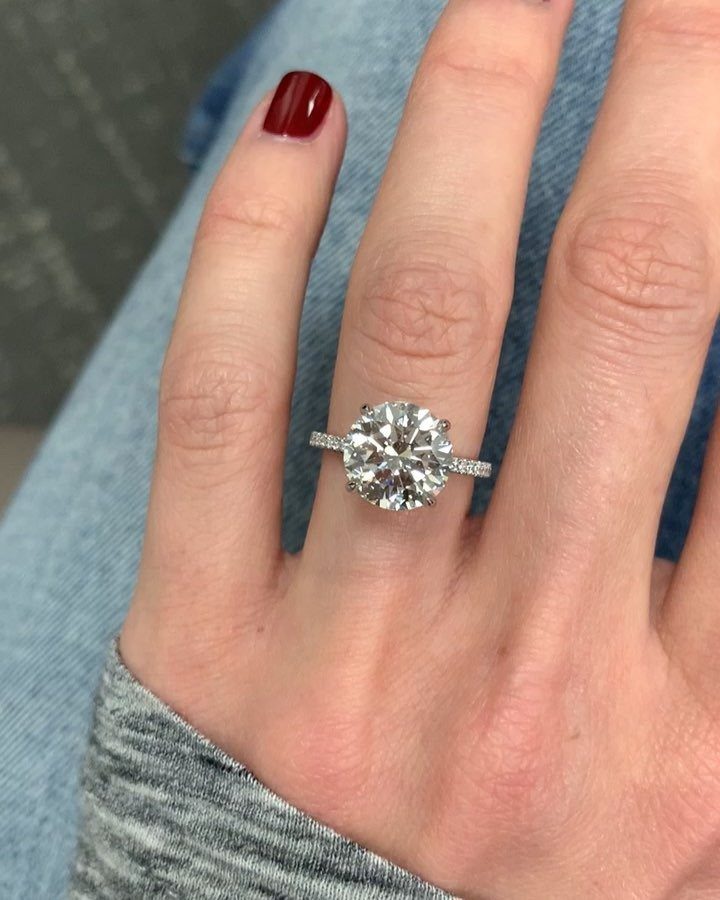
The rings below all carry a 4 carat center, in pear, oval, emerald and round cuts, set on pavé bands, diamond bands or a plain gold band.
Budget settles it: a tight one points to the round solitaire on a plain gold band, where every dollar goes into the stone, while a larger one can pay for the pavé and diamond bands.
1. 4 Carat Ring Popularity
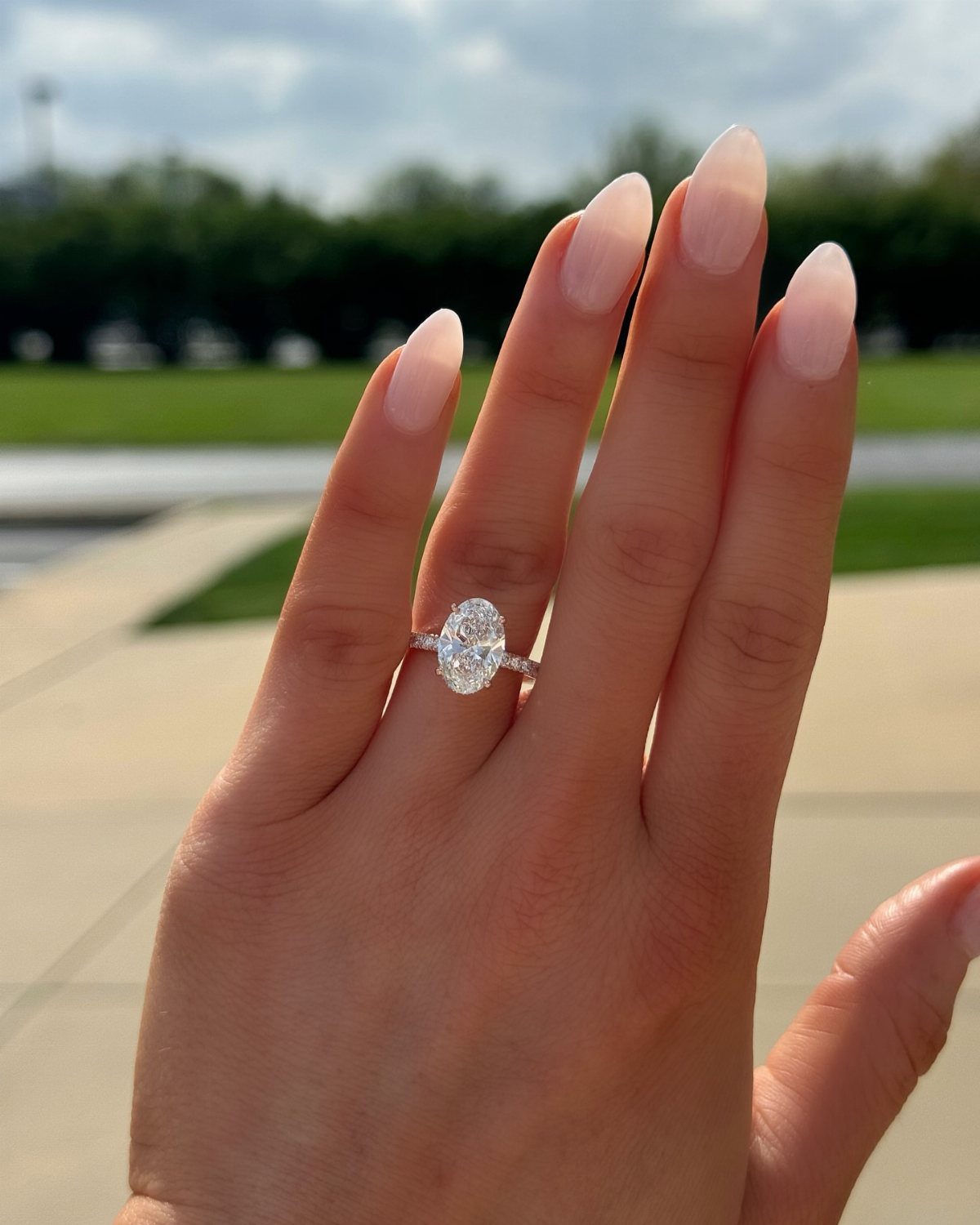
A 4 carat center stone reads from across a room, and an oval cut stretches that size along the finger, so it looks larger than a round of equal weight.
The pavé band adds a thin line of sparkle without competing with the center.
For a reader watching the budget, this is the main reason the size is so popular: the look is dramatic, and lab-grown stones bring that look within reach of far more couples.
4 carat engagement rings feature extraordinary diamonds with remarkable presence and unmatched brilliance.
2. Choosing a 4 Carat Ring
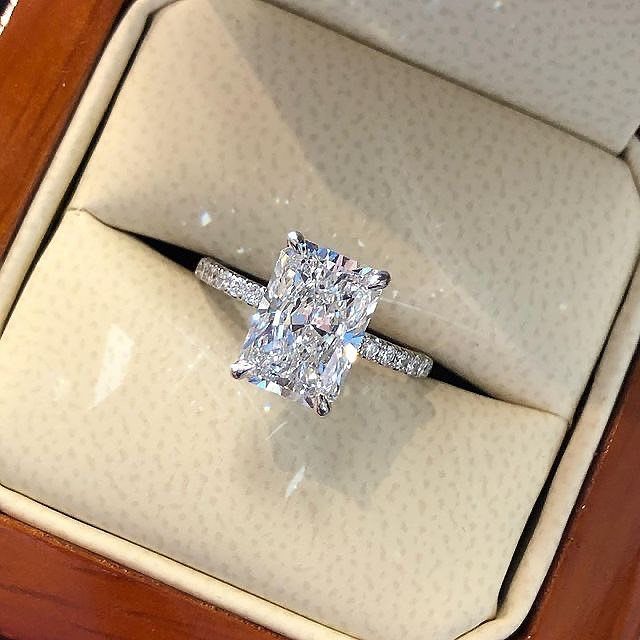
Start with the certificate, not the stone. Ask for a grading report from a recognized lab, then compare cut, color and clarity on paper before you compare sparkle on a screen.
On a radiant cut like this one, I would spend on cut quality first, since it drives the brilliance you actually see.
A pavé band suits those who like extra shine, while a plain band keeps the focus on the center.
Lab-grown stones let the same budget buy better grades.
3. Pear-Cut Diamond with Pavé Band
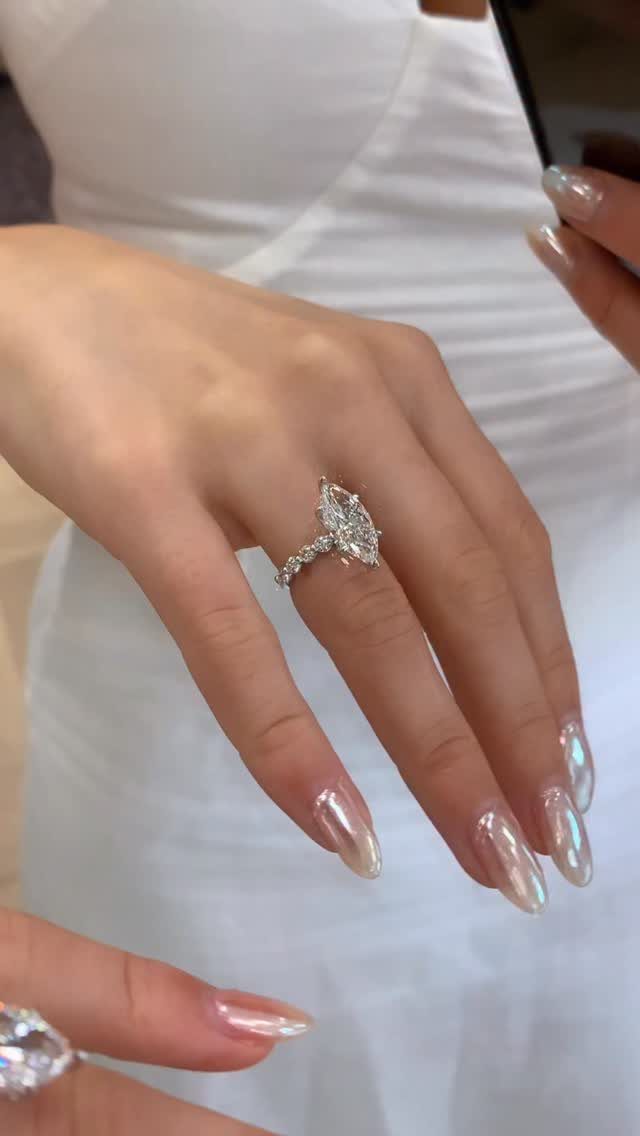
Pear cuts taper to a point, and that shape elongates the finger much the way an oval does, with a softer, teardrop outline. Set on a pavé band, the stone gets a glittering runway on both sides.
Protect the point. Ask the jeweler for a prong or V-tip setting there, because that tip is the most exposed part of the stone and the first place a chip happens.
I like pear cuts for anyone who wants 4 carats without a standard round look.
4. Oval Diamond on Pavé Band
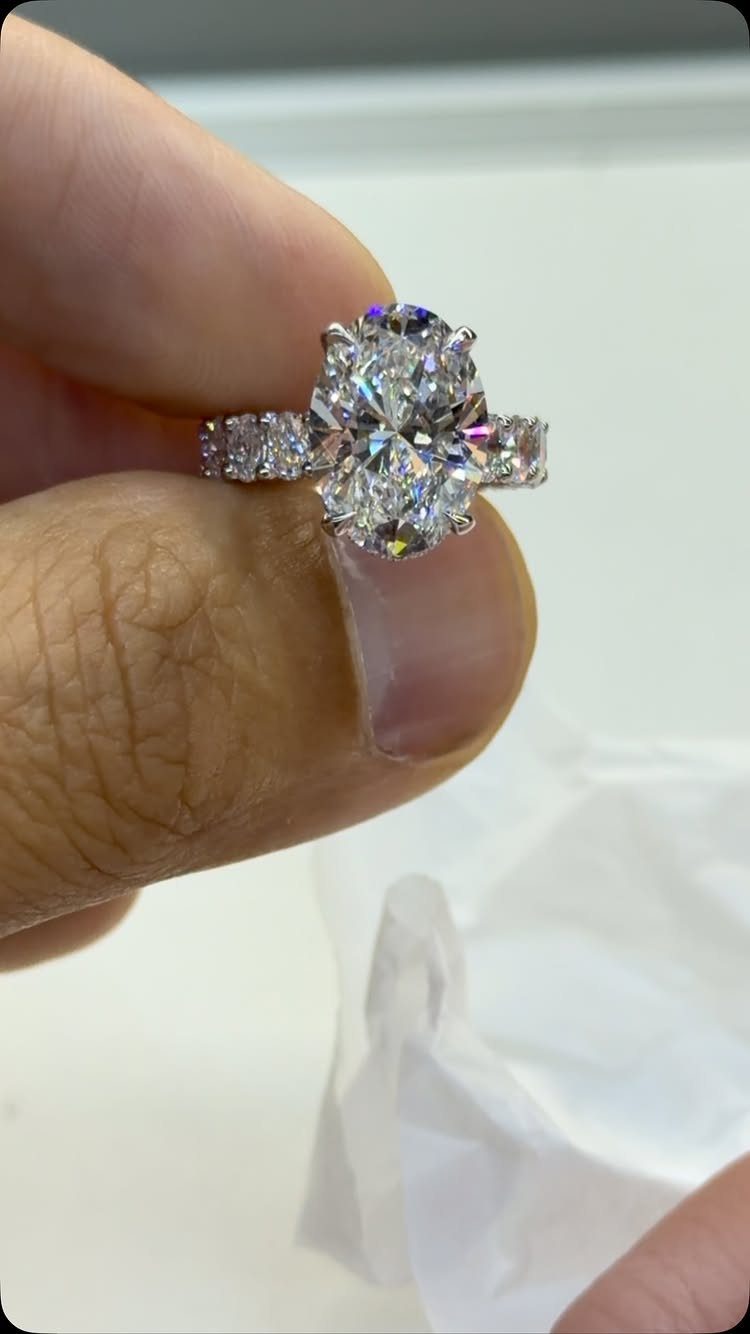
Side accent diamonds plus a pavé band give this oval 3 layers of sparkle: the big center, the small flanking stones, and the band itself.
That is a lot of diamond work, so expect the setting to add cost beyond the 4 carat center.
Look at the oval’s bow-tie, a darker shadow across the middle that some ovals show. Check it in video or in person before buying, since it varies from stone to stone.
If the budget is tight, I would put money into the center and keep the side stones modest.
5. Emerald-Cut Diamond with Diamond Band
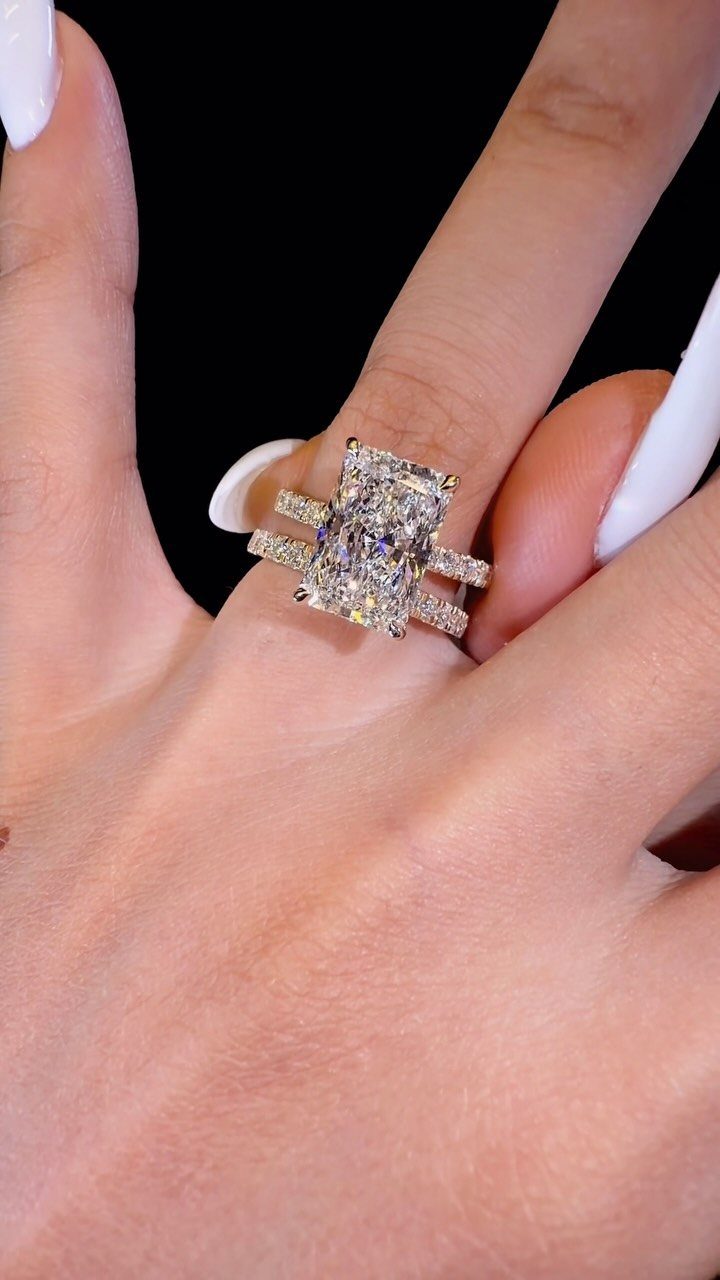
Long, flat steps of an emerald cut give a hall-of-mirrors flash rather than a confetti sparkle, and at 4 carats that clarity is on display.
Flaws are easier to see in this cut, so clarity grade deserves more of your attention here than on a round.
A matching diamond band sits flush against the emerald cut and makes the set look intentional. Buying the 2 together lets the jeweler match the metal and fit.
If you want a quieter look, a plain band works too.
6. Round Solitaire on Plain Gold Band
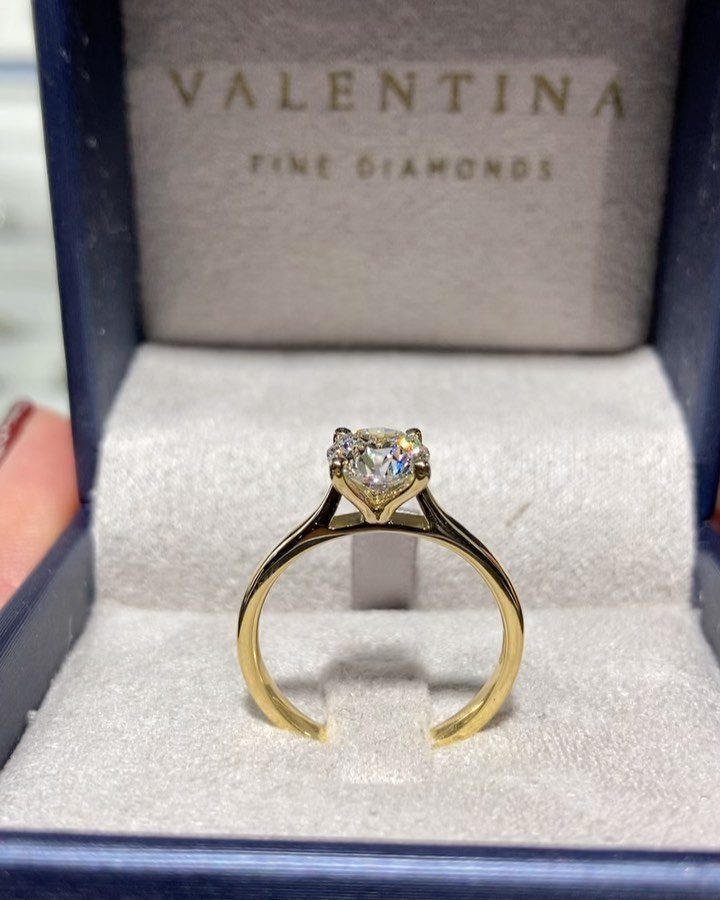
Nothing shows off a round brilliant like a plain polished yellow gold band. With no pavé competing, every dollar of the budget goes into the stone, which is why I think this is the smartest layout for a tight budget.
Round cuts are the most brilliant shape and hide small flaws better than step cuts do, so you can often accept a slightly lower clarity grade. A solitaire is also simple to resize later.
The tradeoff: it is a less sparkly band than a pavé style.
7. Round Diamond with Pavé Band
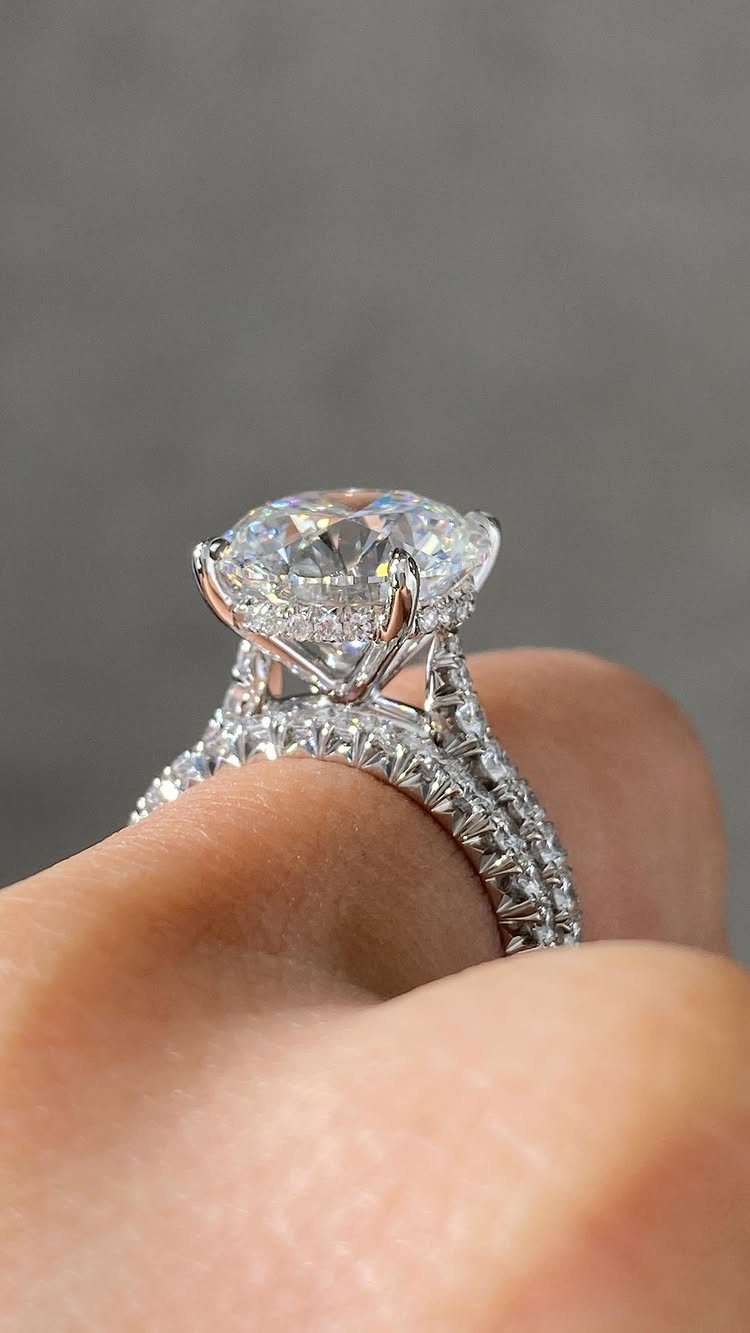
A round brilliant sits highest in its setting and throws the most light back, so a slim pavé band lets the stone do the talking while still adding a fine line of sparkle.
The matching wedding band shown beside it keeps the stack even.
Rounds are the priciest shape per carat, and lab-grown is how I would bring a 4 carat round within reach. Put the money into cut grade first, then settle for a modest clarity grade, since a round hides small flaws well.
Check how thin the pavé is before you buy: smaller diamonds along the band mean more tiny prongs, so ask the jeweler to inspect them at each resizing or cleaning.
4 Carat Ring Size
On a slim hand it will cover a lot of knuckle, and that is worth knowing before the ring arrives.
Shape changes how big the stone looks.
Oval and marquise cuts appear larger than a round of the same weight, and cushion cuts do the same for a wider face. If you want the most visual size for your carats, start with those.
Price moves with shape and grade.
Round brilliants and higher grades cost more, and the setting adds to the total. For a lab-grown stone, VRAI’s 4 carat diamonds start at $5,800 and rise from there with the diamond and the setting you choose.
Consultation Services
Many retailers offer free consultations, and I would use one before spending anything. Bring a budget number and a shape or two to the appointment, then have the jeweler pull stones in that range for you to compare.
Ask them to compare a few diamonds side by side, and ask which setting fits your lifestyle and finger. Book the appointment early if you are working to a wedding date, since a custom setting takes time to make.
Frequently Asked Questions
How much does a 4 carat diamond cost?
A lab-grown 4 carat diamond runs roughly $2,000 to $8,000 on its own, and VRAI’s start at $5,800. Expect a natural 4 carat diamond to run $60,000 at the low end, and that figure climbs fast with better color and clarity.
One retailer lists a natural 4 carat in F color and VS1 clarity at $138,000, against $8,000 for a lab-grown stone with the same grades.
Is a 4 carat ring considered big?
Yes, 4 carats is a large, bold size that reads from across a room. On a slim hand it covers a lot of knuckle, and it may not suit someone with an active lifestyle or a taste for subtle jewelry.





