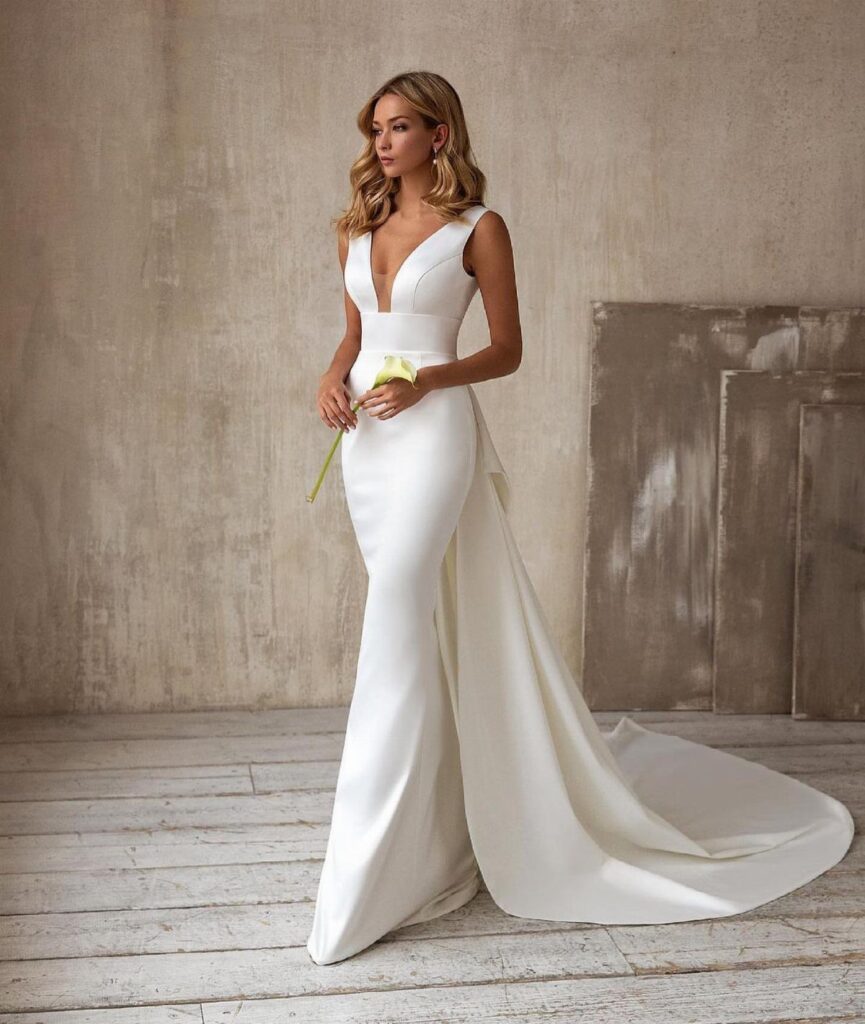
Simple here covers a wide range of cuts and fabrics: a minimalist column, a mermaid in silk charmeuse, a strapless gown, a sheer cape sleeve over a high neck, a lace bodice paired with satin, and a one-shoulder drape.
Your body type and how much you plan to move decide which one is yours. A mermaid suits an hourglass figure and an A-line works on nearly everyone, so start with the silhouette and let the fabric and neckline follow.
1. Minimalist Wedding Dresses
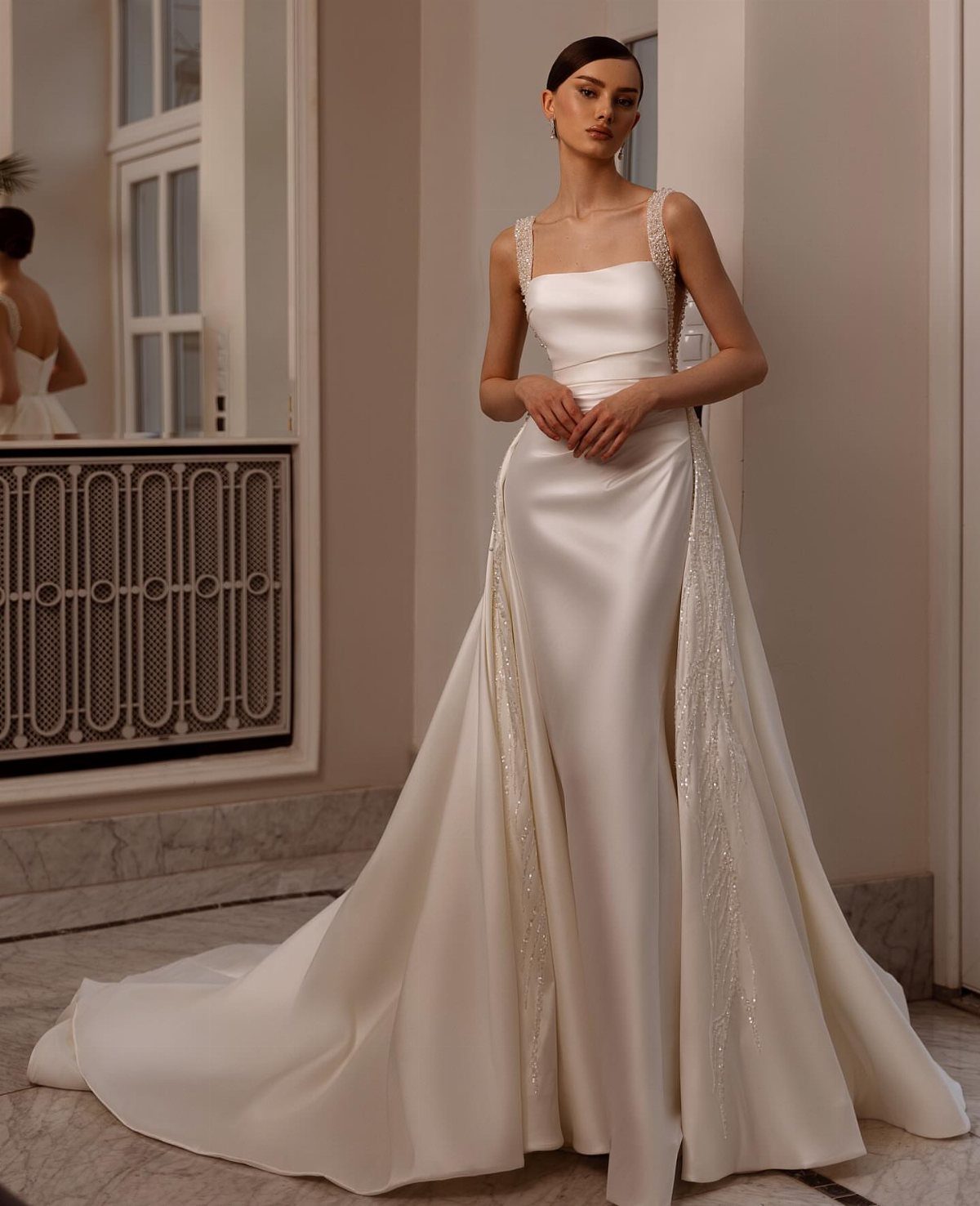
Minimalist means the dress has to earn its place through fabric and cut, since there’s no embellishment doing the work for you. Satin shows every seam, so fit matters more than anything else here.
A detachable overskirt is the smart move on a budget.
You get a clean, sleek sheath for the reception and a fuller silhouette for the ceremony, all in one purchase. Beaded straps add a little sparkle without turning the dress into something busy.
Try it on with the overskirt both on and off to see which version you prefer.
2. Simple Mermaid Dresses
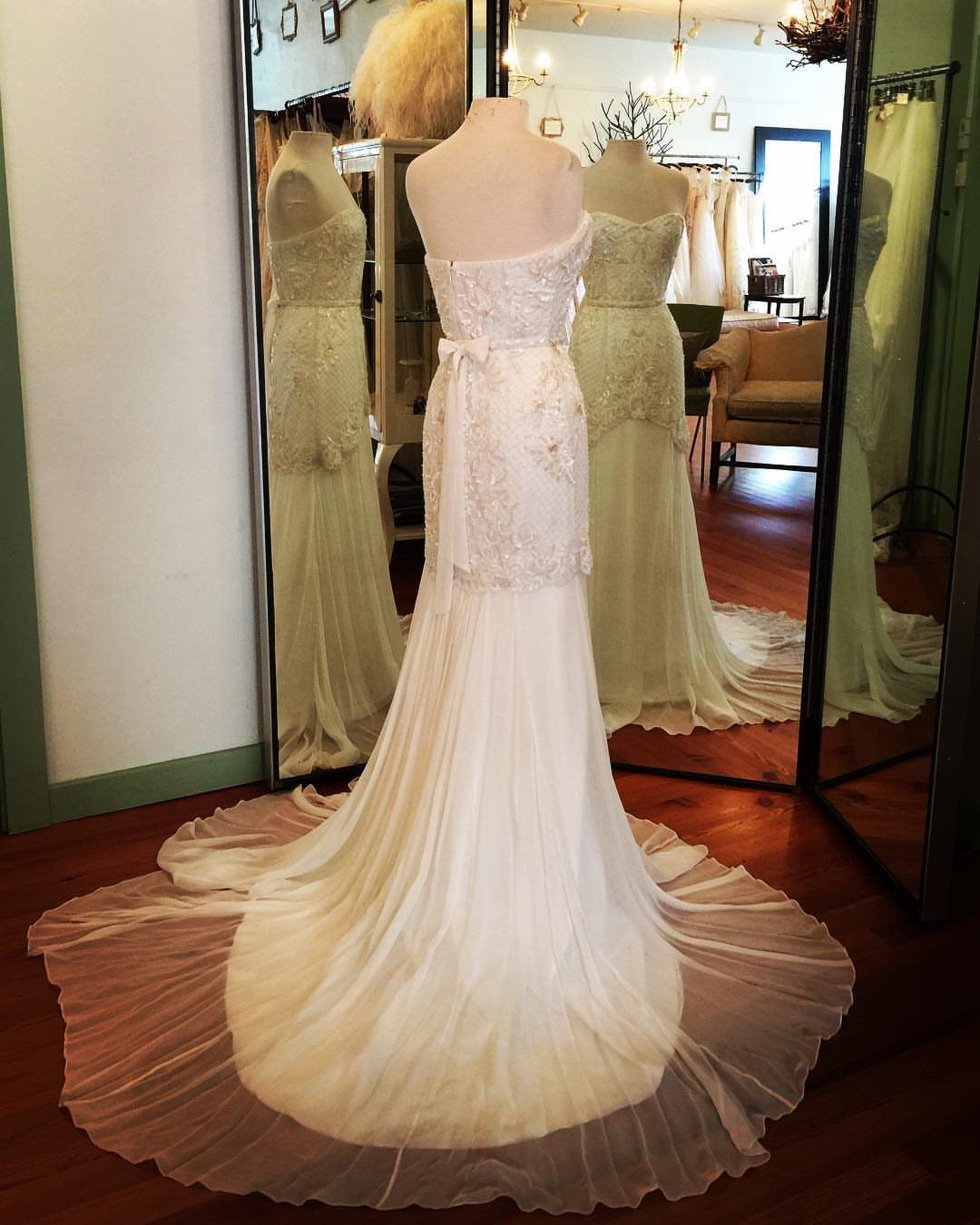
Fitted through the body and flared at the knees, a mermaid shows off the shape of your figure more than any other silhouette. Strapless keeps the top clean, so the curve of the skirt does all the talking.
A plain, smooth fabric keeps the dress looking simple rather than detailed. Skip heavy embellishment, which pulls attention away from the line.
Mermaids leave less room for movement, so walk, sit and practice a dance step in the fitting. If you can’t comfortably do all three, try a different cut.
3. Silk Charmeuse Off-the-Shoulder Dress
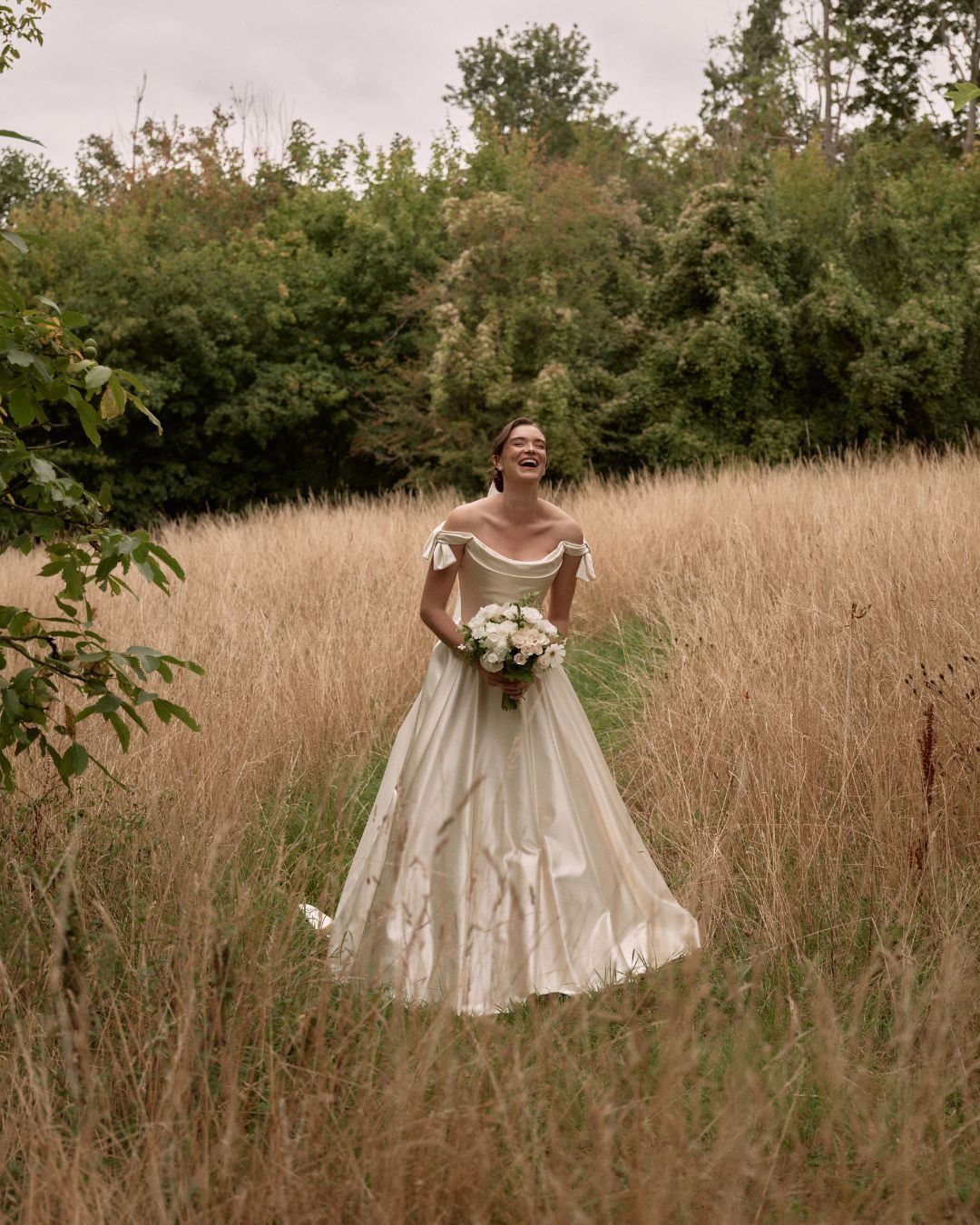
Silk charmeuse has a liquid sheen that photographs beautifully, and a hand-draped bodice with off-the-shoulder straps gives it a romantic shape without any extra decoration.
Pair it with a soft stretch satin skirt that follows your hips and falls in a smooth line.
A dress like this puts your collarbones and shoulders on display, so keep jewelry minimal. A simple pair of earrings is plenty.
Charmeuse is also unforgiving of bumps and lines, so ask about the right undergarments at your first fitting.
4. Simple A-Line Dresses
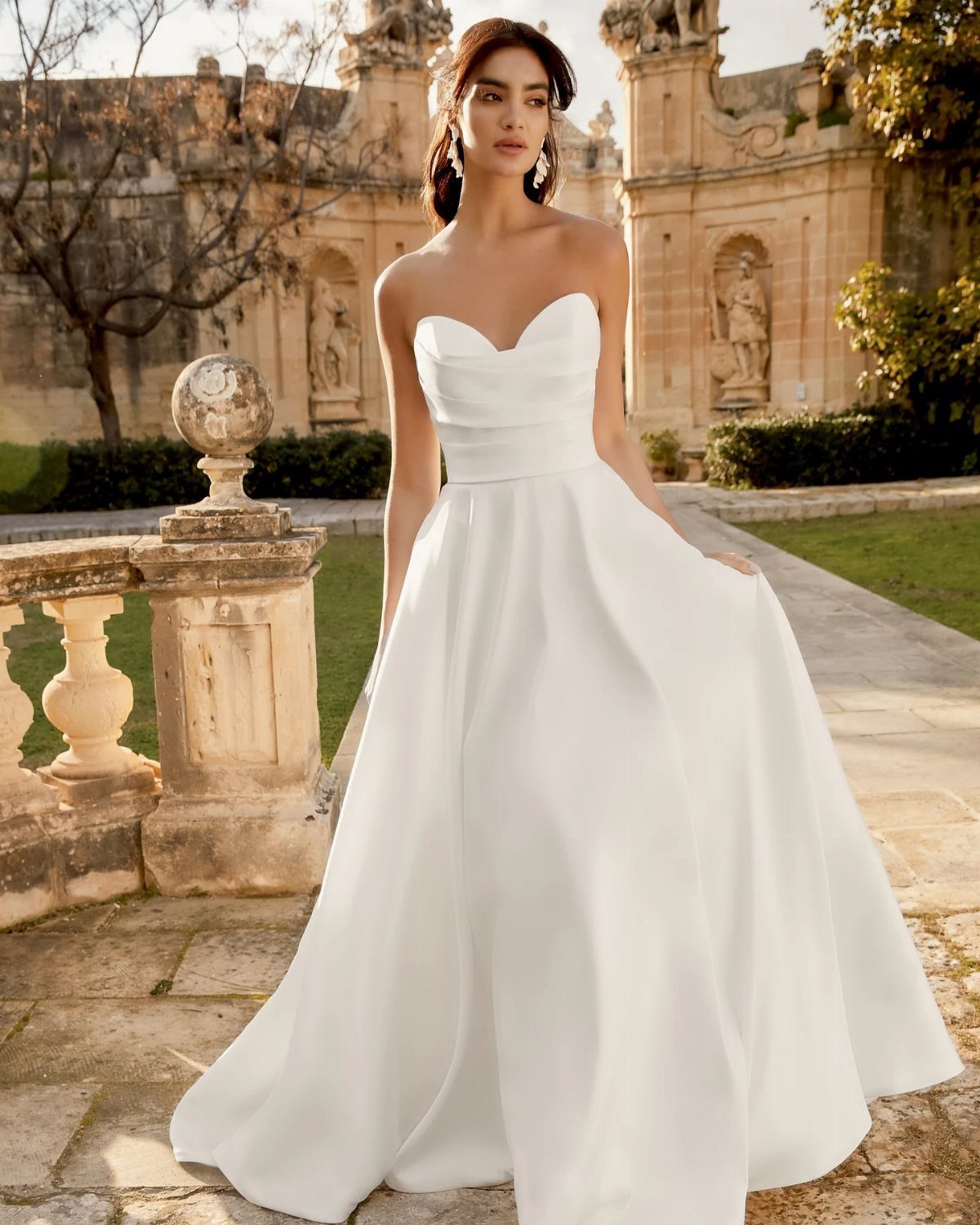
An A-line narrows at the waist and widens gently toward the hem, which is why it works on so many body types. Strapless with a plain skirt keeps it simple and lets the neckline do the work.
If I had to pick one cut for a bride who isn’t sure what she wants, this is it. It moves easily, handles stairs and dancing, and looks good both outdoors and in a formal space.
Choose a fabric with some body so the skirt keeps its shape.
5. Classic Wedding Dresses
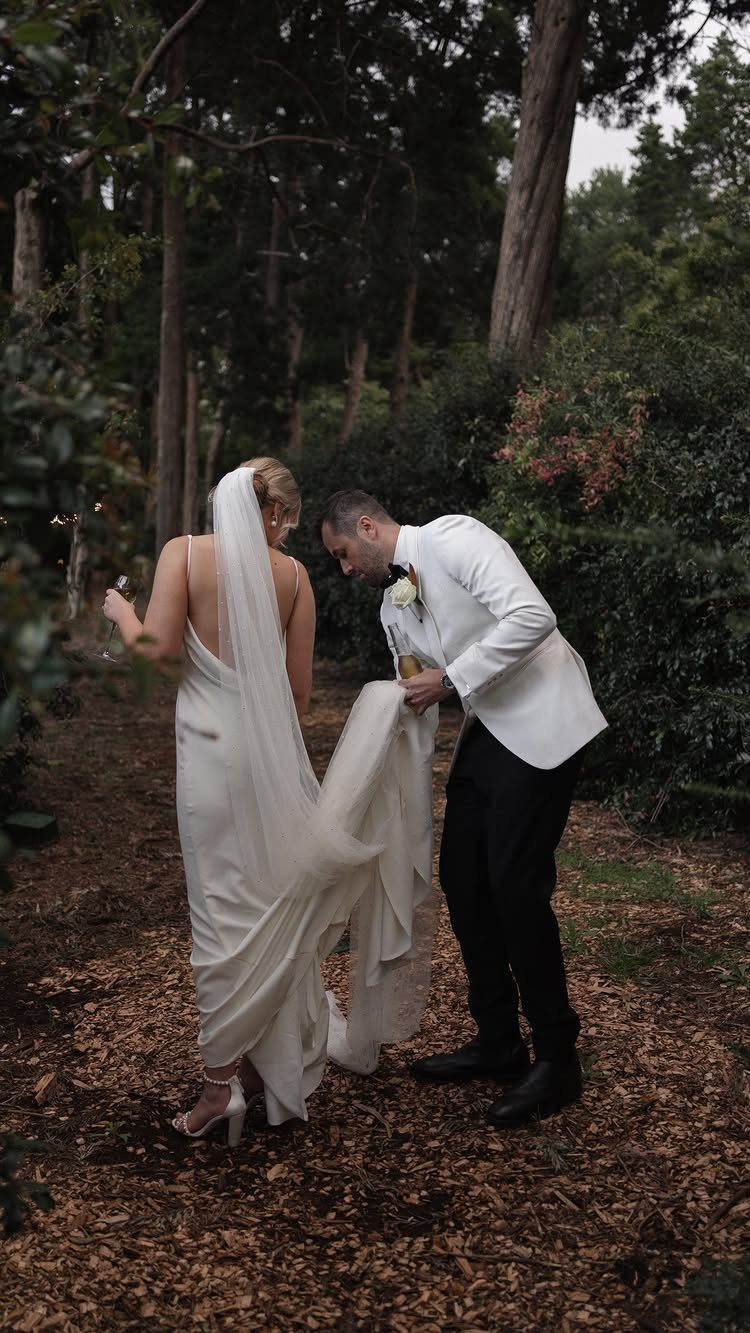
Clean white, a sleek silhouette and a veil: that combination reads as a bride at a glance, and it never goes out of style. Classic doesn’t mean plain; it means the proportions are right and nothing is competing.
A white gown beside a groom in a white tuxedo jacket looks especially polished, so coordinate the two early if you like that look. Keep accessories restrained, a veil and one other piece at most.
If your budget is tight, a classic shape is the easiest place to spend less, since the design needs little extra detail.
6. Simple Strapless Gowns
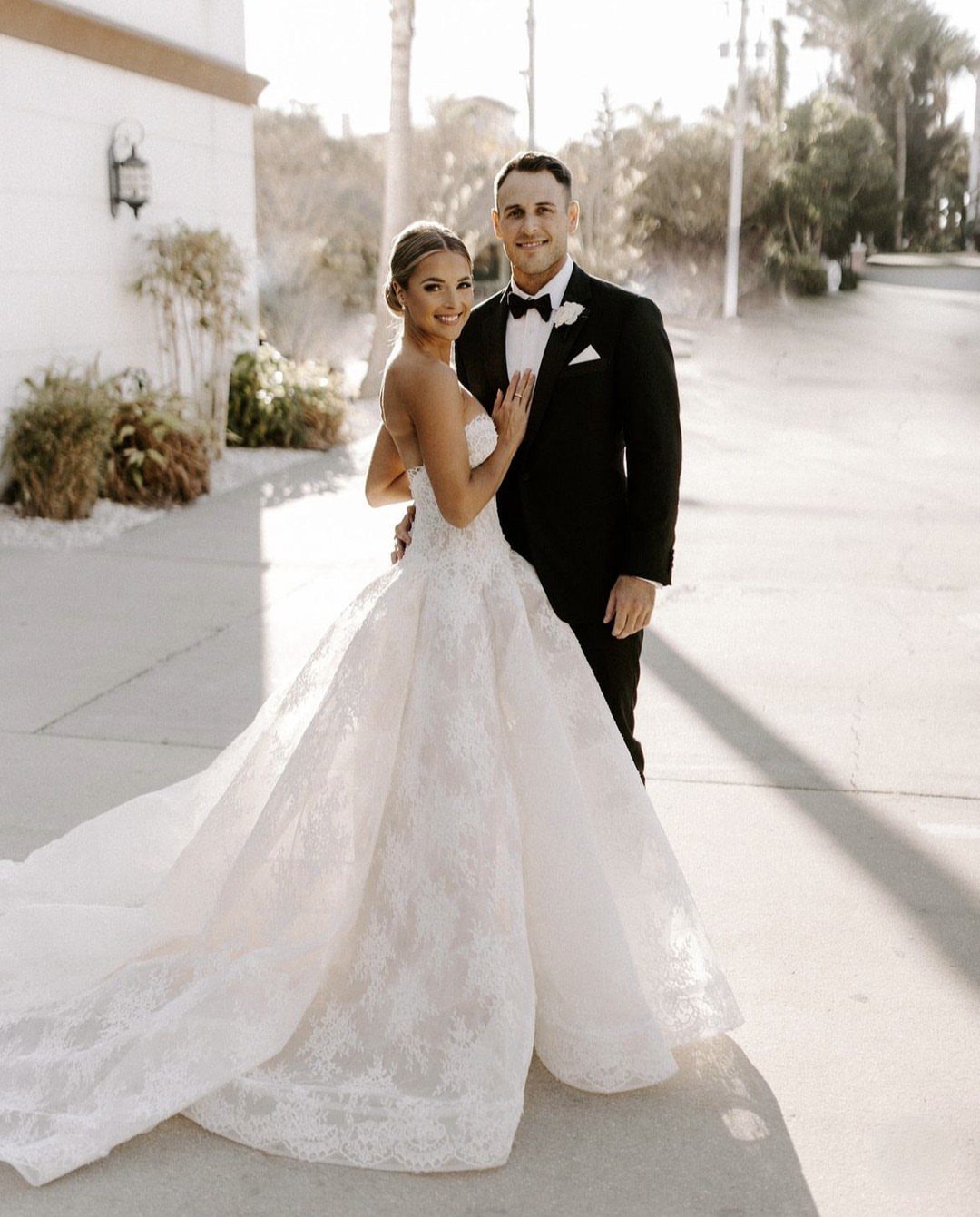
Without straps, the eye goes straight to your shoulders and neckline, so the neckline shape matters more than usual. A strapless lace gown adds texture while still keeping the silhouette uncluttered.
I like lace on strapless dresses because it softens the bare shoulders. A structured bodice is what holds everything in place, so test it by raising your arms and hugging someone.
Skip a necklace; it competes with the neckline. Earrings or a hair accessory are better choices.
7. Sheer Cape Sleeve Wedding Dress
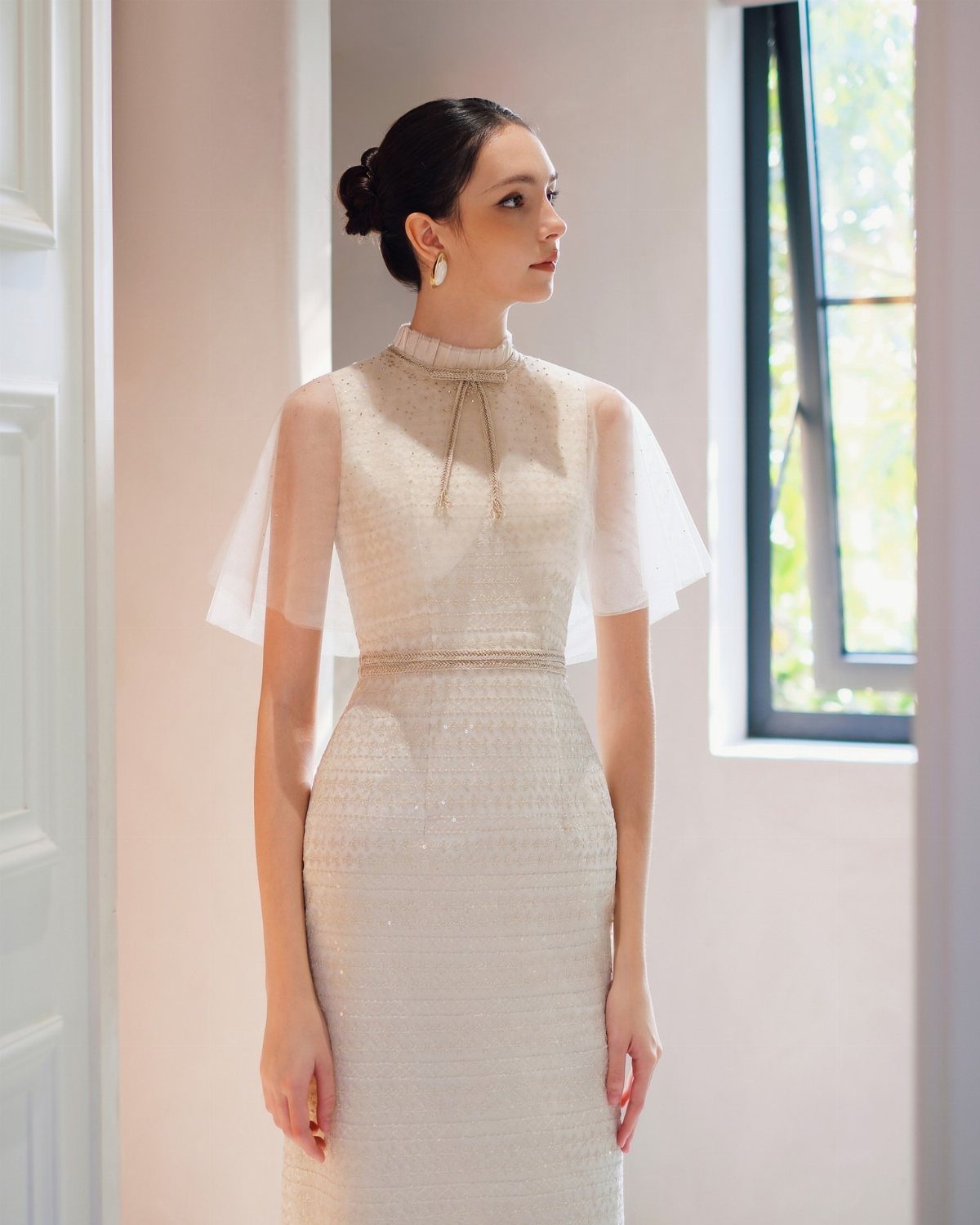
Sheer cape sleeves give a fitted, high-neck dress movement without adding bulk. The body stays sleek while the fabric floats off the shoulders and arms, so you get coverage and drama from one piece.
A slim belt defines the waist and breaks up the long white line. Gold reads warmer than silver against white, so match your earrings or hair pin to it.
Move your arms fully through their range in the fitting. Cape sleeves should lift and drift, not twist or catch.
8. Lace Bodice with Satin Skirt
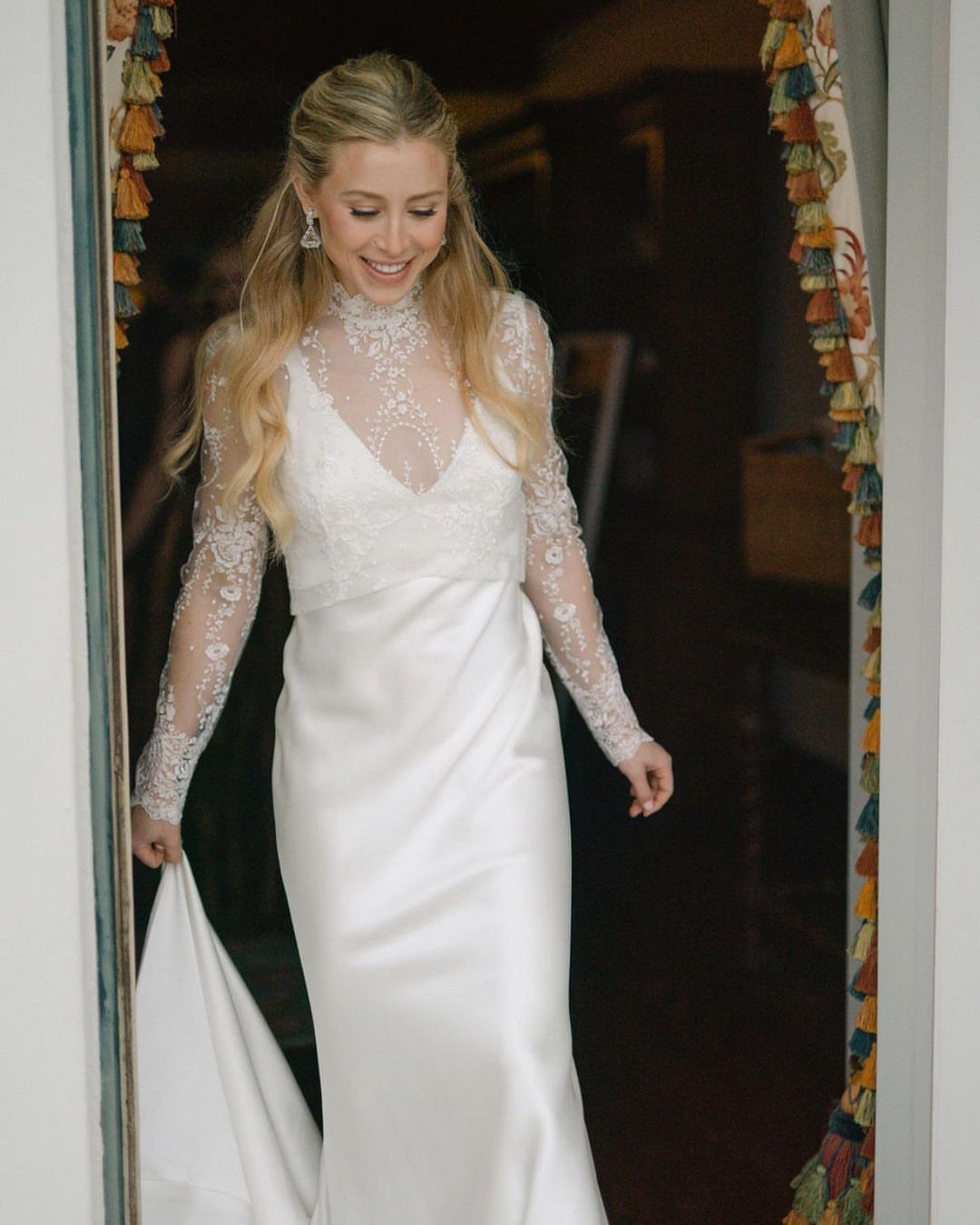
Long lace sleeves over a plain satin skirt let two textures share one dress. The lace gives detail where people look first, and the smooth satin below keeps the whole gown from feeling busy.
I’d pick this pairing for a bride who wants sleeves and a high neck without a heavy, covered-in-lace look. Satin shows every seam, so check the join where lace meets skirt.
Keep jewelry to earrings, since the lace neckline already fills that space.
9. One-Shoulder Draped Satin Gown
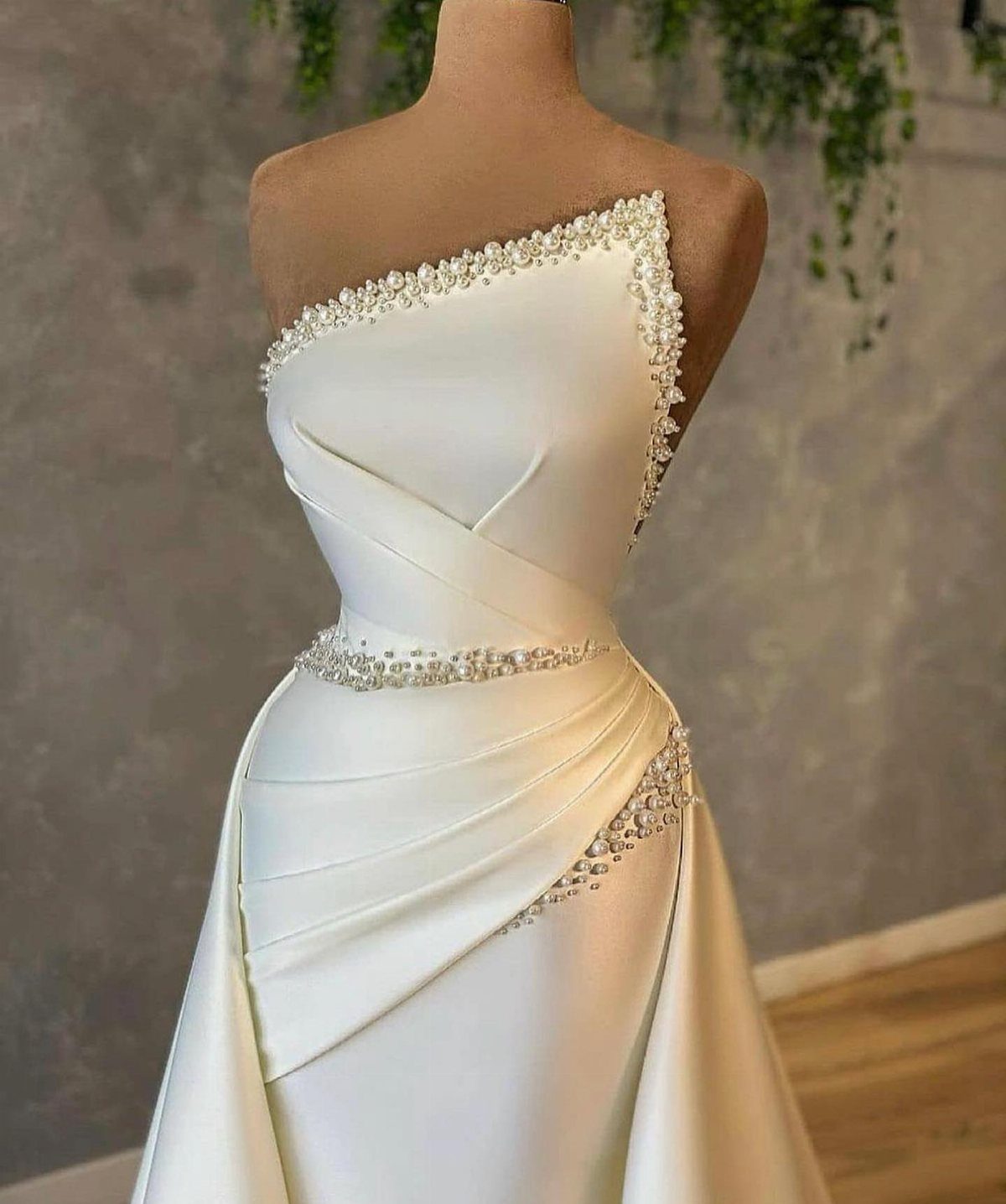
One shoulder, a wrapped drape and a scatter of pearls: that is the whole design, and it works because the pearls sit on only one side. The satin folds across the body and does the rest.
Pearl trim adds shine without sparkle, which suits a bride who finds crystals too much. Skip a necklace and a second statement piece, since the shoulder detail is already the focus.
Request a view of the drape on someone wearing it, not just a mannequin, so you know how the folds fall when you move.
Choosing the Right Fabric
Silk, satin and crepe all drape well, but they read differently against skin. Hold each fabric up near your face in daylight, not under shop lighting, and see which one makes your skin look warmer or cooler.
Crepe de Chine silk is a good example of what a double layer can do. 2 layers of silk give a light fabric enough weight to hang cleanly, which matters when the dress has thin straps and a plunging neckline.
Ask for a swatch and crumple it in your fist. If it springs back with soft creases, it will handle a day of sitting and hugging.
Accessorizing Simple Dresses
Simple dresses leave room for one strong accessory, so choose your lead piece first and build around it. Statement earrings, a hair piece or a veil down to your waist can each carry the look alone.
Some simple gowns have delicate lace, subtle beading or small appliques. Match your accessory to that detail: if the beading is soft, a loud earring can drown it out.
Wear your full set together at the final fitting, in the mirror, while you can still return what does not work.
Body Type Considerations
A sheath can make a petite frame look longer and sleeker, which makes it my pick for shorter brides who want a clean line. A-line is the flattering default for nearly everyone, and it suits any wedding style.
Mermaid is better saved for an hourglass figure, where the cut follows your natural curves.
Hemlines and necklines should work together, so check both in one try-on. A neckline you love can look off with a hem that fights it.
Frequently Asked Questions
What is a simple wedding dress?
A simple wedding dress puts all the work on the fabric and the way it fits your body. Simple doesn’t mean plain, since a clean line in satin or silk charmeuse can look very polished.
Can a simple wedding dress still look formal?
Yes. Formality comes from the fabric and how well the dress is made, not from beading or lace.
White fabric, a fitted shape and a veil are all you need to look like a bride. Add a detachable overskirt and you get a fuller, more ceremonial shape for the aisle.





