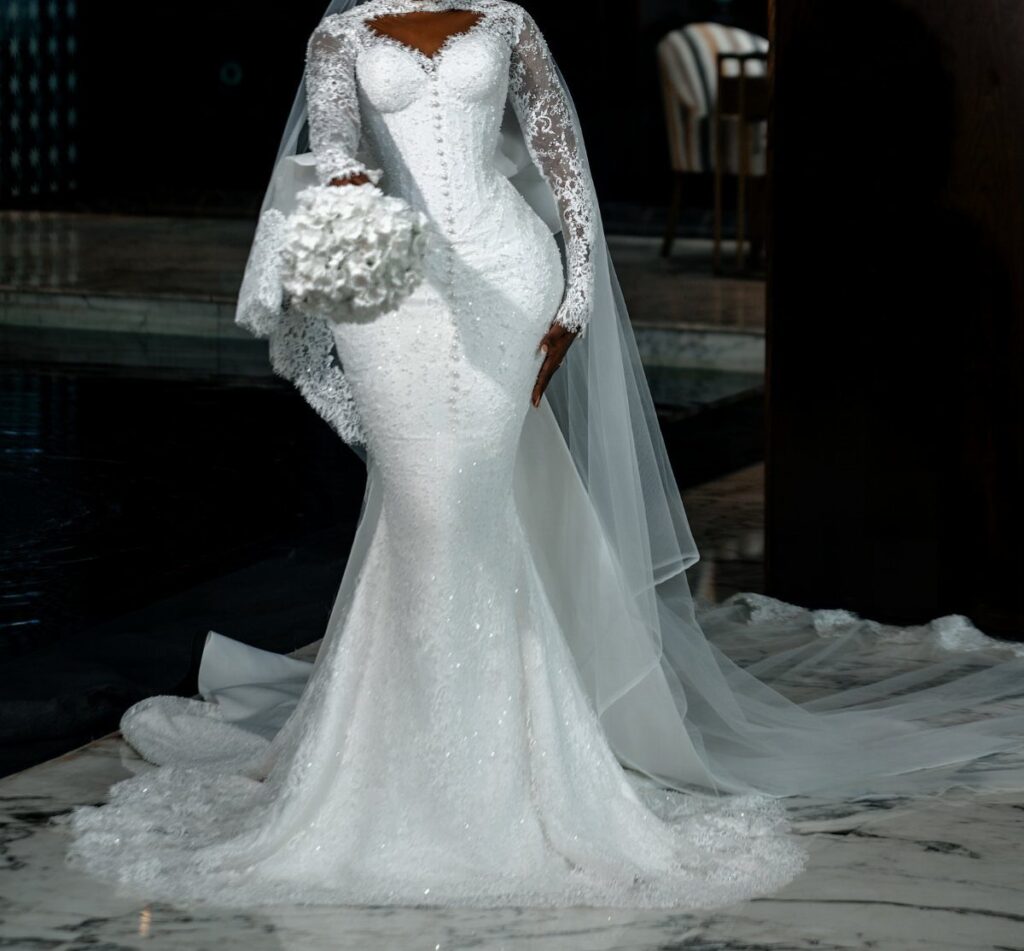
Skin tone and shade decide an all white dress more than the silhouette does: stark white, with no cream or ivory warmth, is the least forgiving shade in a salon, so a pale complexion has to see it in daylight before anything else.
From there the 6 options range from a plain satin square neckline that depends on tailoring to a ball gown with tulle volume and a lace dress with subtle beading.
Budget follows the same split: the plainer the dress, the more your money goes to alterations.
1. Stark White Wedding Dress
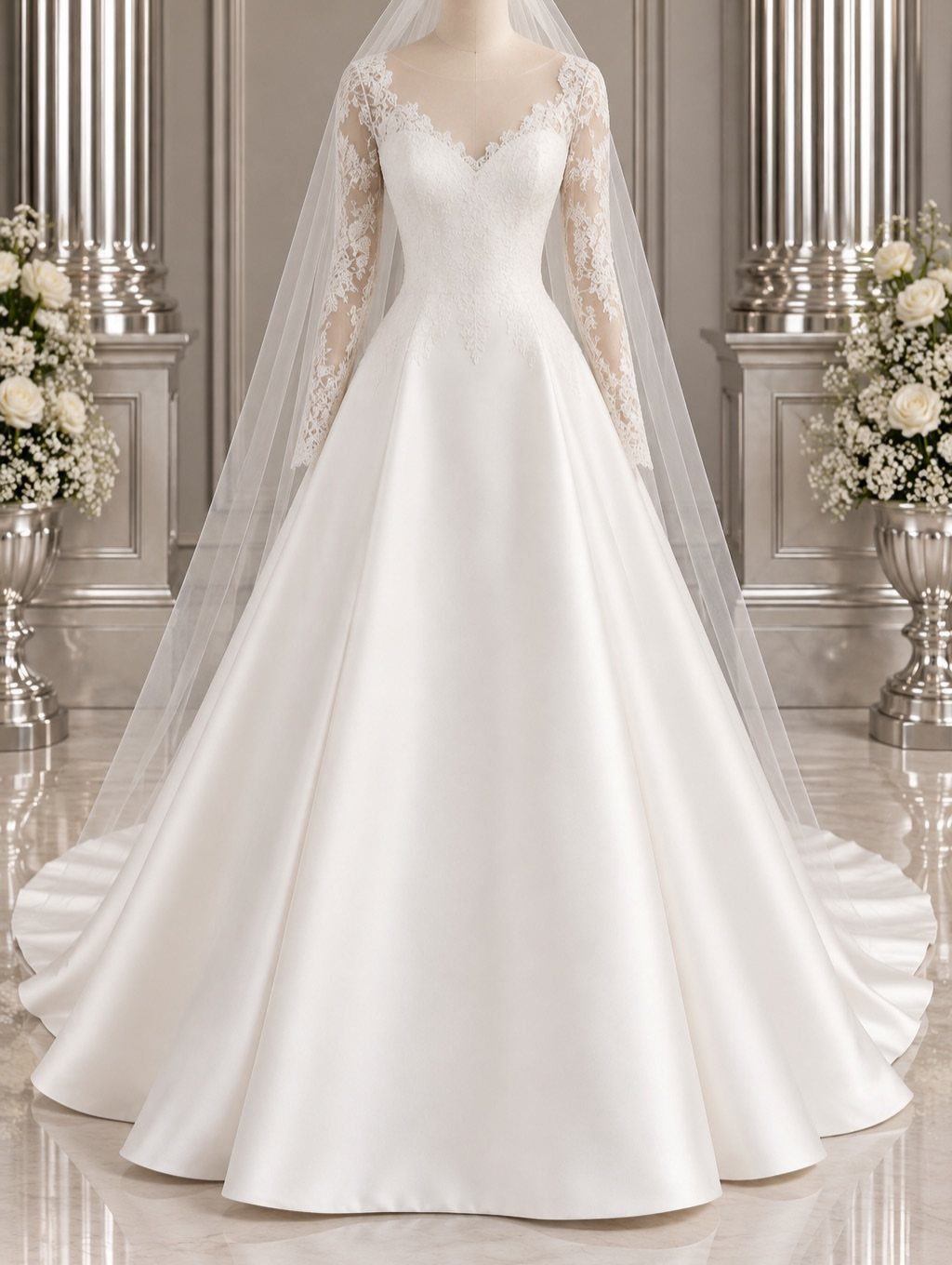
Stark white is the least forgiving shade in a bridal salon, and the reason is simple: it has no cream or ivory warmth to soften a pale complexion.
Lace sleeves and a full satin skirt give the bright color some texture so it doesn’t read flat.
Try it on in daylight before you commit. Under shop lights nearly everything looks fine, but a window shows you how crisp the white really is against your skin.
If the shade feels harsh, ask for the same style in a softer white. Stark white also makes a matching veil easy: buy it in the same white, since a slightly off veil will show.
2. Classic White Ball Gown Wedding Dress
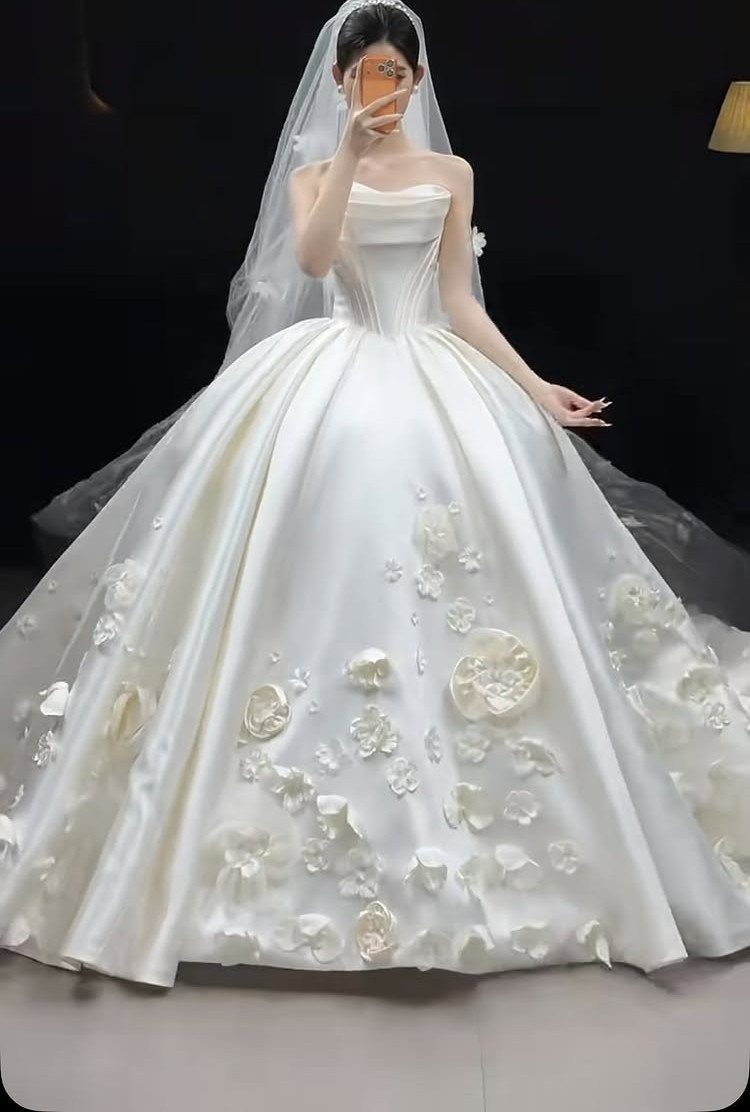
A strapless ball gown with 3D floral appliqués puts the drama in the bodice and the skirt at once, and I like that the flowers do the decorating so the shape can stay clean.
For a budget-minded bride, the full skirt is where your money goes, since it takes far more fabric than a slim cut. Ask what the price includes before you fall for one.
Pair it with a sheer veil, as above, and skip heavy jewelry. Strapless also means you should check how the bodice holds when you sit, raise your arms and dance, not just when you stand still on the pedestal.
3. Sweetheart Neckline Wedding Dress with Long Illusion Sleeves
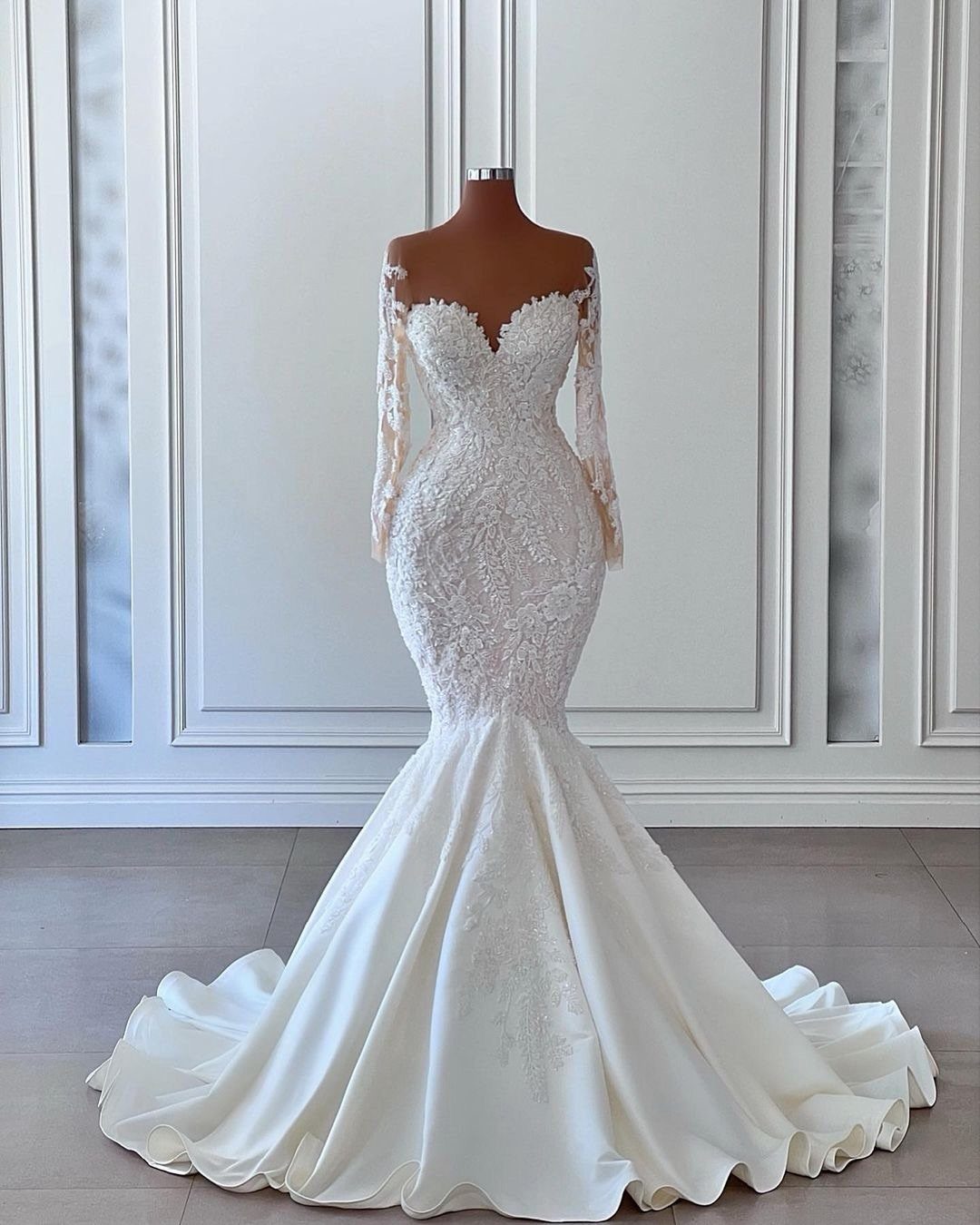
A sweetheart neckline paired with long illusion sleeves gives you a bare-looking shoulder line and full arm coverage in one dress.
The curved top edge of the bodice adds shape, while the sheer lace sleeves keep the look soft instead of severe.
On a mermaid cut like this one, the fit through the hip decides everything. Have the sleeves checked when you raise your arms, because narrow sheer sleeves can pull.
I’d choose this for a ceremony where you want coverage without a heavy, opaque sleeve. Sleeves can often be altered, so ask about length early.
4. White Satin Wedding Dress
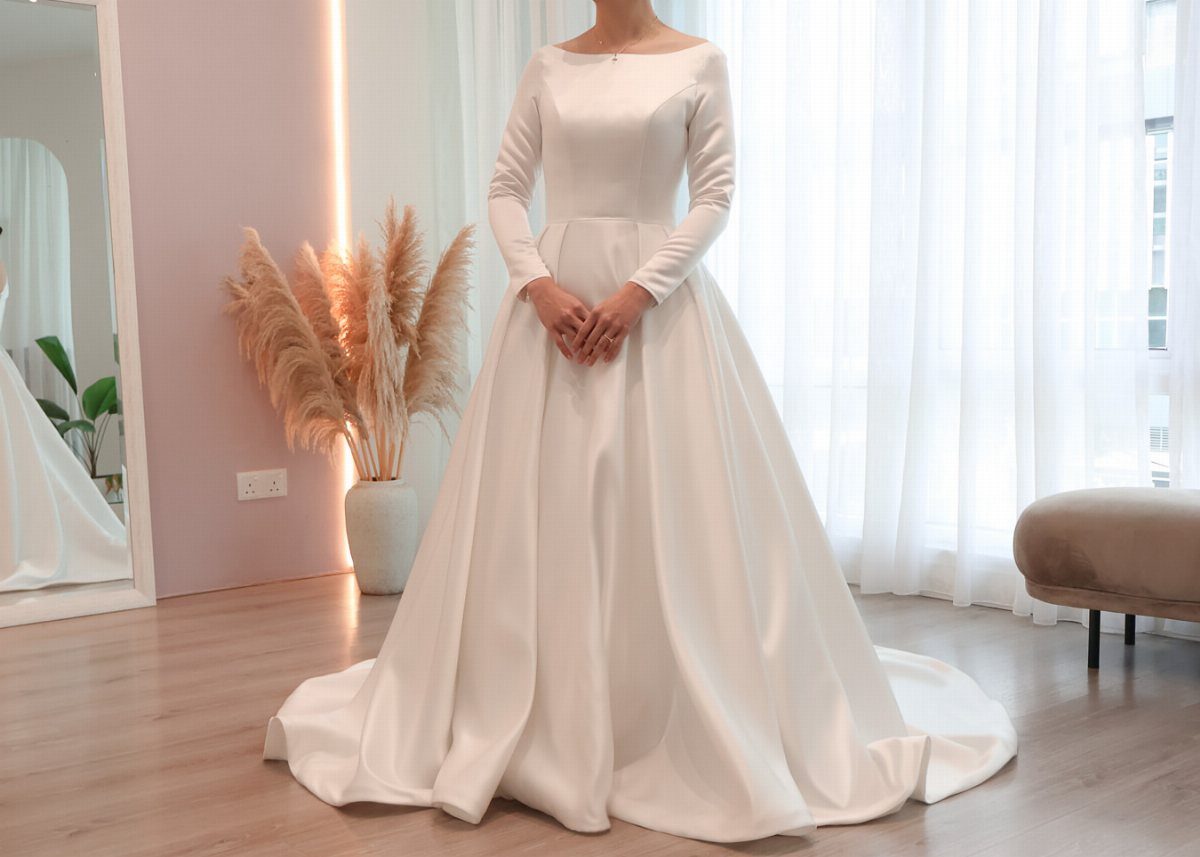
Satin gives a long-sleeved ball gown a smooth, polished surface that reflects light, so the whole dress glows in a bright room. That sheen is also its risk: satin shows every wrinkle and snag.
Because it’s so plain, the cut and the seams carry the design. Look at how the skirt hangs and whether the sleeves sit smoothly at the shoulder.
If you choose satin, plan on steaming before the day and handling it with clean hands. I’d keep the styling simple, since the fabric is the statement.
5. Minimalist White Wedding Dress with Square Necklines
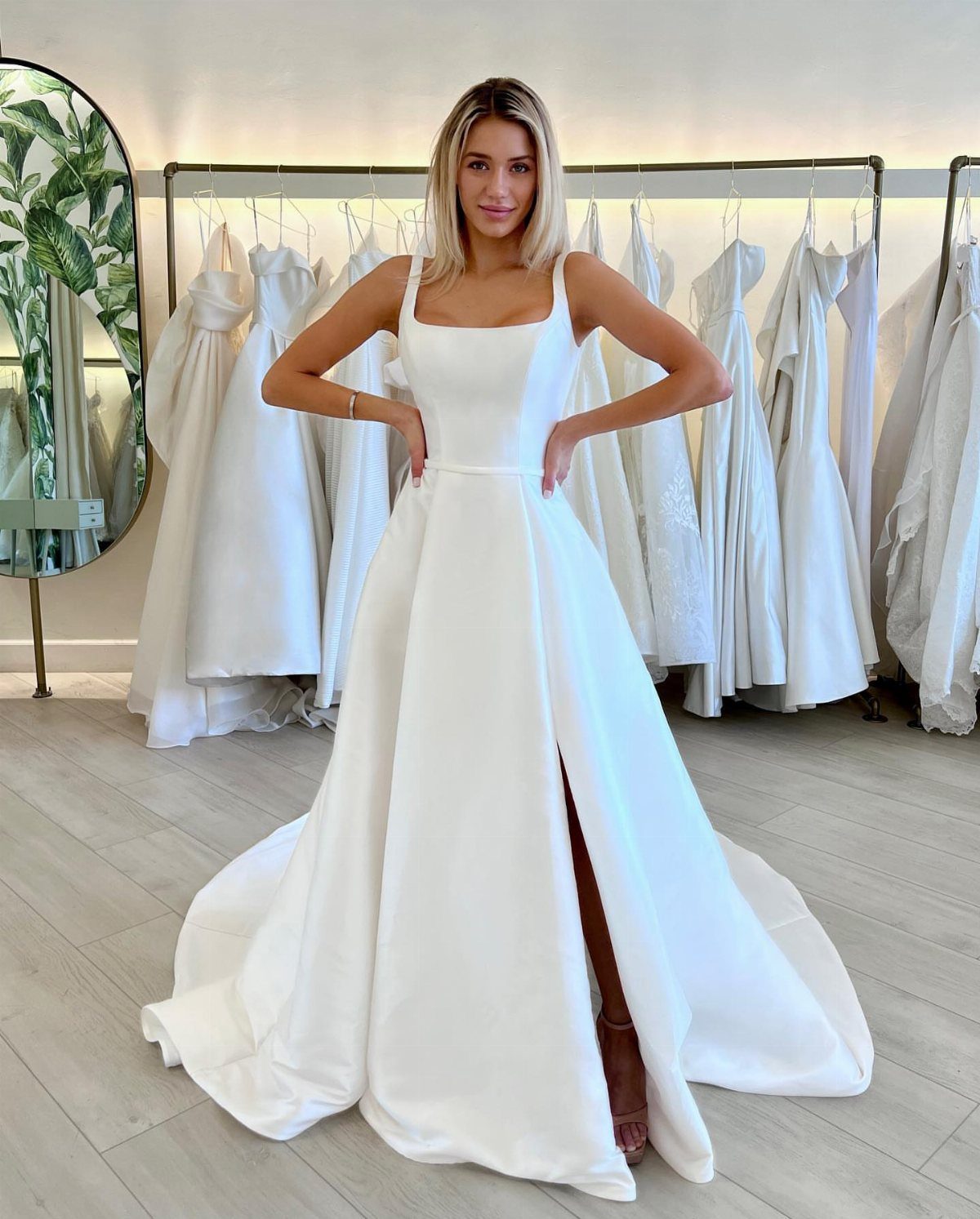
A square neckline gives a minimalist dress a strong, architectural line, and a leg slit adds movement without a single bead or flower. The satin keeps the whole look clean.
Dresses this plain depend on fit, so budget for alterations; a tailored dress can beat a loose one that costs more. Check that the neckline sits flat against your chest and doesn’t gap.
I’d wear simple earrings and leave the neck bare. Minimalist suits a short guest list and a small budget, since the dress needs little else.
6. White Wedding Dress with Subtle Beading and Lace Appliqués
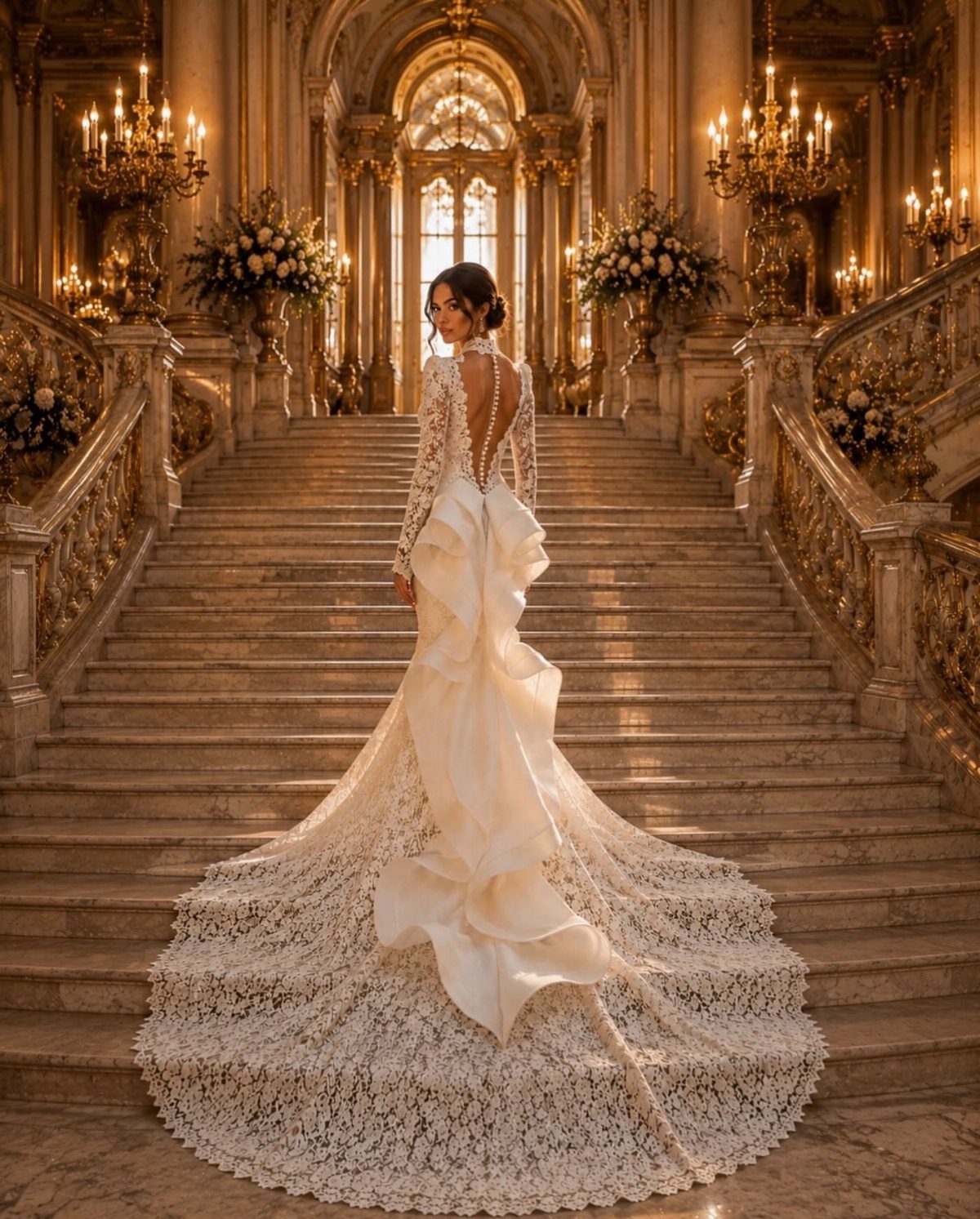
Subtle beading and lace appliqués give a plain white gown depth without making it heavy. A long train, as on this lace dress, adds length that photographs well on stairs and aisles.
Ask to see the beading in person, because small beads catch light differently than they do in photos. Check that the lace sits flat and the beads are sewn securely, since the details are what you’re paying for.
A long train usually needs a bustle for dancing, so ask about that during fittings. I’d keep the veil simple and let the lace lead.
Timeless Wedding Dress Appeal
White earned its place as the default bridal color because it reads as traditional and elegant in nearly every setting, and that is why a white dress rarely feels like a risky pick.
Before you shop, decide on silhouette, fabric, neckline and shade of white as 4 separate choices. Settling them in that order narrows a rack of hundreds to a handful.
A-line is the safest silhouette to start with. The skirt flows out gradually from the waist, which suits most bodies and most venues.
Simple fabrics like satin and chiffon keep it understated, and an A-line budget collection is a sensible place to look if you’re working against a firm number.
Plain gowns also take well to added detail. Illusion panels or cut-outs give a sultrier feel, lace layered over the skirt leans romantic, and rhinestones, beading or crystal clusters add sparkle.
If you want a dress you might pass down someday, pick the simpler base and add the embellishment you love most. Then budget for the fit, since a perfect fit does more than any trim.
Frequently Asked Questions
What are classic white wedding dress styles?
The classic shapes are A-line, ball gown, fit-and-flare, mermaid and sheath.
How do I choose the right shade of white for a wedding dress?
Choose the shade based on your skin tone and where you’re getting married, and look at it in natural light.
Cool undertones often suit stark white or diamond white, warm undertones tend to glow in ivory, and deeper skin tones can carry stark white, ivory or champagne.
Salon lighting runs brighter and cooler than what you’ll get at the ceremony, so take the dress to a window.
Should my veil match my white wedding dress exactly?
Yes. A sheer, simple veil also works well with a detailed gown and lets the dress stay the focus.
Is a white satin wedding dress hard to take care of?
Somewhat.
Satin has a smooth, polished surface that glows in bright light, but it shows every wrinkle and snag. Because the fabric is so plain, check that the skirt hangs well and the seams sit smoothly.





