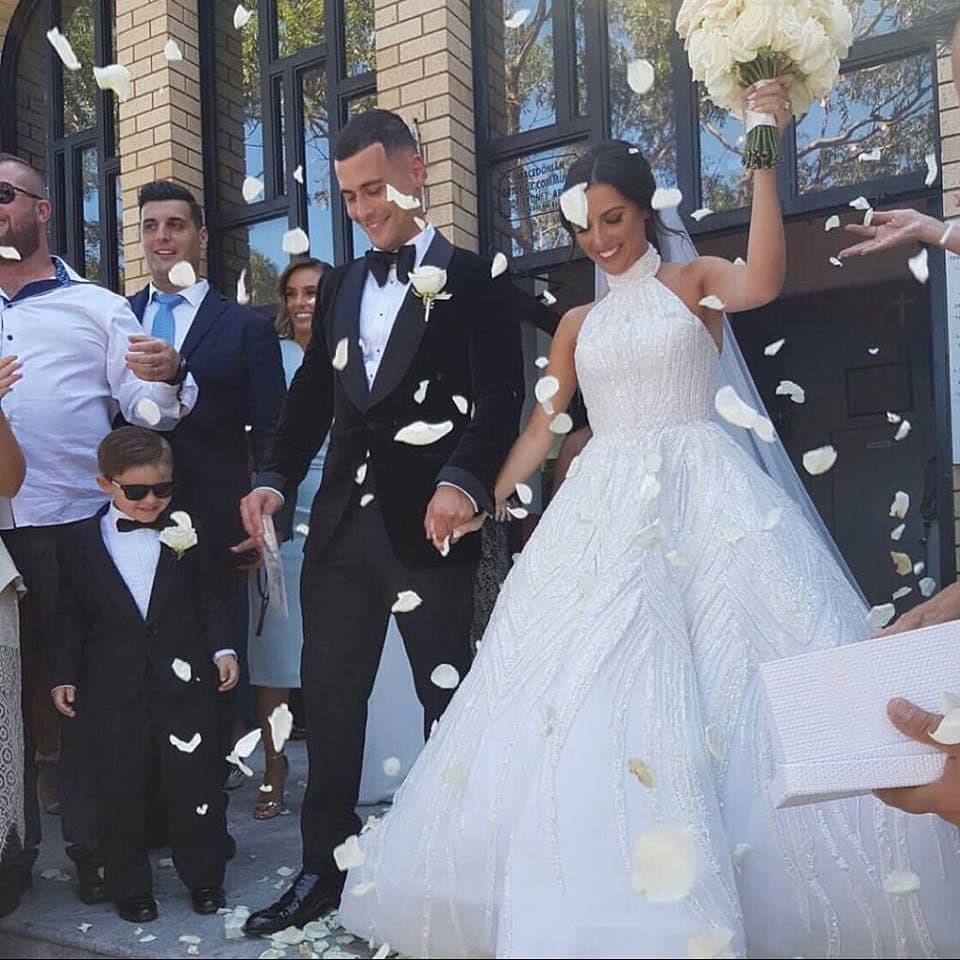
The 12 ideas here range from a plain strapless satin gown to a lace plunge with long sleeves, and the one that suits you depends on where your waistline naturally sits.
A small chest rarely needs padding when the shape comes from the waist, hips or neckline, but a bodice cut too long drops the waist and makes the legs look shorter.
Petite cuts, built for someone under 5’4", can save hundreds of dollars in alterations, so check the waistline in every dress before you fall for the neckline.
1. Sheath Dresses
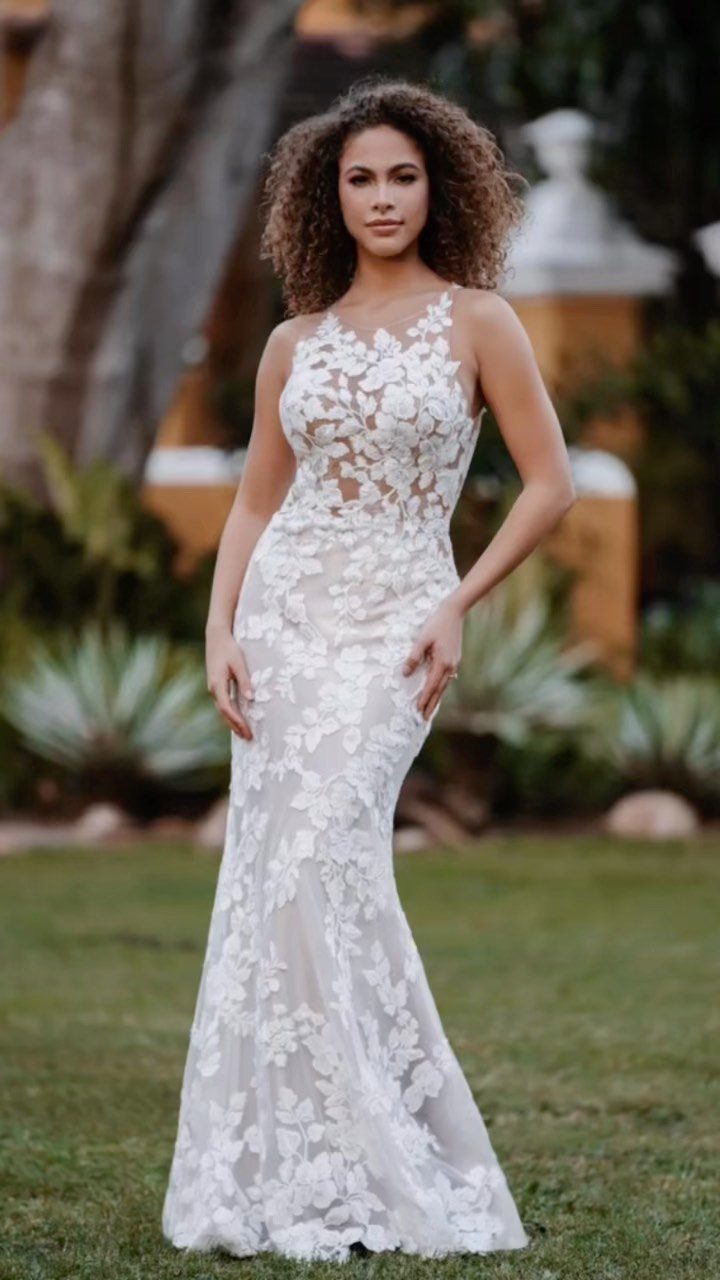
A sheath skims the body from neckline to hem without a full skirt, so on a small frame nothing competes with you. Fabric that follows your natural line keeps proportions clean, and a lace overlay adds texture without adding volume.
I’d choose this if you want to move easily and skip a heavy petticoat. Have the hem fitted with your shoes on, since a narrow skirt shows every inch of extra length.
2. Fit-and-Flare Styles
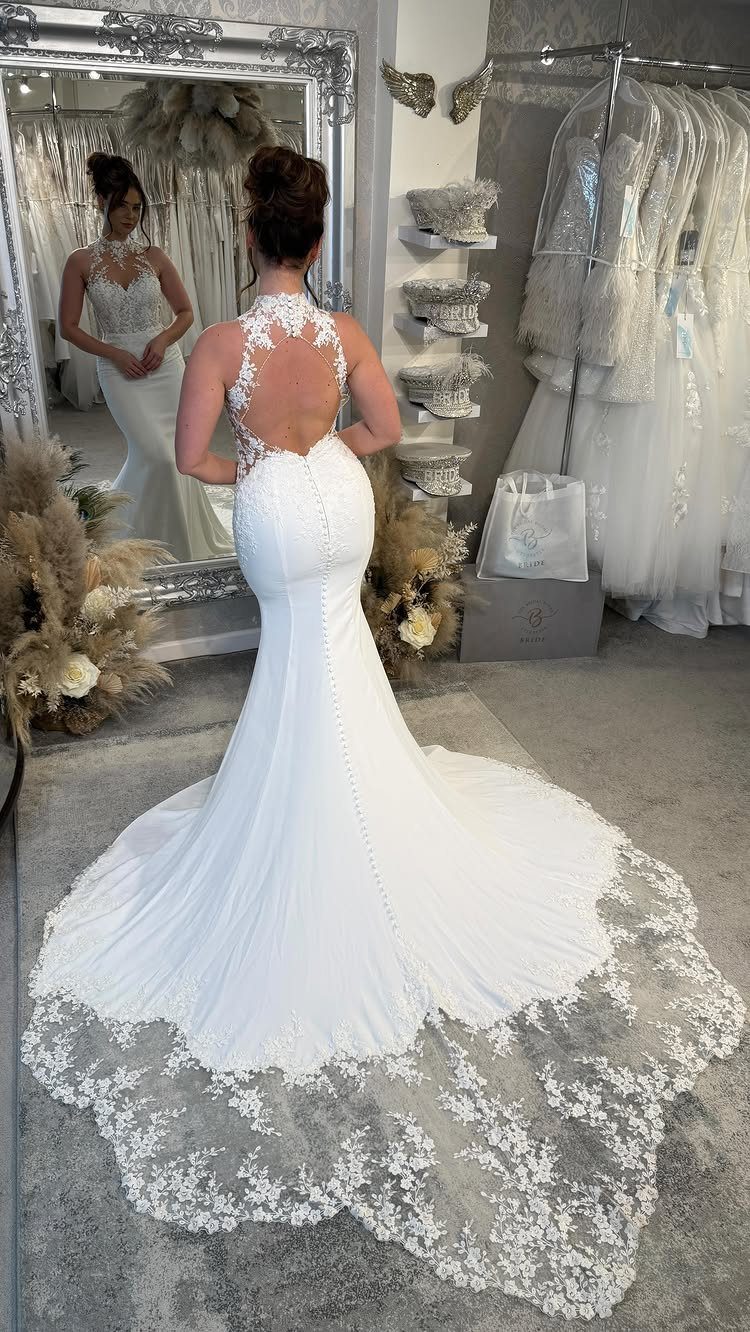
This cut fits close through the bodice and hip, then flares below the knee to balance the silhouette without widening the shoulders.
That balance is what a small chest needs: the shape comes from the waist and hips, not from padding.
A lace back and a modest train give the flare something to do, and I’d take that over a bigger skirt. Try on a few flare points, because where the skirt opens changes how long your legs look.
3. High-Necked Halter Gowns
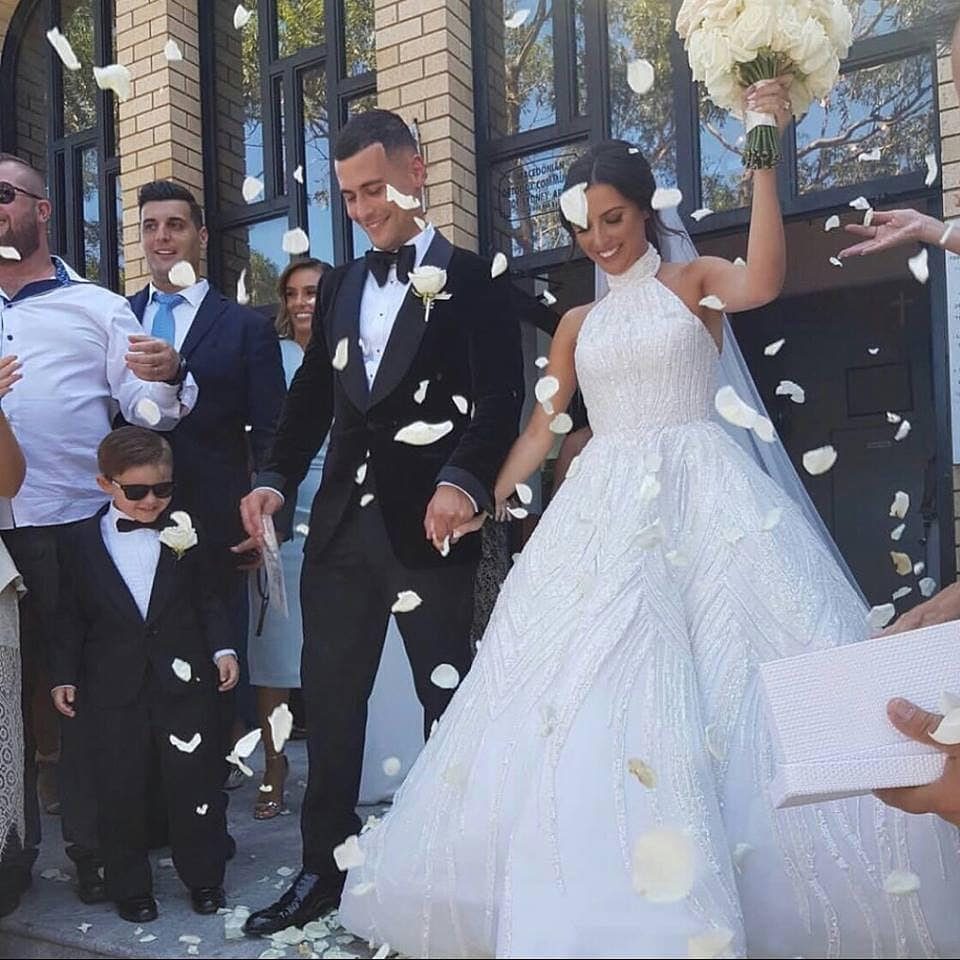
A halter pulls the straps in toward the neck, which frames the shoulders and collarbone instead of the bust. With a small chest, that puts the attention on your shoulders and arms, where it belongs.
The high neck is a bold choice, so keep the skirt plain and let the neckline do the talking.
Check how the halter closes at the back, because a clean closure matters when guests see you from behind at the ceremony.
4. Embellishments and Ruffles on Upper Torso
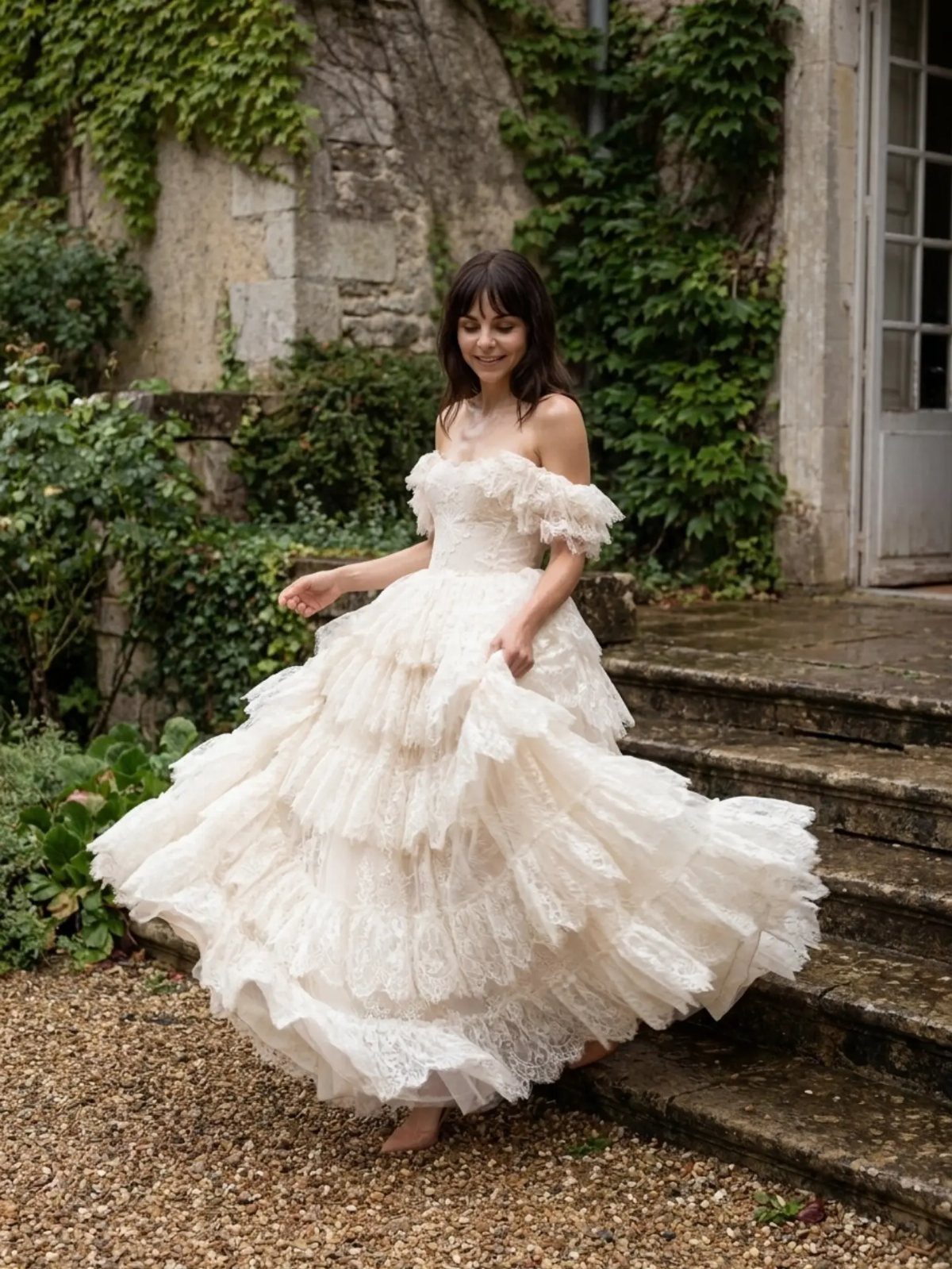
Ruffles and embellishment placed across the upper torso add dimension exactly where a small chest has less. Layered tiers of fabric build shape at the neckline without structured padding.
Keep the rest of the gown quiet so the top stays the focus.
If you’re buying off the rack, ask a seamstress what it costs to adjust a ruffled bodice before you commit, since layered fabric is harder to alter than a plain one.
5. Simple Petite Wedding Dresses
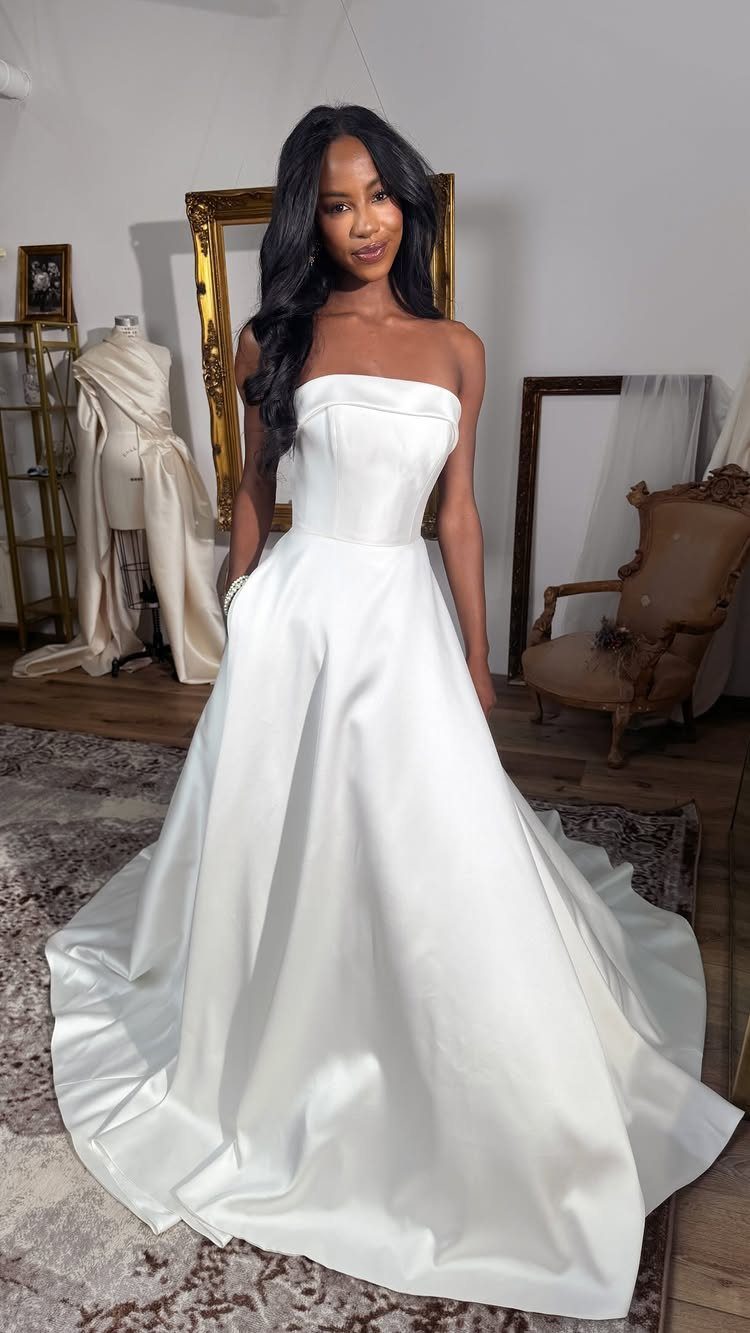
Clean lines let a smaller frame stand out instead of disappearing under yards of fabric. A strapless satin gown is a good example: smooth, structured and uncluttered.
Simple also tends to be easier on a modest budget, and I’d spend the savings on a precise fit and good alterations.
6. Lace Petite Wedding Dresses
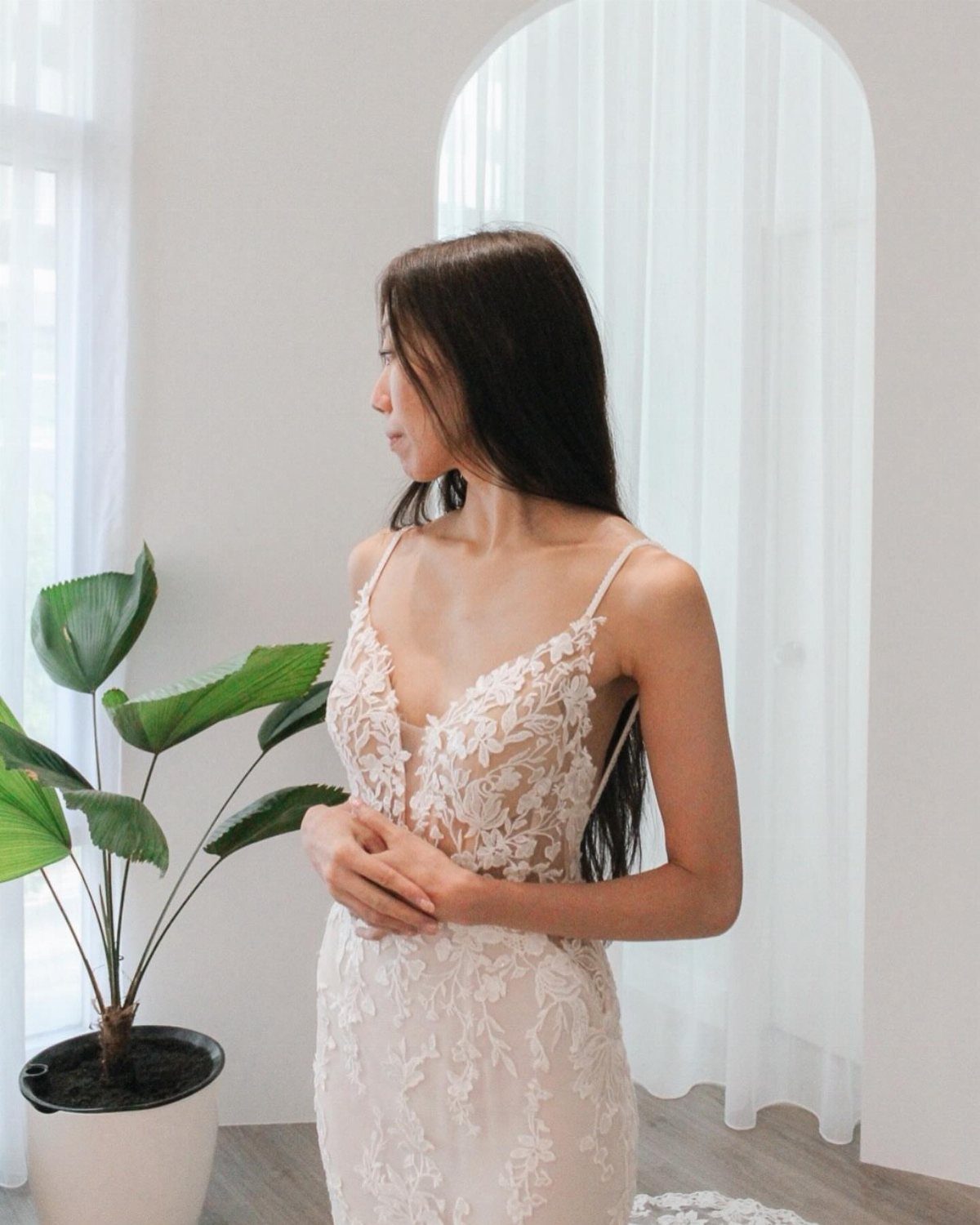
Lace sits flat against the body and reads as detail rather than bulk, which matters when you’re working with a smaller canvas.
Its texture adds soft dimension across the bodice, which suits a small chest better than a flat, slick fabric.
Thin straps and a V-neckline keep lace light rather than fussy. I’d look for fine, delicate patterns over big, heavy motifs, which can overwhelm a smaller frame.
7. A-Line Gowns
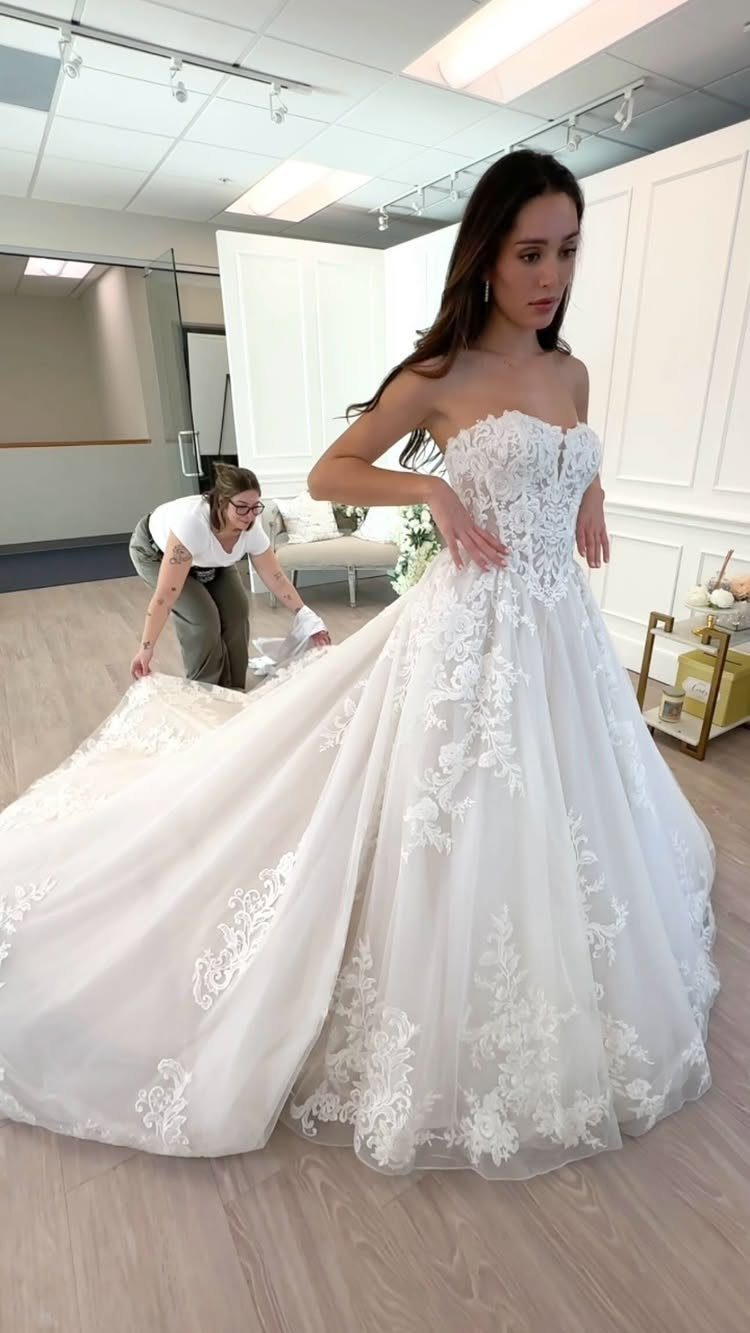
The skirt flares gradually from waist to floor in a diagonal line that adds visible height to a smaller build. With a strapless lace bodice, the eye travels down the skirt instead of stopping at the bust.
I’d pick this if you want a classic shape that flatters without much fuss. Ask for the hem to be fitted with your shoes on, and keep the train modest so it doesn’t swallow you.
8. Plunging Necklines
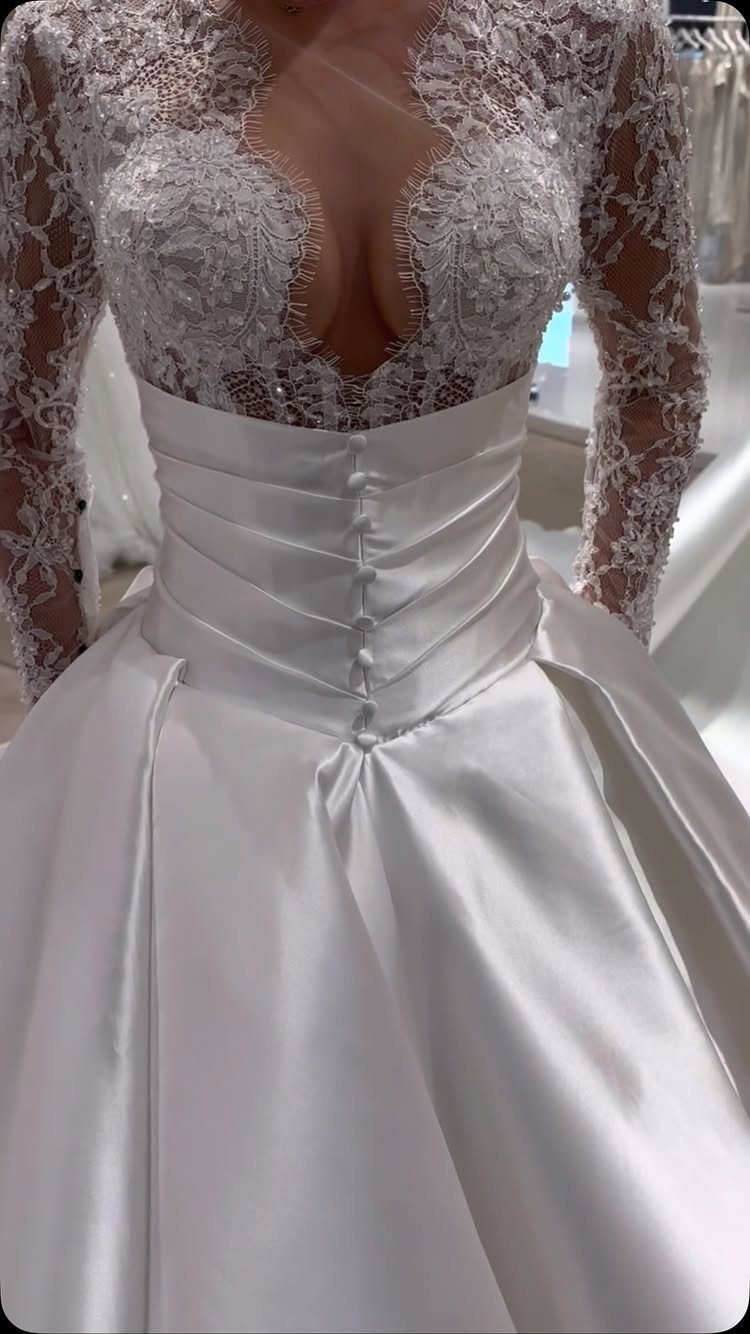
A deep plunge opens the neckline into a long V, which draws the eye vertically and gives a small chest a defined, intentional line. Lace along the edge keeps it soft instead of stark.
Long sleeves balance the depth, and I like that pairing.
Ask your seamstress about hidden tape or sewn-in support at the neckline, since a plunge that gapes is the main risk. Sit, hug and raise your arms in the fitting before you decide.
9. Off the Shoulder
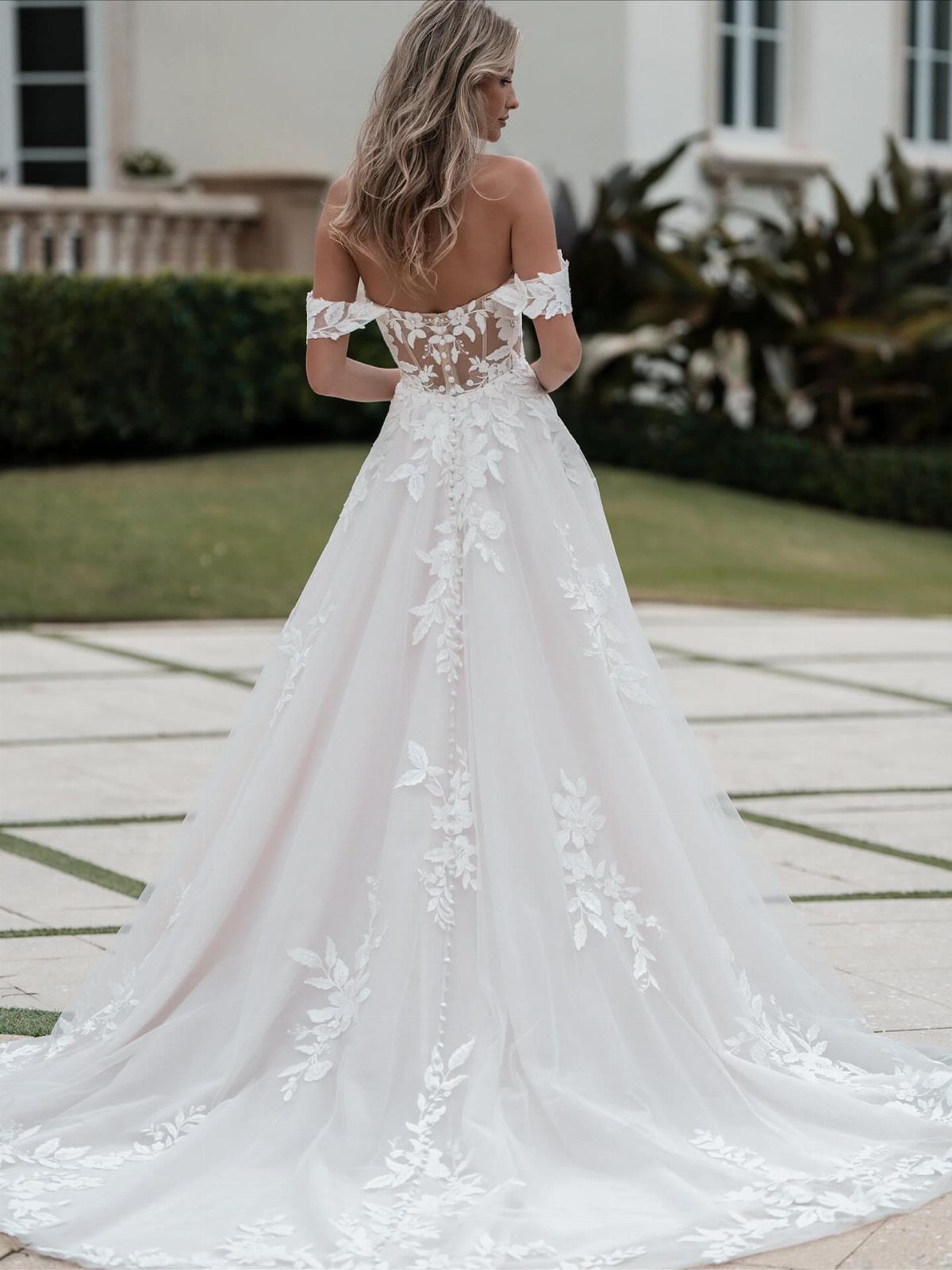
Off-the-shoulder sleeves sit across the upper arms and turn the focus to your collarbone and shoulders. A lace version adds texture across the top without any padding.
Because the neckline runs wide and horizontal, I’d keep the skirt simple. Raise your arms and hug someone during the fitting: if the sleeves pull down or restrict you, ask for a snugger fit through the bodice.
10. Mermaid Silhouettes
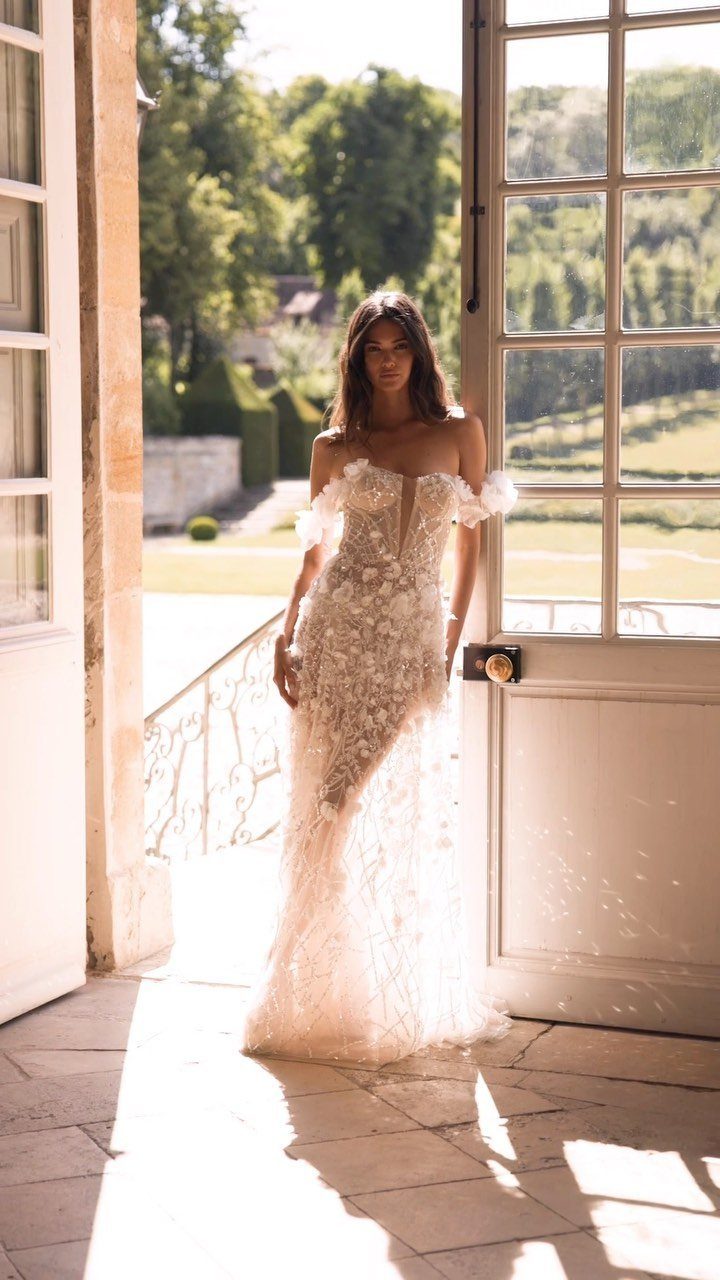
A mermaid fits tight through the hips and thighs, then flares at the knee. That curve shapes the whole silhouette, so the dress does the work your bust doesn’t need to.
Floral appliqué on a strapless bodice adds interest up top.
It’s a close fit, so I’d test walking, sitting and stairs before buying. Budget for alterations, since this cut leaves little room for error.
11. Empire Waistline Wedding Dresses
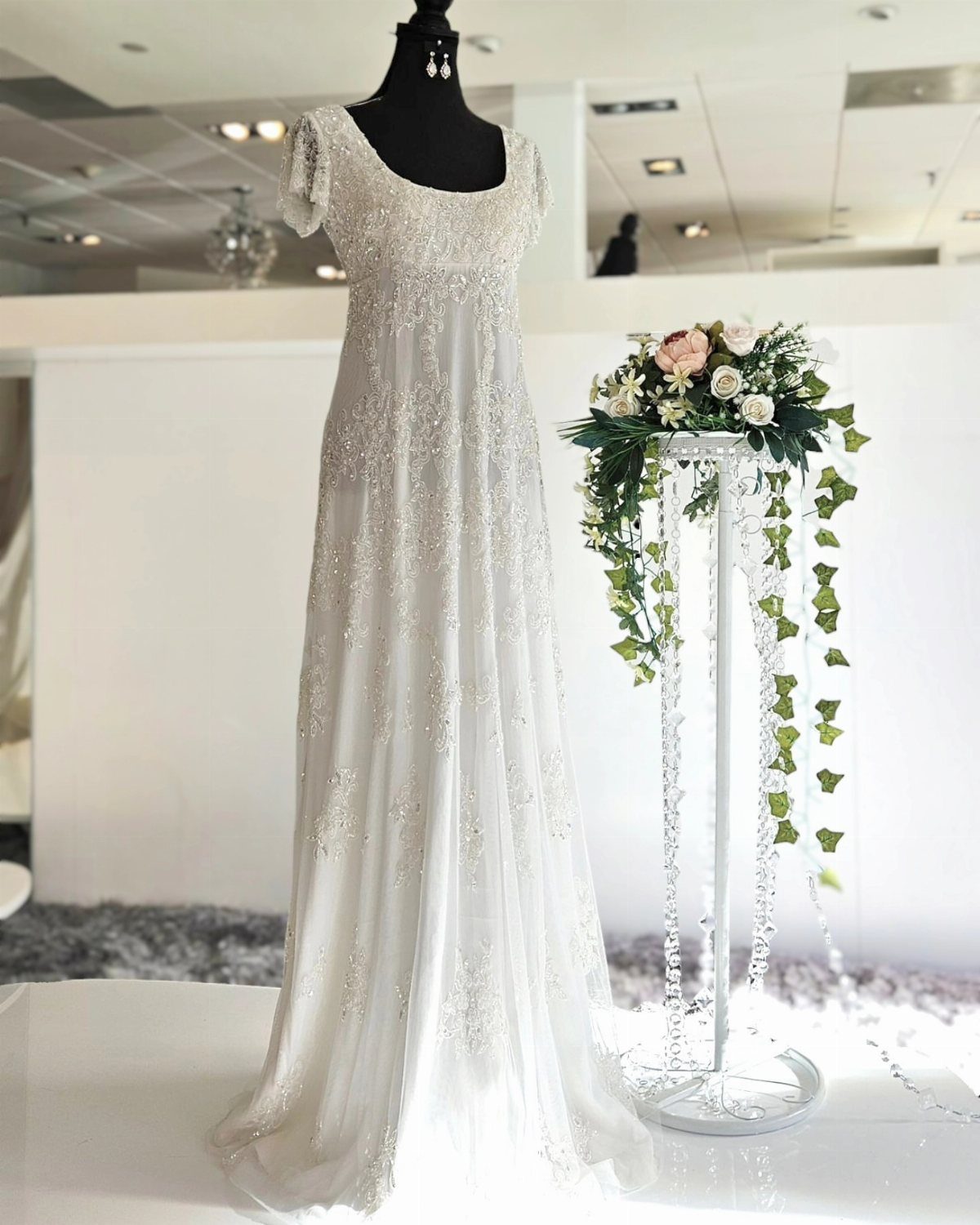
An empire waistline sits just under the bust and lets the skirt fall straight from there, which keeps the focus high on the body. Beading or embroidery across that seam adds detail right where a small chest benefits.
I’d choose this for a relaxed, easy fit. Because the seam is the whole design, check that it lands just below your bust, not across it.
12. Delicate Jewelry and Accessories
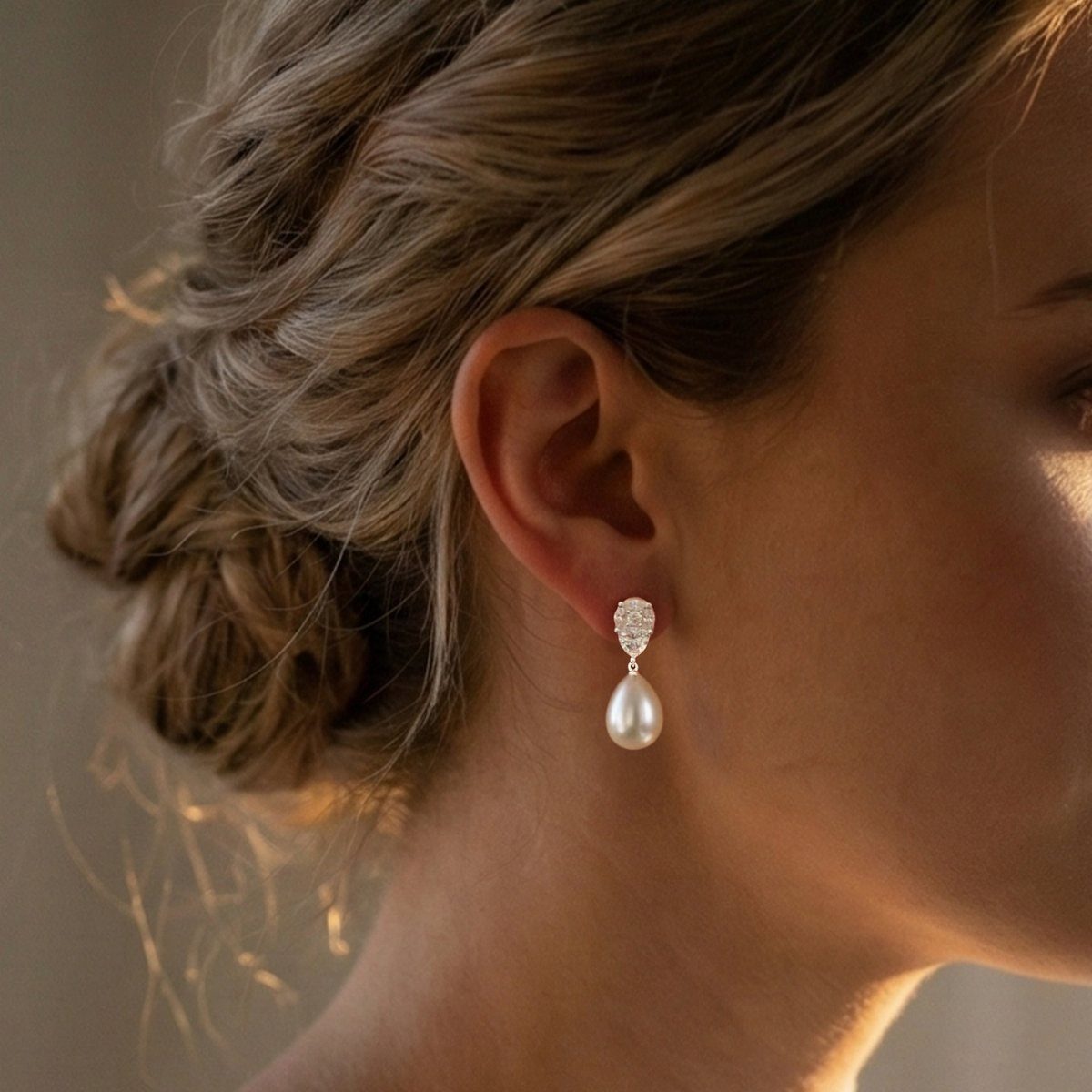
Pair a teardrop pearl with an updo and the jewelry frames your face and neck without crowding a neckline.
I’d skip a necklace on most dresses, especially one with lace or embellishment up top. Spend your money on one good pair of earrings you’ll wear again, and choose the hairstyle first so the earrings show.
Common Challenges for Petite Brides
Petite brides run into 3 problems again and again: a bodice cut too long, a skirt with too much volume, and standard proportions that need extra alterations.
A long bodice drops the waistline below where it should sit, which makes the torso look longer and the legs shorter.
Check the waistline first in every dress you try on. If it lands lower than your natural waist, a fuller skirt will only make the mismatch worse.
Petite-cut dresses are worth a look before you commit to a standard size. The proportions start shorter: waistlines sit where yours does, bodices fit a smaller frame, and skirts hit the floor at the right length for someone under 5’4".
When the torso and hem are already cut to your height, you save on alterations, sometimes hundreds of dollars.
You’ll find petite cuts in every fabric, from lace to crepe to tulle, and the same options for sleeves, straps or pockets as standard sizing.
A basque waist drops to a V below your natural waistline and makes your torso look longer.
Just as there are various gown silhouettes that flatter different body shapes, there are also certain gown styles and necklines that may be visually more suited for those who are more petite up top.
Frequently Asked Questions
What wedding dress looks best on my body type?
For a petite frame or a small chest, I’d start with an A-line, sheath or fit-and-flare.
A-line adds visible height with a skirt that widens gradually from the waist, a sheath keeps one clean line, and fit-and-flare builds shape from the waist and hips instead of the bust.
The height where the skirt begins to widen affects how your proportions read, so test a few different flare points.
What to do when a wedding dress is too small?
Ask a seamstress what can be done before you give up on the gown, since bodice and hem work are the usual fixes.
Petite brides often need a smaller bodice to stop gaping, shortened straps so the top sits right, a raised waistline and a shortened hem.
Where you can, a made-to-order gown cut for petite proportions cuts down on how much alteration you need. Budget for the work early, because snug cuts like mermaid leave little room for error.
Are wedding dress sizes small?
Standard sizing is cut for taller proportions, so petite brides often find the torso too long and the hem too low. Petite-cut dresses start with shorter bodices, waistlines placed where yours sits and hems made for someone under 5’4".
Cut to your height from the start, they can save you hundreds of dollars in alterations. They come in lace, crepe and tulle, with the same sleeve, strap and pocket options as standard sizes.
What are the small sleeves on a wedding dress called?
A small sleeve that sits across the upper arms and leaves the collarbone and shoulders bare is called an off-the-shoulder sleeve. On a small chest it draws attention up to the shoulders, and a lace version adds texture without padding.
Move through a full range of motion in the fitting room, since tight sleeves that shift when you lift your arms usually mean the bodice needs to be taken in.





