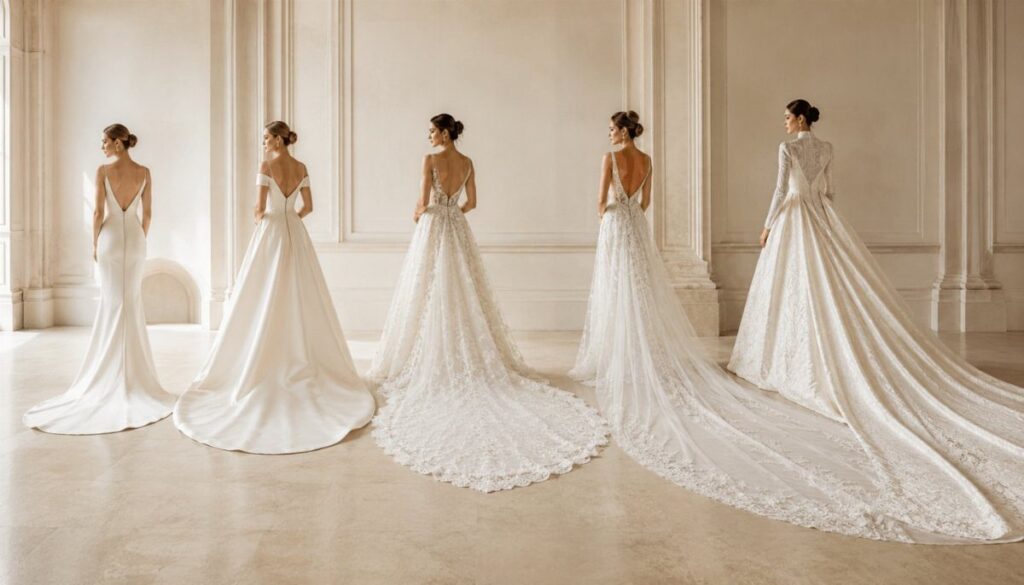
Which cathedral train suits you depends on how much drama you want and how you’ll manage it: these ideas include bustles that disappear the length for the reception, practical tips for moving through the ceremony, and how each train changes the entrance.
The ideas here range from smooth satin to lace across the whole length, with volume, ruffles and a pale blue gown in between. Whichever you pick, the bustle fitting decides how the train behaves once the reception starts.
1. Cathedral Train
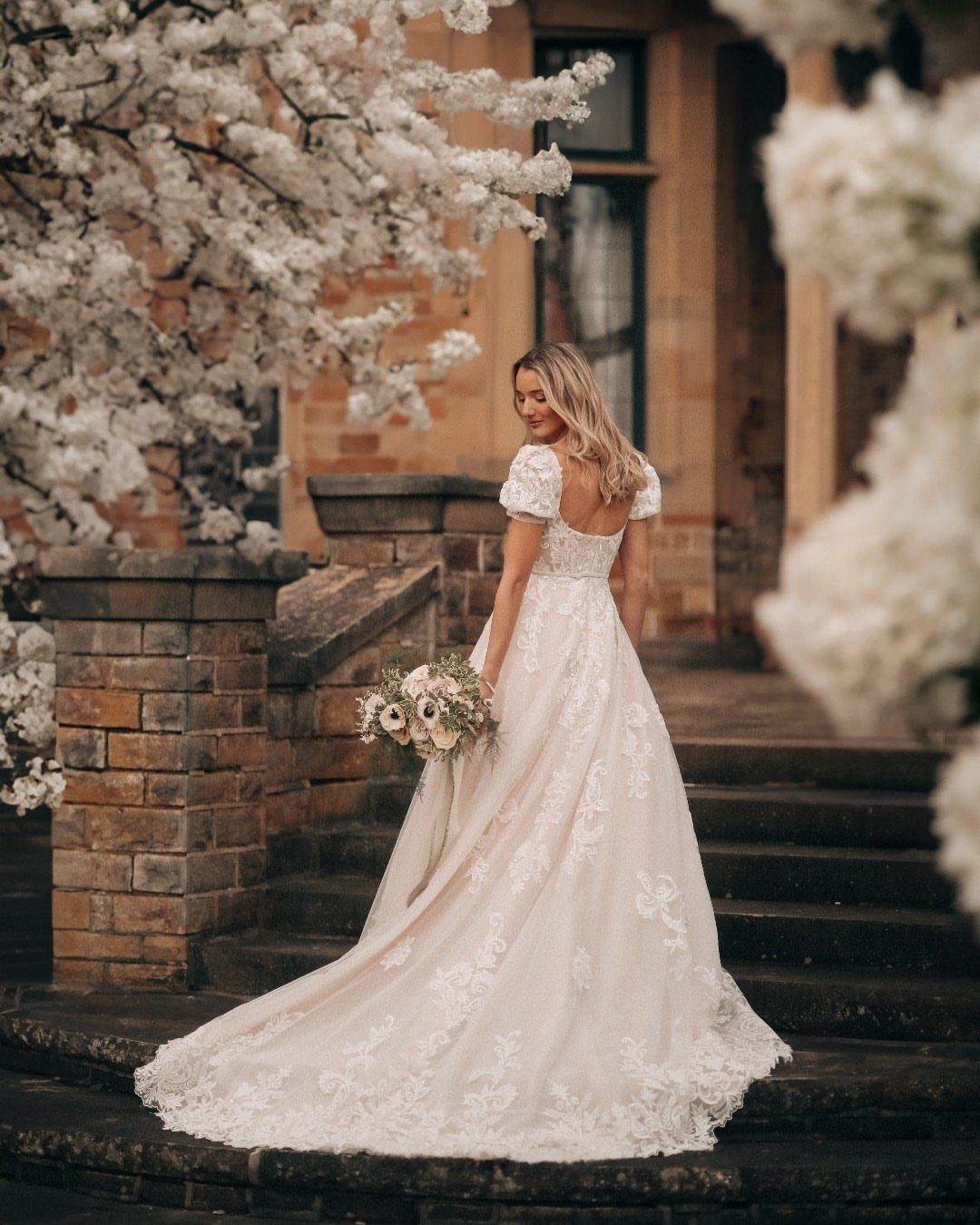
A cathedral train is the one dress detail that works on the walk down the aisle before anyone sees your face. It trails well behind you, so the entrance becomes part of the dress.
I’d choose it for a formal ceremony with a long aisle or wide steps, where the length has room to show. Ask for a bustle at the fitting, so the train lifts off the floor once the reception starts.
2. Lace Bridal Gown Cathedral Train
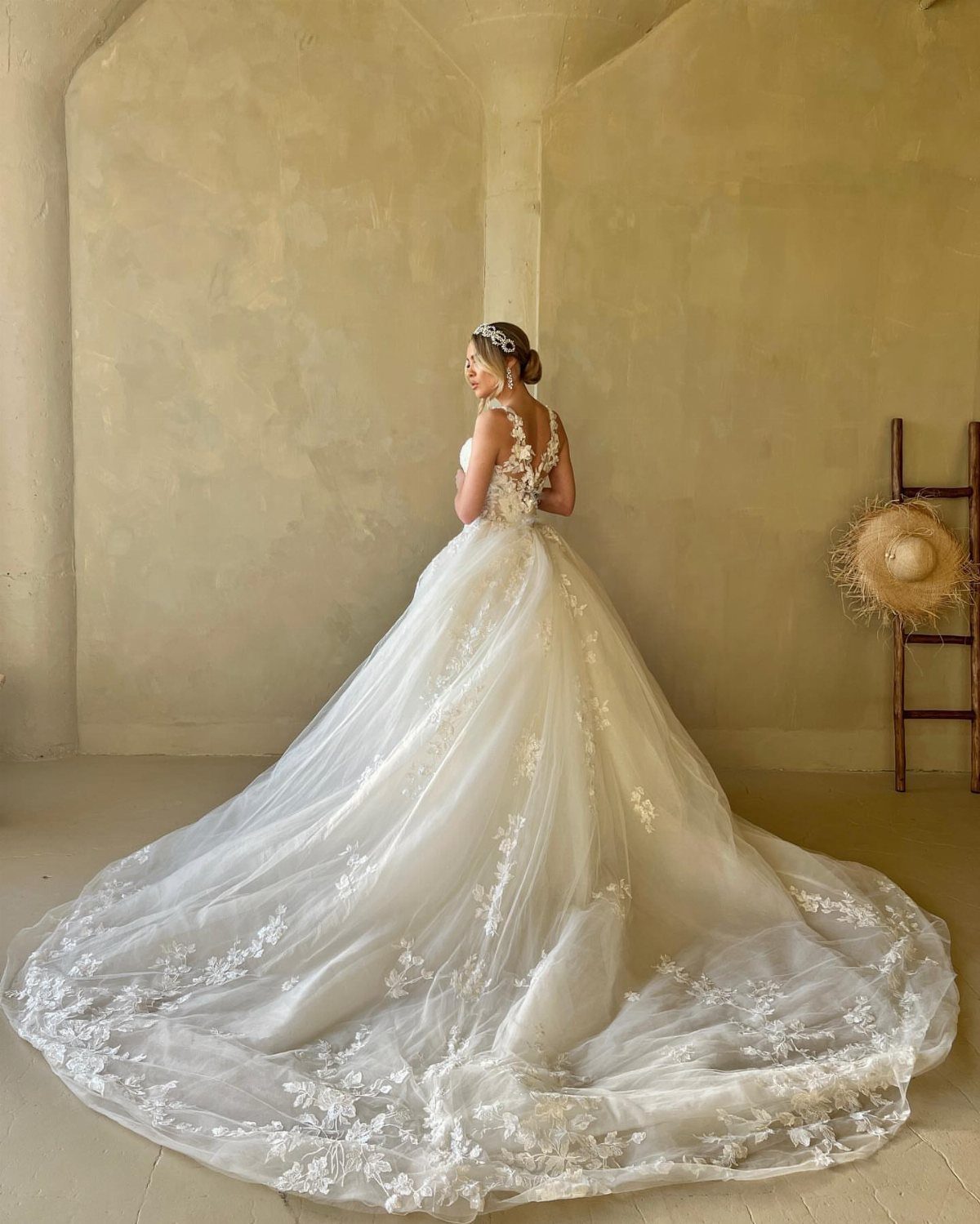
Lace across the whole length of a cathedral train gives the floor something to look at. Spread out behind you, the pattern reads as ornate rather than plain.
Lace this detailed is best shown on an open floor, so plan a few minutes at the start of the ceremony for someone to fan it out.
Expect to pay more for lace over a long train, and I’d say it’s worth it only if you want the train to be the focal point.
3. Voluminous Ballgown Cathedral Train
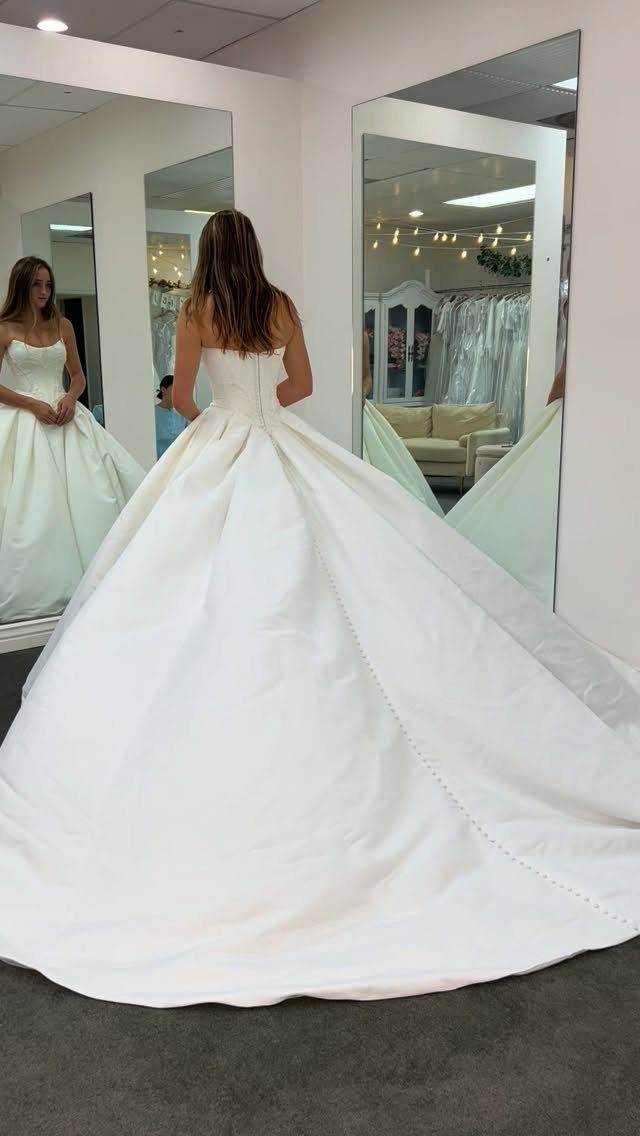
Pair a full ballgown skirt with a cathedral train and you get 2 layers of drama: the volume at the waist, then the length behind. It’s the most traditional silhouette for this train, and I like it for that reason.
Try it on in a shop with a long mirror, because the skirt and train together take up a lot of space. Practice sitting and turning in it during your fitting to confirm you can move.
4. Smooth Satin Cathedral Train
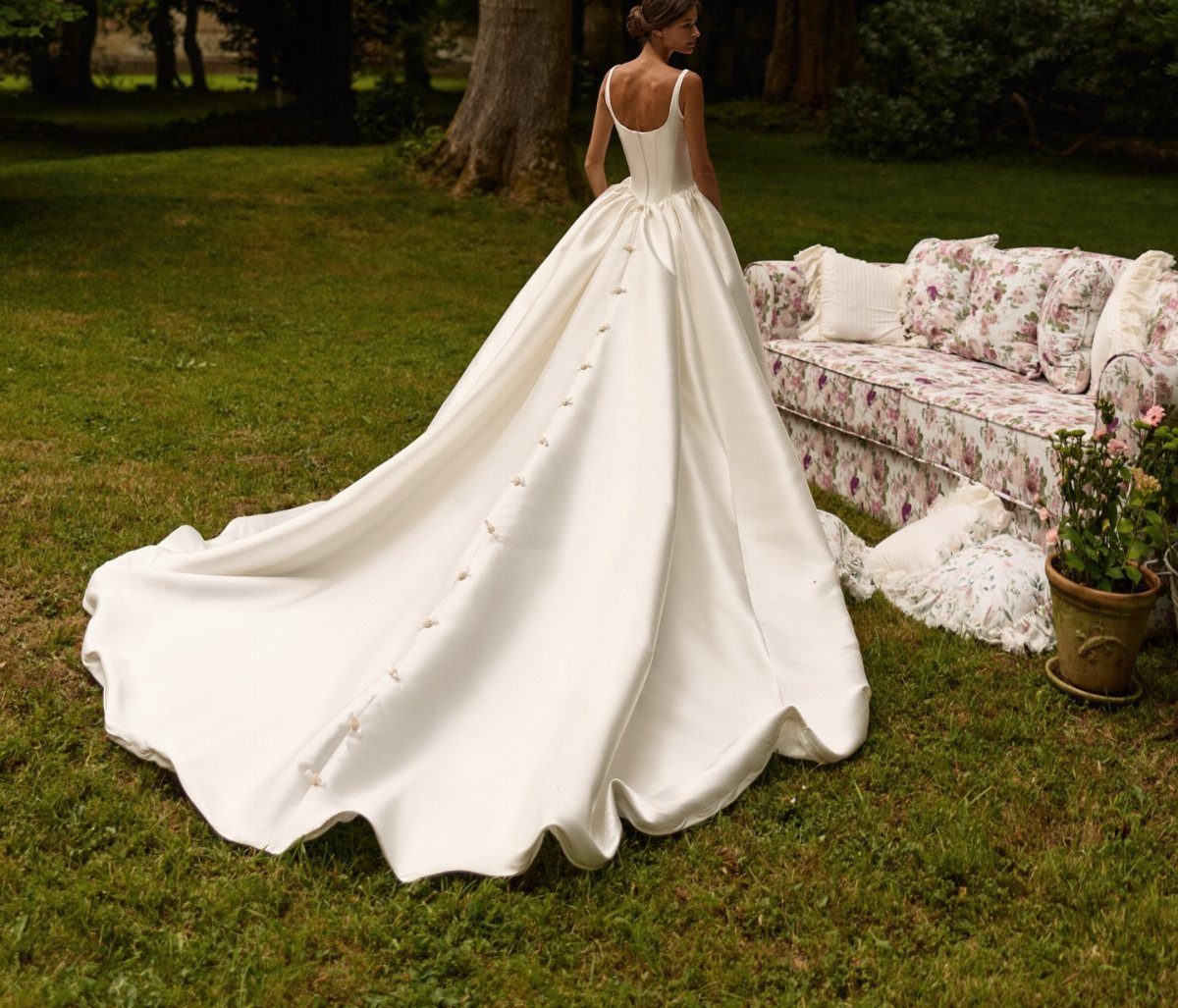
Satin keeps the train clean and smooth, with no texture competing for attention. The length alone does the work, and the fabric catches light as it moves.
Smooth fabric shows every crease and mark, so I’d keep this one off damp ground. A steamer on hand and a helper to arrange the train before photos make a real difference.
5. Ruffled Cathedral Train
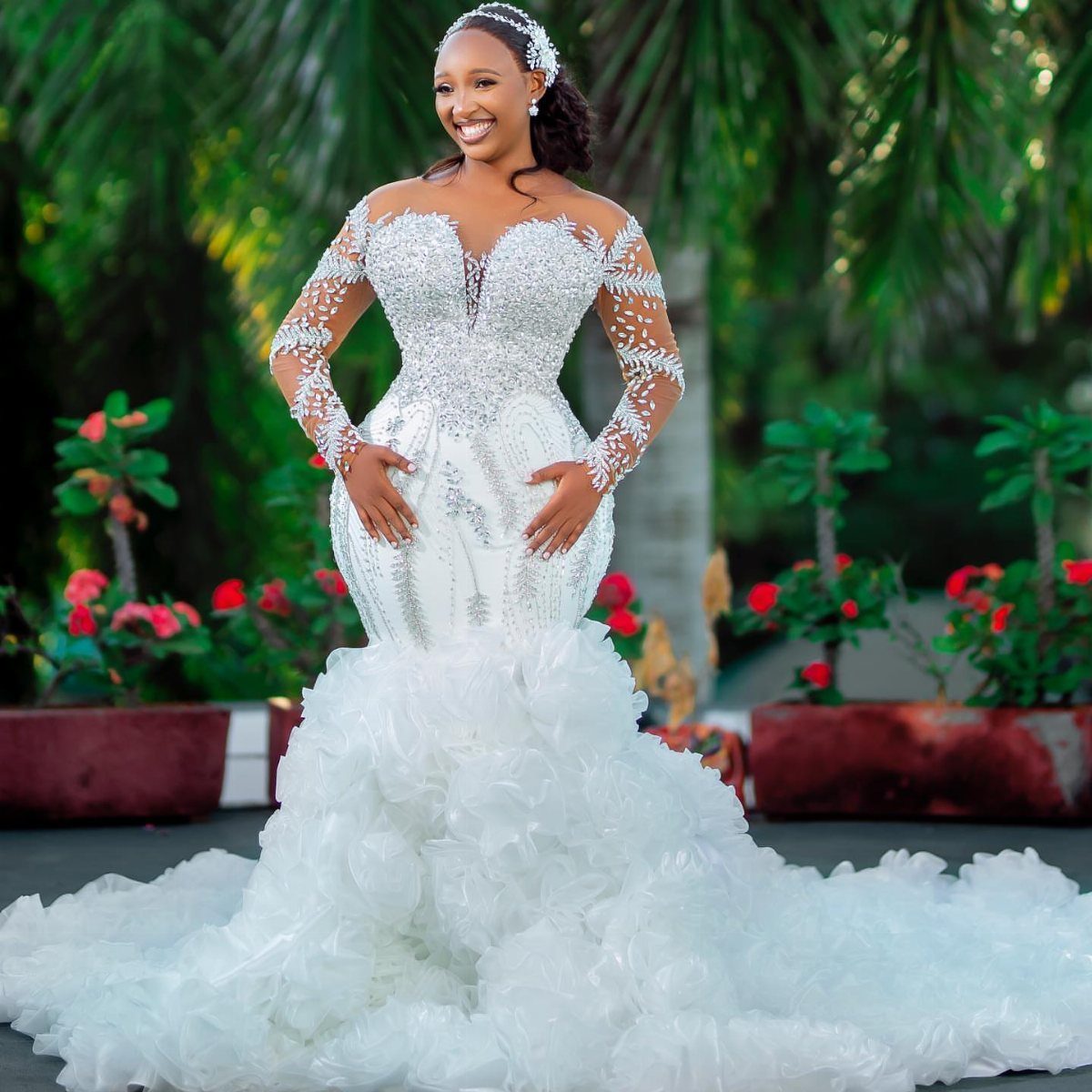
A fitted, beaded mermaid gown can carry a ruffled train because the bodice stays slim while all the volume sits behind you. That contrast is what I like most about it.
Ruffles add bulk, so ask how the bustle will gather them before you order. For less volume at the back, choose a plainer train and keep the beading as the main feature.
6. Pale Blue Cathedral Train Gown
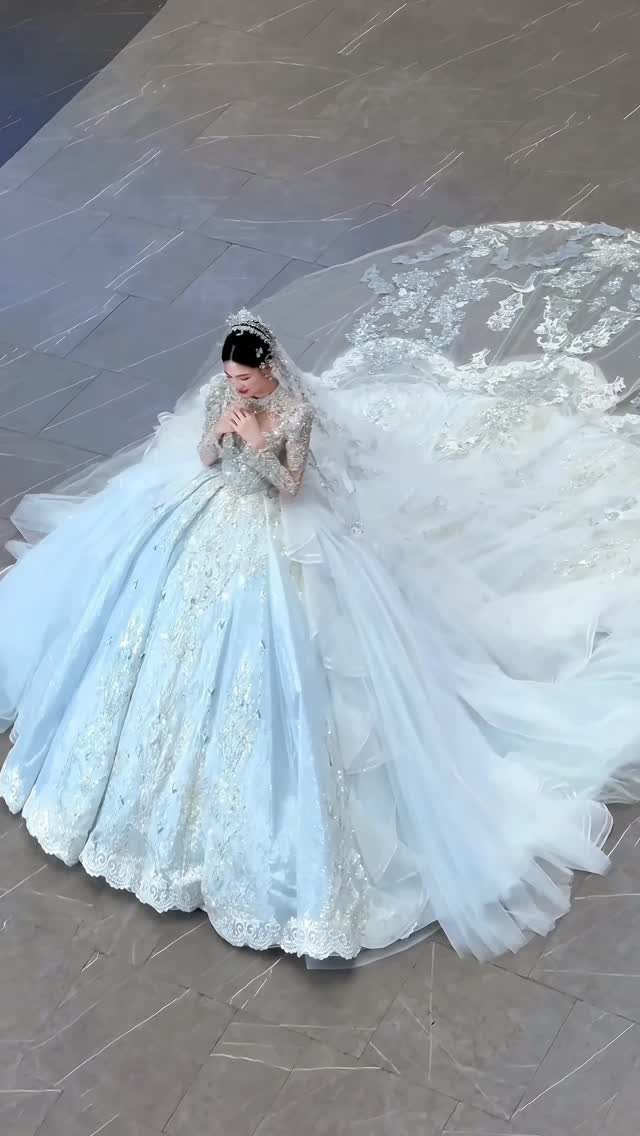
Pale blue instead of stark white sets this gown apart, and the lace embroidery on the train keeps it traditional. It suits brides after a formal silhouette with a little color.
Look at the fabric in daylight and under indoor lights before ordering, since a soft shade can shift between the two. Bring a white swatch for comparison.
Managing a Wedding Dress Train
Modern gowns nearly always take a bustle during alterations, and that fitting is what makes a cathedral train manageable once vows are done. Once it’s lifted and secured, walking, dancing and talking with guests all get much easier.
Have your seamstress walk you through how the fasteners work. Then have a bridesmaid or family member learn it too, since pinning a train up correctly can take a few minutes and you won’t want to do it yourself.
If the gown allows it, ask about a detachable train as well. Try both options at your fitting and decide which one works with your alterations specialist months ahead.
Train Length and Venue Suitability
Let the venue weigh in on the train as much as your taste does. Churches suit chapel or cathedral lengths, and grand ballrooms and historic estates give that fabric room to trail in photographs.
On a beach, go shorter so the hem doesn’t collect sand.
Before you decide, walk and turn in the sample, and picture the actual floor, steps and doorways you’ll cross. How you’ll move through the day counts as much as how the train looks.
Bridal Entrance Impact
A cathedral train moves as well as it trails, and that movement is what sets it apart from a plain long hem.
A cathedral train runs longer than chapel length, so someone should be ready to help manage it during the ceremony. Whoever arranges it should know the moment to step in, and the bustle goes on before the reception begins.
Venues like castles, luxury hotels and historic estates give it the space it needs.
There is a particular kind of bridal entrance that feels unforgettable before a single word is spoken. A cathedral train creates that moment with ease, bringing scale, softness, and ceremony to the aisle in a way that photographs beautifully and lingers in memory.
Frequently Asked Questions
What does a train on a wedding dress signify?
Historically, trains that stretched several feet signaled wealth and status.
Today it works mostly as a visual statement: the train creates movement and gives the entrance and the photographs a dramatic line. The right length complements the silhouette while staying manageable.
What is a cathedral train wedding dress?
It’s a gown with a train that extends well past the hem, longer than chapel length. The length makes the walk down the aisle part of the dress itself.
Is a chapel length train considered long?
Chapel length runs about 4–5 feet behind the hem and photographs beautifully without getting underfoot.
A cathedral train runs longer still. That extra length is why cathedral trains usually need someone to help manage them during the ceremony.
Can fitted wedding dresses have long trains?
Yes. Mermaid, A-line and ball gown silhouettes all work with extended trains.
Will I need a bustle or a detachable train?
A cathedral train nearly always needs a bustle, added during alterations, so it lifts off the floor for the reception.





