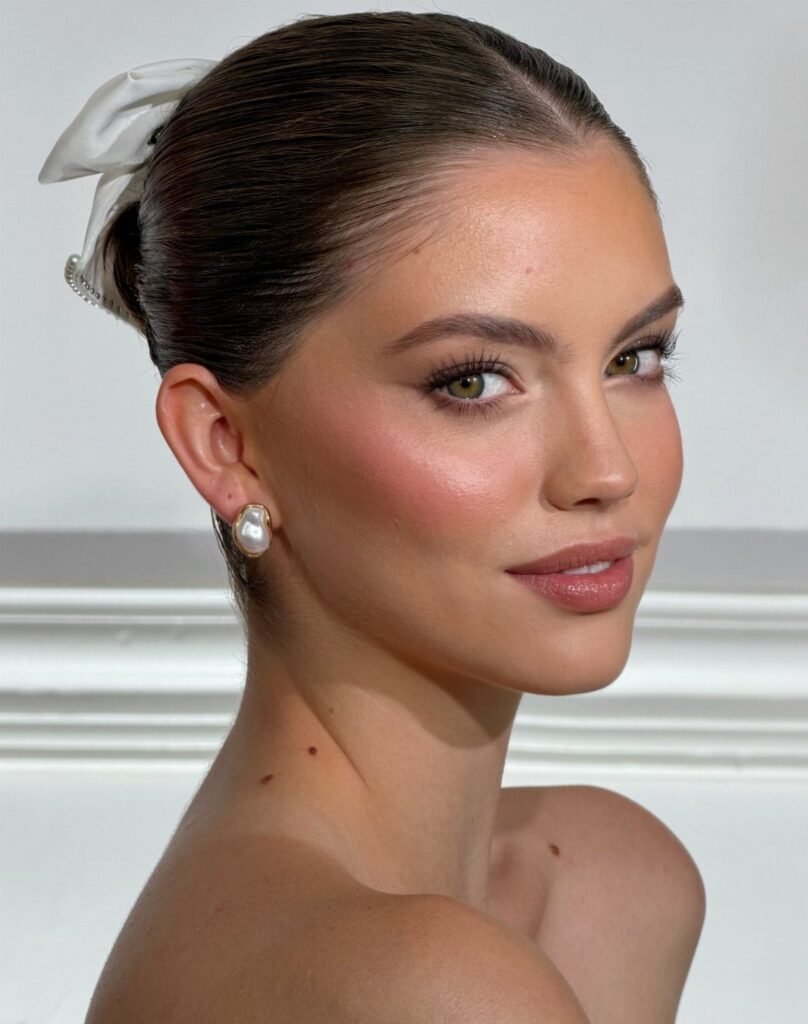
The 8 looks run from natural makeup, with a short product list, to 3D contouring and bold Arabic eyes that need an experienced artist and a trial in daylight.
What decides which one is yours is your dress and setting: matte suits a plain gown and indoor flash, smokey eyes suit an evening ceremony, and shimmery or dewy finishes catch light differently depending on whether you’re outdoors or under ballroom chandeliers.
If you’re between two, go lighter.
1. Matte Makeup
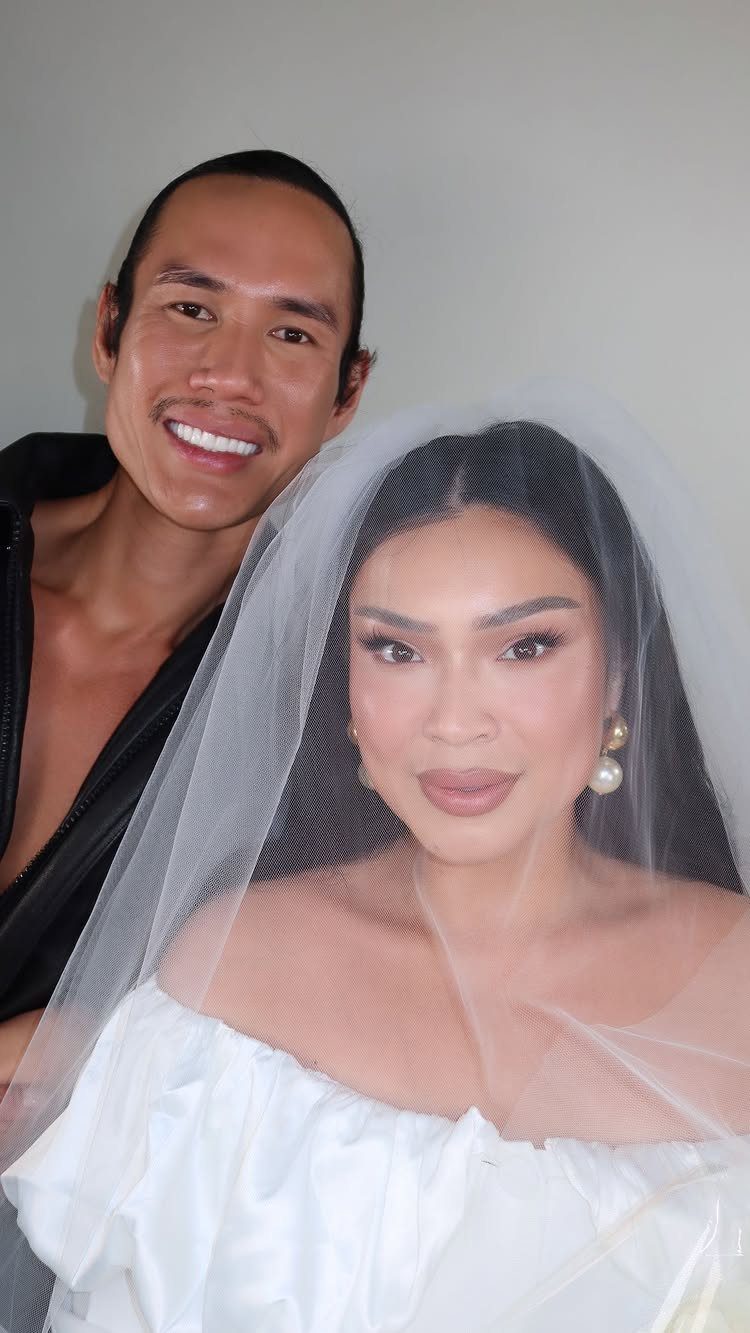
Matte makeup is the finish for a bride who hates seeing shine in photos. Skin looks velvety and even, with nothing reflecting the flash.
A matte face also pairs well with a veil and a plain gown, since nothing competes with the fabric. I would choose it for a polished, controlled look in indoor pictures.
A fully flat finish can look heavy on dry skin. Keep the texture soft rather than chalky, and ask your artist for a trial before the day.
2. Smokey Eye Makeup
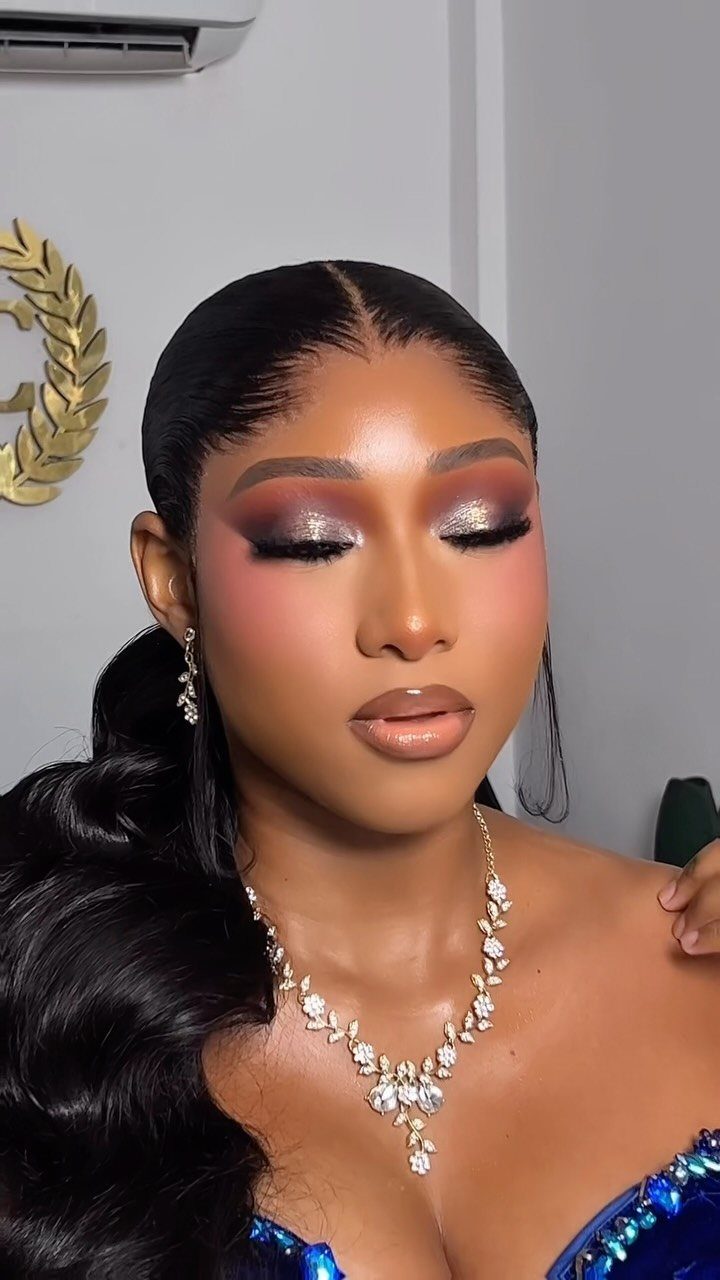
Eyes do all the talking in a smokey look, so the rest of the face stays quieter.
Blended dark shadow around the lash line, here with a touch of gold shimmer, gives a dramatic frame that sits well beside a statement necklace.
I like it for an evening ceremony or a bride in a colored dress, where a bare eye would feel underdressed.
Keep the lips soft so the face stays balanced. Smokey eyes run dramatic, so do a trial first and see how you feel in the mirror.
3. Shimmery Makeup Look
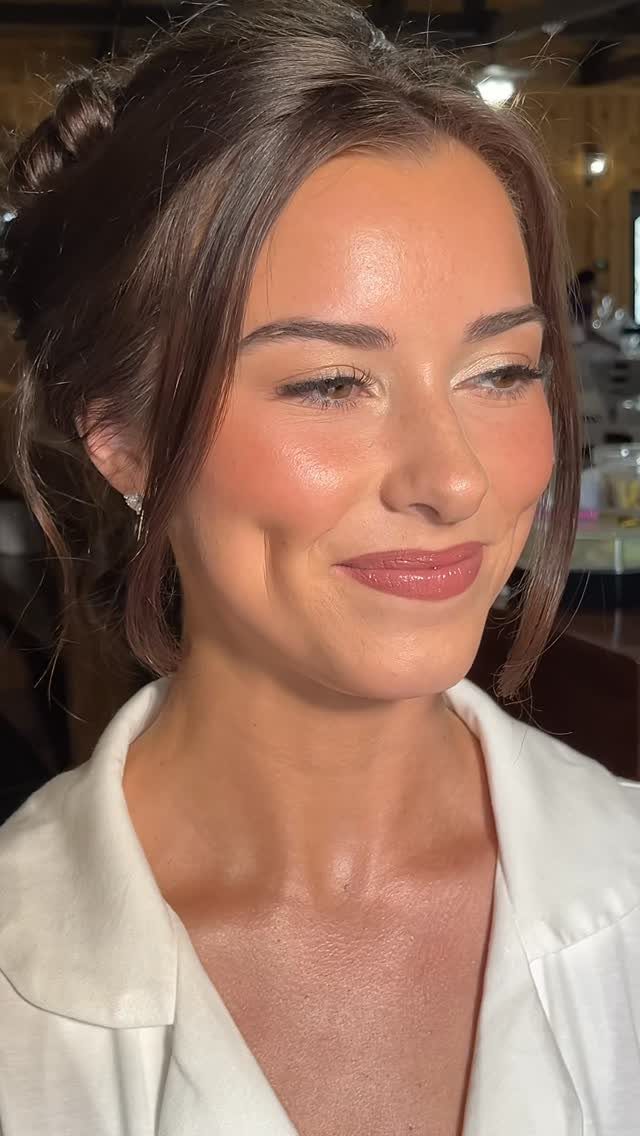
Light-reflecting pigments are what make this look: highlighter on the cheekbones, glitter or metallic eyeshadow, and glossy lips. Together they give a glowing, party-ready face.
Gold shadow with pink gloss is the version I would pick, because the warm tones keep the shimmer from reading as costume. Shimmer suits a reception where the lights are low and you want to catch them.
Choose one or two shimmery spots to lead, not all three at full strength. Too much sparkle everywhere looks busy.
4. Natural Makeup
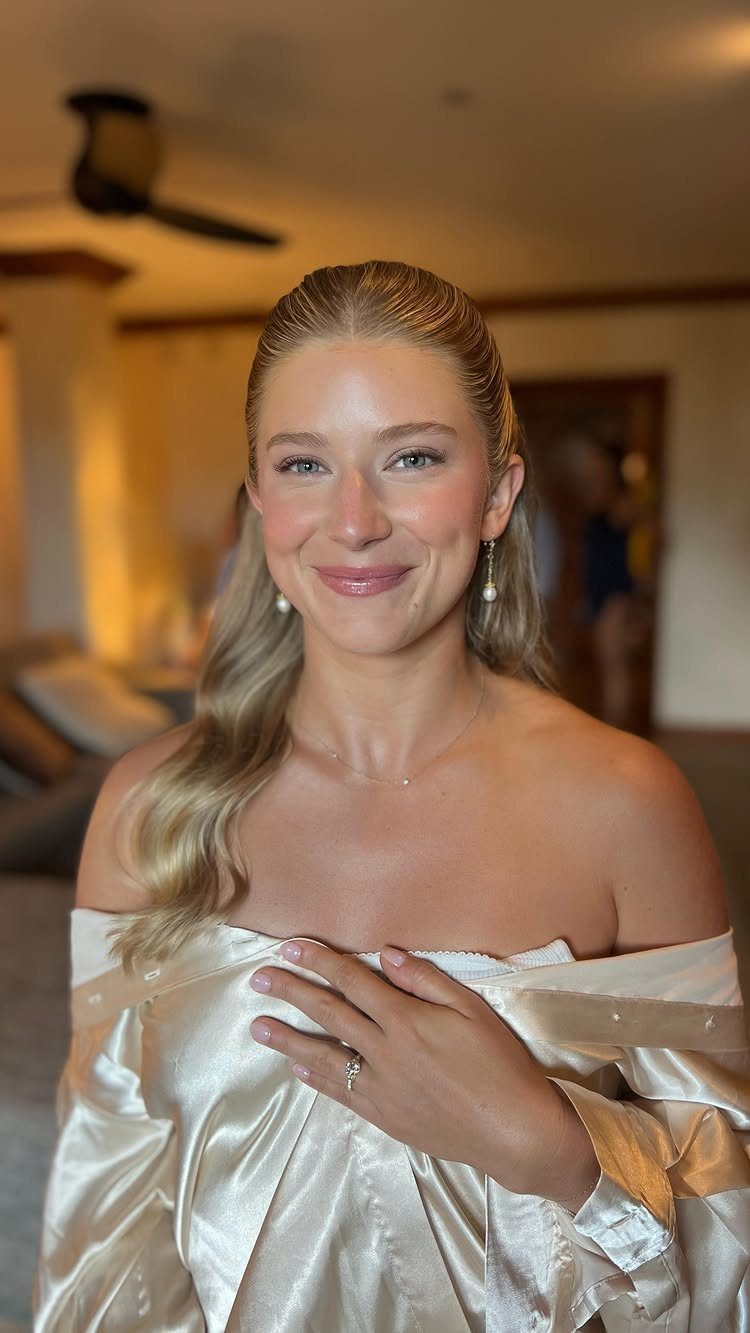
Soft tones that enhance your own features: that is the whole idea behind natural bridal makeup. Think of it as your face on its best day, not a new one.
It suits brides on a tight budget of time and money, since the product list stays short.
Pick shades close to your skin and lip color, then ask your artist to keep everything blended. Natural does not mean no makeup, and a good trial will show you how much you need.
5. Dewy Makeup
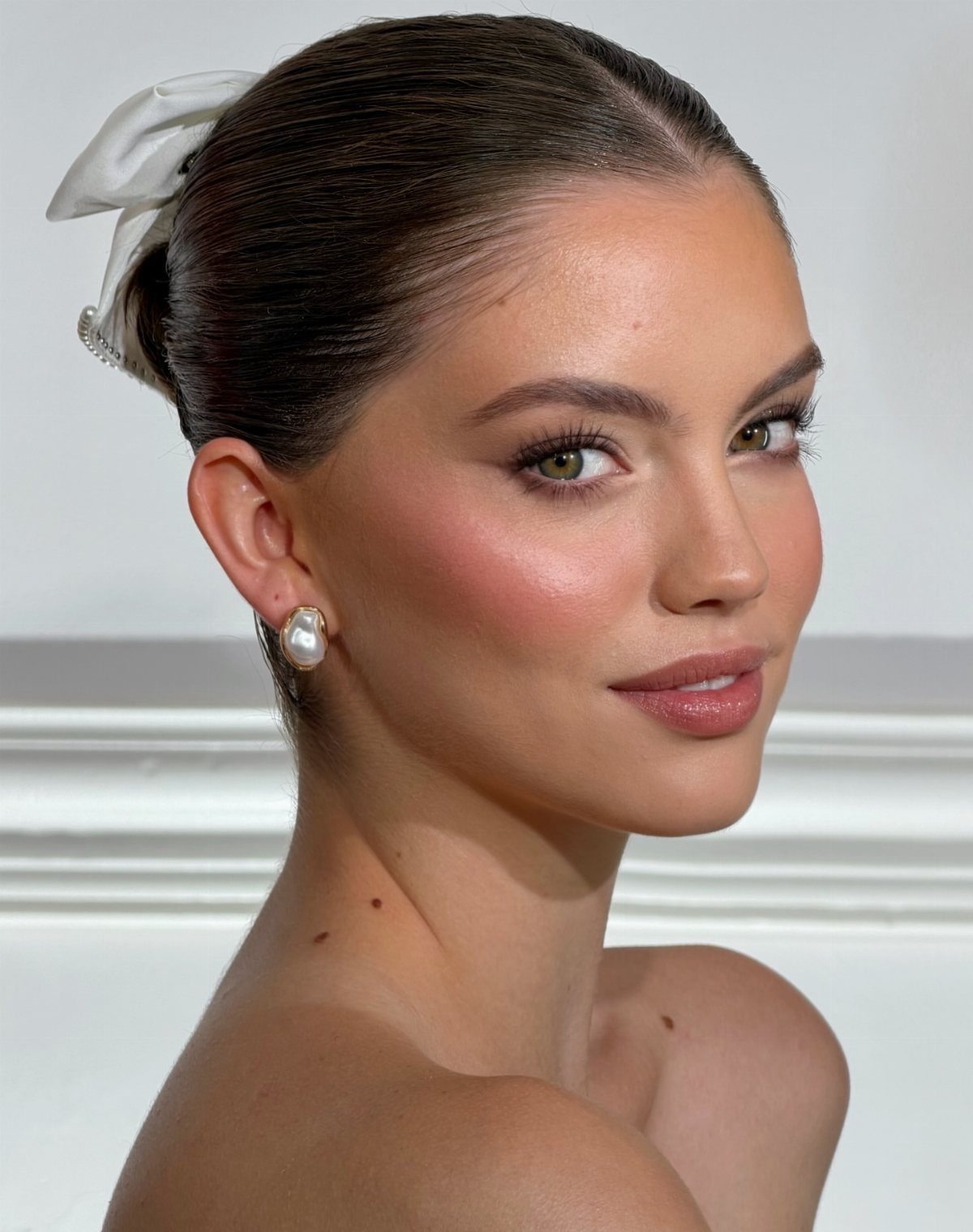
Radiance is the point of dewy makeup: a complexion that looks lit from within rather than powdered flat.
I would choose it for a bride who wants fresh, youthful skin and a simple styling touch like a hair bow. It reads best in close-up portraits.
The limit is the opposite of matte: a glowing finish shows every bit of texture and shine. Prep your skin well in the weeks before, and test the look in photos at your trial.
6. 3D Bridal Makeup
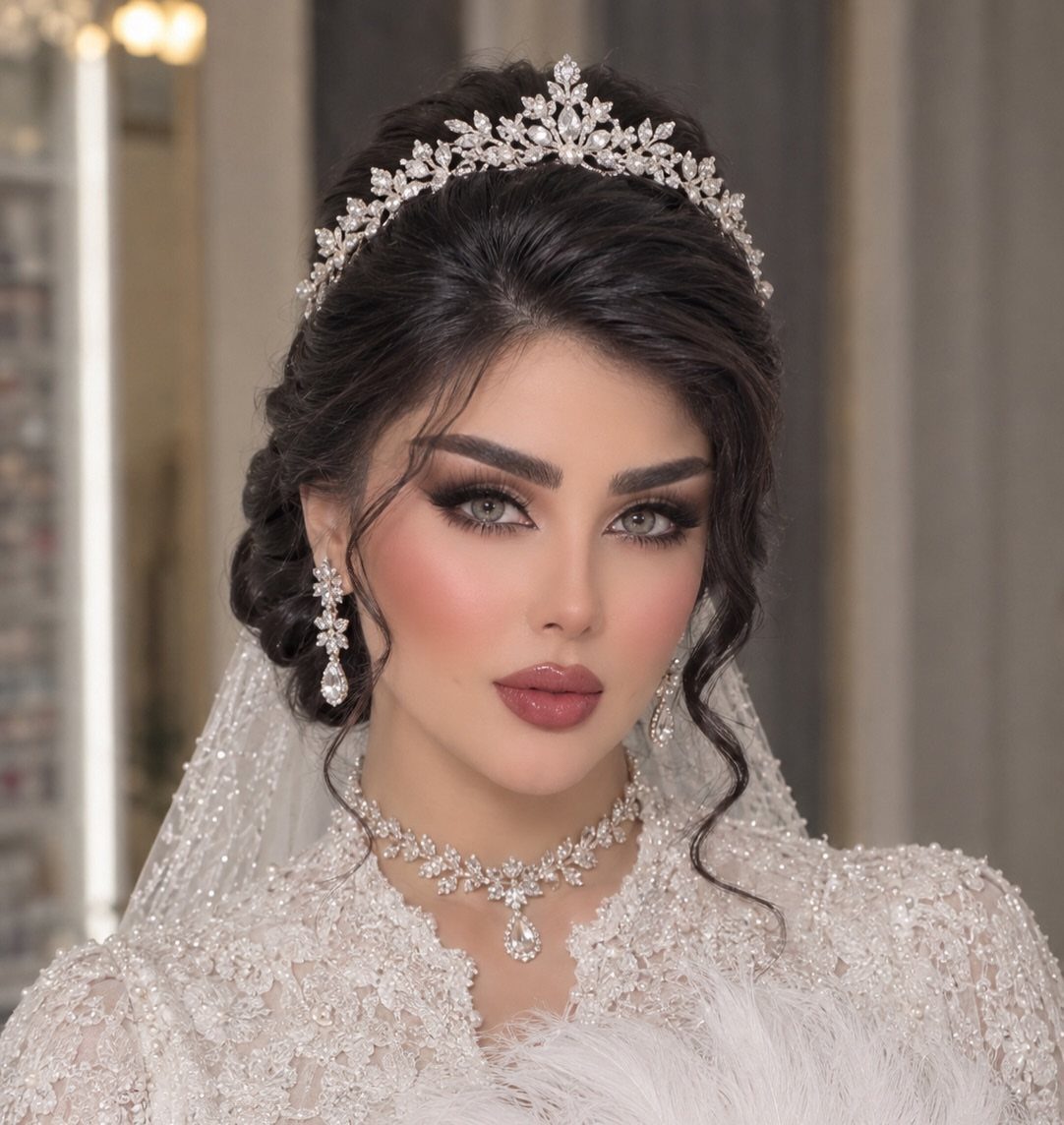
Strong contouring sculpts the face into planes of light and shadow, which is what gives 3D bridal makeup its dimensional look. Cheekbones, jaw and nose are shaped with deeper and lighter tones.
It pairs naturally with a full bridal look, like a veil and tiara, where the makeup needs to hold its own. I would pick it for a formal, camera-heavy day.
It takes real skill and blending, so book an experienced artist. Heavy contouring that is not blended well shows quickly in photos, and it is hard to fix on the day.
7. Arabic Bridal Makeup
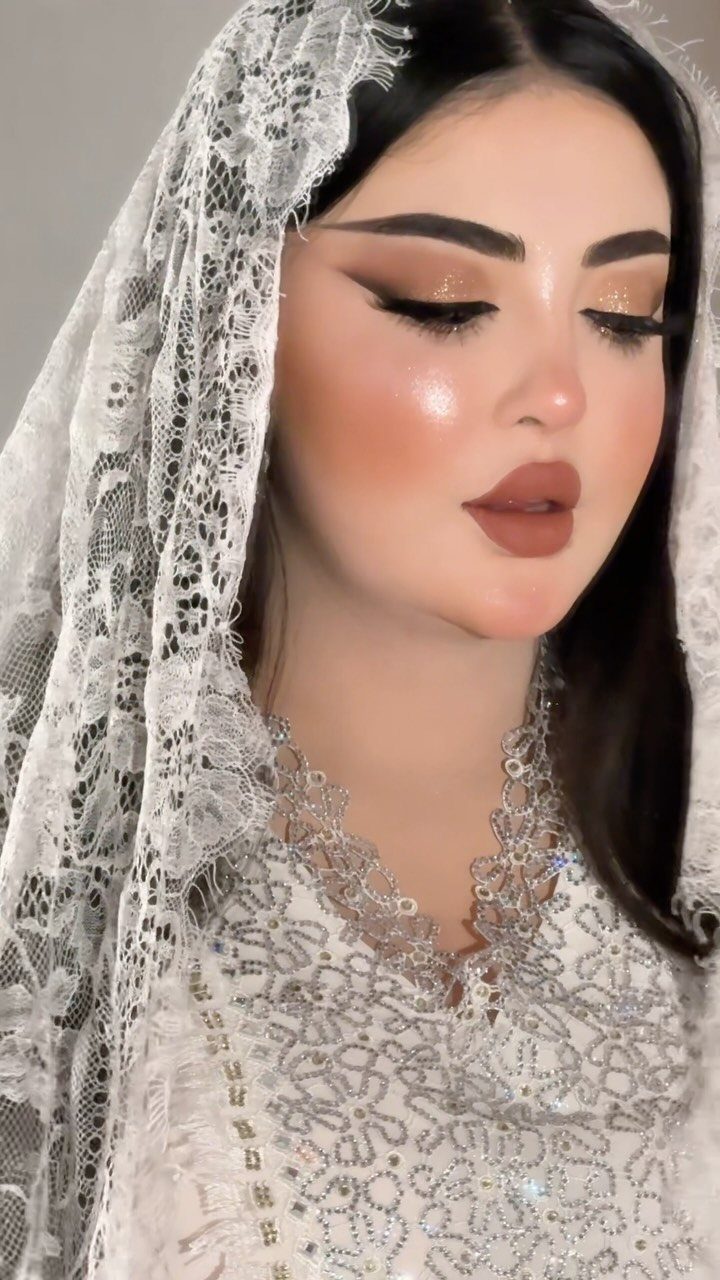
Arabic bridal makeup runs bold: defined, darkened eyes and a brown lip that reads from across the room. The eyes carry the drama, and the brown lipstick keeps the face grounded instead of competing.
I would choose it for a bride who wants her face to be as striking as her dress.
Bold work shows mistakes fast, so book a trial and photograph it in daylight before the wedding day.
8. Royal Bridal Makeup
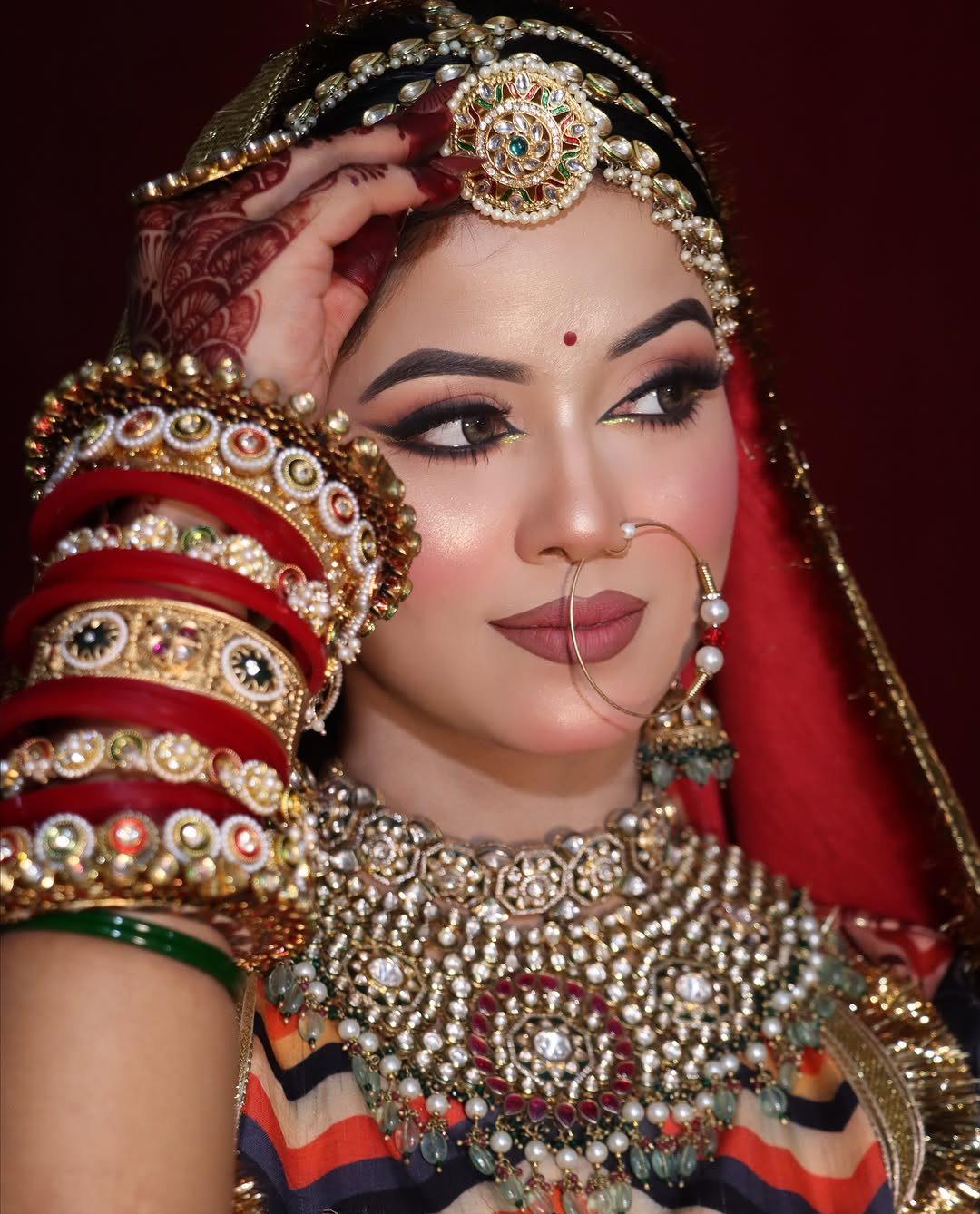
Against a red veil, I would keep the color strong and the finish polished, so the face is not swallowed by the jewelry.
This look suits a bride wearing traditional attire with a lot of detail, where a soft, minimal face would look underdressed.
Bring photos of your jewelry and veil to the trial, so your artist can match the intensity of the makeup to them.
Choosing the Right Makeup Style
Pick the look you would be happy to see in a frame years from now. A wedding look lives on in pictures, so a shape you already wear well beats something new and untested.
Hold your dress fabric next to your face in daylight before you decide. The makeup should work with the gown, not against it, and it should feel wearable for a full day rather than overdone.
If you are torn between 2 looks, go lighter. Many artists lean toward light makeup for the bride, and airbrush or an HD finish are worth asking about when you want a smooth, camera-ready base.
Choosing the best wedding makeup look for your big day is an incredibly personal affair. Once you’ve locked in the location, selected your dream dress, and addressed the endless array of details, defining your beauty approach is an essential final step.
— Vogue
Makeup Application Tips
Long wear starts with the base. Use a primer suited to your skin, blend each layer fully, and lock the finished face with a setting spray.
Waterproof liner is worth having in your kit, since a wedding day usually brings tears. Ask your artist which long-lasting base products they plan to use, and whether they use airbrush or HD techniques.
Keep your regular skincare routine going until the day itself. Switching products at the last minute is a risk, and the primer only works as well as the skin under it.
Pre-wedding Skincare
Start with the basics: a steady skincare routine, plenty of water and enough sleep. They cost nothing and show up in the mirror.
Anti-inflammatory foods help calm redness and breakouts from the inside, so build them into your meals in the weeks before. Cutting back on foods that trigger inflammation for you is the matching move.
A facial suited to your skin’s needs is a good splurge if the budget allows. If it does not, a de-puffing device like Solawave or NuFace is a cheaper way to smooth and contour.
On the wedding morning, use eye masks or sheet masks, and exfoliate your lips so lipstick sits evenly.
Frequently Asked Questions
What are the types of bridal makeup?
The main looks are matte, smokey eye, shimmery, natural, dewy, 3D contoured, Arabic and royal.
They run from soft and skin-like to bold and sculpted, so the choice depends on how much drama you want on camera. Many artists also offer airbrush or HD finishes as a smooth base under any of them.
What is 3D bridal makeup?
This style uses layered contouring to sculpt depth across the face, hitting the hollows under the cheekbones and along the jawline with darker tones and lifting the high points with highlight.
The full-coverage result holds up under professional lighting and pairs well with traditional details like cathedral veils and crystal accessories.
The technique depends on blending skill, so look for an artist whose portfolio shows smooth transitions rather than visible stripes of color.
Is light makeup better for a bride?
Often, yes. Many artists recommend a lighter hand for the bride, because it looks wearable through a full day instead of overdone.
Natural makeup also keeps the product list short, which helps a tight budget. A trial run shows whether sheer coverage reads as polished or whether you need more product to even out your skin tone under camera flash.
How do I make bridal makeup last all day?
Layer a base-matching primer first, let each product set before adding the next, and lock everything down with a fine mist of setting spray.
Waterproof liner helps, since tears are likely. Confirm which formulas your artist plans to work with, particularly the foundation and concealer, and stick with your regular moisturizer and serums in the week leading up to the wedding.





