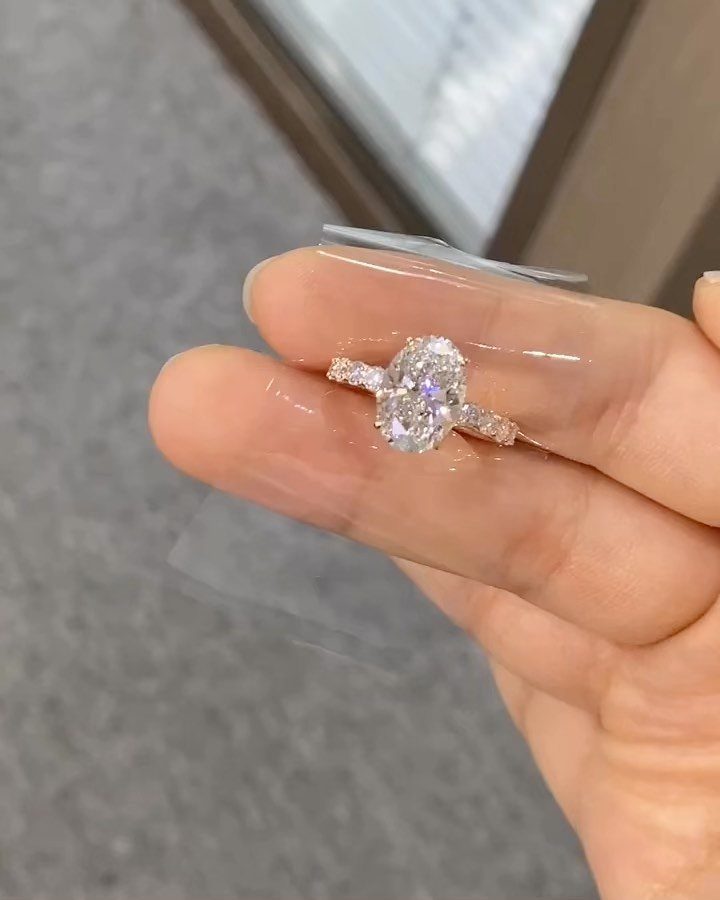
A 2 carat center stone can take a round, oval or square cut, and the setting you choose changes the ring’s look as much as the carat weight does.
The budget sets which trade-offs you make: fix the price ceiling first, then let cut, color and clarity adjust under it, since dropping just below 2.00 carats saves money per carat without losing much size.
1. Round 2 Carat Diamond Ring
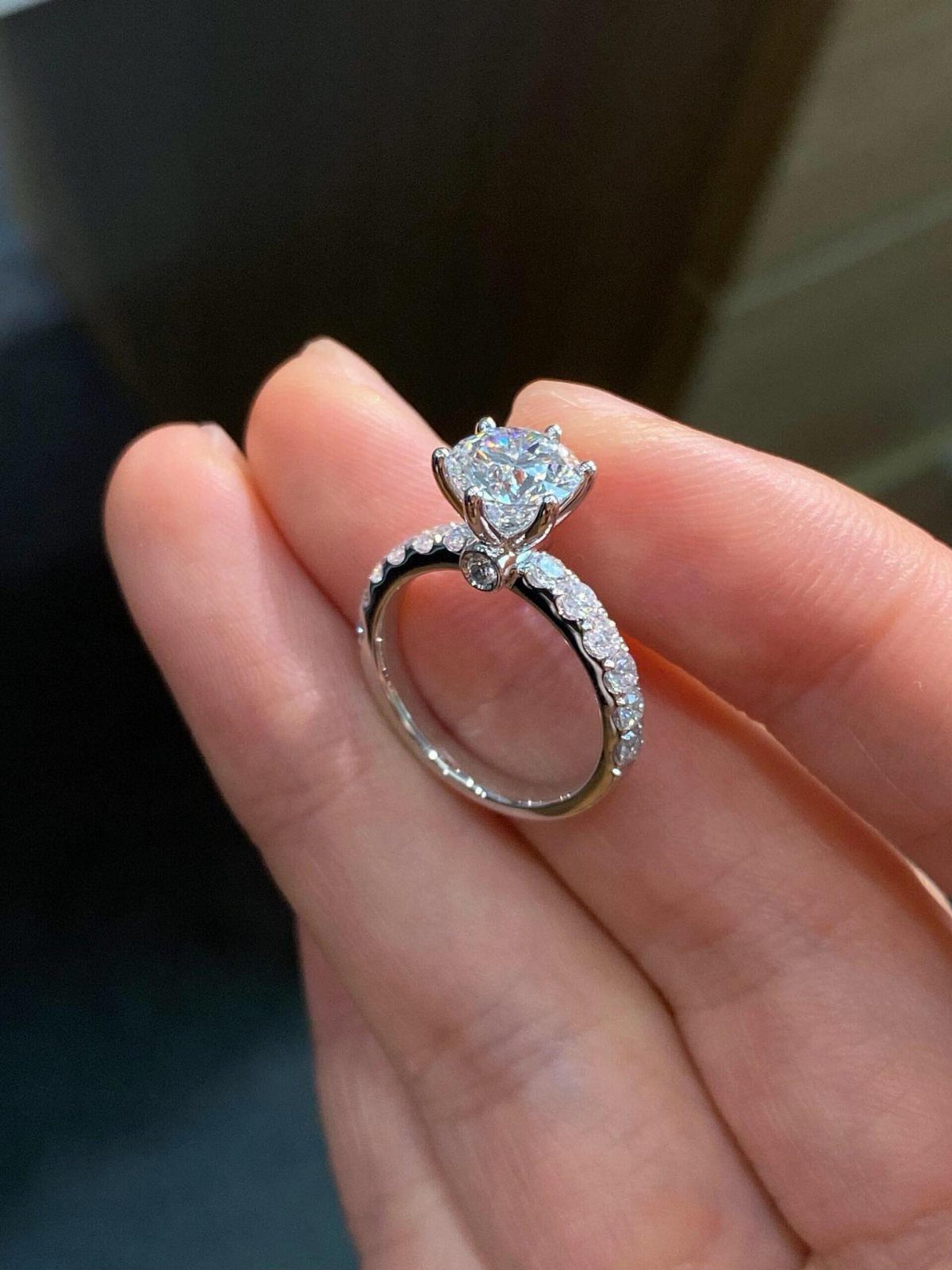
A round brilliant is the classic 2 carat choice, and a pavé band like this one adds sparkle while keeping the focus on the center stone.
Ask to see the stone in person or on video before you commit, because 2 diamonds with the same weight can look quite different on the hand.
Weight is only one number.
Cut, color and clarity set the price, so decide which of those you will give up first if the budget is tight. I would trade a little clarity before I would trade cut.
2. 2 Carat Diamond Ring Styles
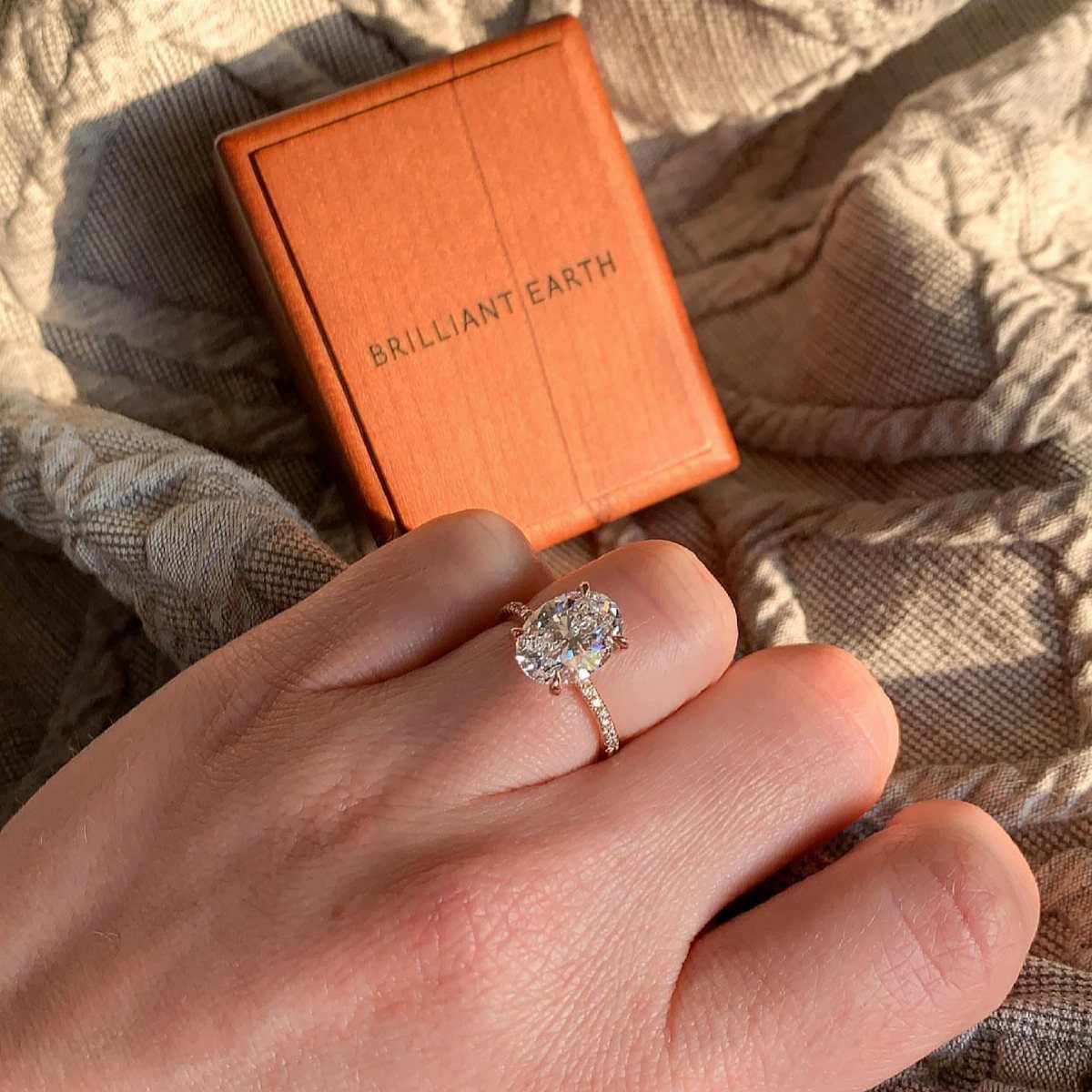
Oval, round, and square cuts all come in 2 carat sizes, and the setting changes the look as much as the stone does. An oval with a pavé band reads long and slim on the finger.
Choose the shape you would still like years from now, then pick the band. Pavé adds sparkle, while a plain band keeps the focus on the center diamond.
Try each shape on a real hand before you order, since photos flatten the differences.
3. Square Cut 2 Carat Ring
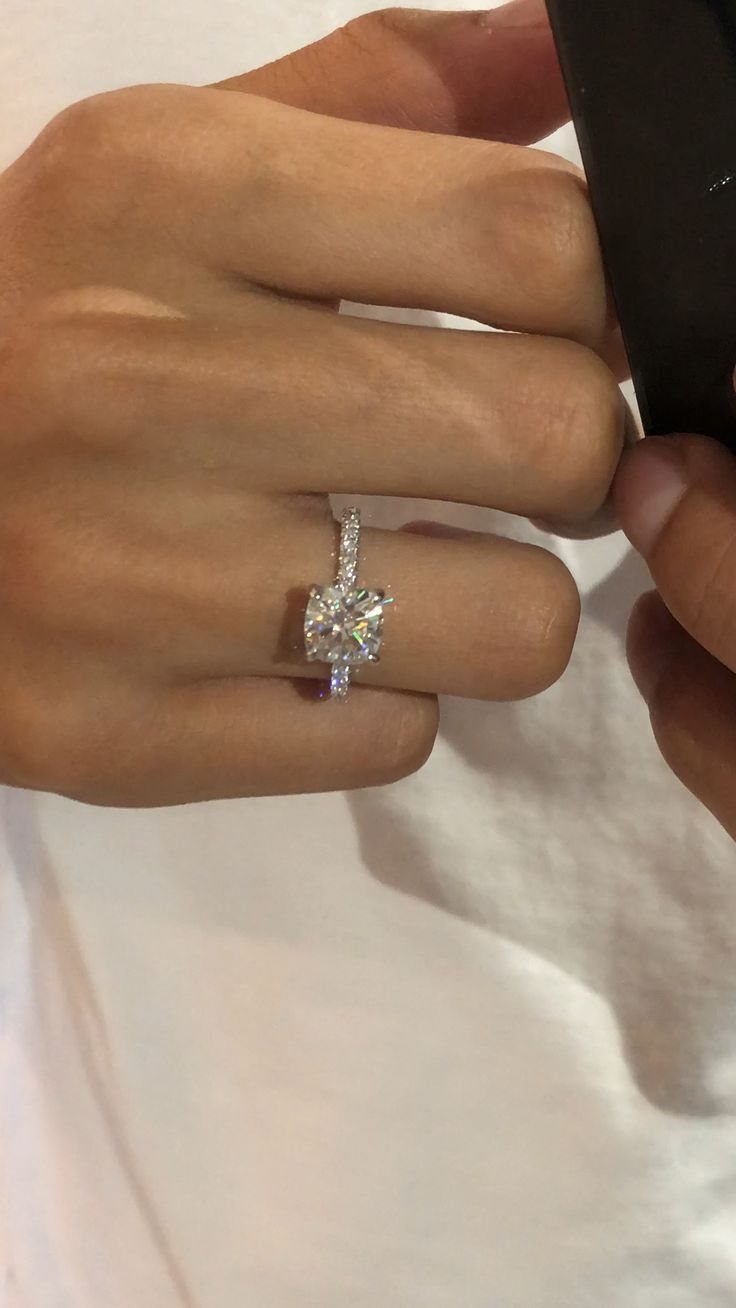
Square cuts have crisp lines and a modern look, and a pavé-accented band softens that sharpness with a little extra shine. If you want clean geometry without a fussy setting, this is the pairing I would pick.
Check the corners when you compare stones. They are the most exposed part of the diamond, so ask the jeweler how the setting protects them.
A square stone can also look different from a round one at the same weight, so compare them side by side before you decide.
Maximizing Budget for Diamonds
Buy shy.
A diamond just under 2 carats costs less per carat than a stone at exactly 2.00, because demand piles up on the round number. Face-up, the size difference is hard to see on a finger.
Color and clarity are the other levers.
Dropping a grade or two on either lets you afford a bigger stone, and the stone is still a natural diamond. Many flaws and slight tints sit below what the eye picks up once the diamond is set.
Size also has a track record. A 2 carat ring is common, not a stretch goal, so a stone a little under it is nothing to apologize for.
Set a hard ceiling before you shop, then let the grades flex around it.
Return Policies
Check the return window before you check the price. Many retailers allow 60 days, which gives you time to wear the ring, compare it in daylight, and have it looked at by an independent appraiser.
Read the fine print first.
Ask whether the refund covers the full price, whether resizing or engraving voids the return, and who pays shipping. A custom or altered ring is often final sale.
Keep the box, paperwork, and any grading report together, and ship the ring insured. Then use the window: if the stone looks different from what you saw online, send it back.
Frequently Asked Questions
What is a 2 carat diamond ring worth?
Expect a wide spread: a natural 2 carat diamond ring starts near $5,000 for a lab-grown or lower-grade stone and climbs past $60,000 for a top-grade natural one.
Shape and stone quality drive that spread, and a lab-made diamond of the same weight costs less than a natural one. Because those 3 grades drive the price, pick the one you would trade away first and spend where it shows.
How can I maximize my budget for a 2 carat diamond?
Buy shy: pick a stone just under 2 carats, since a diamond at exactly 2.00 costs more per carat. On a real finger, a small gap in carat weight is much harder to spot than it looks on a spec sheet.
Dropping a grade or two in color or clarity also saves money, since faint tints and tiny inclusions often vanish to the naked eye once the diamond is in its setting.





