These printables run from a simple name-and-address sheet to templates that track responses, manage your numbers and plan where people sit.
How much you need depends on the stage you’re in: a blank page suits a first draft before the list gets cut to fit your budget, while a tracker earns its place once envelopes go out and replies start arriving.
Pick for the stage you’re at, since a template built for early brainstorming won’t have the columns you need once replies start coming in.
1. RSVP Status Wedding Guest List
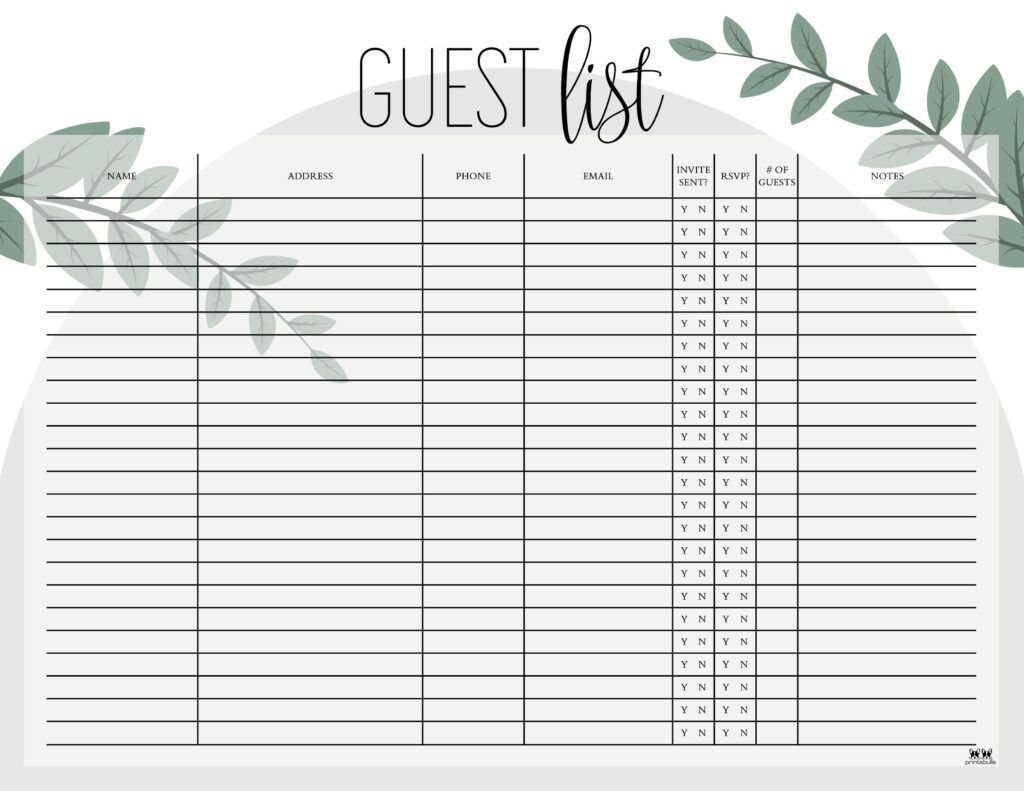
Name, Address, Phone, Email, Invite Sent, RSVP, number of guests and Notes give you the columns that matter. Together they turn one page into a tracker, not just a list of names.
Fill in Invite Sent the day envelopes go out, then use RSVP for yes, no or pending. The guest count column matters most, since a yes from a couple changes your headcount differently than a yes from a family.
Notes is where I would put dietary needs and plus-one questions.
2. Wedding Guest List Template
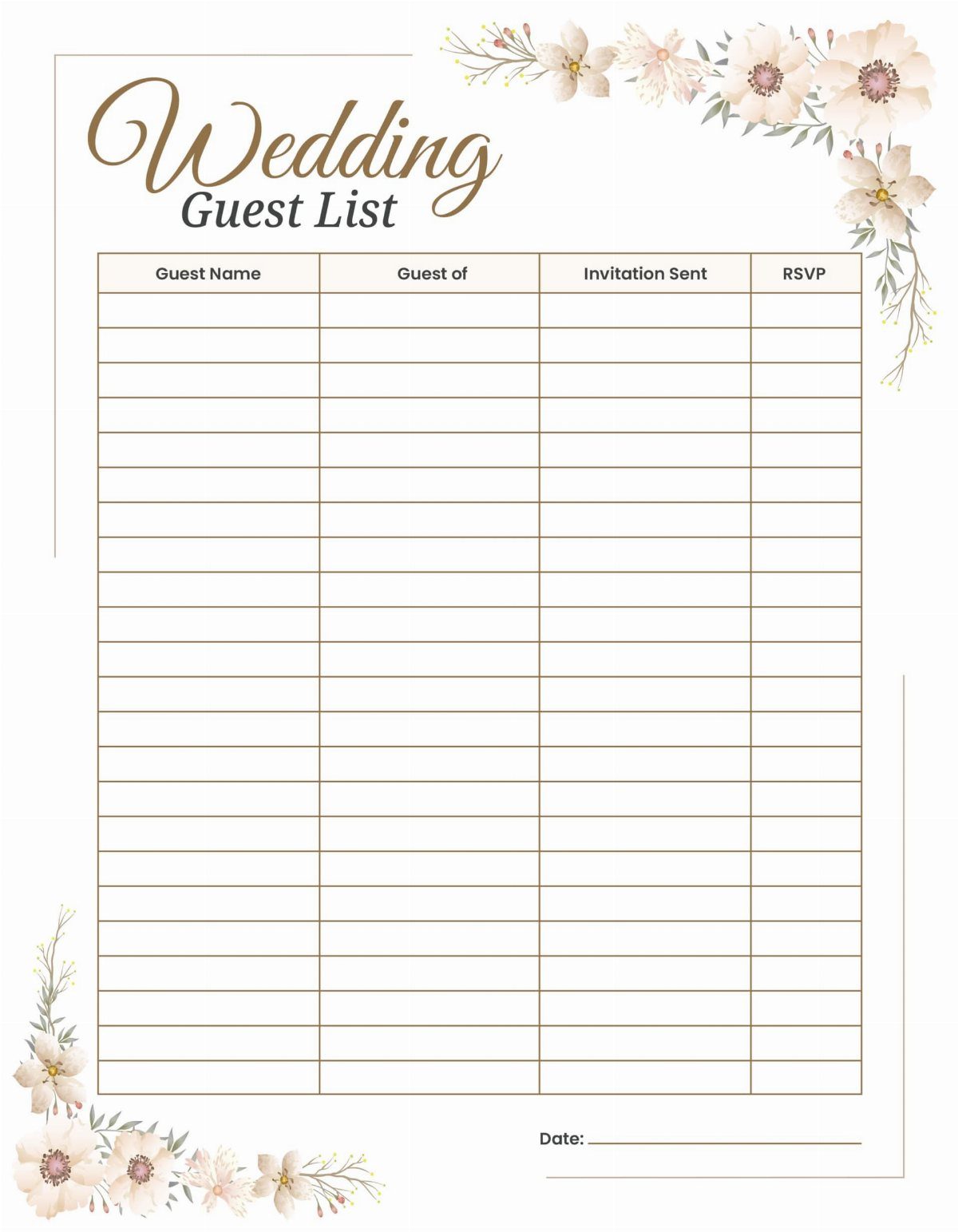
Guest of is the column I like best on this floral template.
It records whose side each person belongs to, or who invited them, which makes it easy to see how the list splits between you, your partner and both families.
Pair it with Invitation Sent and RSVP, and one glance shows who still owes you an answer. Write the date at the bottom each time you update the page, so a stale copy never gets mistaken for the current one.
Print a fresh sheet whenever the old one fills up with cross-outs.
3. Free Guest List Templates
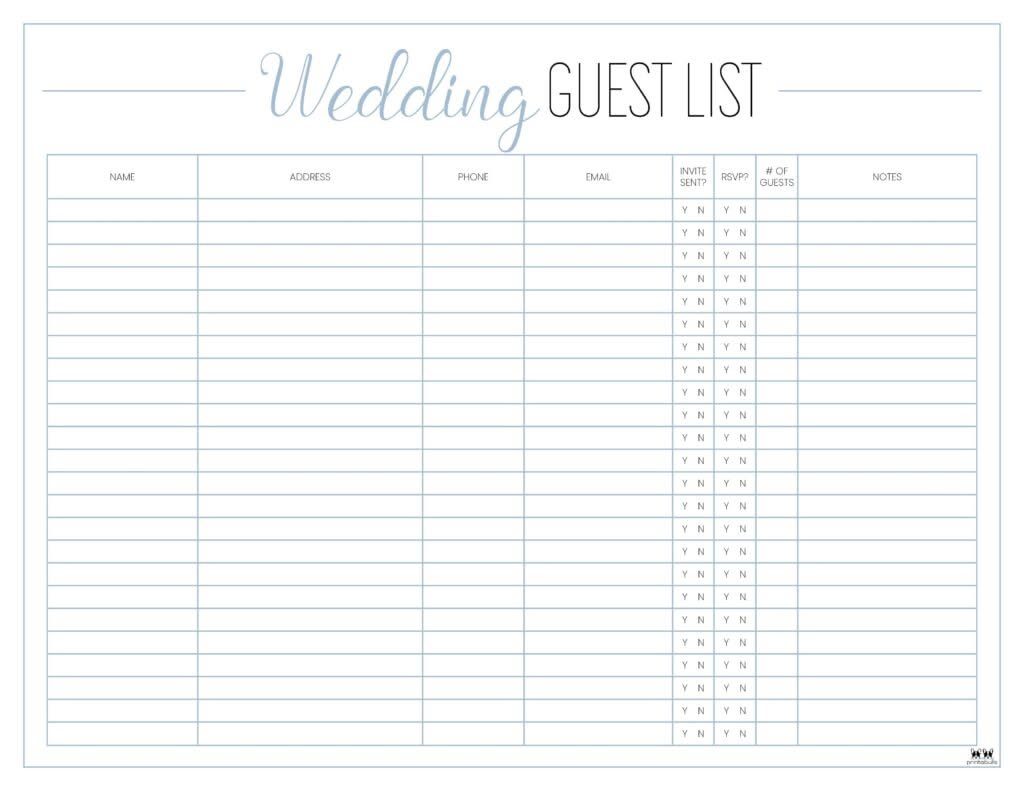
Download it, print several copies, and keep a clean one in reserve.
Because nothing is filled in, you can use it for the bridal shower or rehearsal dinner as well as the wedding. Just retitle each copy.
Plain beats decorated when you plan to scribble. Fewer graphics leave more room for the Notes column.
4. Guest List Seating Arrangements
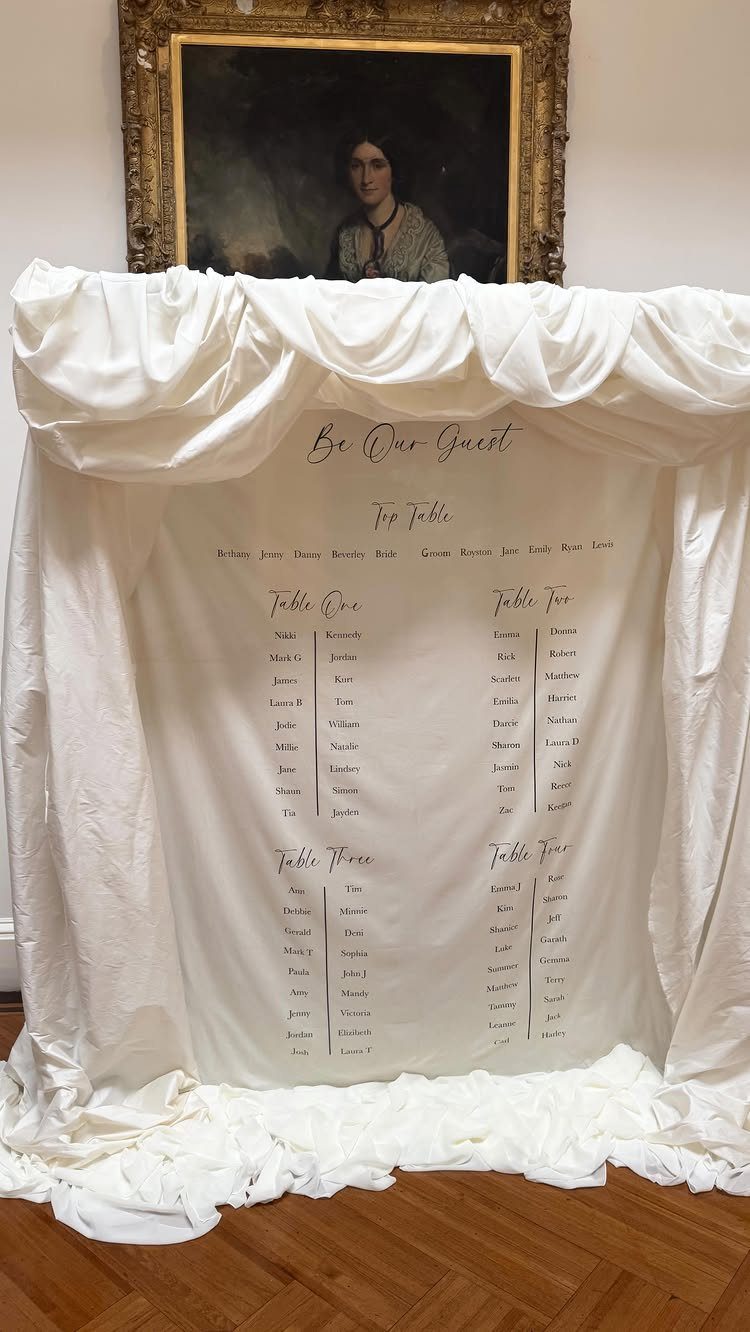
Once the list is settled, turn it into tables. A sheet like this one, with a Top Table and Tables One through Four, shows the plan the way guests will read it on the day.
Draft in pencil first, because seating shifts every time a late RSVP arrives. Keep your RSVP list beside you and count each table against the # of Guests column.
Write the final names only after replies close. Fabric works well for display, but paper is easier to redo.
5. Floral Border Guest List
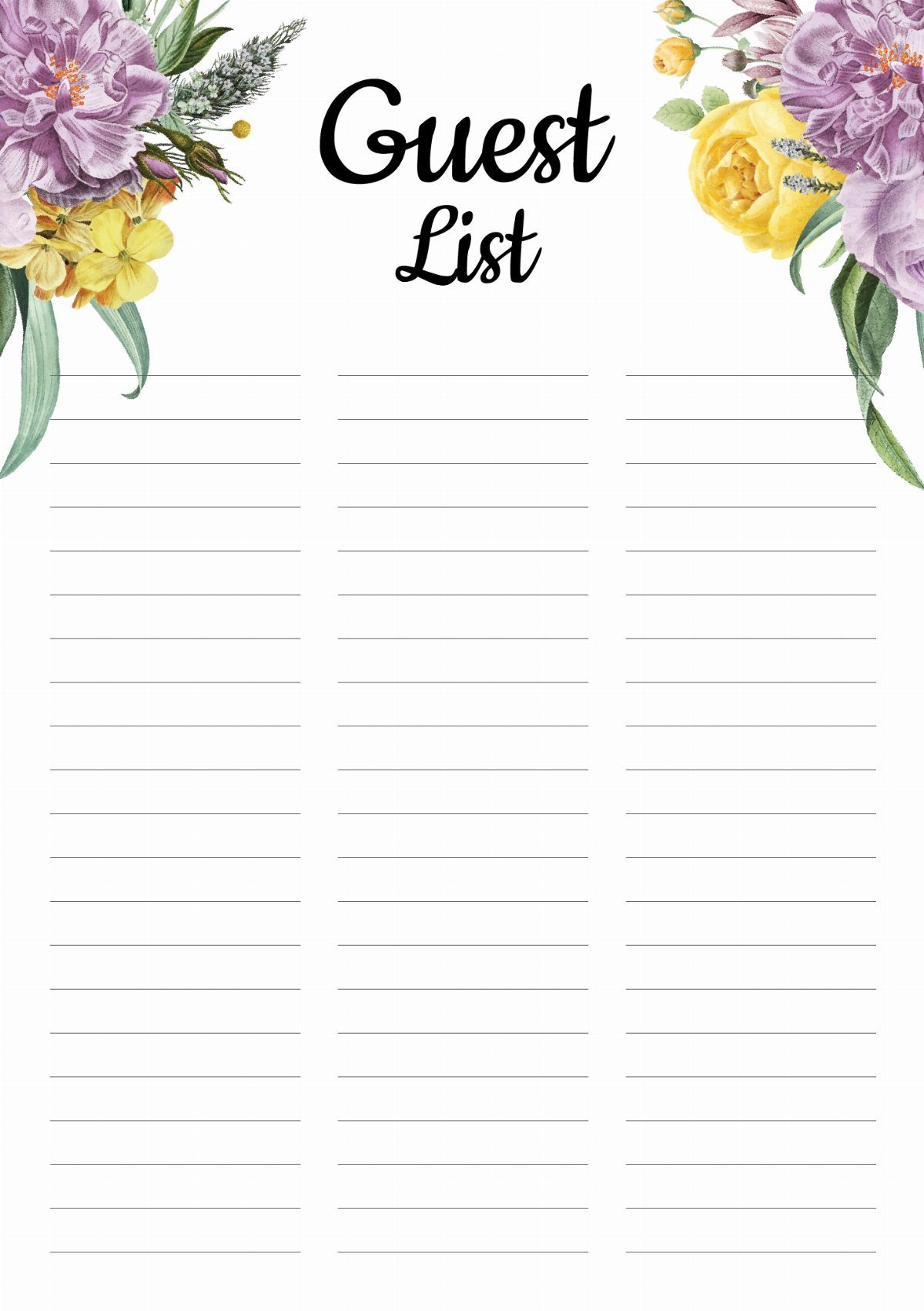
Since it has no preset headings, label the columns yourself. A name on the left and a note about address or reply on the right is enough.
I would choose this one for a first draft, the brainstorm stage before the list gets trimmed to fit your budget.
Importance of Guest List
A guest list sets the numbers that everything else rests on: venue size, catering count, invitations to print, even how many chairs get rented. Get the headcount wrong early and each of those costs shifts with it.
Record seating requests and meal choices on the list as they arrive, so one document answers every question a vendor asks.
A venue will want to know your expected count before you sign, so check that the space holds everyone comfortably, with room left for a dance floor or a buffet line.
Plan a small buffer for last-minute additions. Knowing exactly who is invited also keeps uninvited plus-ones from turning up at the door.
Cutting Down Guest List
Your first draft will run too long, and that is normal. Skip the name-by-name haggling and sort everyone into 3 tiers instead.
Tier A is the people the wedding can’t happen without: immediate family and anyone whose absence would hurt for years.
Tier B holds people you genuinely want at the celebration: extended family, close friends, anyone whose presence matters but fits only if the numbers allow it.
Tier C covers the nice-to-haves: work colleagues, friends from years back, plus-ones for unattached guests, people your parents want to include.
Invite A and B first.
When regrets arrive, promote a few C names at once rather than one by one. Send B invitations at least 6 weeks out, early enough that no one guesses they were fallback choices.
Each of you should tier the whole list separately before you compare. Two complete lists give you something to compare and reconcile; debating one name at a time turns every decision into a standoff.
Communication with Guests
Tell guests what to expect, and tell them early. Collect an email address or phone number for everyone, and update the list the moment a reply comes in, not at the end of the week.
Ask about dietary needs on the reply card itself, so you aren’t chasing answers by text a week before the caterer’s deadline.
Expect surprises in the final days before the RSVP cutoff: changed plans, silent no-replies. Keep a backup plan ready, such as a few Tier C names waiting for an opening.
Guest information is private.
Store the list somewhere secure and don’t post it on a public site. Share it only with people helping you, like a planner or a close friend.
Frequently Asked Questions
How do I make a wedding guest list?
Start with households, listing everyone you’d consider inviting before you edit anything. Then you and your partner each sort the whole list into tiers A, B and C on your own, and compare the 2 versions afterward.
Start by inviting your A-list and B-list guests, then fill open spots with C-list names as people decline. Two separate lists give you something concrete to compare and combine, rather than arguing about whether one specific person makes the cut.
How many people should I invite?
Start with your venue capacity and your total budget, then count backward to see how many guests fit inside those limits. The headcount drives venue size, catering, invitations and chair rentals, so a wrong number early shifts every cost.
Keep 5–10 spots open for additions you didn’t see coming, and confirm the room can handle your final count plus space for dancing or serving.
What is an A-list and B-list for a wedding?
It’s a tiering system. A-list guests are the ones who have to be there: parents, siblings, the friend whose absence you’d feel every time you looked at the photos.
The B tier is people you truly want there if the numbers allow. Send A-list and B-list invitations first, then move several C-list names up together once you know how many seats opened.
When should B-list invitations go out?
Mail B-list invitations no later than 6 weeks out from your date. That gives recipients enough time to plan, and nothing about the timing suggests they were invited in a second wave.





