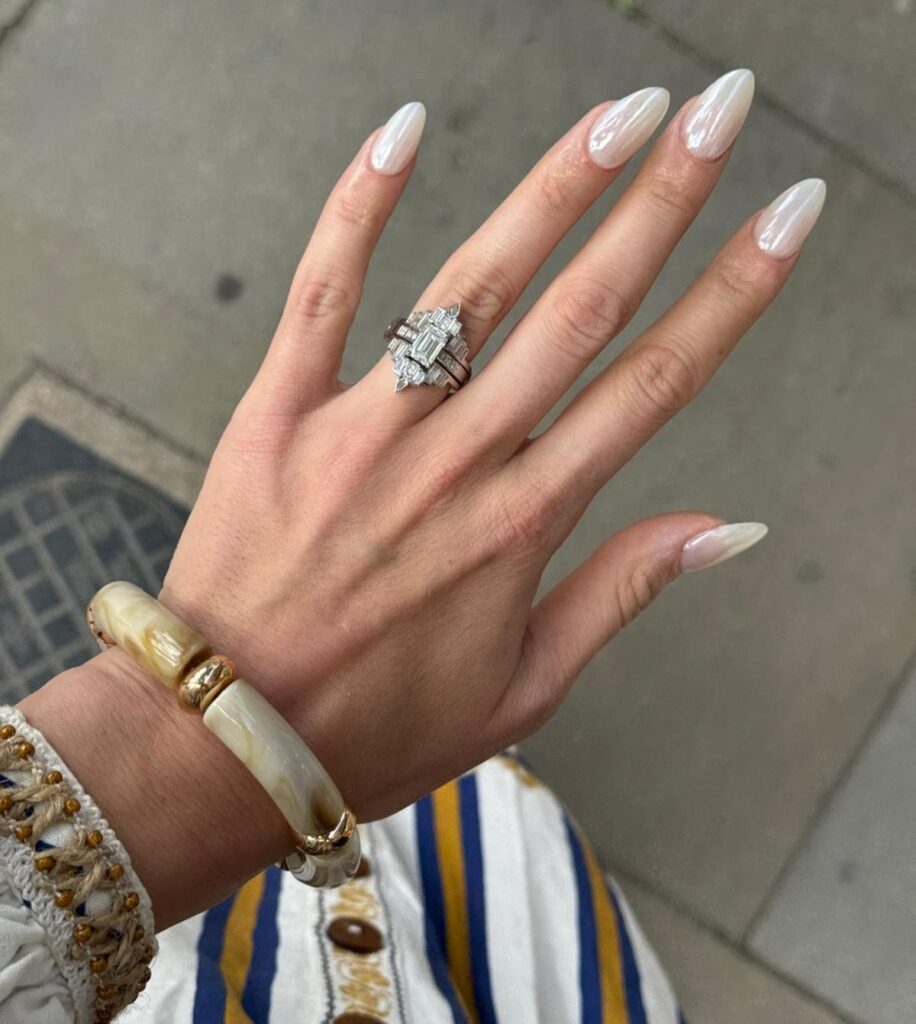
Vintage rings range from Art Deco designs to bezel settings with milgrain, cluster halos to engraved bands, and the difference between vintage and antique changes what you’re buying.
A ring that is 20-40 years old is vintage, while one over 100 is antique, and the antique is harder to size, replace and resell.
1. Art Deco Engagement Rings
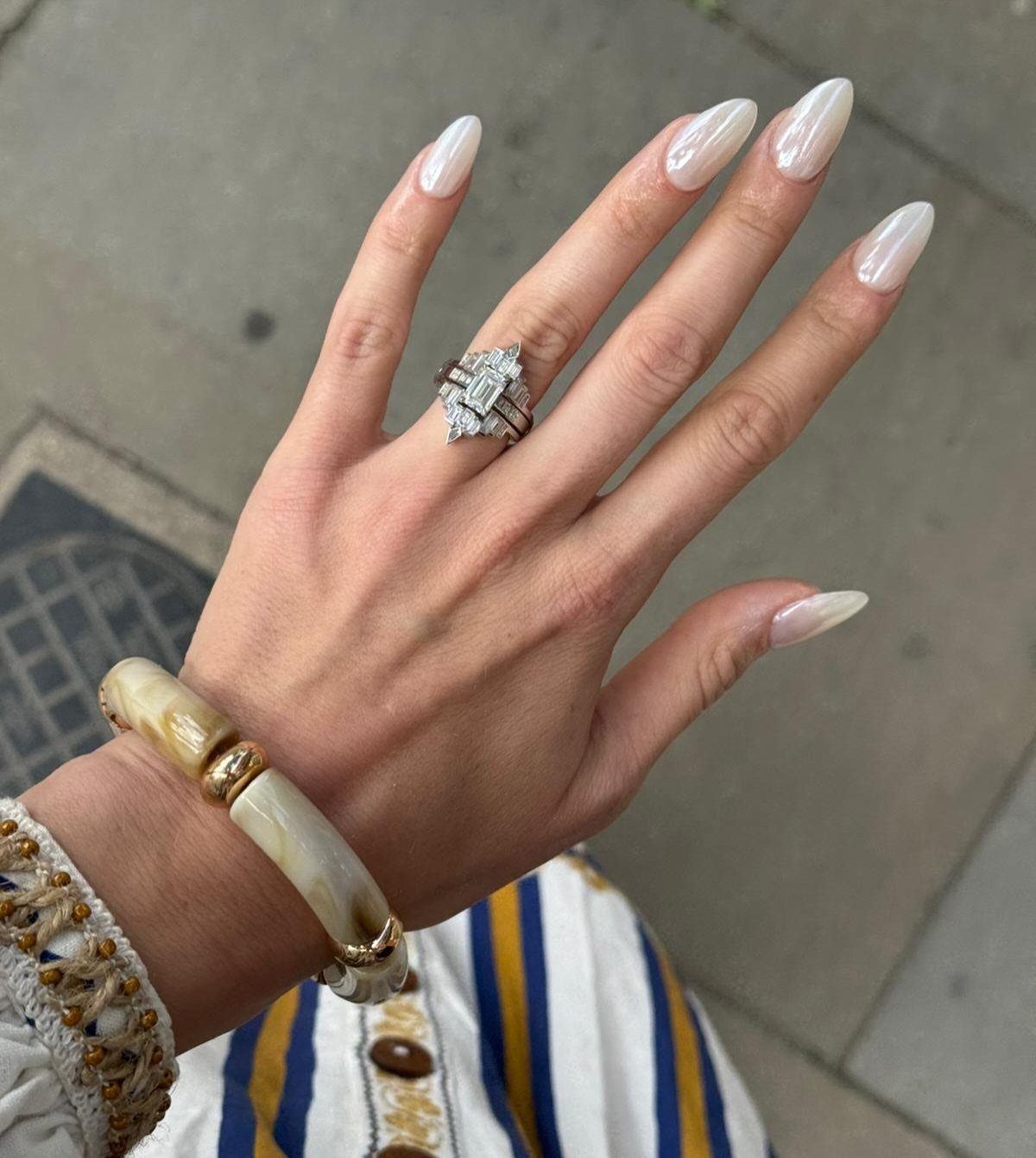
Straight lines do the work in an Art Deco ring. A rectangular center stone, bold color and geometric shapes give it a look that reads as architecture rather than ornament.
For budget-minded couples, I’d choose this style when you want drama without a huge center diamond. The shape and the angular setting carry the presence.
Pair it with a chunky bracelet if you like that look, but keep the rest of your jewelry quiet so the geometry stays the focus.
2. Antique Cushion Cut Rings
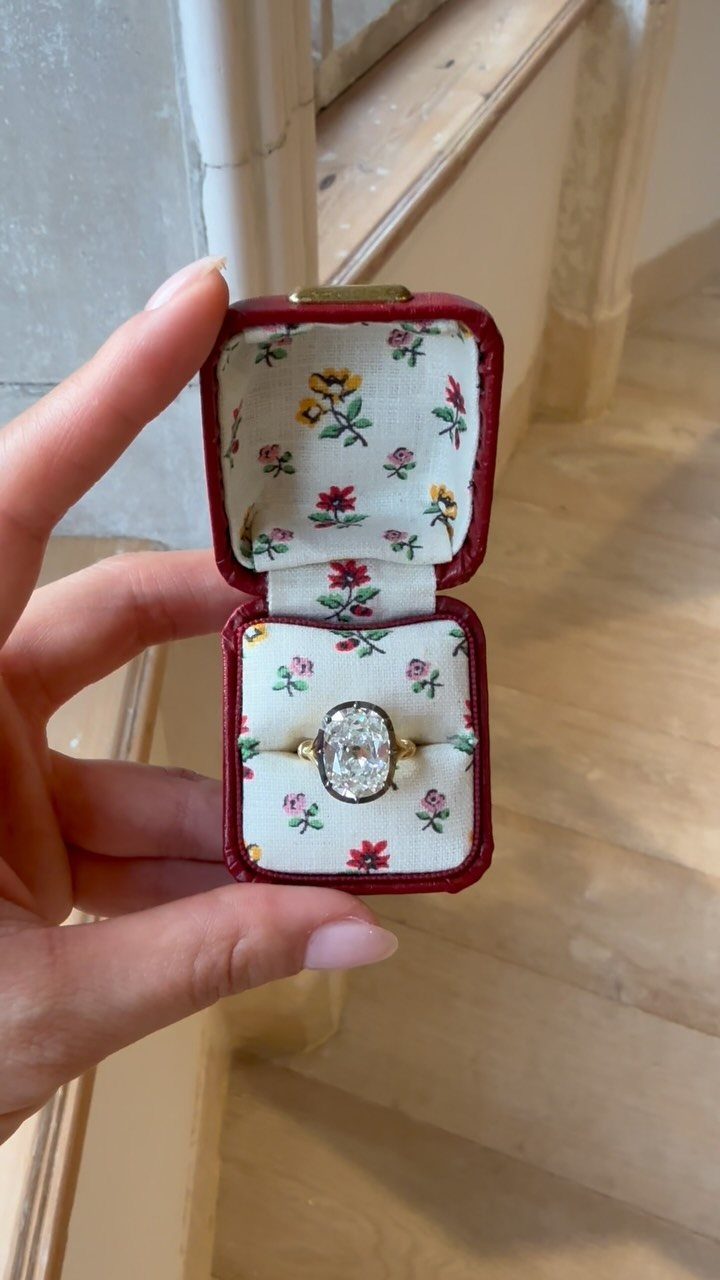
Antique cushion cuts have a soft, pillowy outline that modern brilliant cuts don’t copy. Ask a jeweler which of the two you are looking at, since the labels get mixed up.
A gold band suits either cut and keeps the look warm. Because these stones are cut by older methods, no two look quite alike, so I would always view the exact ring before buying.
A velvet box is a nice touch, but the stone matters more than the packaging.
3. Bezel Settings Edged with Milgrain
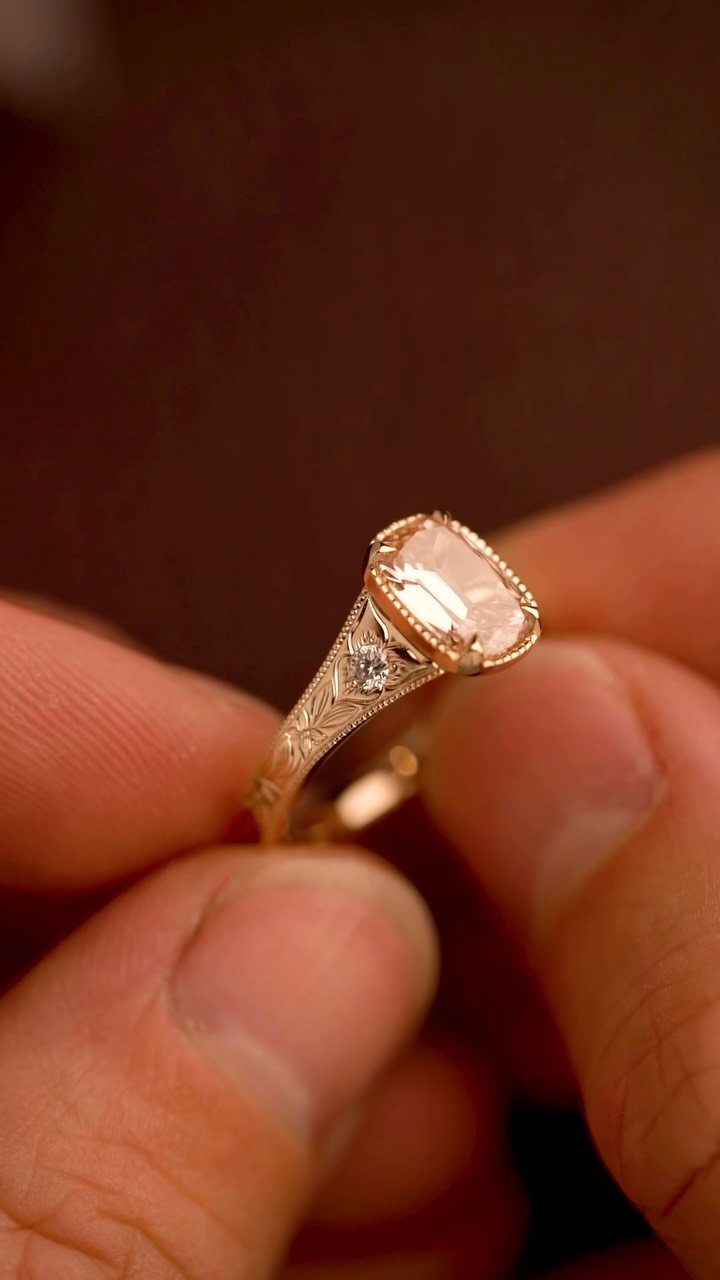
Milgrain is the row of tiny beads along a setting’s edge, and it adds intricate detailing without adding a single extra stone. Around a bezel, it makes a plain metal rim look finished and old.
Rose gold gives it a warm, antique tone, and a cushion-cut center fits the soft outline of the bezel well. Engraving along the band, as in this style, adds more detail.
For a tighter budget, this is where I would spend: detail in the metal costs less attention than a bigger diamond.
4. Cluster Halos
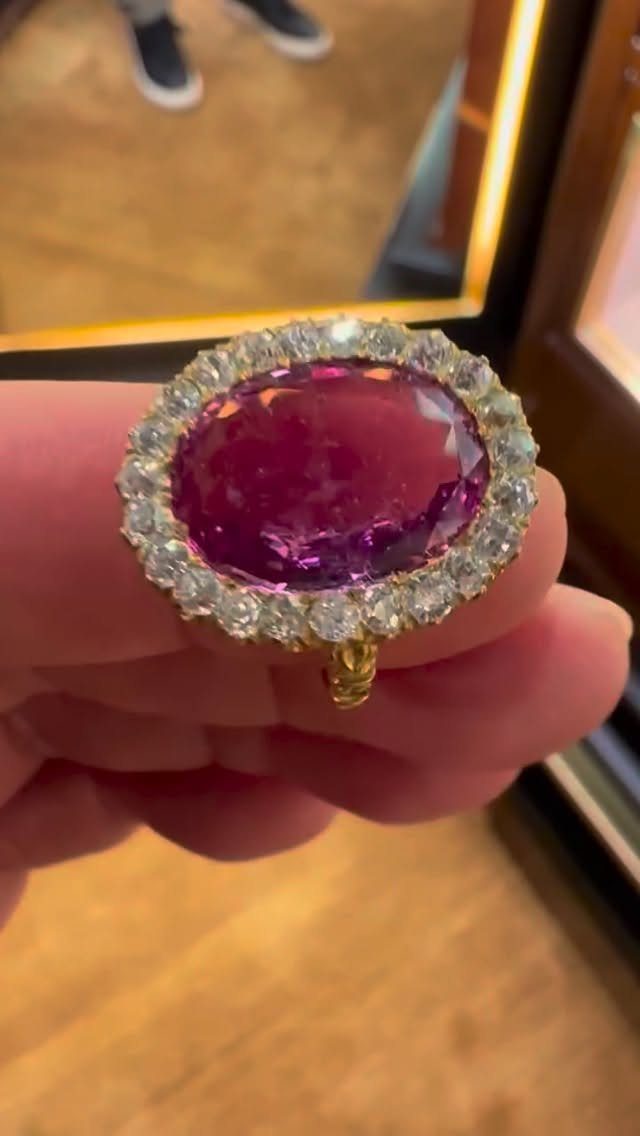
A ring of small diamonds circling a center stone goes back to the Georgian period, which makes the halo one of the oldest designs you can buy and still have it look right. Few settings have lasted that long.
A colored center, like a large oval purple gemstone, makes the diamond ring stand out. If a colored stone appeals to you, I would pick it over a white center, because the diamonds frame it so well.
Choose gold for the band to keep the vintage warmth.
5. Vintage Oval Solitaire Ring
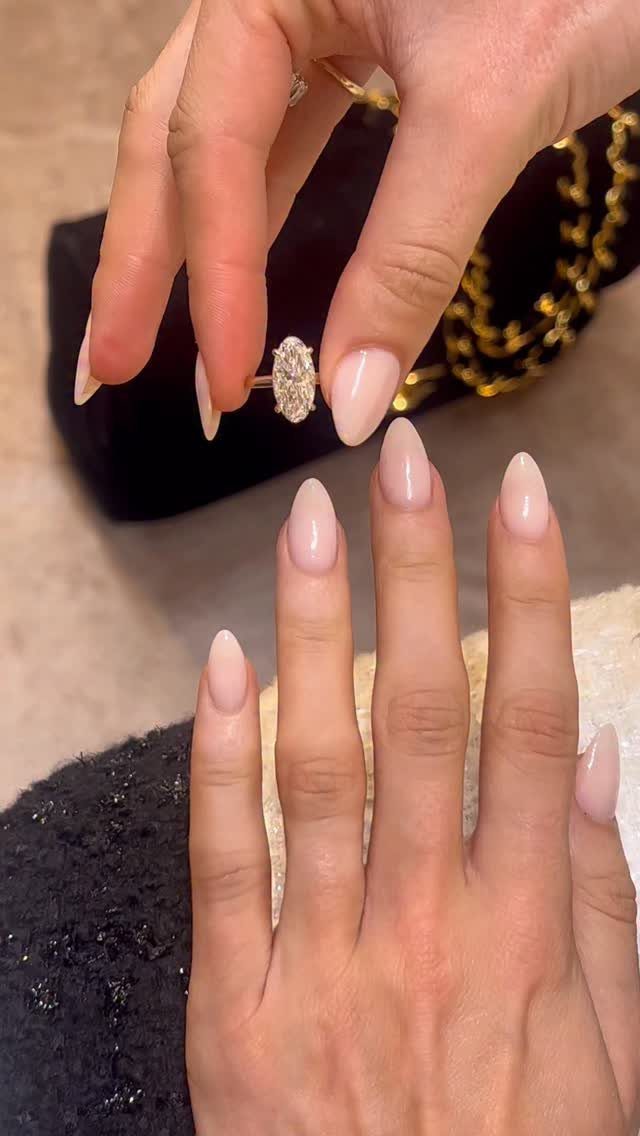
One oval diamond on a slim gold band is the simplest vintage look here, and I find it the easiest to wear every day. Nothing competes with the stone.
An oval stretches along the finger, which suits readers who want a stone that looks long and elegant without a showy setting. Keep the band delicate so the shape stays the focus.
Simple also tends to be kinder to a tight budget, since you’re paying for one stone and one band.
6. Vintage Three-Stone Diamond Ring
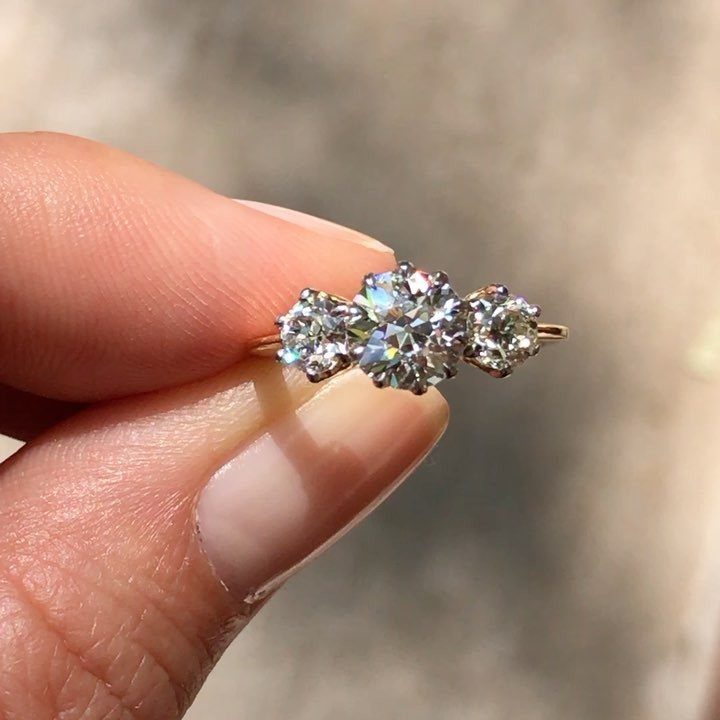
3 round diamonds in a row on a gold band make a ring that is balanced rather than flashy. Every stone is the same shape, so the eye travels evenly across the top.
I like this for couples who want something traditional but not fussy. Gold gives it a classic tone.
Before buying, compare the 3 stones side by side in person. Matching sizes and similar sparkle make the whole ring look deliberate.
7. Engraved Band Emerald Cut Ring
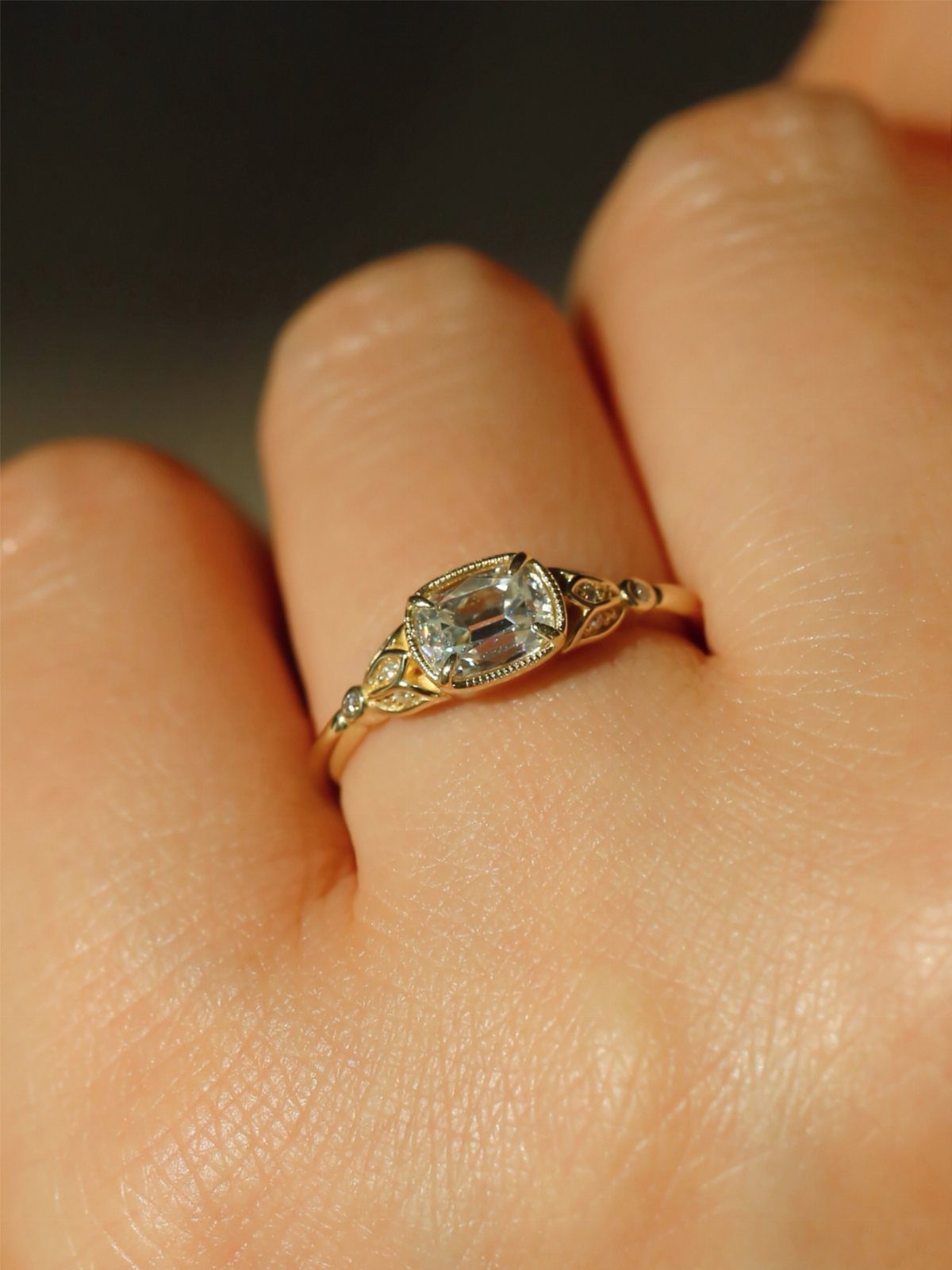
An emerald cut reads as long, clean steps of light rather than sparkle, and engraving on the gold band gives that calm stone some history to sit beside.
Plain gold would feel modern; the carved detail is what makes this one vintage.
Look at the engraving up close before buying. Crisp, even lines along the band matter as much as the diamond.
I’d keep the stone itself simple and let the band carry the pattern.
8. Vintage Marquise Diamond Ring
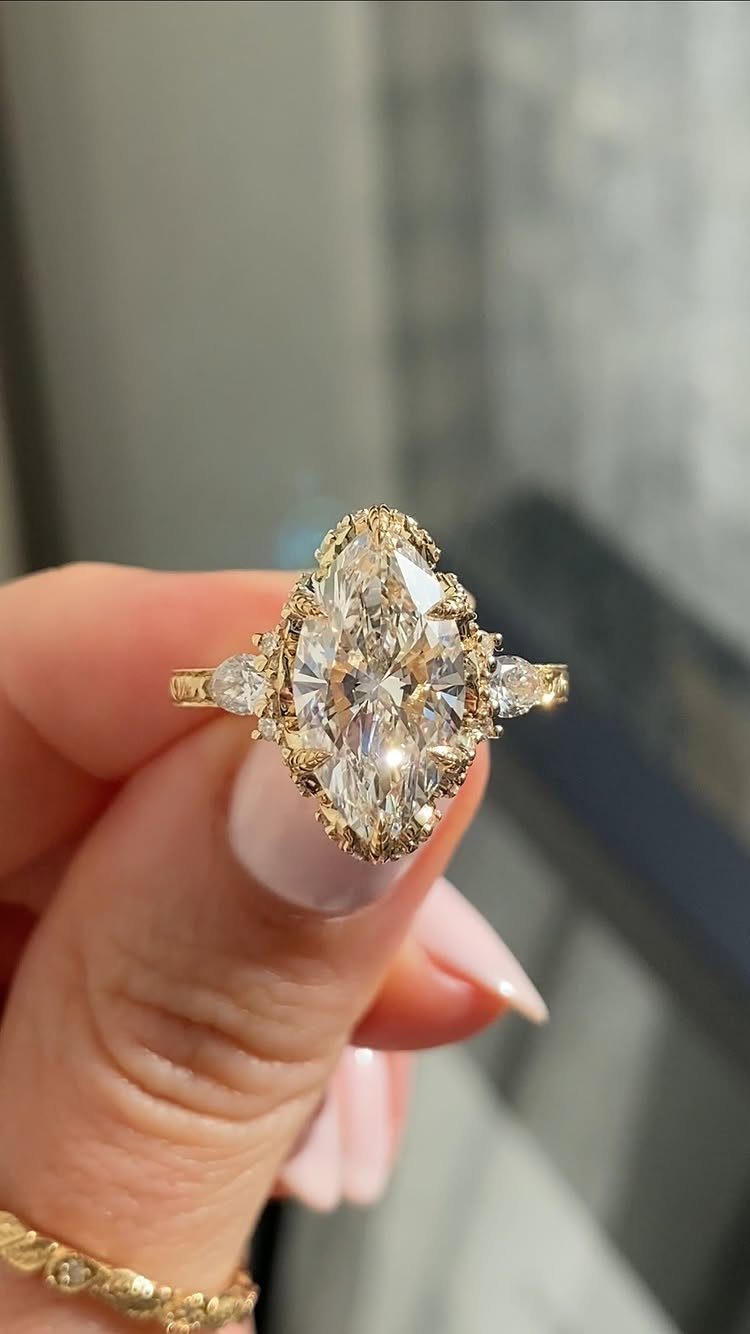
A marquise is a pointed oval, and its long tips make a finger look longer. Here a halo of smaller diamonds surrounds the large center stone, with vintage-style accents on the gold.
I’d pick this for readers who want presence without a round brilliant. The halo widens the whole ring, so the center looks bigger than the stone alone.
Marquise stones have 2 sharp points, and those tips snag and chip more easily than any other part of the stone, so look at them closely in person and ask for a protective setting such as V-prongs.
Points are the most exposed part of a marquise, so ask the jeweler how well the setting protects them.
9. Intricate Engraved Band Diamond Ring
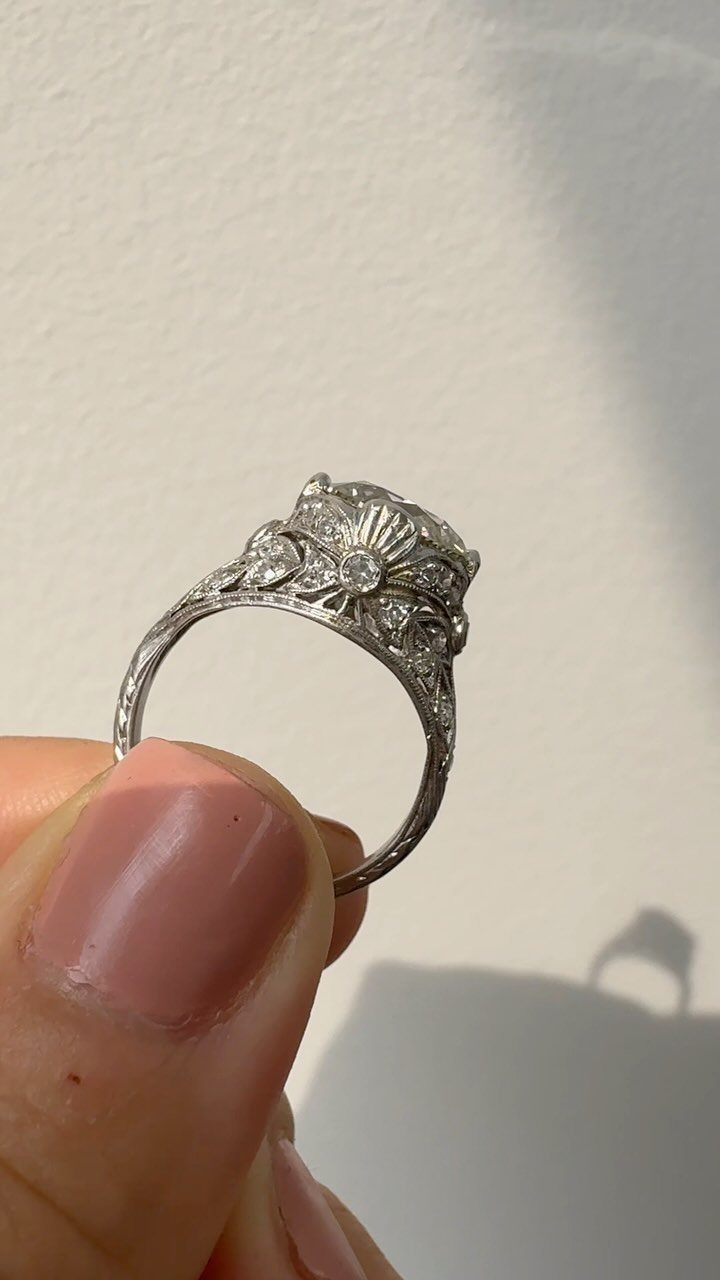
Detailed engraving and small diamonds running along the band make this ring about the metal as much as the stone.
A platinum or white-metal setting gives an engraved band a cool, crisp look, a clear contrast to the warmer glow of yellow gold.
For a modest budget, I like this approach: the ornament lives in the band, so the diamonds can stay small.
Hold it under bright light and turn it slowly. Small stones should sit evenly, and the engraved lines should be clean from edge to edge.
10. Round Solitaire in Vintage Box
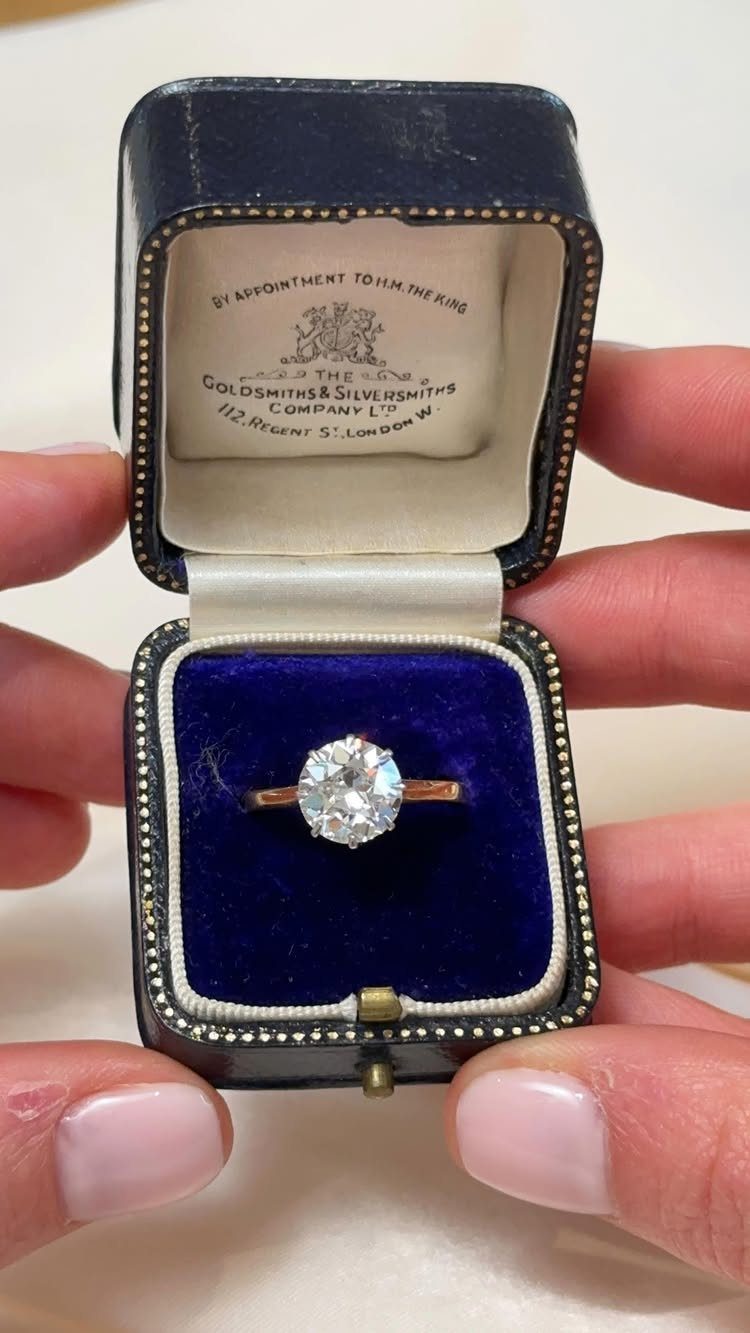
A round solitaire in gold is the plainest style you can choose, and that simplicity is why it reads as an heirloom, especially when it arrives in an old box lined with blue velvet.
The box lid, stamped "BY APPOINTMENT TO H.M. THE KING", does half the storytelling.
Plan the box separately from the ring. A vintage case is an inexpensive extra, and I’d hunt for one after choosing the stone, never before.
Judge the diamond first. The box is for the proposal; the ring is for every day after.
Differences Between Vintage and Antique
"Vintage" and "antique" get swapped constantly, but jewelers use them for different things. A vintage ring is usually 20-40 years old, while an antique ring is over 100.
Before you pay, ask which of the two you’re looking at.
The answer changes what you’re buying.
A new ring in an old style can be sized, replaced and resold more easily than something made a century ago. An antique carries real age, and you’re paying for that.
Materials for Vintage Rings
Metal sets the tone of a vintage ring before the stone does. Your options run from 14K and 18K yellow gold to white gold, two-tone gold and platinum.
If you wear one metal in your other jewelry, match it. For a tighter budget, 14K gold is the practical pick, and 18K gives a richer color if you can stretch.
The era you’re drawn to helps you choose.
Four periods drive most vintage designs: Victorian (1835-1900), Edwardian (1900-1915), Art Deco (1915-1935) and Retro or Post-War (1935-1950). Some rings blend more than one, so don’t be surprised if a ring you love doesn’t fit a single era.
Customization Options
Start by choosing an era, not a ring.
Ask yourself whether you lean toward Art Deco elegance, mid-century simplicity or Victorian romance. Once you’ve settled that, the field narrows fast.
If nothing in stock fits, a custom design is a real option, and many retailers offer one. Some let you browse loose stones first, or start from an existing design and change it.
Bring pictures of the details you like, and be ready to say which ones you’d drop if the price climbs. Settle the budget before the sketch, because custom work grows quickly.
Frequently Asked Questions
What is a vintage engagement ring?
A vintage engagement ring is built in an older style, known for fine detail, elaborate settings and careful craftsmanship. Some are new rings designed with old-fashioned details, and some are genuinely old.
Can I get a vintage-style engagement ring in a semi mount?
Yes, some retailers sell vintage-style semi mounts, which let you pick your own center diamond. Set a number before the first meeting, because the price climbs faster than most people expect once detailing starts.





