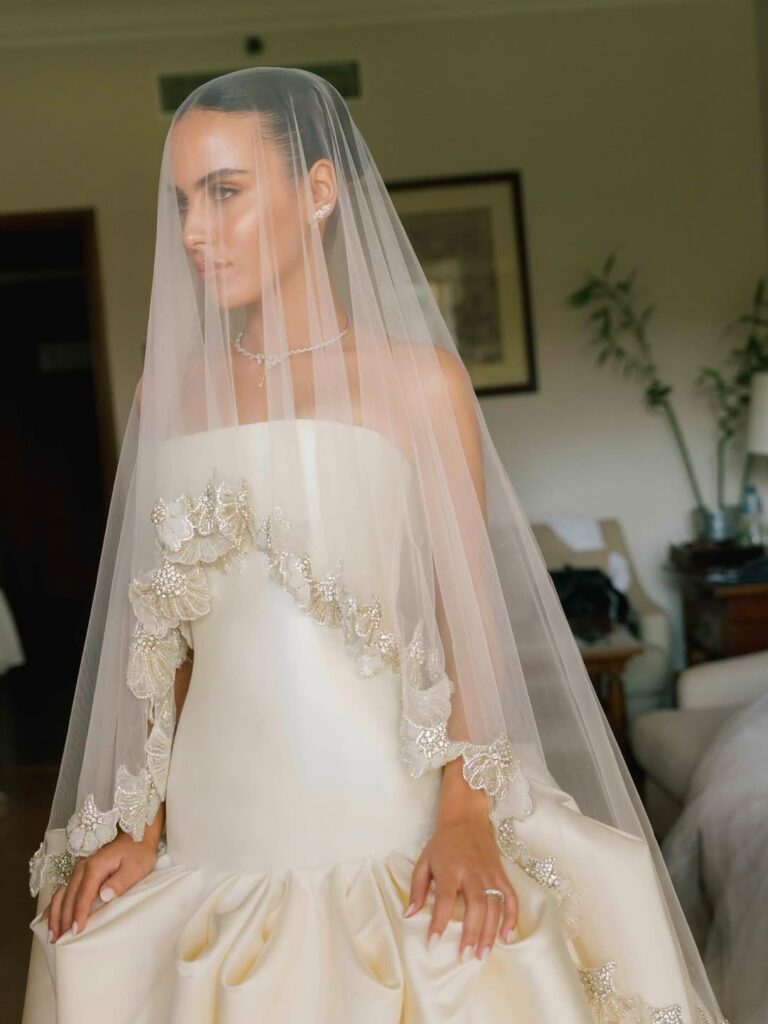
The list runs from appliquéd lace and high necklines to drop waists, ball gowns and corset bodices. Ivory and soft white hold nearly every rack this season.
1. Floral Appliqués and Lace
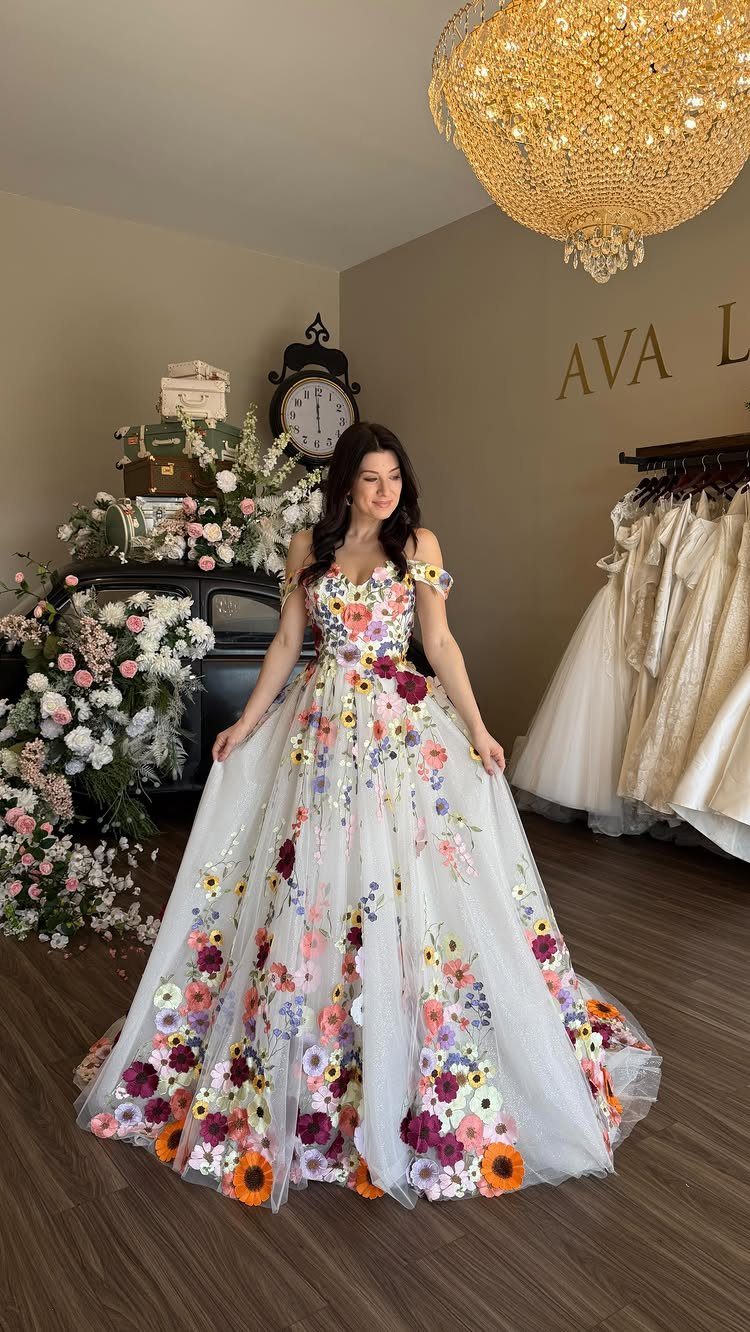
Texture makes a floral appliqué dress: 3D flowers stitched onto the bodice and skirt give the fabric depth that a flat print never will.
Color makes it more personal, and a dress with colorful blooms already carries your palette, so the bouquet can stay simple.
Lace works the same way at a quieter volume. If you love the idea but fear it will feel busy, choose appliqués scattered across the skirt instead of covering the whole gown.
Try both versions on in person, since 3D pieces look different in motion than on a hanger.
2. Dramatic Ball Gowns
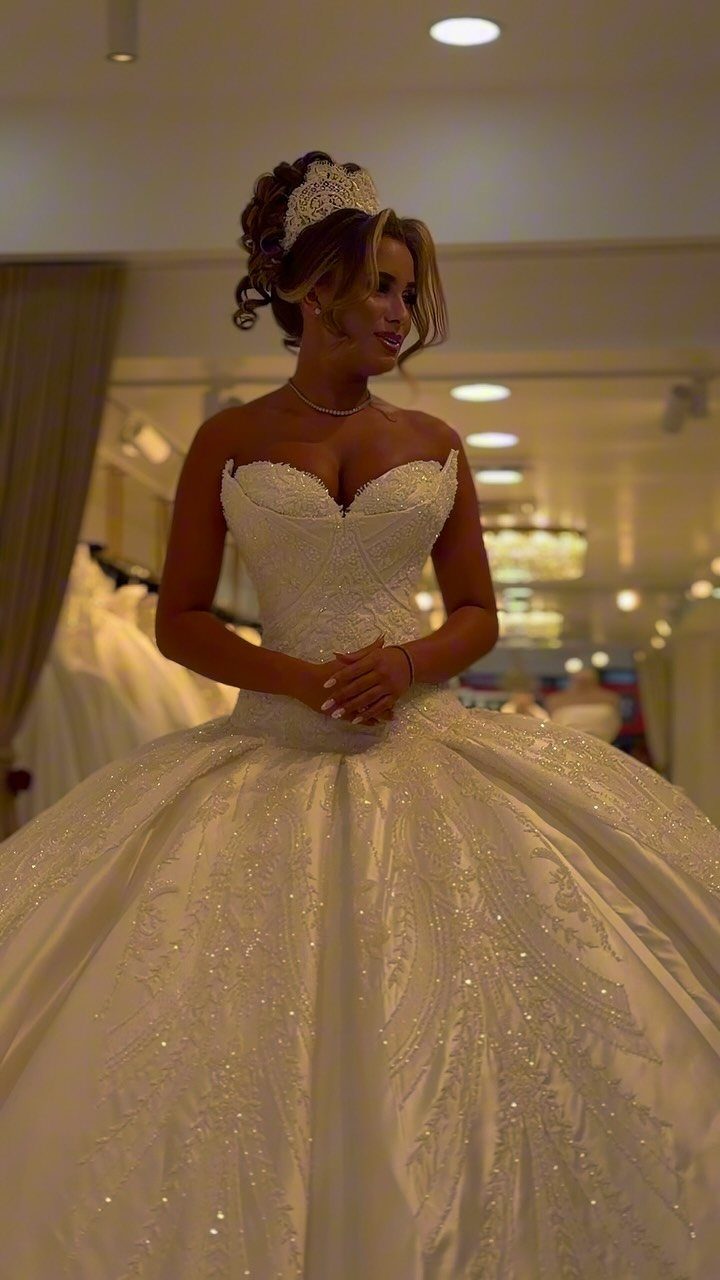
A ball gown is the classic answer for a bride who wants the full fairy-tale entrance. The skirt carries the drama, so a strapless bodice and a tiara are enough; anything more starts to compete.
I would choose a sparkly fabric only if you want the dress to be the center of every photo. Plain fabric lets the volume speak on its own.
Volume is also the downside: a skirt this full takes up space in doorways, cars and while dancing, so practice moving in it at fittings.
3. Drop Waists
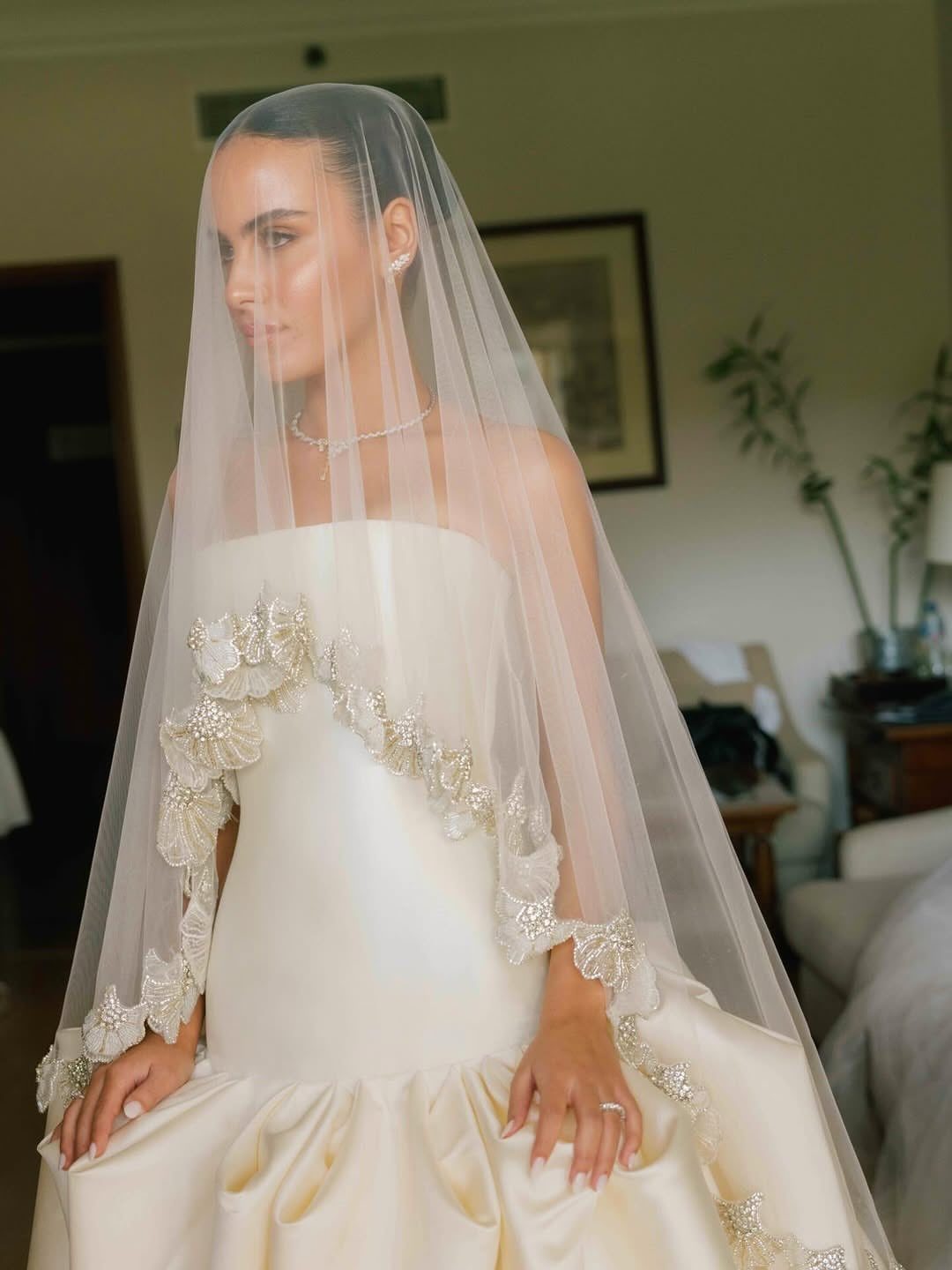
Fitted through the torso and skimming the hips before the skirt begins, a drop waist lengthens the body in a way a natural waist cannot.
Cream satin suits the shape well, because the smooth fabric lets the line itself be the detail.
Pair it with a veil edged in lace and the look reads modern and romantic at once.
Check the seam placement at your fitting. Where the skirt joins sets the proportions, and a small adjustment changes how the whole dress sits.
4. Tulle and Chiffon Dresses
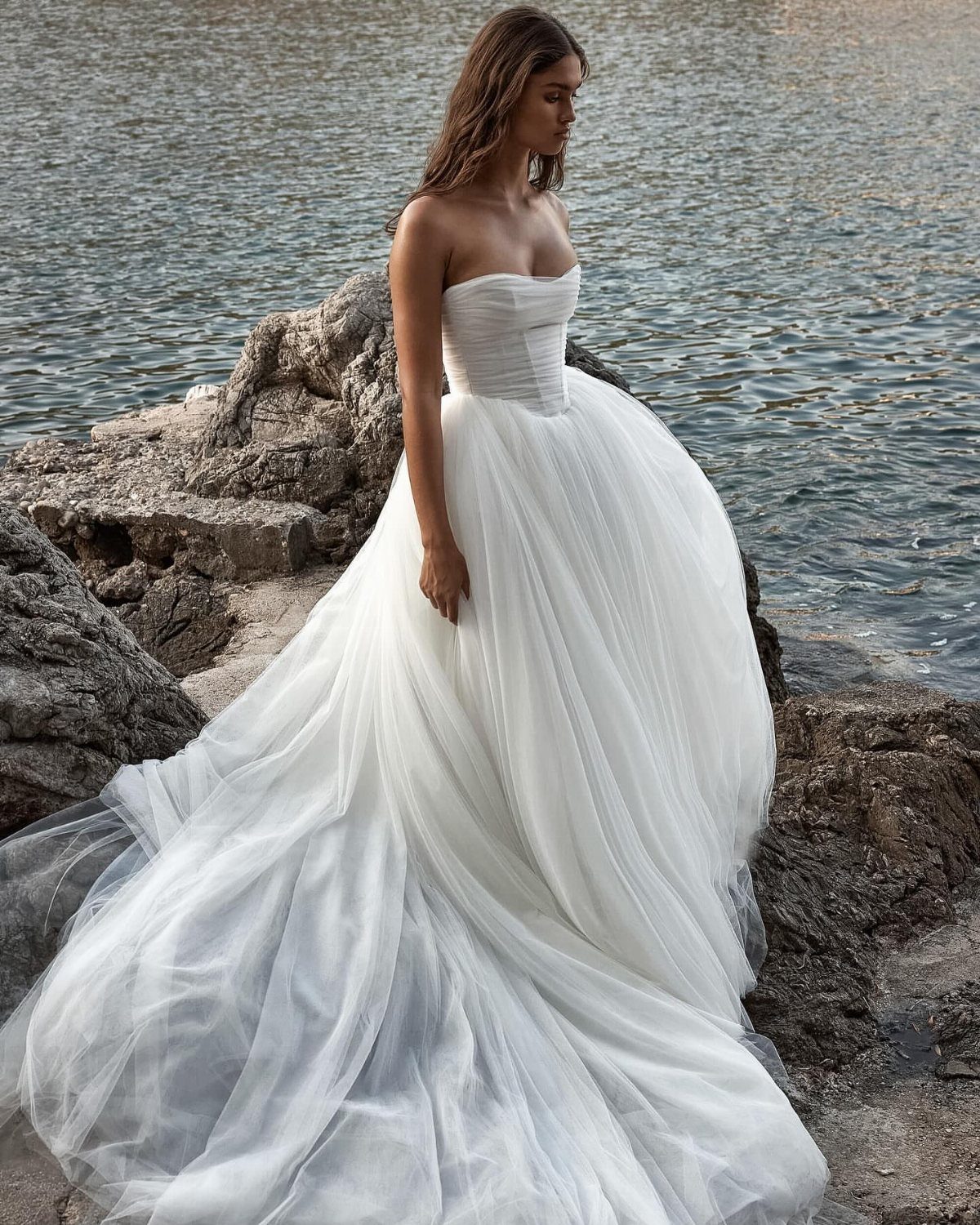
Tulle and chiffon are the fabrics for a bride who wants her dress to move.
A full tulle skirt holds its shape and floats, while chiffon drapes and ripples in any breeze, which makes both a natural fit for outdoor settings like a shoreline.
Layered tulle gives you volume without the weight of heavier fabrics. A strapless bodice keeps the focus on that skirt.
Both fabrics are light and airy, but they are delicate, so ask the shop how to handle snags.
5. Overskirts
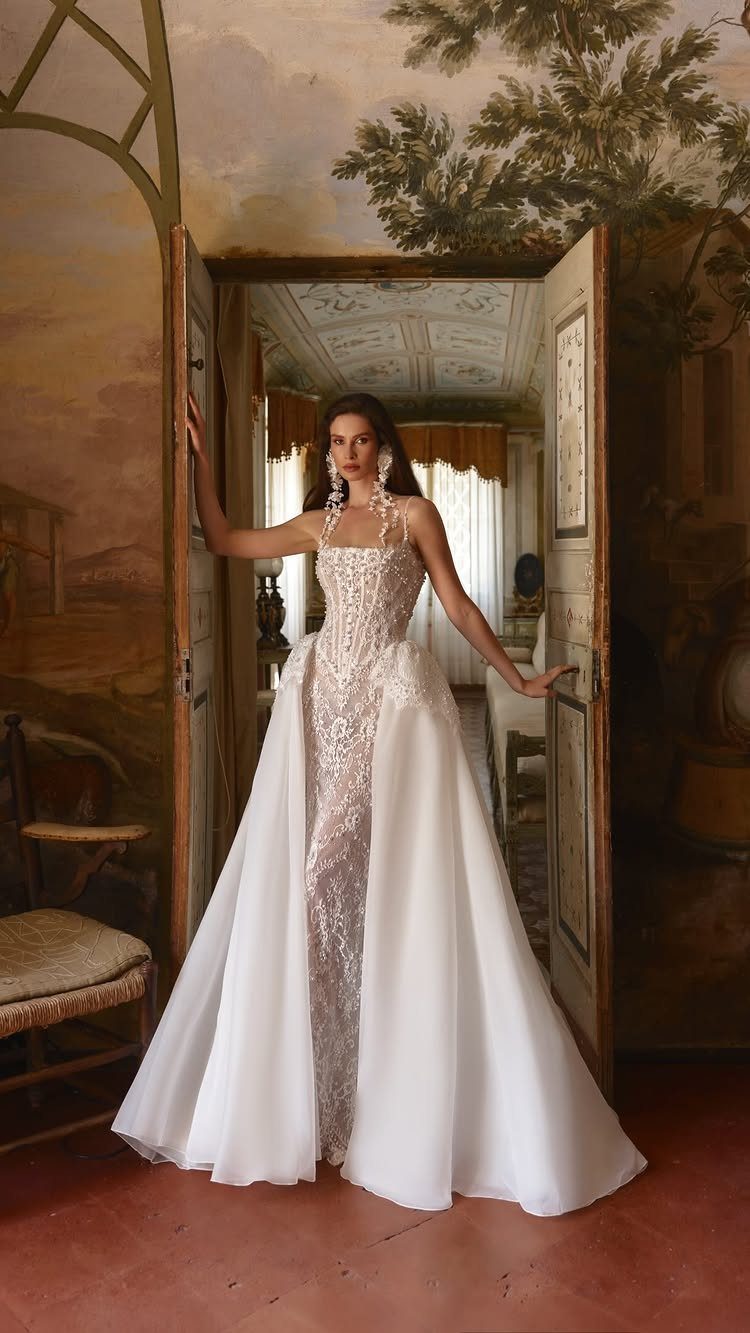
Detachable overskirts give you two dresses for the price of one, which is a smart move on a budget. Wear the full skirt for the ceremony and photos, then remove it for a slimmer dress on the dance floor.
A beaded or lace overskirt adds detail without changing the dress underneath, so ask how it fastens and whether it comes off easily without help.
Practice taking it off before the wedding, so the switch takes seconds on the day.
6. Corset Bodices
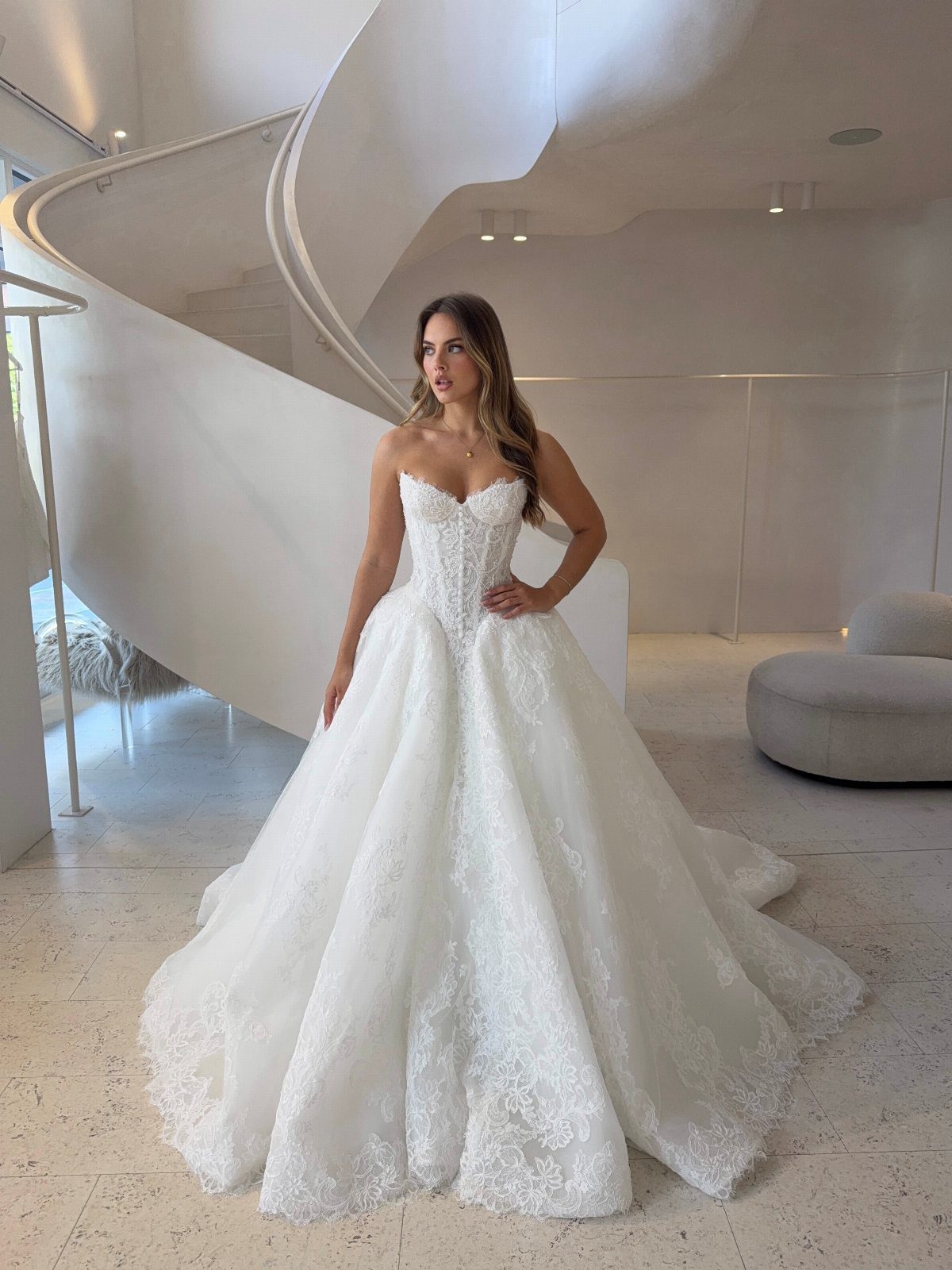
A corset bodice shapes the torso with structure, and pairing it with a lace skirt softens that firmness into something romantic. The strapless cut shows off the neckline and shoulders.
Book alterations early and plan on a few fittings.
Lace-up backs can be adjusted a little on the day, which helps with small changes in fit.
7. High Necklines
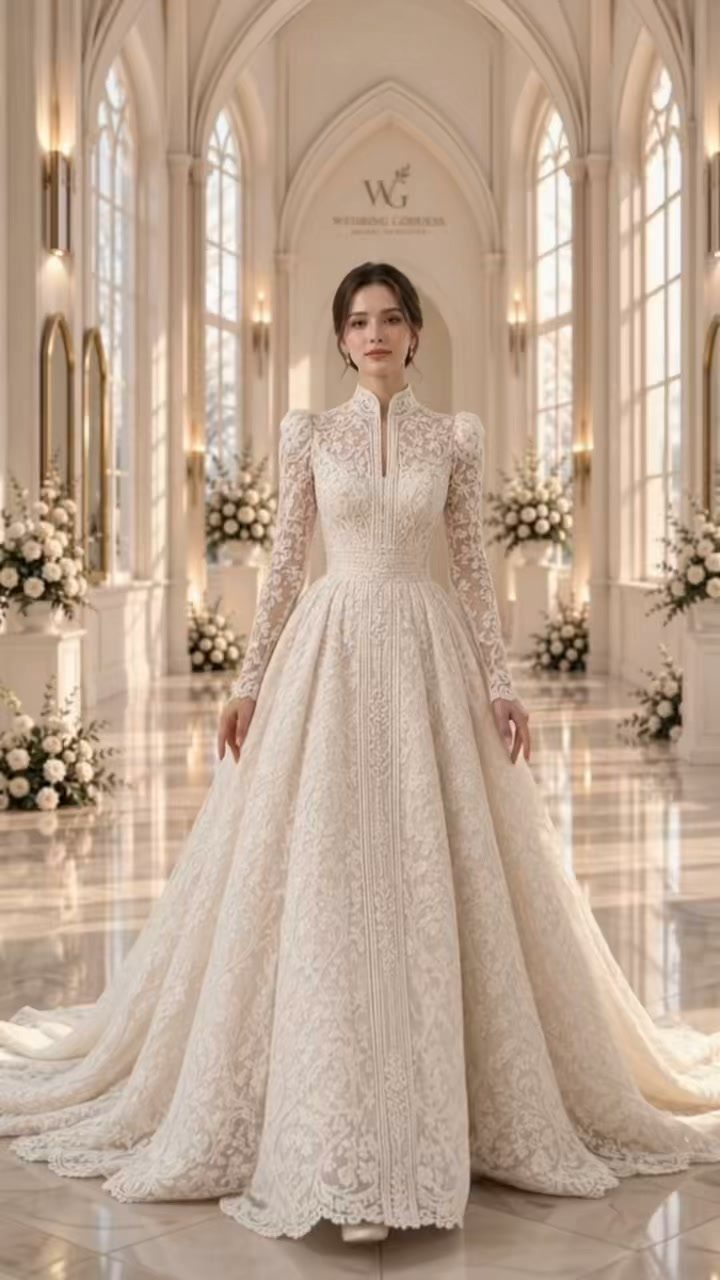
A high neckline covers the collarbone and sits close to the throat, which gives a dress a polished, modern look without adding anything else. Lace with long sleeves keeps the whole bodice quiet and covered.
Skip a statement necklace; the neckline is the detail. Earrings and an updo show it off best.
Check how the collar sits when you lean forward or reach up, since a high neck can pull during hugs.
8. Statement Bows
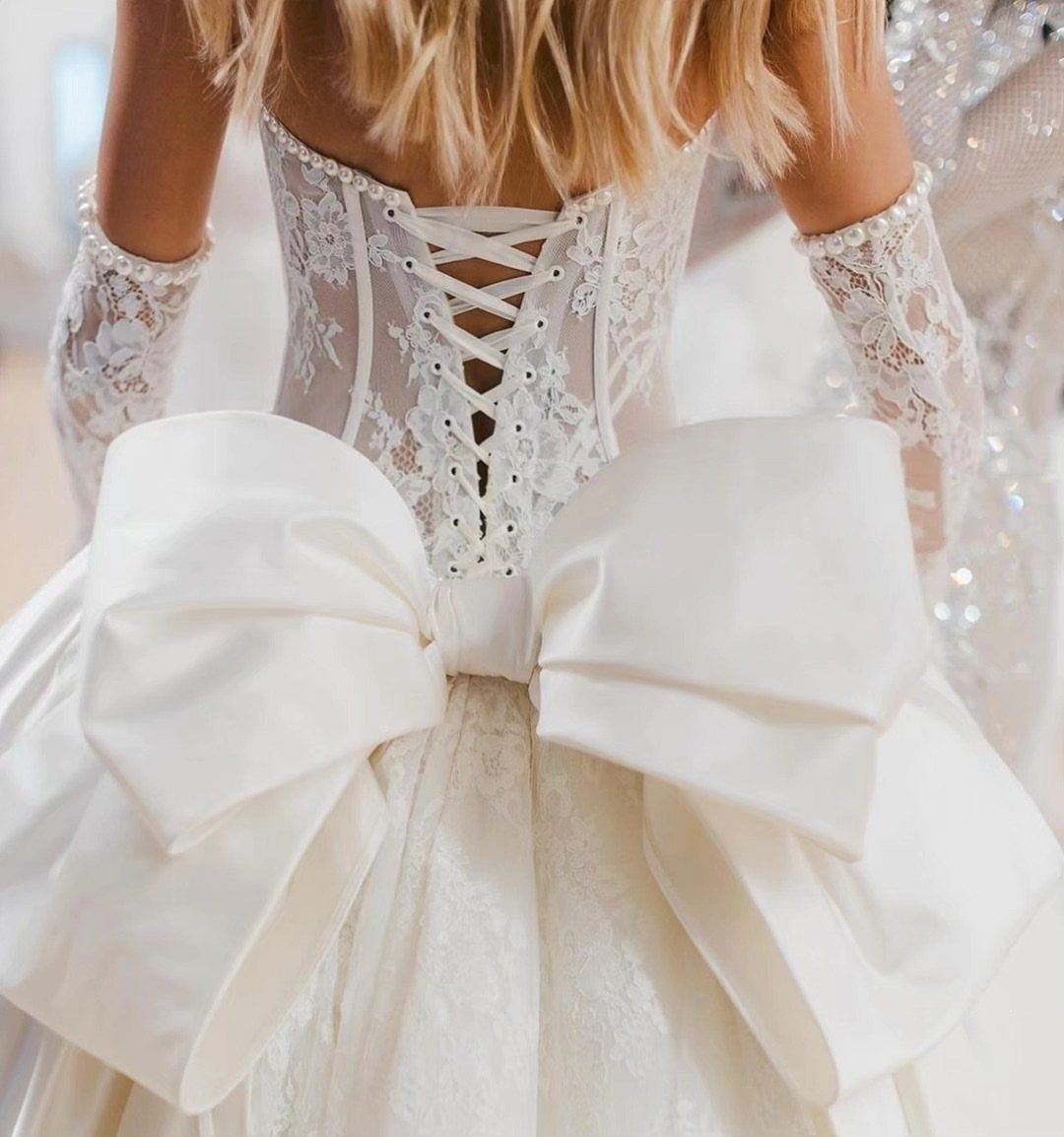
Bows work at two sizes, and I prefer the oversized one at the back of the waist, where a satin bow turns a simple lace dress into something you see from the aisle.
A delicate bow at the neckline or along the straps is the quieter choice.
Pick one placement only.
Ask how the bow is attached and whether it can be removed or reshaped if you tire of it.
9. Sleek Satin Dresses
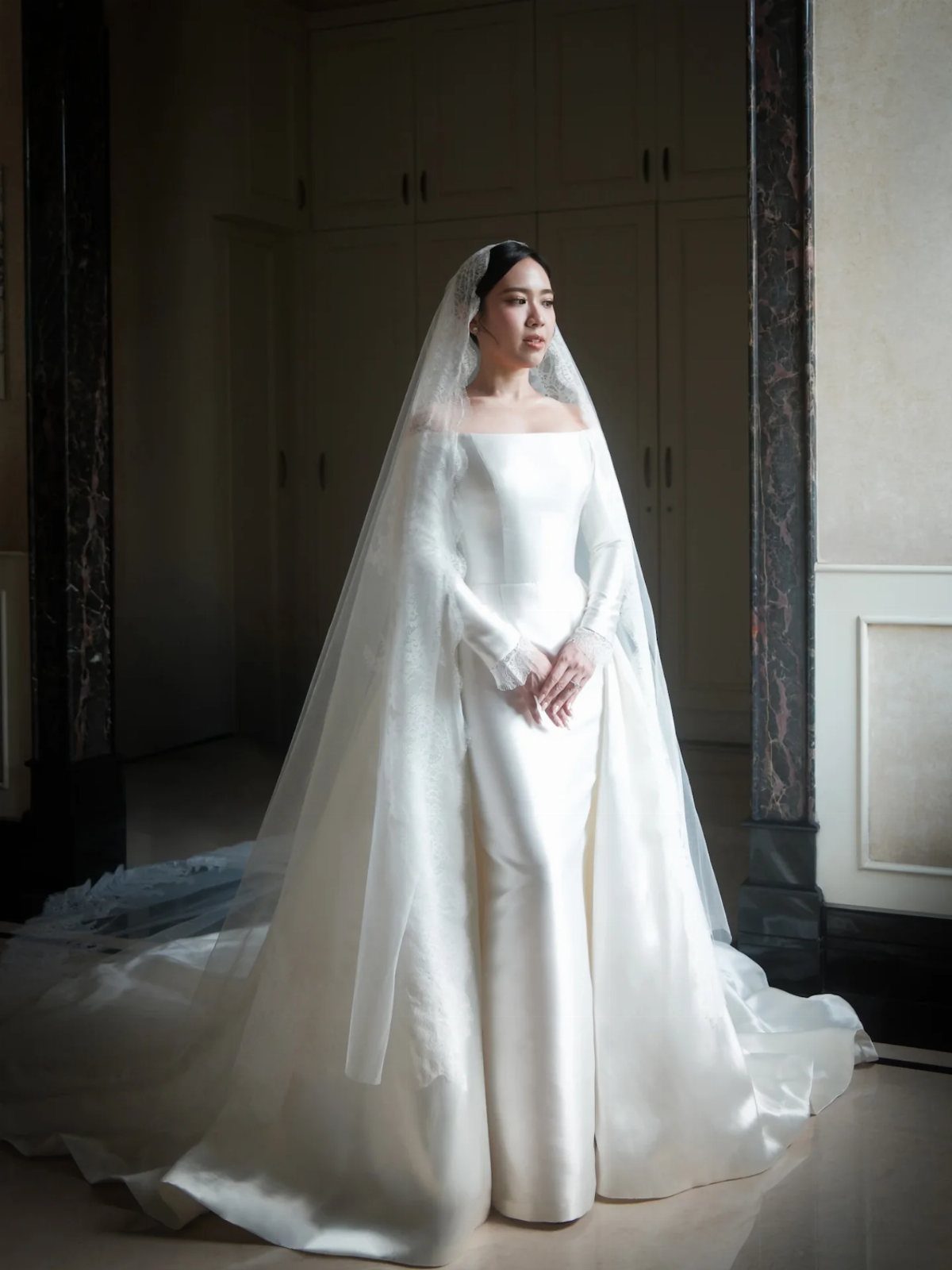
Sleek satin leaves the dress with no beading or lace to hide behind, so cut and fit do all the work. An off-the-shoulder neckline shows the collarbone, and a long veil adds drama without adding fabric to the dress itself.
I would spend the alterations budget here, because smooth satin telegraphs every pull and wrinkle. Ask for a steamer at the fitting.
Keep jewelry minimal so the fabric catches the light.
10. Sparkly Wedding Dresses
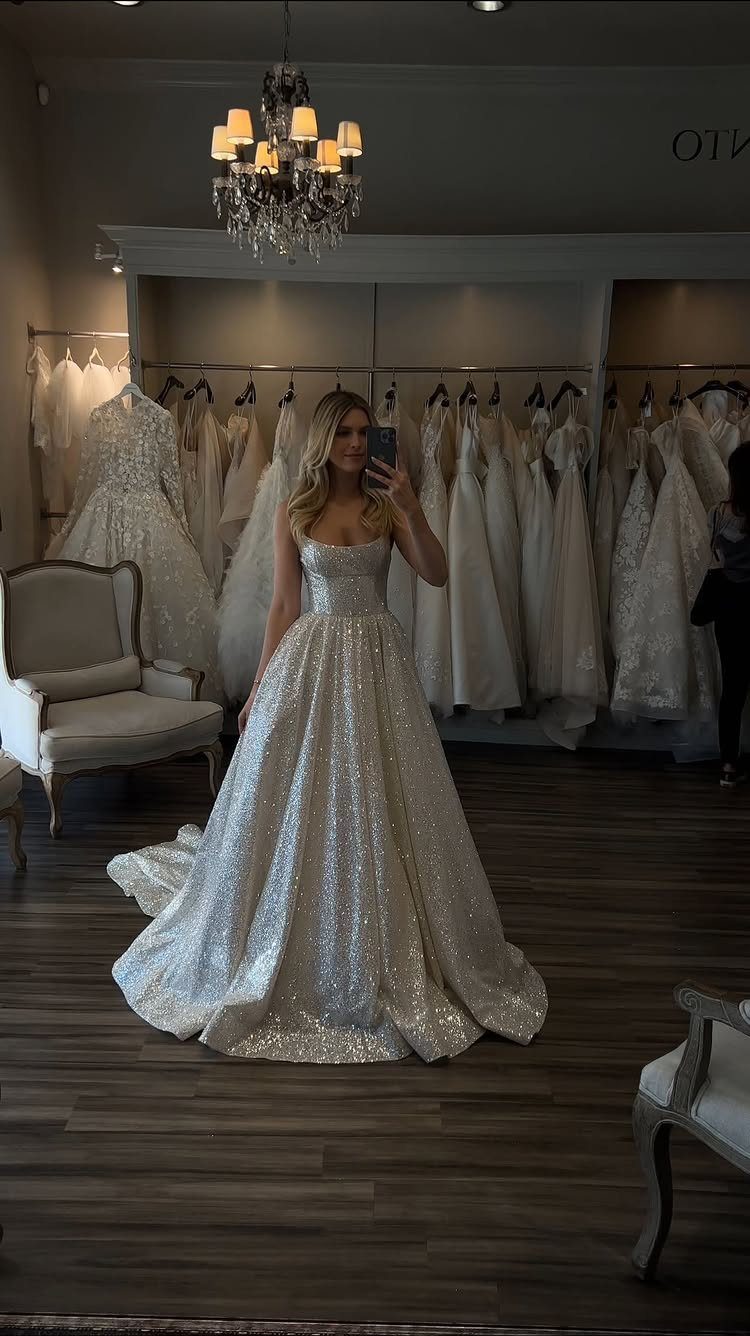
Metallic-threaded fabric and embellishments give a gown a shimmer that shifts with every step. A silver-white ball gown reads as glowing rather than glittery.
Look at it under different lights in the shop. A boutique chandelier flatters sparkle differently than daylight or a reception room.
Keep everything else plain: simple hair, small earrings, a clean veil. The dress is already the statement.
11. Pearl Embellishments
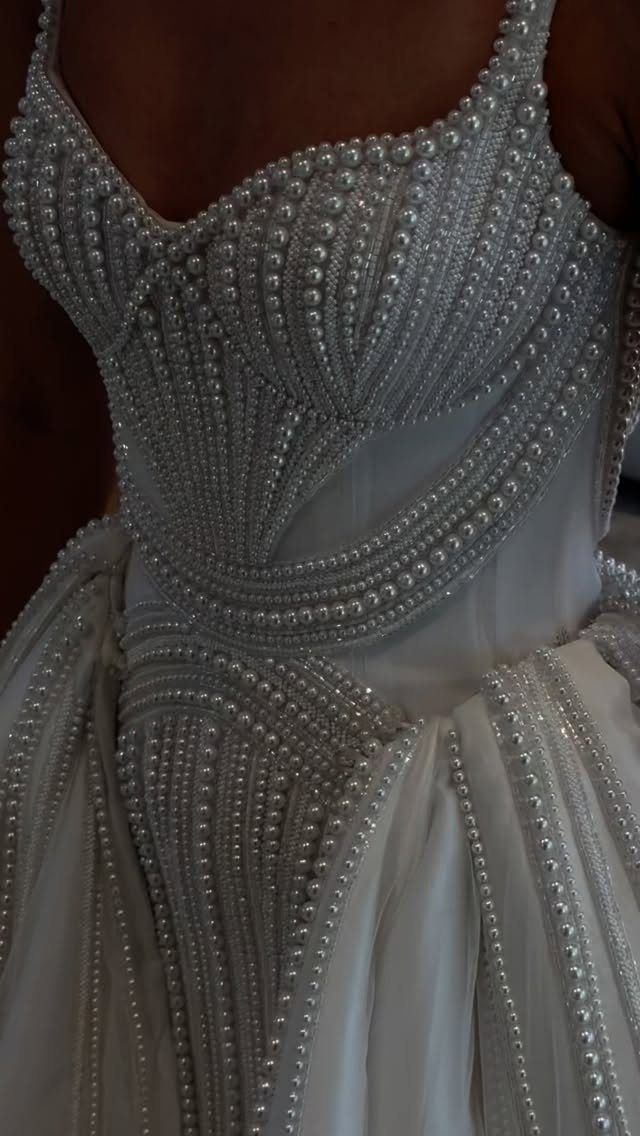
Pearls on a bodice, sewn in dense, curved rows, feel modern when they are used as pattern instead of as a single strand. This is texture you can see up close and in photographs.
I would pick pearl work over a plain skirt so the detail has room. Ask whether the pearls are sewn on by hand, and how the shop repairs any that come loose.
Beadwork adds weight, so wear the dress for a full fitting before deciding.
Choosing the Right Fabric
Spring weather swings, so pick fabric for the whole day, not just the ceremony.
Satin can look just right in spring if you choose a structured, modern silhouette where the fabric’s weight and shine do the work.
Lace gives you texture and softness, and the best patterns have an irregular, natural quality rather than something that feels stiff or formal.
Corded and delicate lace, shimmering and sheer fabrics, detailed embroidery and satin are the textures showing up for 2026.
If you want one dress to do two jobs, a removable sleeve or topper lets you change the look between ceremony and reception.
Accessorizing Your Dress
Let the dress set the volume for everything else.
A bold lace motif calls for understated accessories like a plain veil or simple pearls, while a streamlined silhouette gives you space for dramatic earrings, a veil with floral appliqué or a detailed hair comb.
Vintage-style pieces are the 2026 direction: headscarves, bridal capes, neck scarves and veils. Pick one of them, not all four.
Shade matters as much as the accessory. Soft champagne, warm ivory, blush-tinged linings and nude layers can make lace and appliqué look luminous, and I would choose whichever makes your skin look alive.
Shoes deserve a real decision. For a lawn ceremony, block heels, low heels or polished flats beat a narrow stiletto, and comfort lets you stay present all night.
Spring Wedding Considerations
Choose the gown around the venue first.
An outdoor garden suits something that moves easily and trails behind you, but if the lawn might be wet or rough, decide on your bustle ahead of time and choose a train you can lift or pin without hassle.
Indoor venues with high ceilings and formal architecture can carry heavier fabrics like mikado, structured pleating or a skirt with real volume.
Rooftops and lofts suit sleek crepe or satin. Beach and waterfront ceremonies need fabric that flows and breathes, a relaxed skirt shape and secure necklines or sleeves, because wind will test every seam.
Ivory and soft white dominate the 2026 season, and both work beautifully with vintage details and bias-cut silhouettes. For cooler evenings, a topper or sleeves that come off handle the swing between warm afternoon and chilly night.
Before you buy, make sure you can walk, sit, hug and dance without constantly adjusting.
Frequently Asked Questions
What makes a wedding dress feel right for spring?
A spring dress should be light, comfortable, and ready for weather that swings from warm afternoon to chilly night.
Tulle and chiffon move easily, lace adds texture when its pattern looks natural rather than stiff, and satin works in a structured, modern cut.
I would add a removable topper or sleeves, since they handle the temperature drop without a second dress.
What wedding dress fabric is best for a beach or waterfront wedding?
Tulle and chiffon are the best fits, because they flow and breathe.
Chiffon drapes and ripples in a breeze, while layered tulle gives volume without heavy weight. Wind finds every weak seam on a waterfront, so keep the skirt relaxed and choose a neckline or sleeves that stay put.
How can I get two looks out of one wedding dress?
A detachable overskirt or a removable sleeve or topper does it. Ask how the piece fastens and whether it comes off without help, then practice the switch so it takes seconds on the day.





