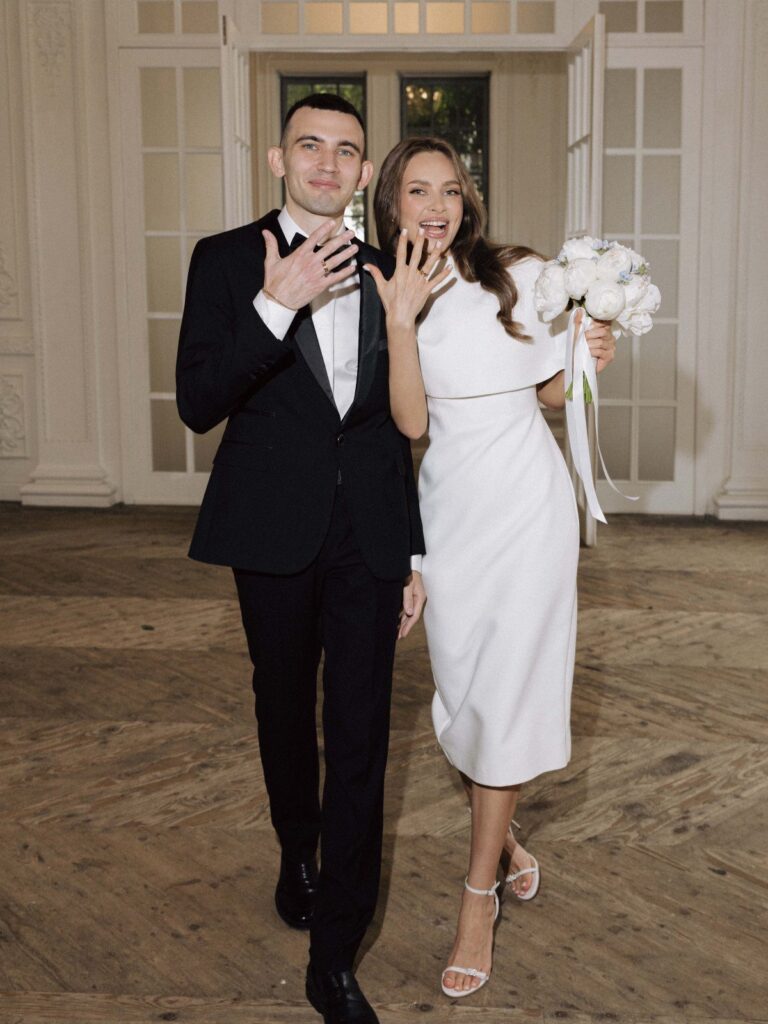
Your courthouse’s dress code decides this list more than your taste does, and the clerk’s office can settle it with one phone call before you buy anything.
The ideas run from a pantsuit with a lace bodice and a jumpsuit to tea-length dresses, short dresses with hats or detachable trains, and capelets, and most of them sit between business casual and semi-formal.
1. Bridal Jumpsuit
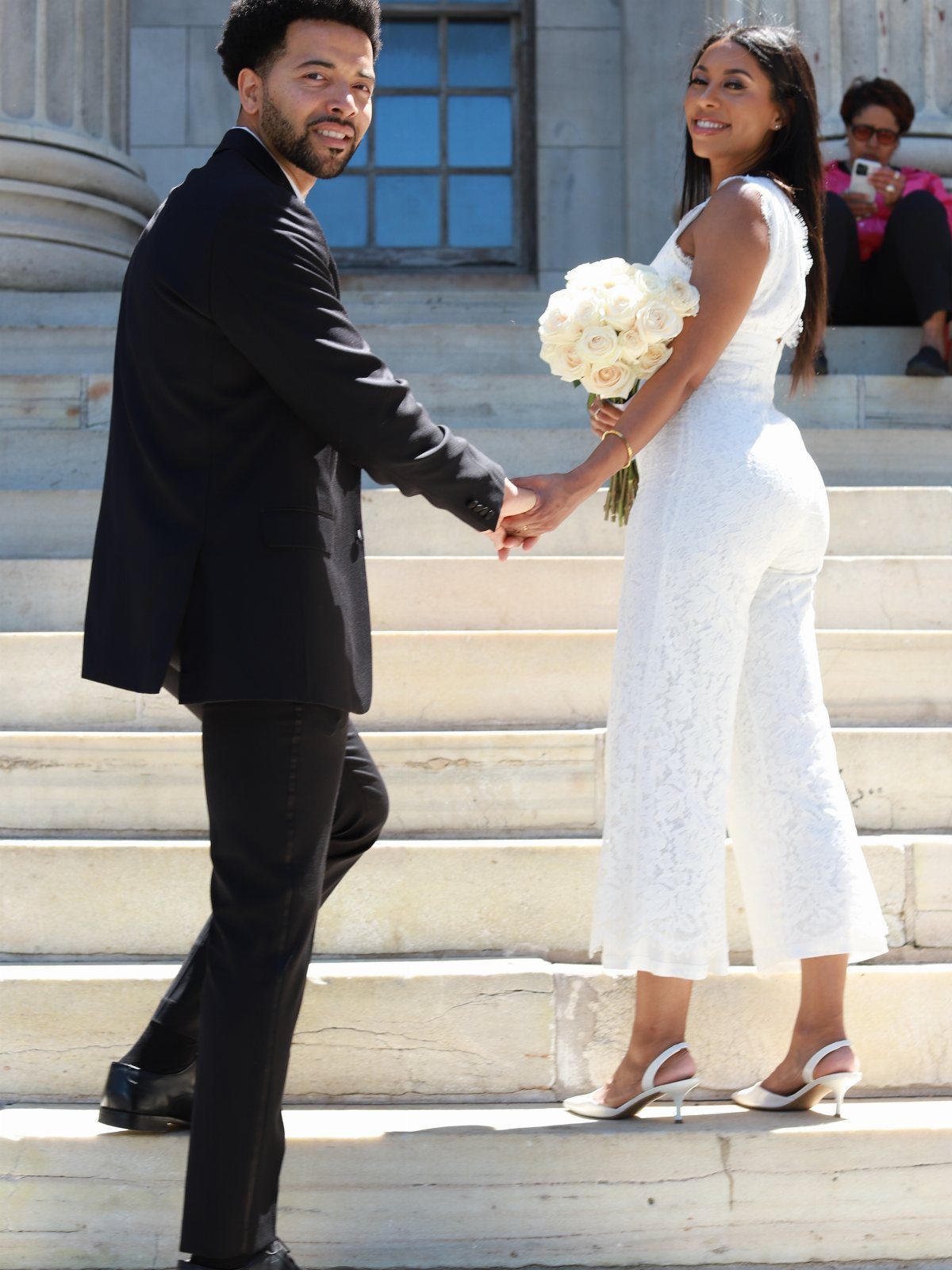
Lace keeps a jumpsuit from reading as office wear, and that is what makes this one work for a civil ceremony.
Pants also settle a practical problem: courthouse steps, security lines and parking garages are easier in a leg than in a hem.
Choose a fitted bodice and a wide leg that skims the floor, and wear heels high enough to keep the line unbroken. Have the hem pinned for the shoes you will actually wear.
A jumpsuit is a bolder choice than a dress, and I would pick it over one every time for a courthouse.
2. Jacket-style Wedding Dresses
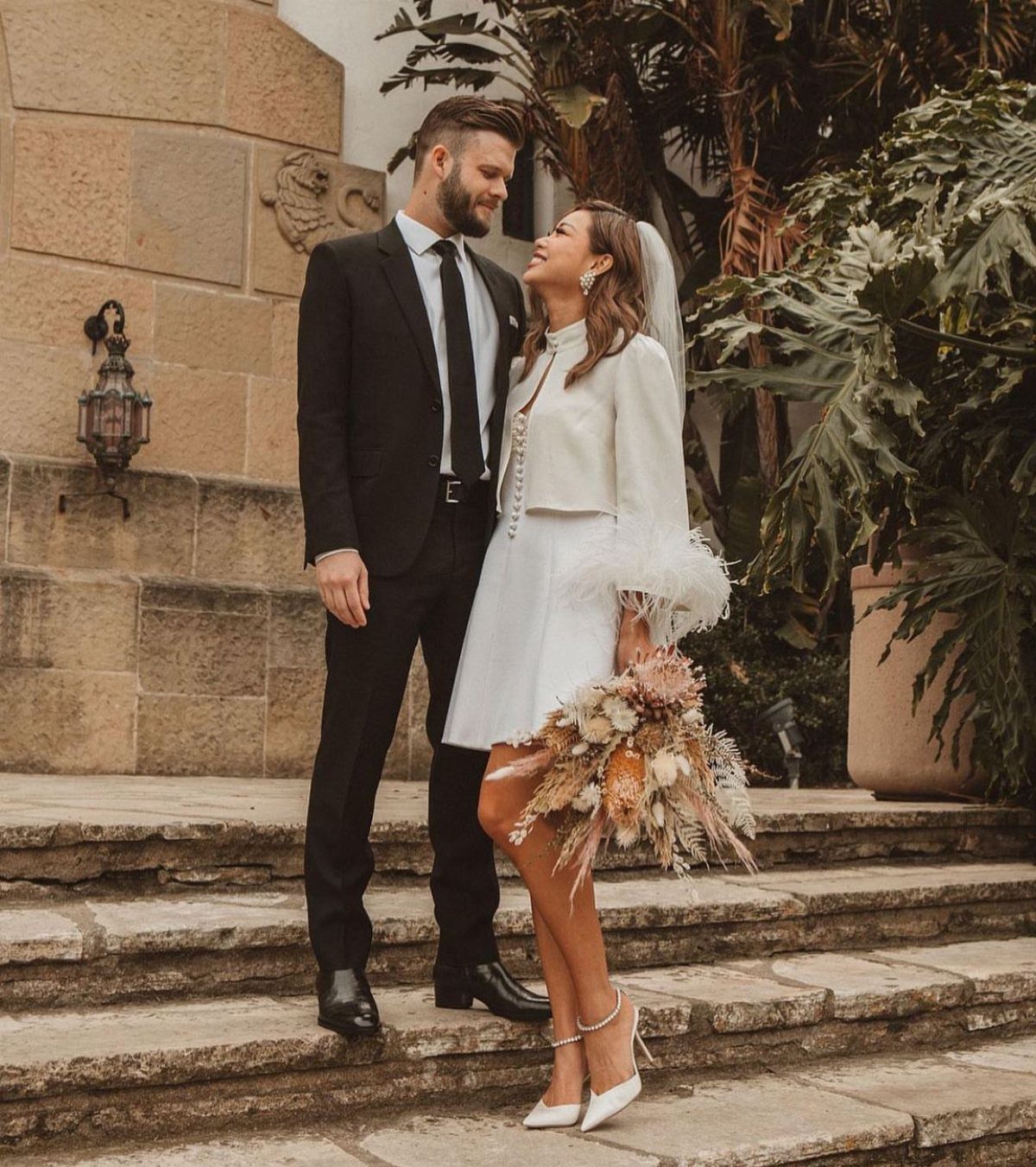
A short dress with a cropped jacket gives you two outfits in one. For the ceremony, the jacket adds structure that suits a courthouse’s formal, official feel; afterward it comes off and the dress works for dinner.
Match the white of the jacket to the dress as closely as you can. Even a slight shade difference shows up in daylight on stone steps.
If the budget is tight, I would put the money into the jacket’s fit across the shoulders. That is the part people notice.
3. Tea Length Dresses
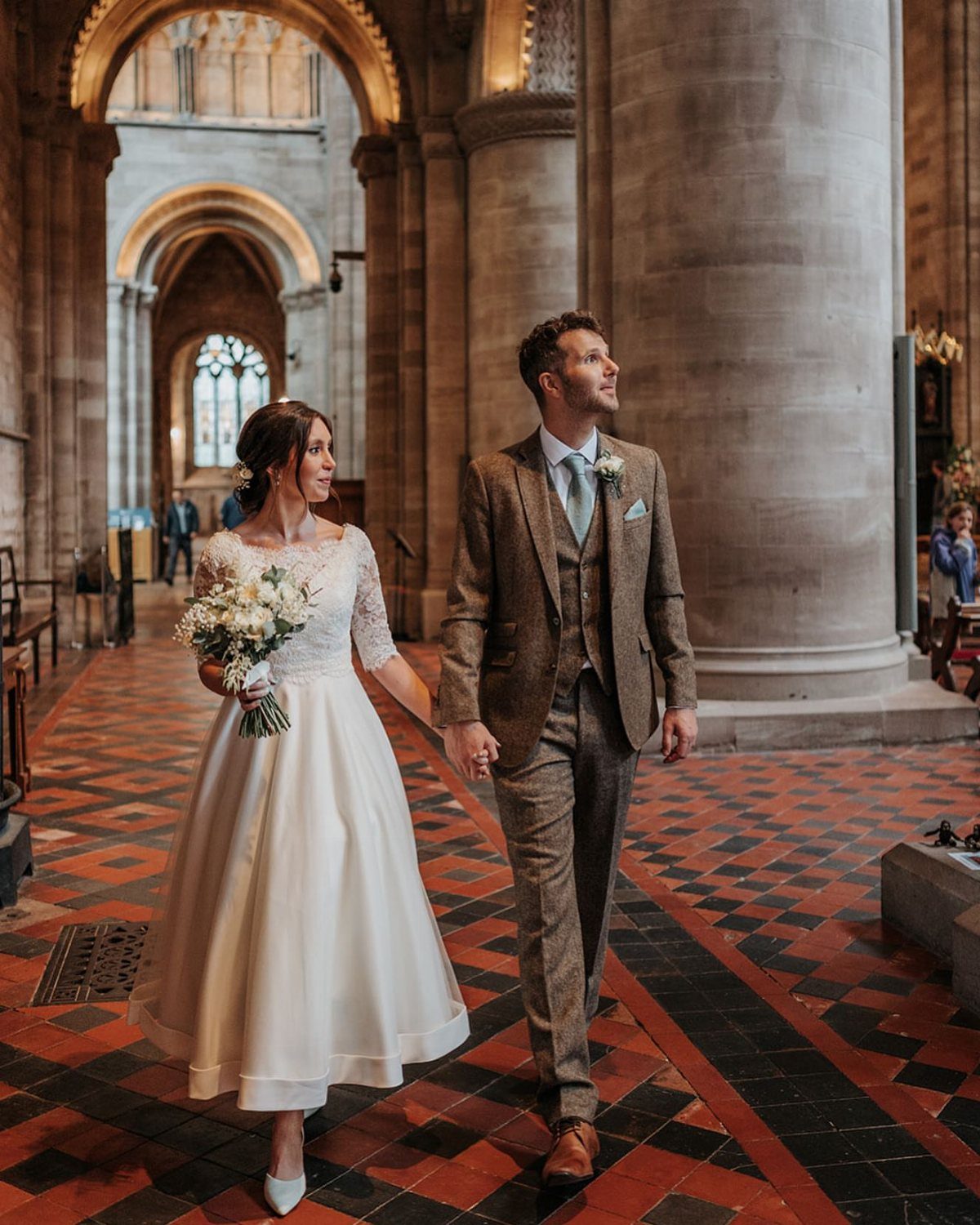
Hemlines that stop mid-calf sit between a gown and a cocktail dress, which is why tea length looks right in a formal building without feeling like costume. A hem at that height also keeps fabric off courthouse floors and stairs.
Because the length is the feature, check it with your shoes on. A tea-length dress reads best when the hem lands at the slimmest part of the calf.
Pair it with a simple heel or a flat. A heel with a slim strap is my pick, because it leaves the outfit clean and uncluttered.
4. Short Wedding Dresses
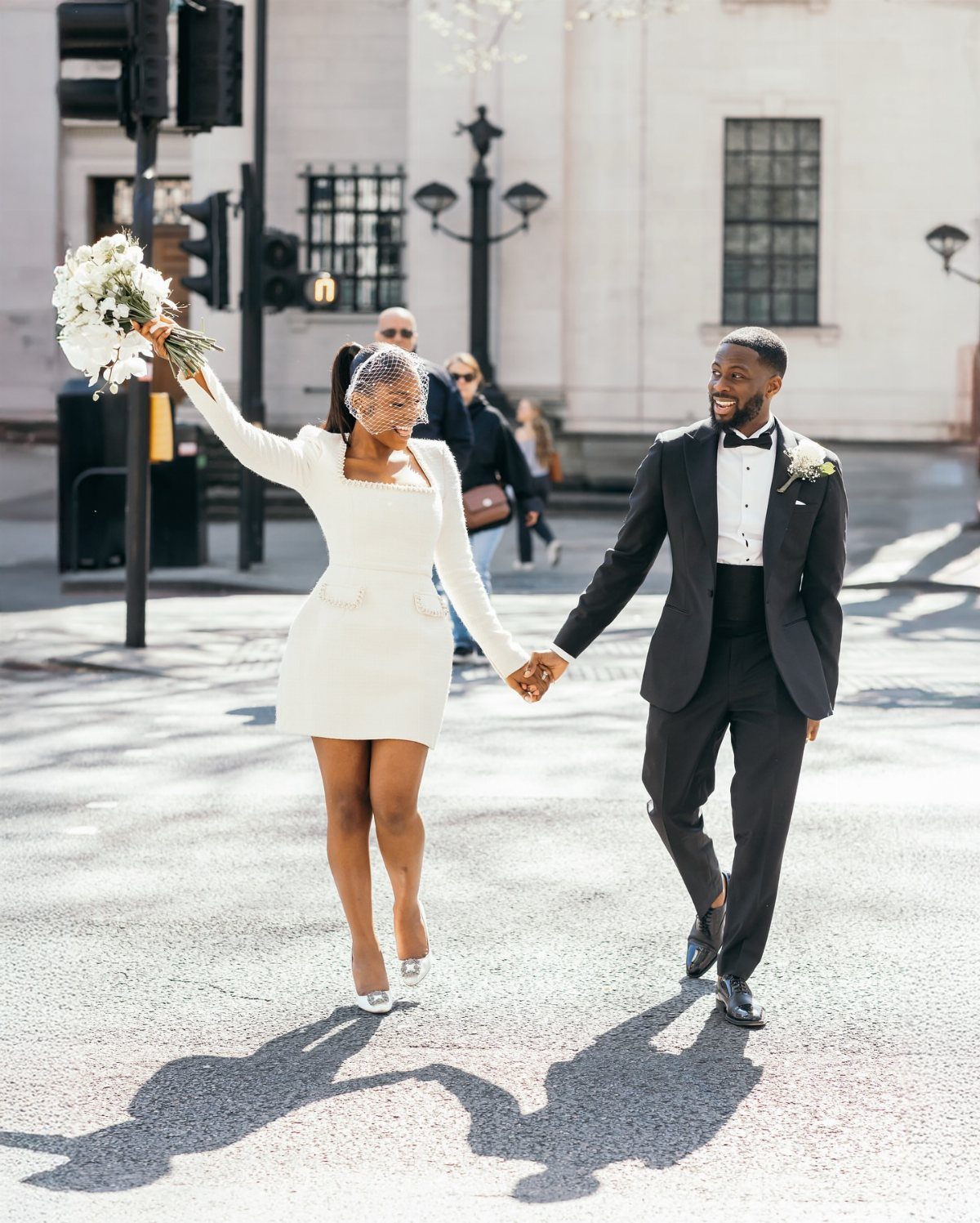
Long sleeves on a short dress are the detail I would look for first. They add coverage and a polished feel, so the dress stays chic instead of party-ready.
A short veil finishes it. Choose one that ends near the shoulders or elbows, so it moves well when you walk outdoors between the courthouse and the car.
Short dresses also tend to cost less than gowns, which helps when the budget is modest. Spend the savings on tailoring so the fit is exact.
5. Casual Civil Wedding Dress
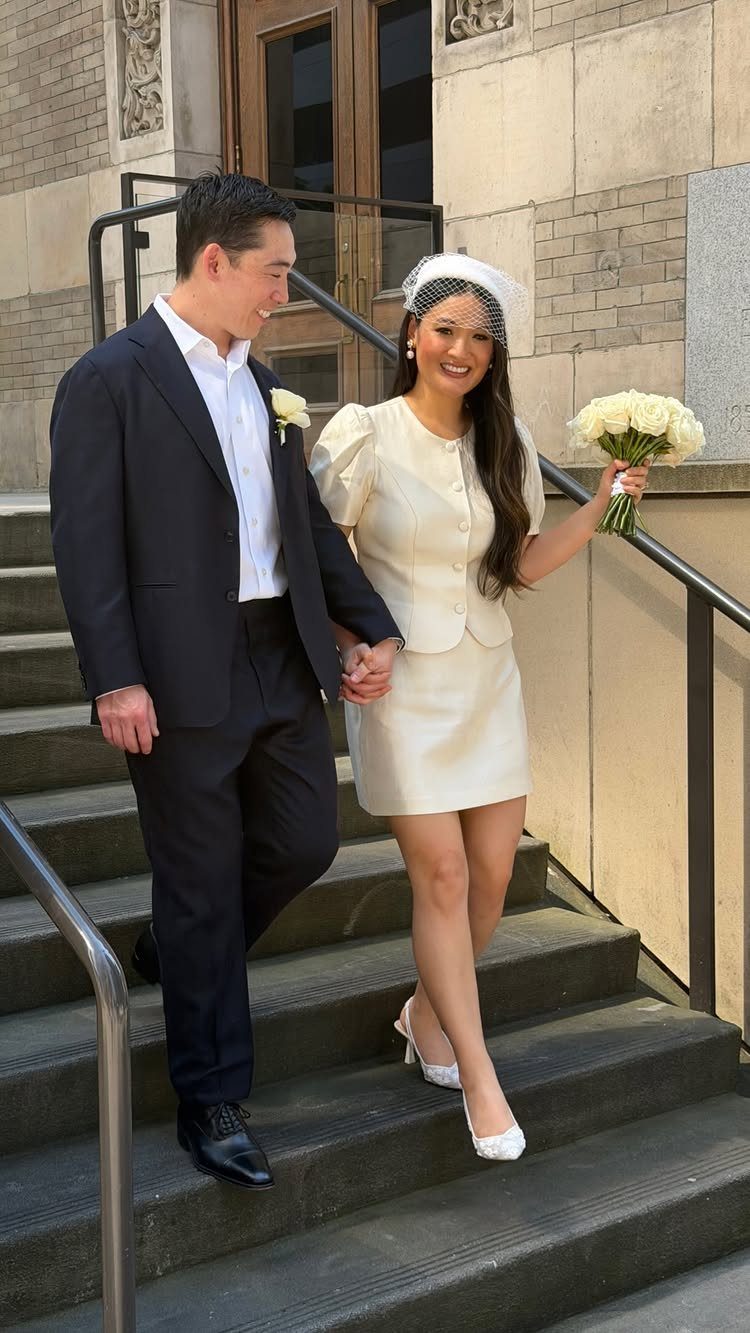
A short white suit is a fashion statement, and a courthouse backdrop suits it well. The tailoring says deliberate, not downsized.
Look for a cream or white set in a matte fabric, then add a short veil to mark it as bridal.
I like this version for anyone who would rather wear a blazer they could rewear than a dress they will store. Have the skirt or trousers hemmed to your shoes.
6. Off-the-Shoulder Midi Dress
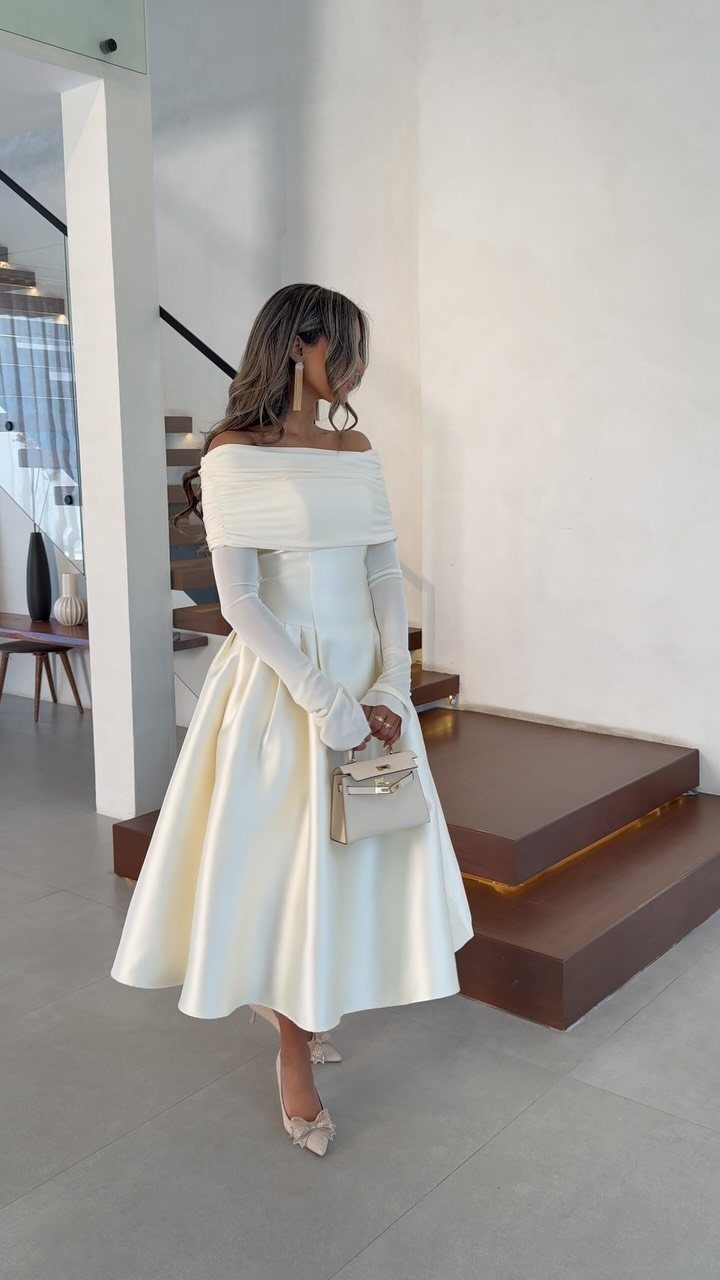
An off-the-shoulder neckline frames the collarbones and shoulders, and a midi length stays relaxed enough for a civil ceremony. It is a dress that photographs well in a modern interior with clean lines.
Because the neckline sits low on the arms, try it on and raise your arms. If it slips or pulls, a size adjustment or a few stitches inside the band can help.
Add heels and a small handbag, and you are done. I would skip a veil here and let the neckline do the work.
7. Sleek and Simple Designs
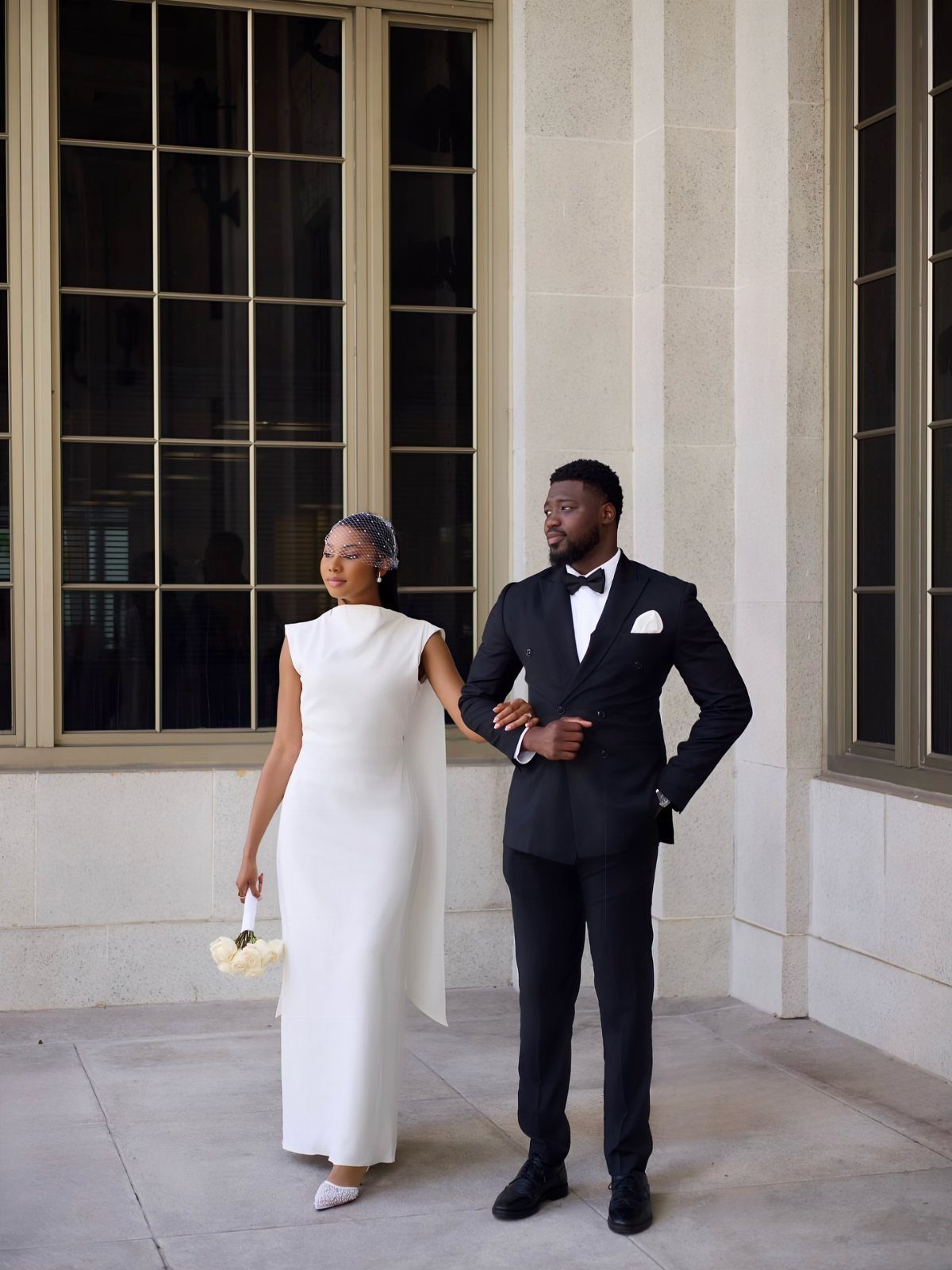
A high neck and a clean column of white leave nothing to fuss over, which is why a plain midi suits a courthouse so well. With no beading or lace to compete, the cut and the fabric carry the look.
Choose a matte crepe or satin with a little weight, since thin fabric shows every seam in bright light. I would keep jewelry to small earrings and let the neckline stay bare.
8. Chic Separates
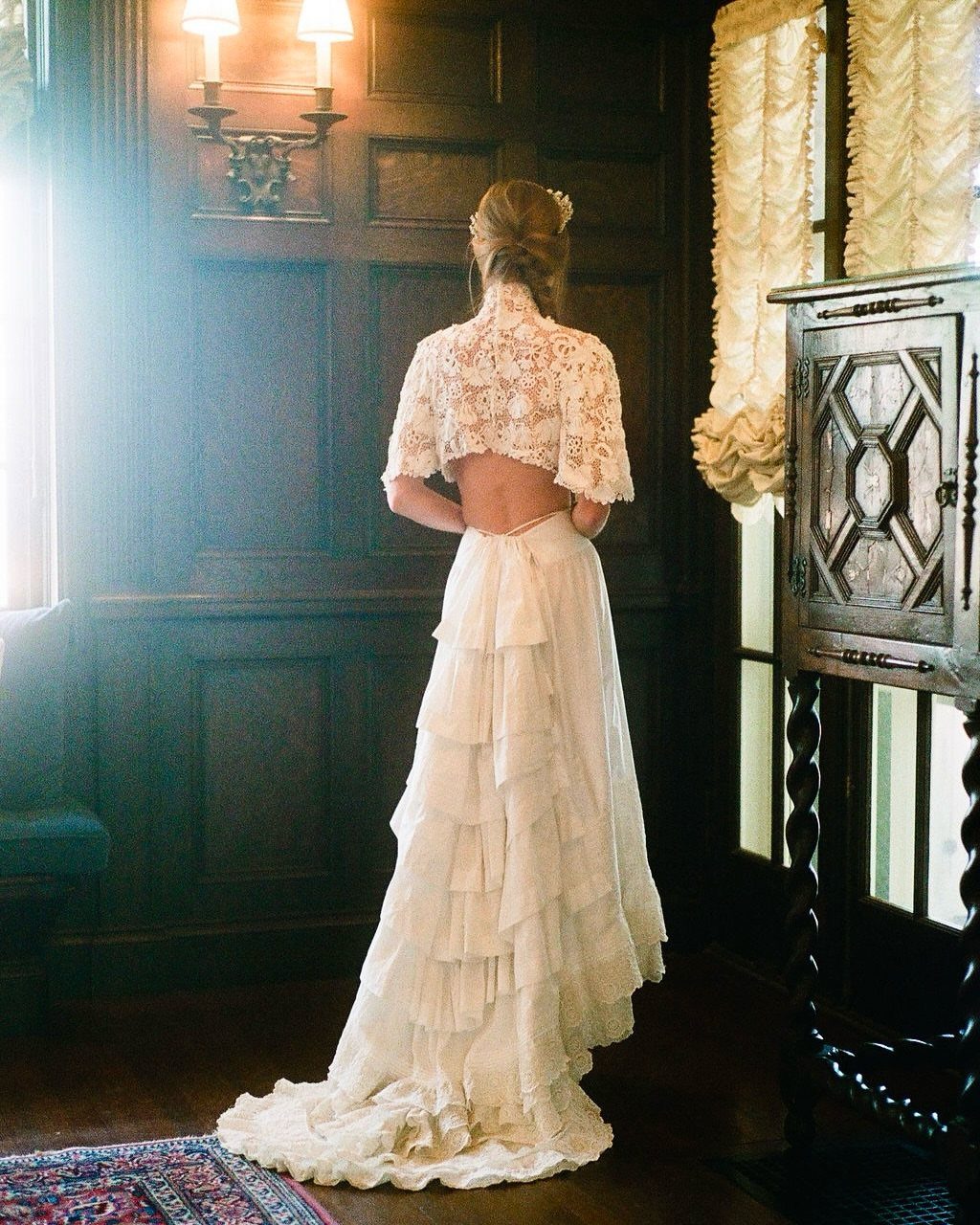
Separates let you build the outfit around the piece you love most. A lace crop top over a tiered skirt is a good pairing, because the top is delicate while the skirt gives movement.
Buy each piece in the size that fits it, not as a set. Then have the skirt waist hemmed or taken in so the two meet without a gap.
Both pieces can be worn again separately, which I count as a real budget win.
9. Short Dress with Detachable Train
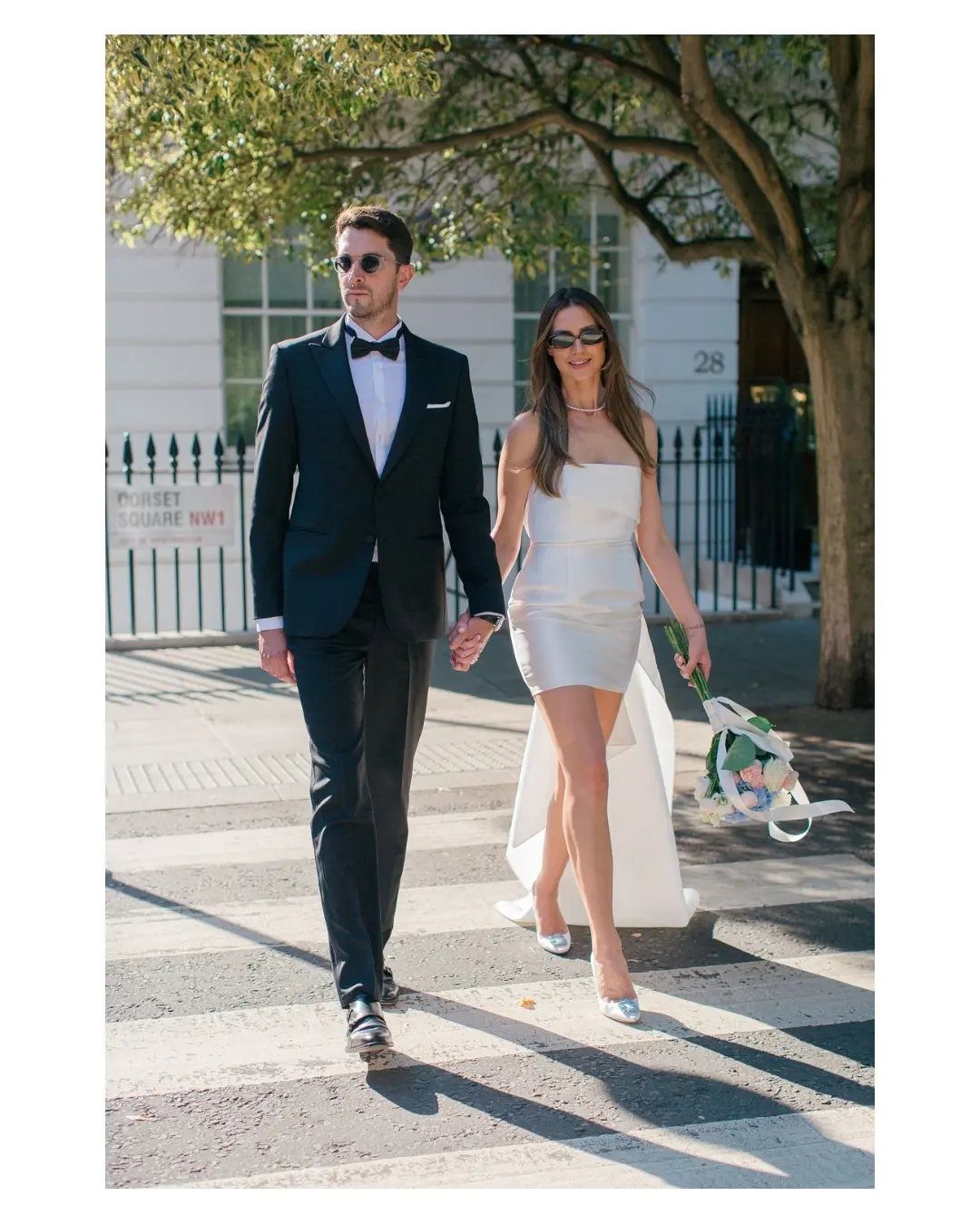
Pair a short dress with a sheer train and you get a street-length outfit that still has a bridal finish.
It suits a courthouse well: you keep the practical hem for the building, and the train adds drama for the walk outside.
Ask whether the train detaches. If it does, you can remove it before dinner and wear the short dress alone.
Sunglasses and classic white heels keep the look polished. I would take the sheer train over a long skirt any day.
10. One-Shoulder Dress with Statement Hat
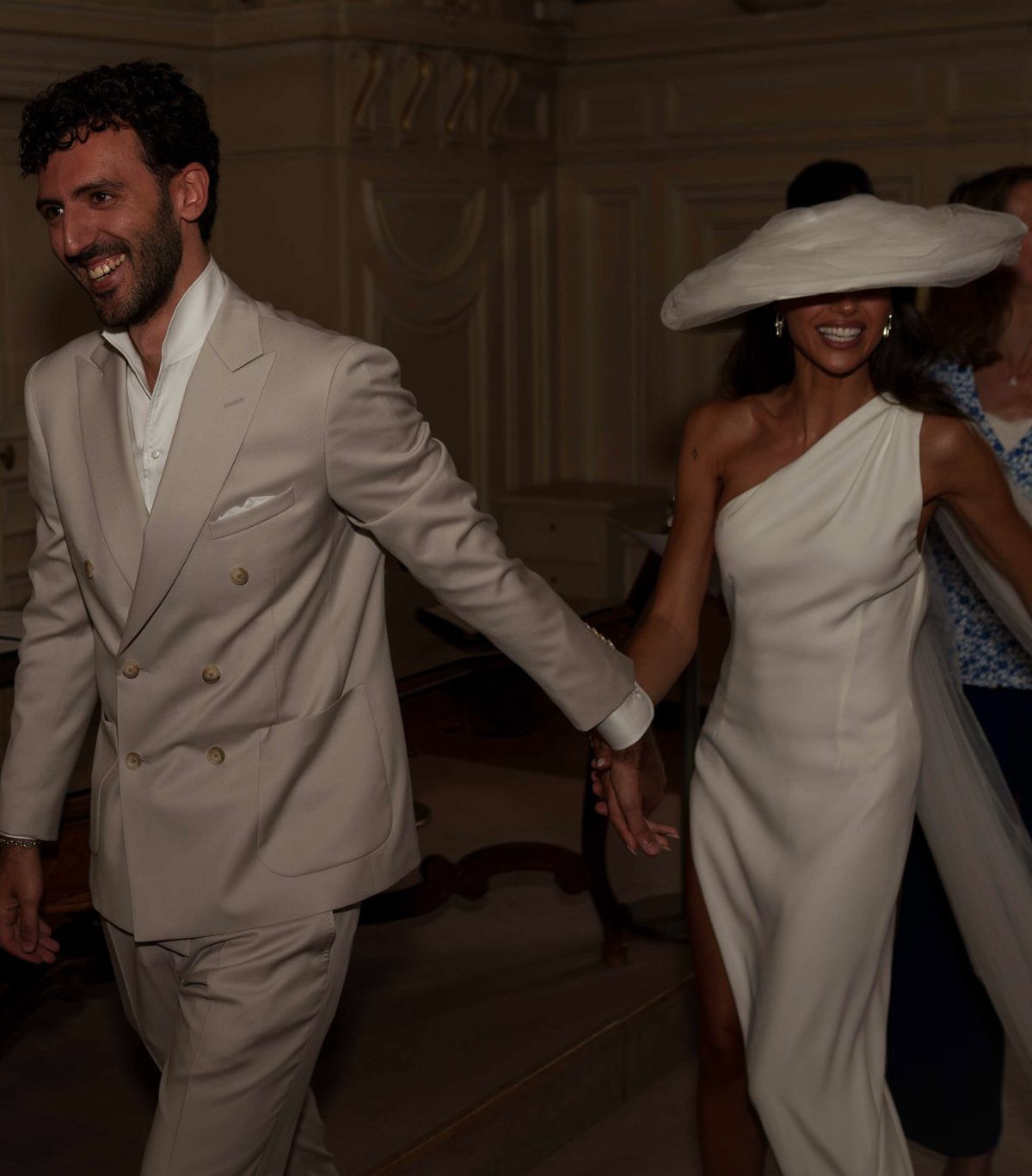
A wide-brimmed white hat does the work of a veil and a statement piece in one. Matched with a sleek one-shoulder gown, it makes a courthouse ceremony feel styled and deliberate.
Let the hat be the only large accessory. Keep the earrings small and the hair simple, so the brim frames the face without competing.
Try the hat on with the dress, and check that the brim does not hide your face when you tilt your head.
11. Capelet Wedding Dress
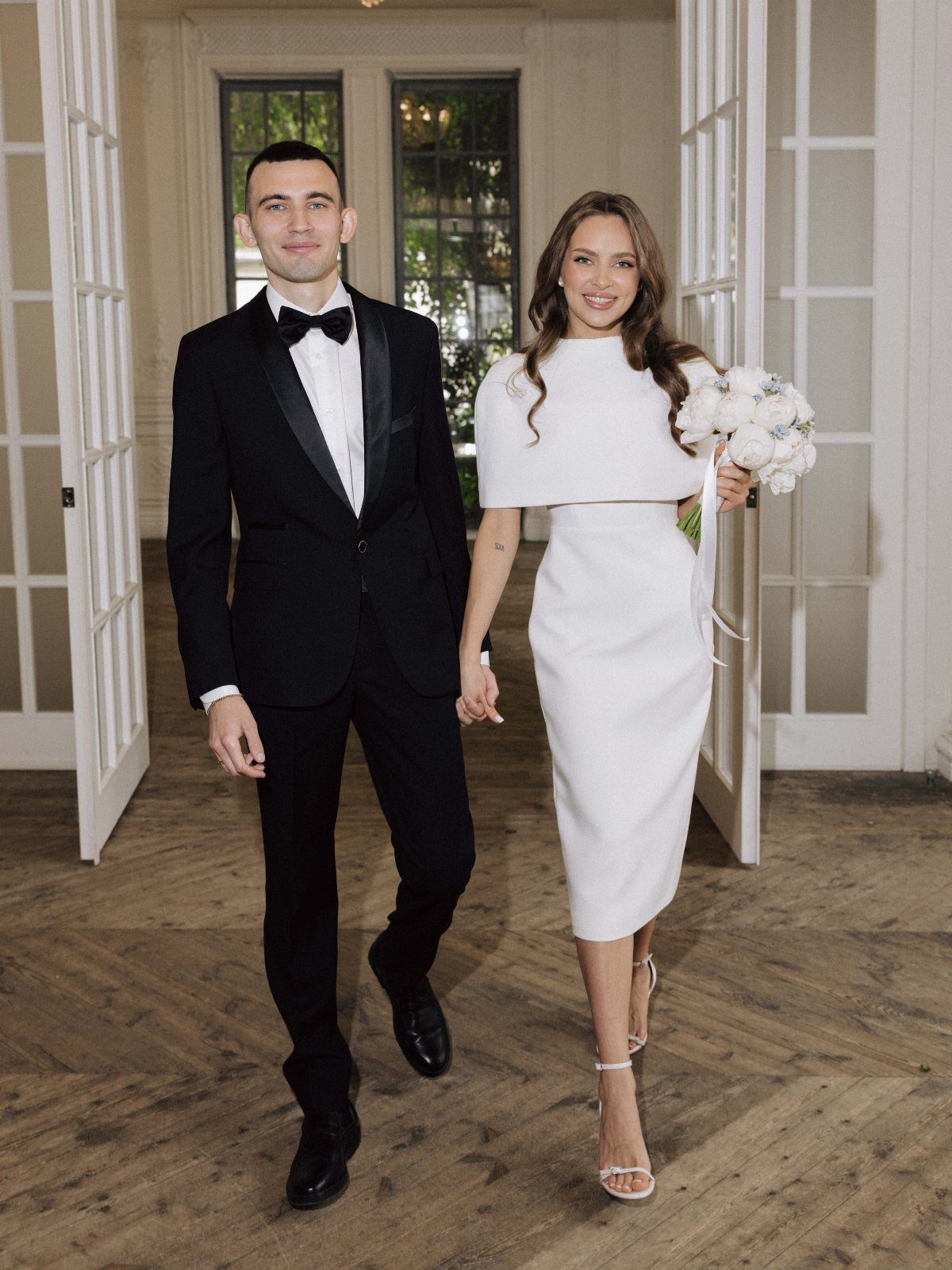
A matching cape overlay adds drama and a little coverage without the weight of a full train or sleeves. It works on a knee-length or longer gown, and the dress underneath can stay simple.
Check how the capelet sits when you hold a bouquet, because your arms will pin the fabric. If it bunches, have the tailor shorten it slightly.
I like this one because the cape gives a formal feel in a civil setting without extra accessories.
12. Ruffled Sleeve Midi Dress
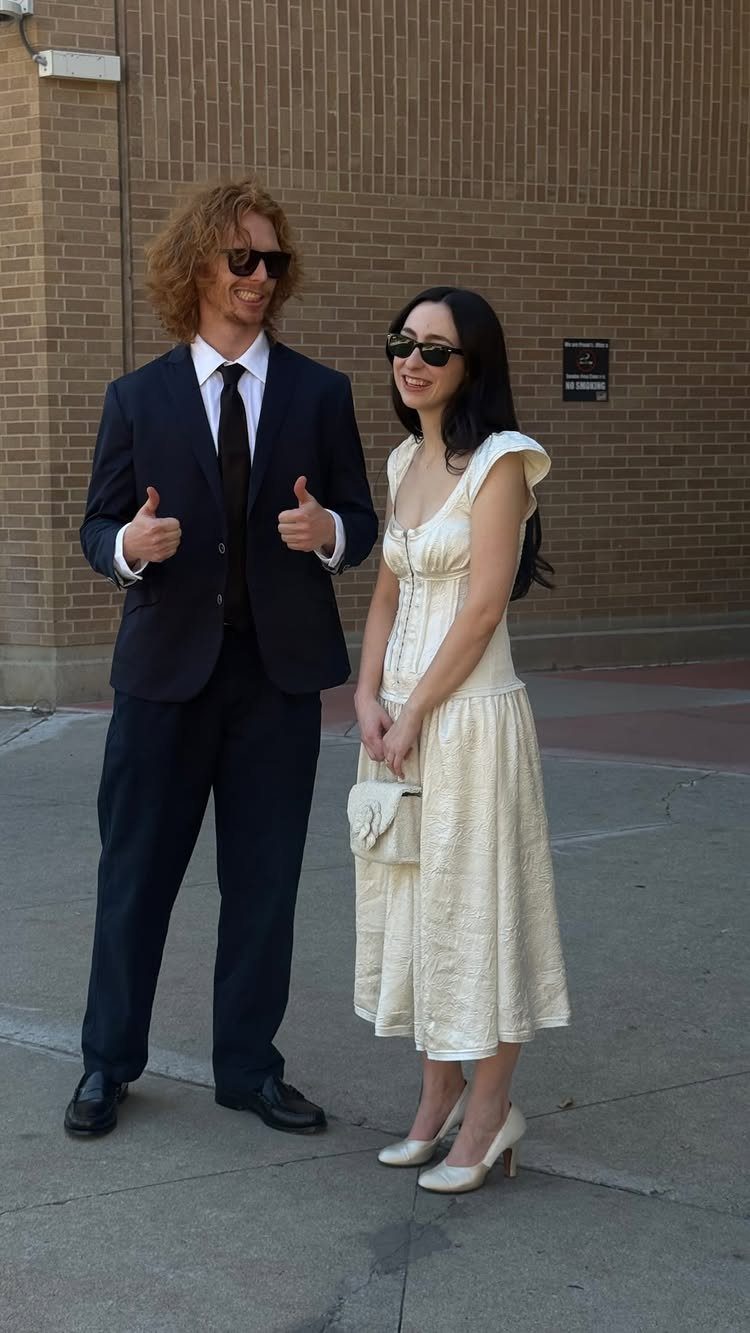
Ruffled sleeves are the whole statement here, so keep the rest of the look quiet. A cream midi with full sleeves needs only white heels and sunglasses to feel finished.
Choose a soft fabric that holds the ruffle’s shape instead of collapsing. Raise your arms in the fitting room to confirm the sleeves do not restrict movement.
Skip a necklace, since the ruffles already fill the space around the neckline. Against brick or stone, a cream midi reads warmer and gentler than optic white, which can look harsh beside those tones.
13. Bridal Pantsuit
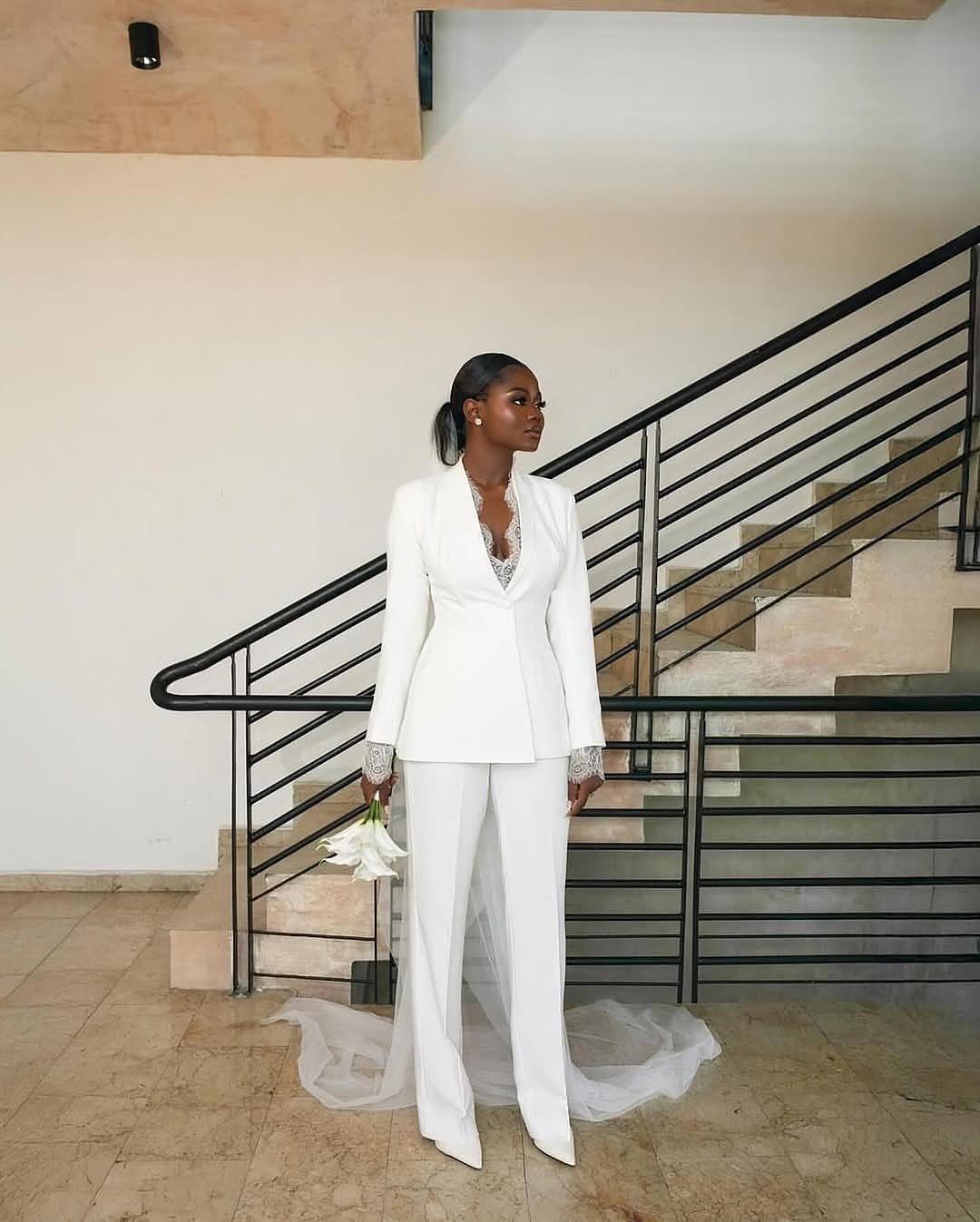
Tailoring does the heavy lifting in a pantsuit with a lace bodice, and the lace is what keeps it bridal instead of boardroom. A veil finishes the look, and trousers make stairs and security lines easy.
Hem the trousers while you are wearing the actual shoes, because even a half-inch of difference leaves the fabric dragging or showing an ankle.
Lace bodices tend to tug at the shoulders and underarms, so raise your arms and hold a bouquet at your waist during the fitting before you commit.
For a courthouse, I would pick this over a short dress if you want something that feels formal without a train.
14. High-Neck Midi Wedding Dress
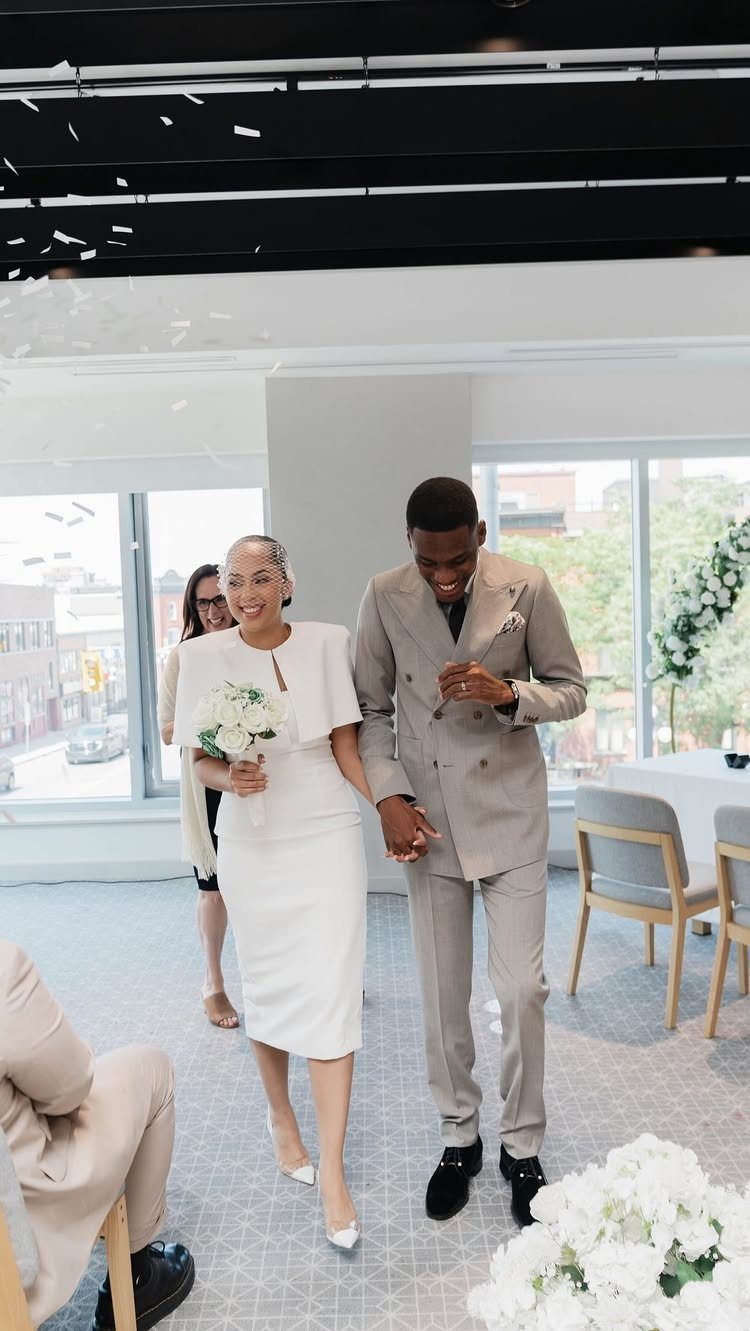
Cover the neckline, and a midi suddenly looks modern. A high neck with floral accents gives you detail up top, so the skirt can stay plain and easy to walk in.
Choose a length that clears your shoes, since you will be moving through hallways and perhaps a crowd with confetti.
Before you buy, sit down in the dress and turn your head side to side; a high neckline that rides up or pinches while seated will bother you all through dinner.
I would keep earrings small and skip a necklace. The floral detail already fills the space, and a bouquet in one hand completes it.
15. Short Dress with Pillbox Hat
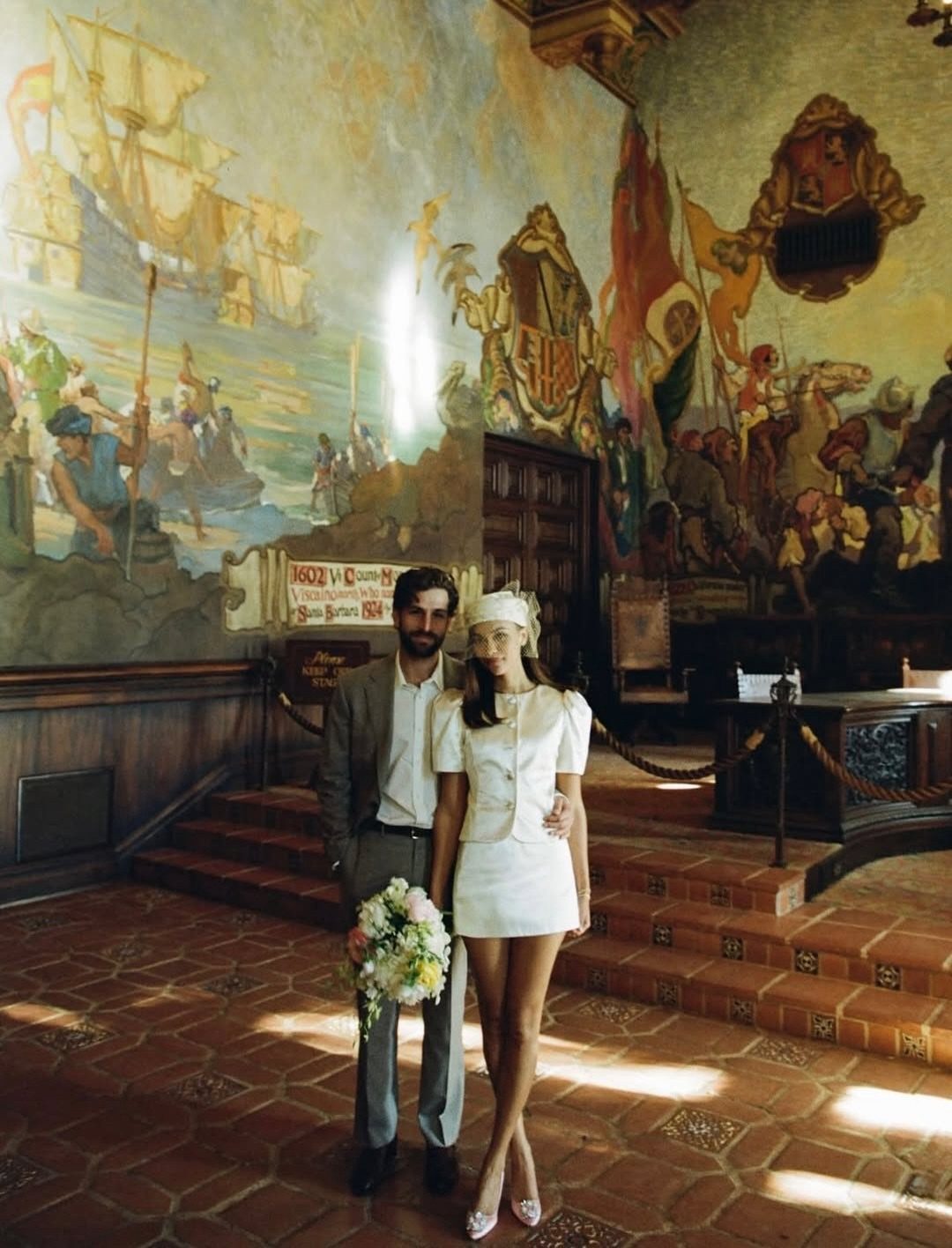
A pillbox hat is a retro move, and paired with a structured short dress it looks deliberate instead of costume. The veil attached to it gives you the bridal signal without a long length of tulle.
Put the hat on with your hair styled the way you will wear it, because a pillbox sits flat on top and needs a secure pin. Keep the dress clean-lined so the hat is the one period piece.
Against a decorated room, such as one with a large mural, a plain white dress holds its own. I would choose this for photos.
Dress Code Considerations
Rules differ from one courthouse to the next, so a quick call to the clerk’s office should come before any dress purchase.
Anything from a cocktail dress to a full gown is usually fine, since the typical expectation sits somewhere between business casual and semi-formal.
Aim for polished rather than party. If you’re torn, I’d go with a sleeveless dress in a polished fabric like crepe or satin, which looks formal enough for the room and still moves easily.
How comfortable you feel, the photos you picture, and whatever you’re doing right after the ceremony should make the final decision.
Photography Tips
City backdrops bring strong architectural lines, and the right dress makes them work for you. Streamlined shapes and a flattering neckline give the best results, because nothing competes with the setting.
A week or two ahead, ask your photographer to walk the location with you. Check how the dress looks against the stone, brick or glass you will stand beside, and choose your spots by that.
Budget-Friendly Options
Spend your money on 3 things: fabric that photographs well and feels comfortable, a proper fit through custom sizing or affordable alterations, and a style that works for both the ceremony and the reception.
Heavy beading and long trains are the first things to cut.
If white isn’t a requirement for you, consider blush or champagne.





