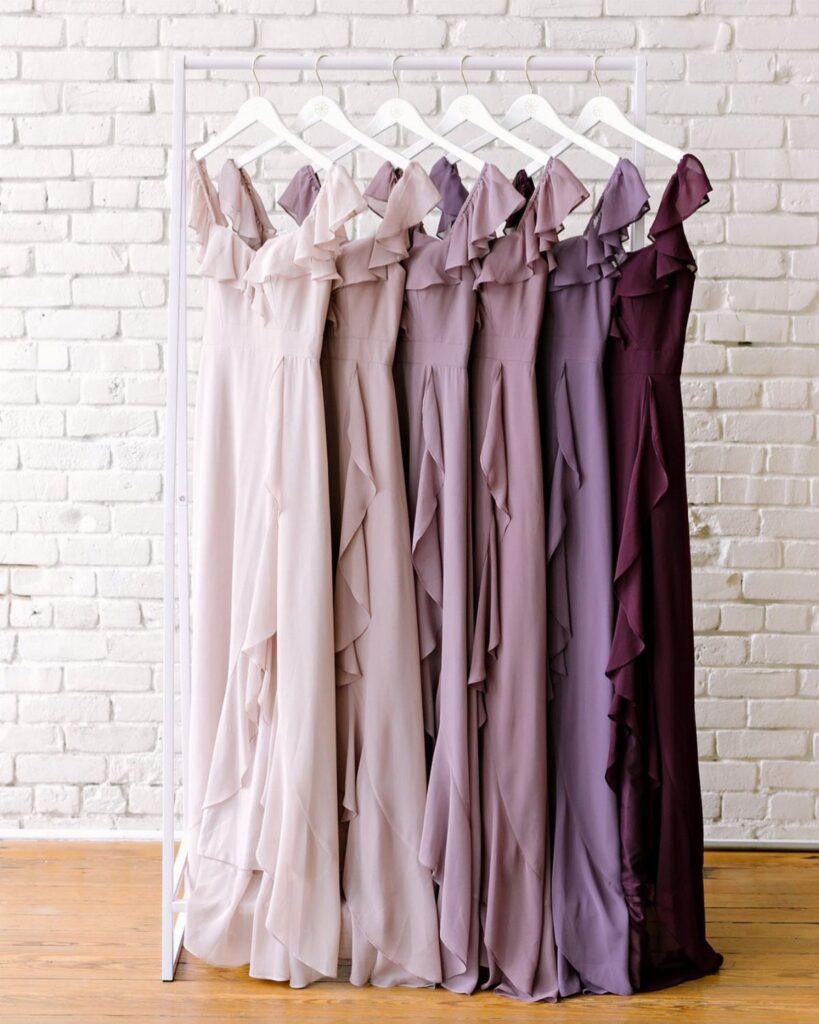
The ideas run from a strict gradient, where six dresses step from palest mauve to deepest purple in one fabric, to a loose mix where only the color and hem length are fixed.
Your bridesmaids’ sizes and comfort levels decide how far you can push: a group with different body types or strong preferences about coverage needs open parameters like one color family and free rein on cut, while a group that aligns can commit to stricter coordination.
Fabric matters more than you’d think, since chiffon beside satin reads as 2 separate looks even when the color matches perfectly.
1. Light to Dark Shades of One Color
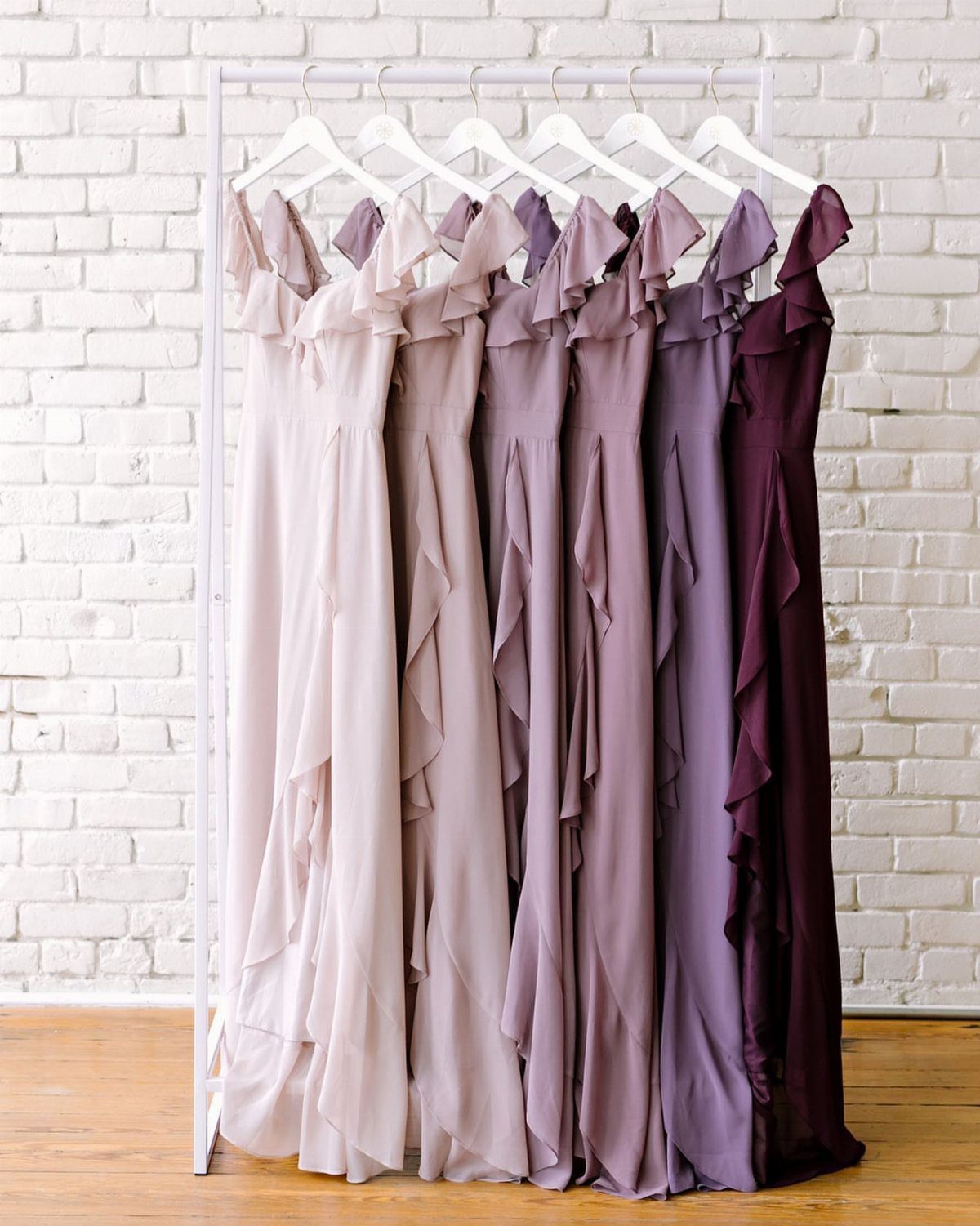
An ombre rack works because the eye reads one color, just stepped up in depth. Line the 6 dresses from palest mauve to deepest purple and the group looks planned even if every silhouette differs.
Give the darkest shade to your maid of honor so the gradient ends on her. Then order every dress in the same fabric, since a satin next to a matte crepe will break the gradient before the color does.
Swatches matter more here than anywhere else. Request them all at once and compare them in daylight.
2. Chiffons in the Same Colour
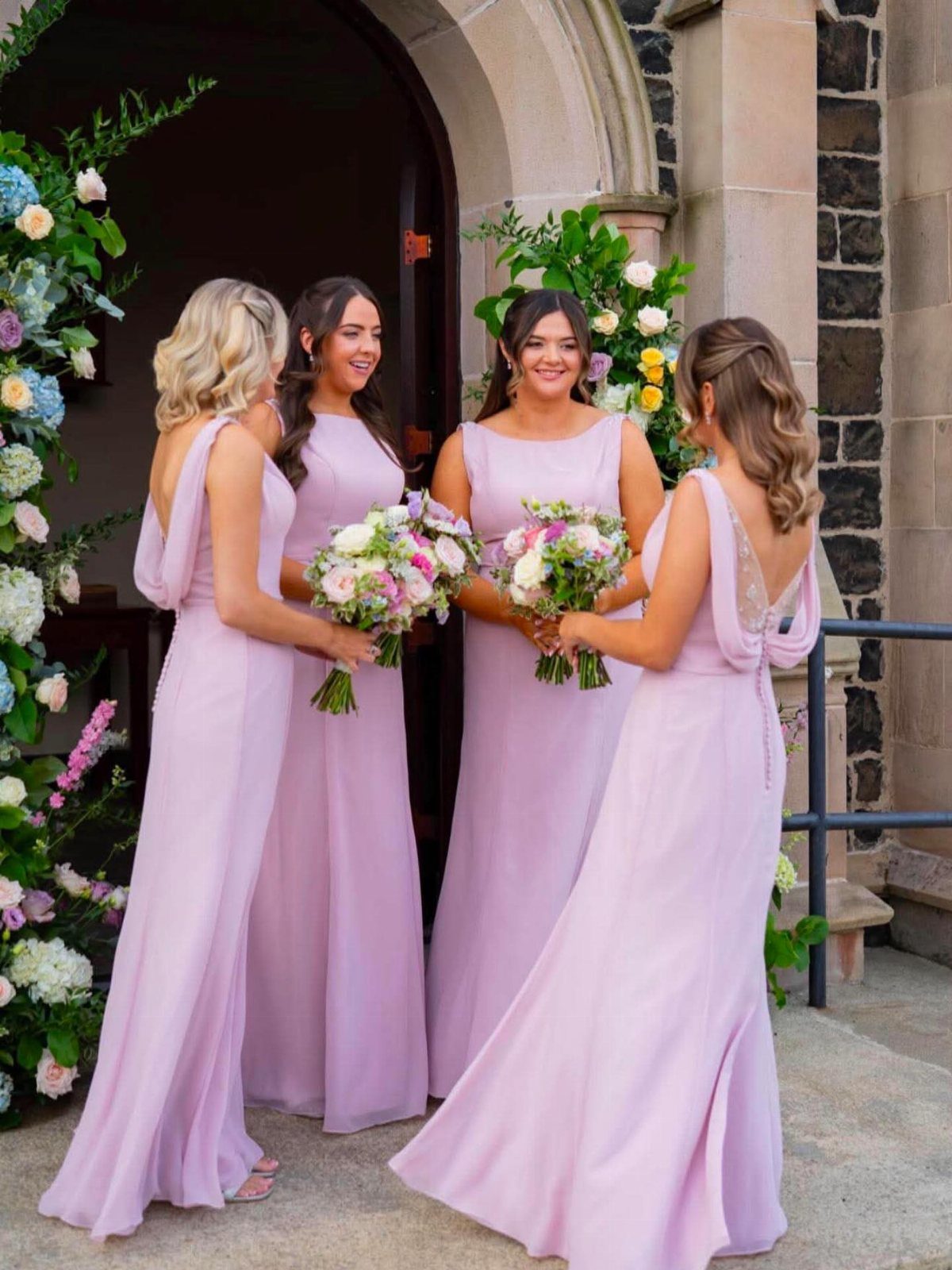
Chiffon is the easiest way to let necklines and cuts differ without anyone looking mismatched. Because the fabric is the same, a light purple dress with straps and one with a flutter sleeve still read as a set.
I would order from a single dye lot, or at least a single color name. Light purples drift toward pink or gray between brands.
Keep the bouquets simple, since the dresses already supply the movement.
3. Same Color, Different Styles
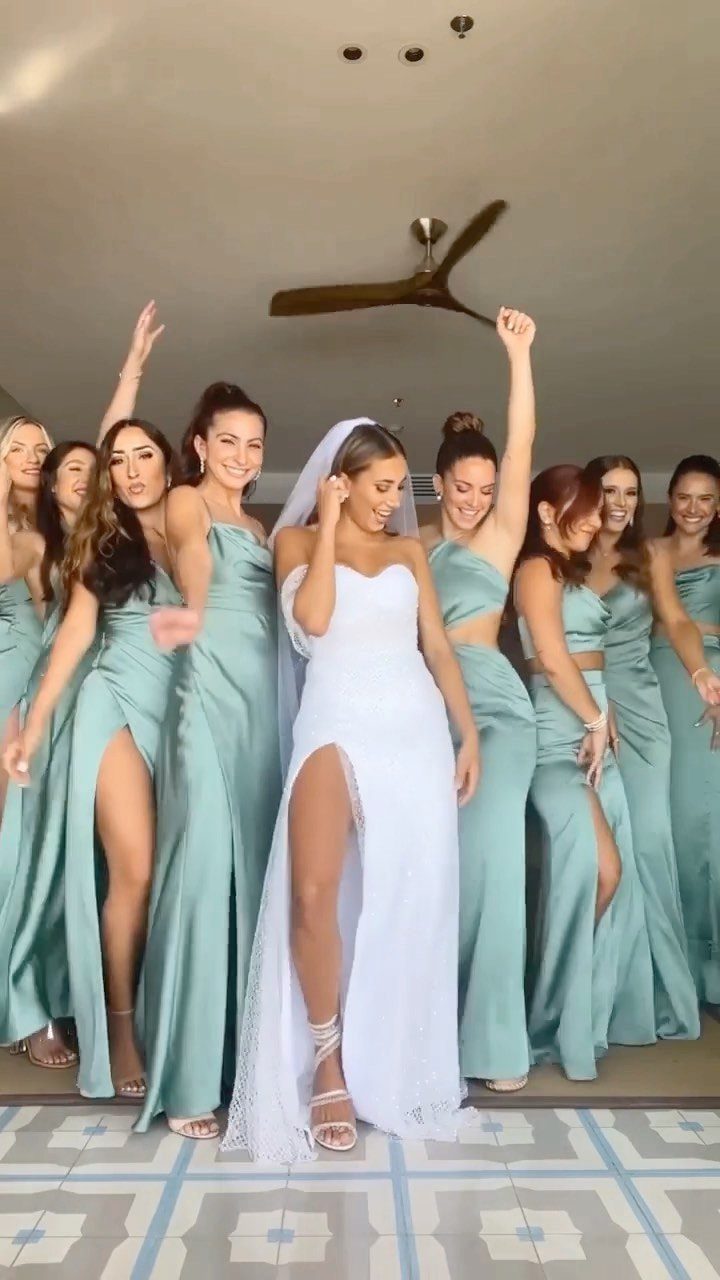
A large party is a lot of bodies to dress alike, and letting each pick her own cut solves the fit problem before it starts. Sage green holds the group together; the shapes can wander.
Pick one color name and one fabric family, then let each woman choose her neckline and length within that. Send everyone the exact shade to order, not a description.
Hold a final check on hemlines so floor-length and midi dresses do not clash in the lineup.
4. Patterned Dresses Among Solid Colors
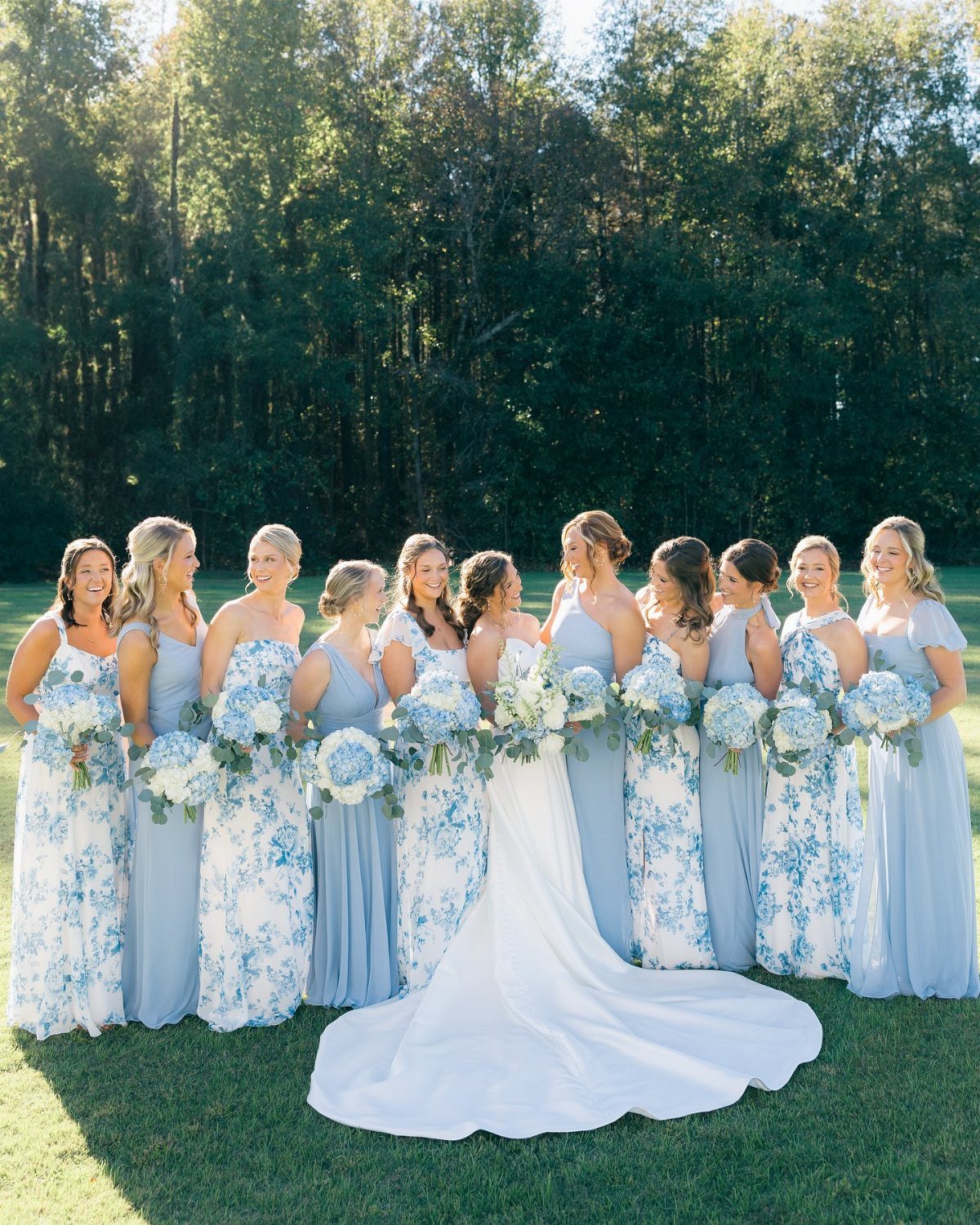
Floral dresses among solid blues add pattern without losing the palette, so long as the blue in the print matches the blue in the solids.
Hold a printed dress up against a solid one in person to see whether they read as a set.
I would keep prints to a minority so the solids anchor the lineup. Choose prints with a quiet background, not a busy one.
Let the bride’s white gown stay the only plain white in the group; a cream-heavy floral can read as competing.
5. Sage Green Satin Gowns
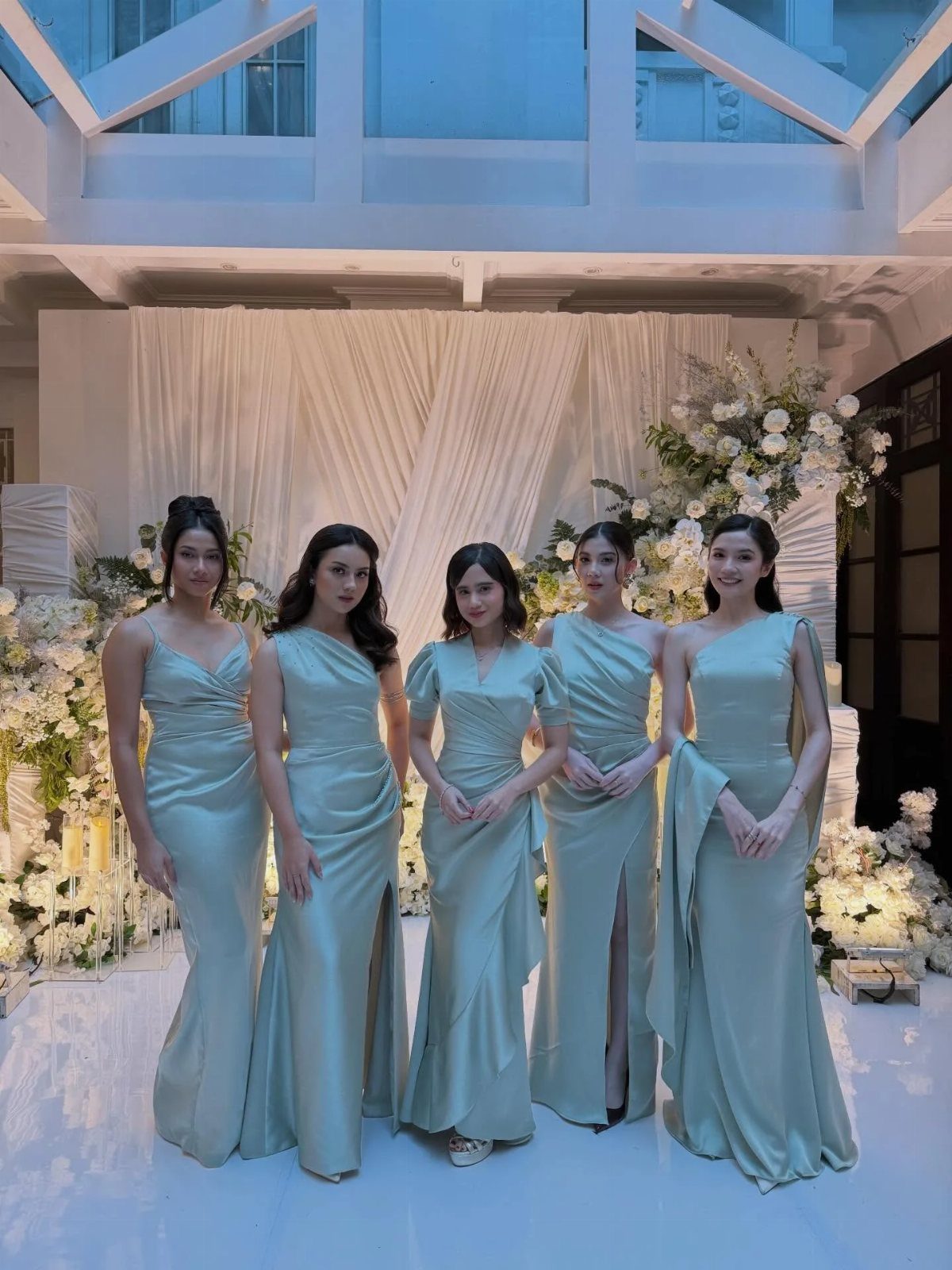
Satin in sage green catches light, and that sheen does half the work of tying different cuts together. One-shoulder beside sleeveless looks deliberate when the fabric and shade are identical.
Choose long gowns for everyone, since length is the second thing the eye matches after color. Satin wrinkles easily, so plan on steaming the morning of.
I like this best for a group with mixed preferences, because the cut becomes the only decision left to make.
6. Olive Green Mismatched Silhouettes
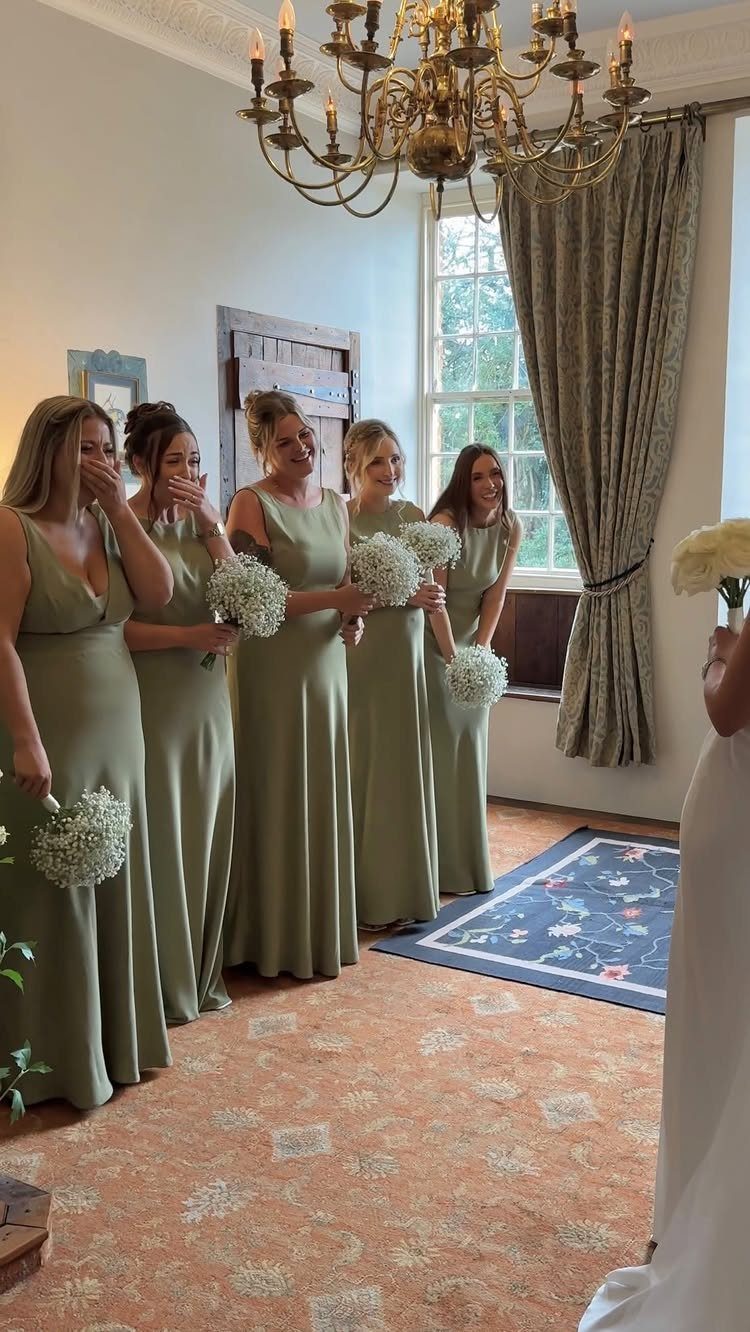
Olive is a forgiving color for a mismatched group: it is muted enough that straps, necklines and sleeves can all change while the gowns still feel like one family. Floor length keeps it tidy.
Fix 2 things for everyone: the exact olive and the hem length. Each bridesmaid picks her neckline and strap style.
White bouquets give the olive a clean contrast, and I would keep them identical across the group.
7. Pale Yellow Modest Dresses
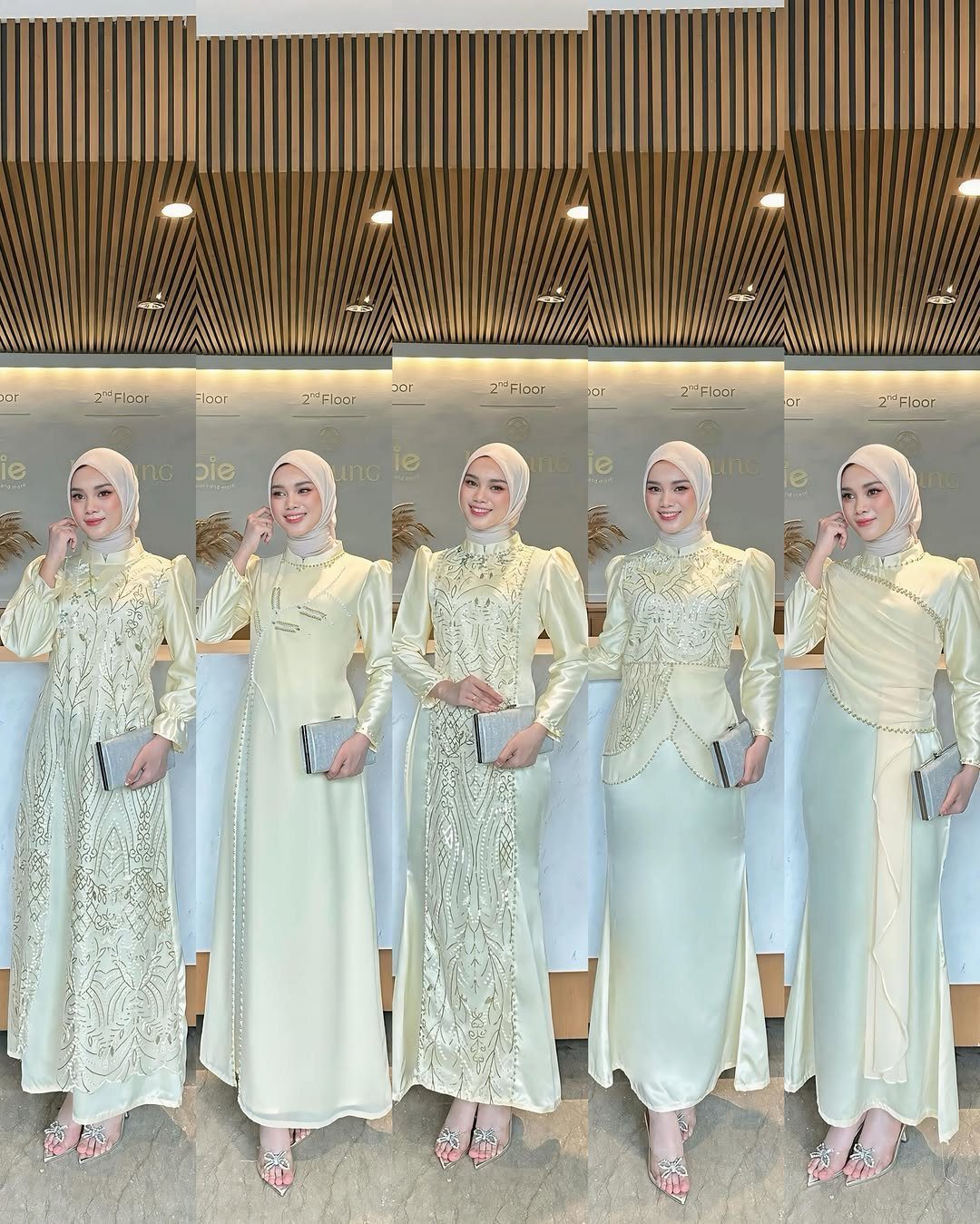
Pale yellow suits a modest lineup because the color stays soft while texture does the differentiating. Let each bridesmaid choose her cut, with sleeves and full-length skirts as the shared baseline, and the group still reads as one.
Hijabs should match the dress shade, so ask each woman to bring hers to the fitting rather than ordering one blind.
Pale yellow shifts toward cream or lemon between fabrics, so compare the dresses and scarves side by side in daylight.
I would limit the mix to two or three textures. Beyond that, the yellow stops carrying the group and the differences start to compete.
Communication with Bridesmaids
Tell each bridesmaid her exact color before she starts shopping, and send two or three example dresses along with it. A short vision board of inspiration images does more than a paragraph of description.
Ask everyone to wait for your approval before buying. A returned dress costs her time and you a fight, so one quick yes or no up front saves both.
Skip the group chat for this part. Once every bridesmaid is posting links to several dresses, the thread gets overwhelming fast, and opinions pile up.
Message each woman one on one instead. If one of them is stuck, you can pick a few options yourself and let her approve the style.
If your theme is broader, such as a single fabric, track who has chosen what so two women don’t land on the same color.
Photography Considerations
Photographs flatten what the eye forgives in person, so judge the dresses the way a camera will see them. Start with fabric: pick one or two and keep them across the group, so chiffon stays chiffon and satin stays satin.
Set a few style limits too, like floor-length or midi, a neckline family, or a sleeve type. Those shared lines are what make a mismatched row look arranged rather than accidental.
Before the wedding, lay all the dresses side by side, or have the bridesmaids stand together in them, and take a phone photo. If one dress jumps out on a small screen, it will jump out in the album.
Involvement of Bridal Party
Give your bridesmaids real choices inside clear limits. A woman who picked her own neckline stands straighter in the aisle than one who was handed a dress.
Ask each of them what she won’t wear, whether that’s strapless, a high slit, or a clingy fit. That conversation now saves a closet dress later.
Stay open to her input on style, and hold firm on the color and fabric. That split keeps the group cohesive while she feels the dress is hers.
Frequently Asked Questions
Can bridesmaids wear different colors?
Yes, as long as every color sits inside a palette you chose. Set a few boundaries so the group still reads as part of your wedding, not a lineup of guests who happened to match.
One simple route is a single color in light to dark shades, with the darkest going to the maid of honor.
What are some tips for mismatched bridesmaid dresses?
Lock in the color and fabric, add a short list of what’s off limits, then hand each bridesmaid the rest of the choice. Pick one exact shade and one or two fabrics, such as chiffon or satin.
What are common bridesmaid dress mistakes to avoid?
The biggest mistakes are mixing fabrics, letting a color drift, and letting opinions pile up. Buy from one dye lot if you can, and send each bridesmaid her link privately instead of dropping five options into a group thread.
What are some unconventional bridesmaid dress ideas?
Patterned dresses among solids are one good option. Keep prints to a minority with a quiet background, and avoid cream-heavy florals that can compete with the bride’s white gown.





