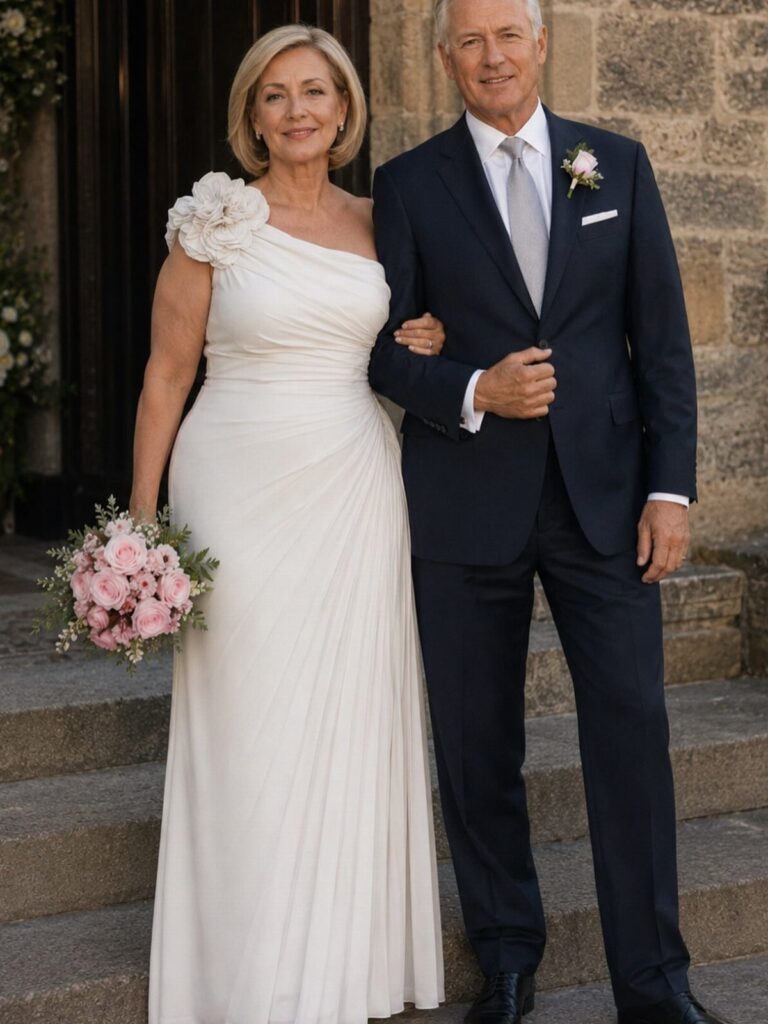
The 5 dresses run from a soft wrap tied at the waist to an embroidered capelet gown, and the choice between them depends on which part of your body you want covered and which you want seen.
Every one of them needs a fitting where you raise your arms, hug someone and sit down, so you know it will move with you on the day.
1. Delicate Lace Sleeves
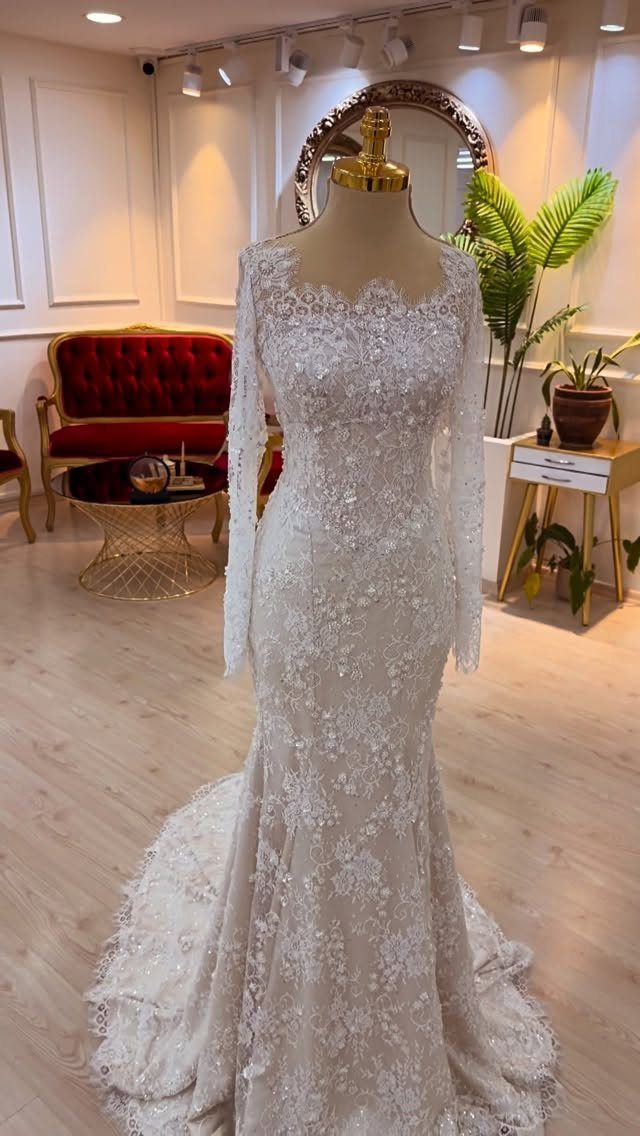
Lace sleeves cover the upper arms without the weight of a solid fabric, and that is why I like them for a bride over 50. Lace is openwork, so it lets skin show through while still giving coverage.
Sleeve length is the choice to settle first. Long sleeves on a mannequin look tidy, but you need to lift your arms, hug people and hold a glass in them.
At a fitting, raise both arms and reach forward. If the lace pulls across the shoulder, ask for a different size or a looser cut.
A boutique will often sell the sleeves as part of the dress, so ask whether they can be removed or swapped later.
2. One-Shoulder Floral Accent Gown
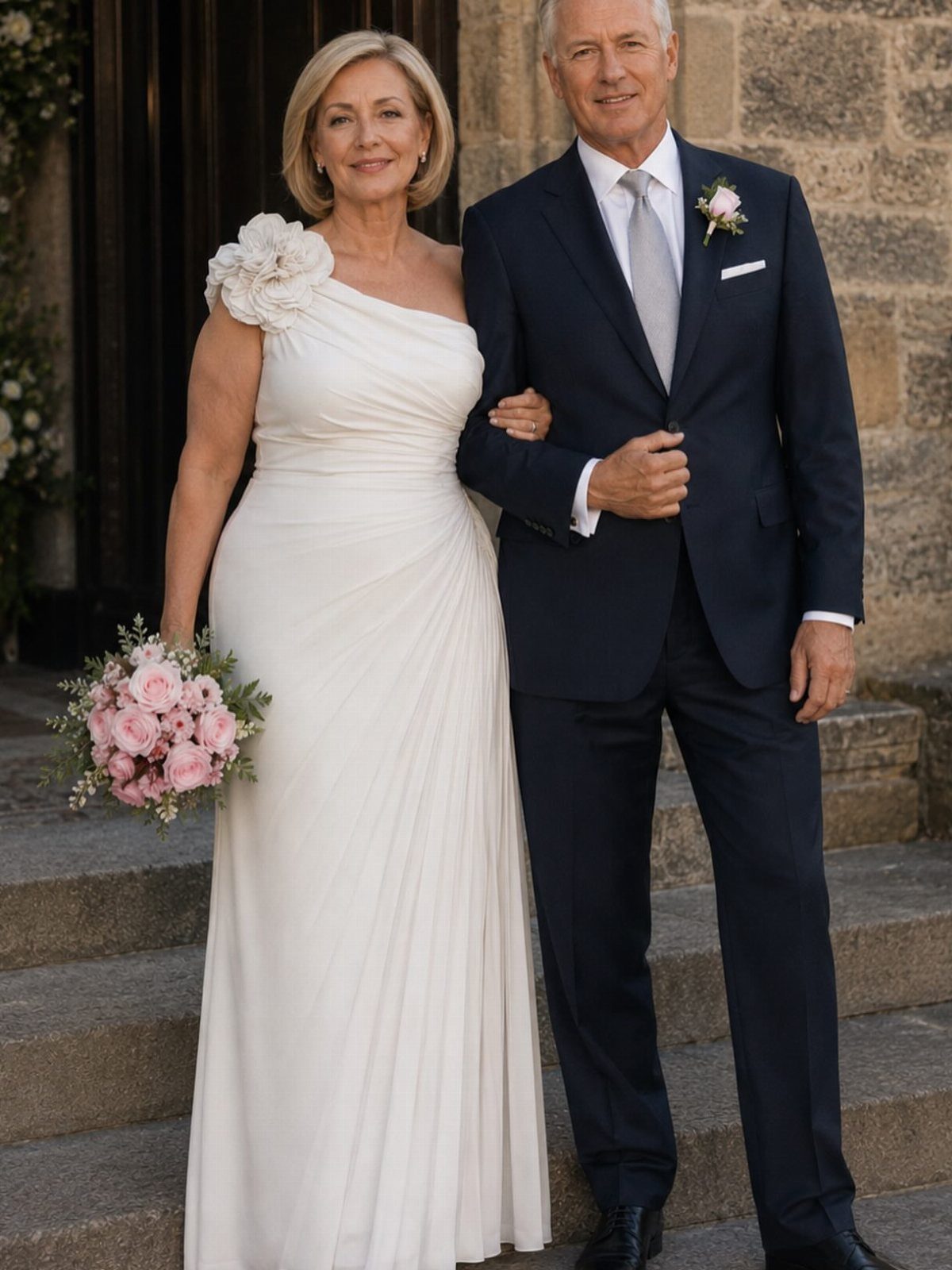
One bare shoulder, one dressed with flowers: that asymmetry does the work of a necklace, so you can skip a statement piece.
For a bride in her 50s, it frames the face and shows off the collarbone and one arm, while the opposite side stays clean and simple.
I would keep jewelry to small earrings and let the floral accent lead. Keep your hair off the shoulder, in an updo or swept to the other side, or the flowers get hidden.
Check the strap at fittings. A single shoulder carries the whole bodice, so it should sit snugly and stay put when you hug your groom.
3. Wrap Dress with Sheer Sleeves
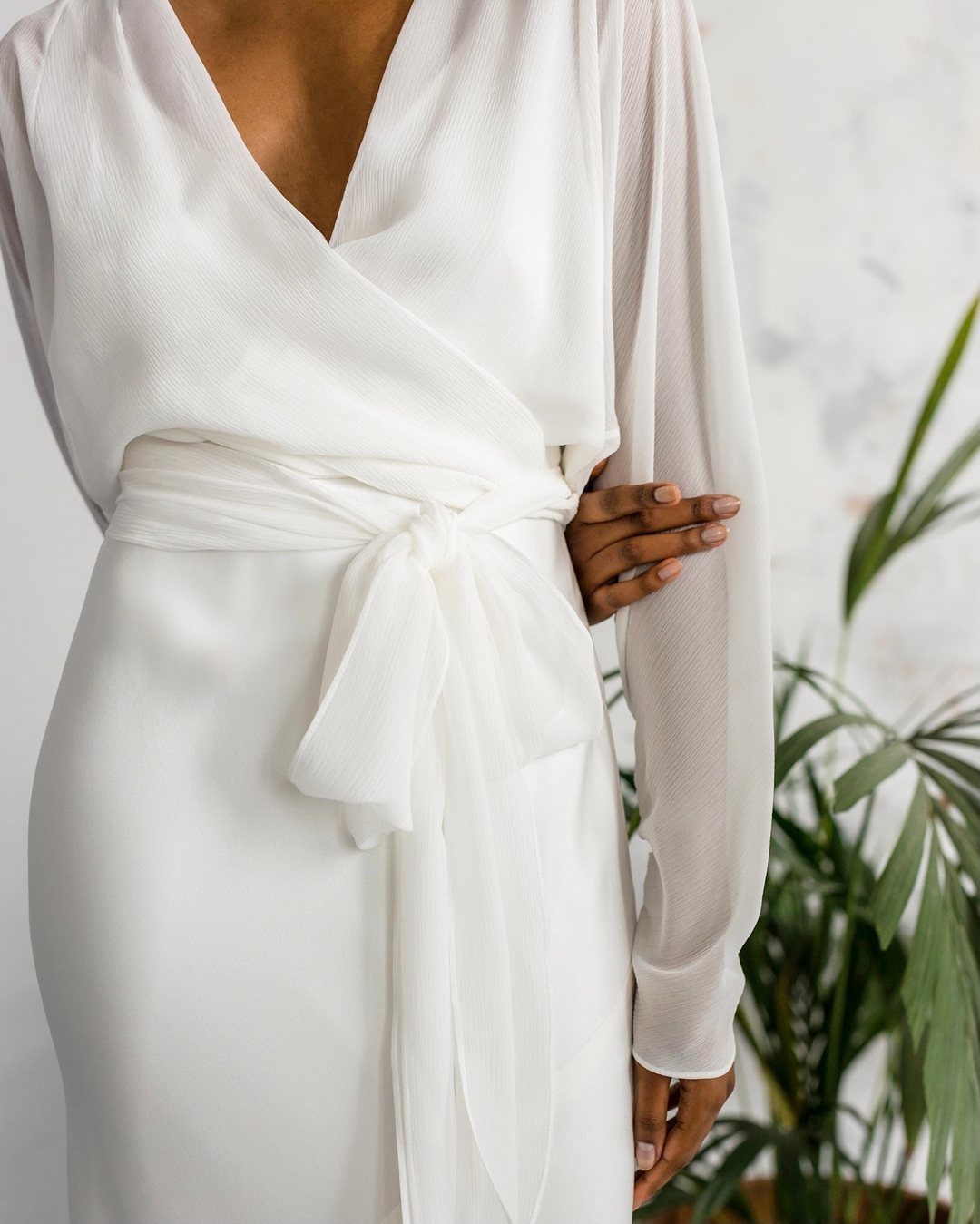
Because a wrap dress ties at the waist, you set the fit yourself.
Cinch it more or less on the day, and the sash follows your shape instead of fighting it. That adjustability is the biggest reason I would put a wrap on a shortlist for this age group.
Long sheer sleeves add coverage without heat. Between the sash and the sleeves, the look stays soft rather than structured.
Try it on and sit down, then walk up a step. Wrap fronts can gape or shift, so ask a seamstress about a hidden snap or stitch at the crossover.
4. Embroidered Capelet Gown
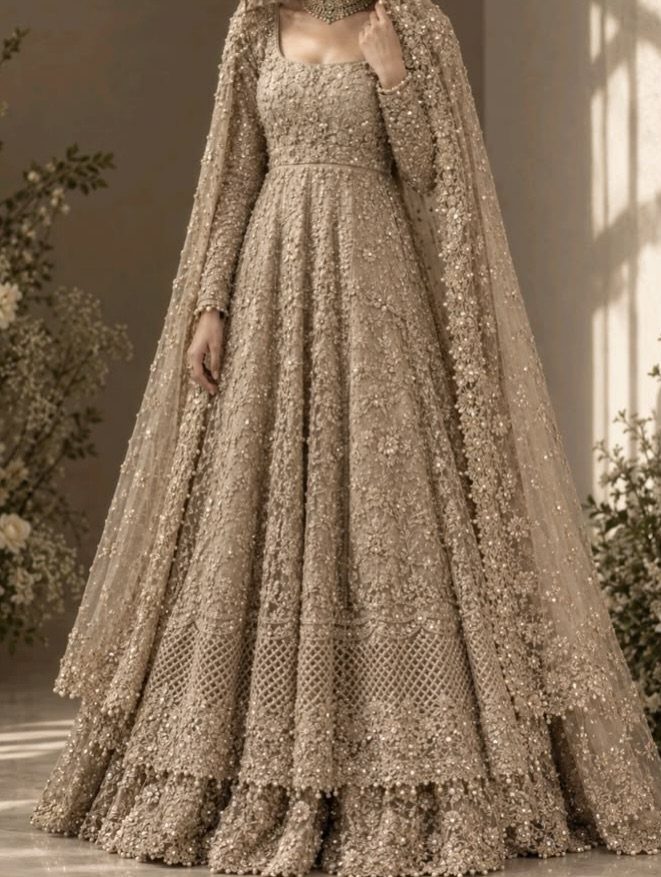
Champagne reads warmer than stark white, and for many women over 50 it flatters skin better. Gold sequins and embroidery add sparkle, and the sheer cape covers the shoulders and upper arms without a heavy sleeve.
I would choose this over a plain gown if you want to skip a veil. The cape already gives you movement and a finished look for the aisle.
Heavy beadwork costs more and takes longer to alter, so budget for tailoring. If you want a sleeker second look, ask whether the cape can come off for the reception.
5. Embroidered A-Line Gown
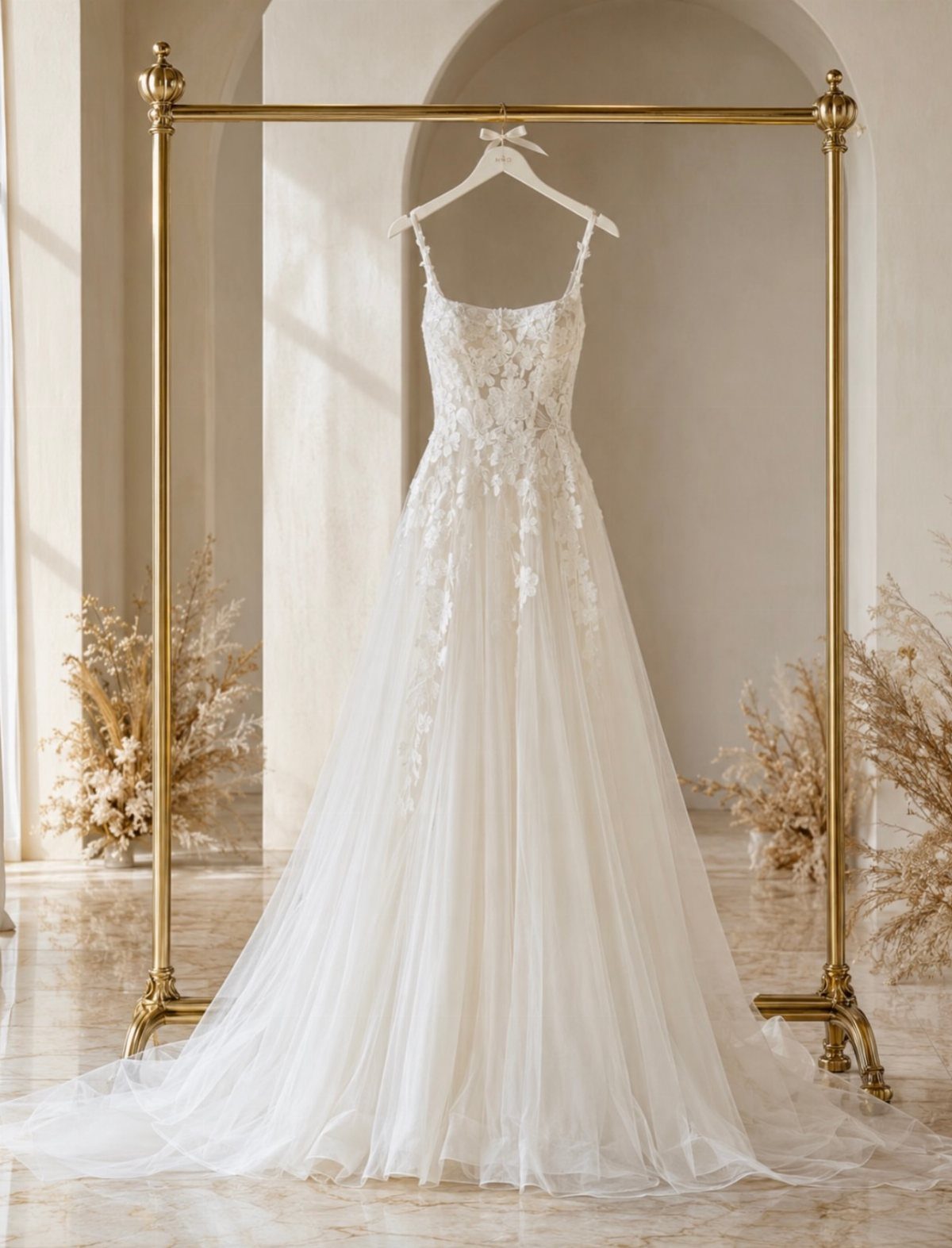
An A-line skirt skims the hips and flares from the waist, so it does not cling anywhere.
An A-line is the safest silhouette for most bodies, since it skims the waist and falls away from the hips, and floral lace across the bodice and skirt adds enough detail that it never looks plain.
For me, the white version wins on versatility. It works in a church, a garden or a courthouse, and almost any veil, belt or shoe suits it.
Lace on both bodice and skirt means more places to alter. Ask the salon about hem work early, since lace hems need careful hand finishing.
Advice for Older Brides
Decide what you want to feel in the dress before you look at a single gown. Write down two or three words, such as comfortable, polished, or like yourself, and hold every dress up against them.
Expect opinions, and expect some to be about your age. Pick one trusted person to bring to appointments, and let everyone else see the dress on the day.
A dress that makes you stand taller usually beats one that merely follows a rule about what is "appropriate."
Choosing the Right Silhouette
A-line, empire waist and sheath are the 3 silhouettes I would try first, because each solves a different problem.
An empire waist sits just under the bust and is more forgiving through the midsection. A sheath runs straight from shoulder to hem and fits a modern city hall ceremony or a second wedding better than the full skirt does.
Try all three in one appointment, even if you arrive sure of one. A shape that looks plain on the hanger can surprise you on the body.
Mermaid styles follow the body closely and show off an hourglass shape, while a ball gown gives volume to a straighter frame. If either appeals to you, put it on and see for yourself.
A good bridal consultant can read your proportions quickly, so tell her what you like and what you want to play down.
Emphasis on Individuality
By your 50s you probably know which necklines, colors and cuts you reach for again and again.
Use that. Bring photos of clothes you already love, not only bridal gowns, because the pattern across them tells a consultant more than a Pinterest board does.
Traditional, modern and bohemian are all open to you.
Ignore trends that will date quickly. A dress chosen for your own taste will still look right in the photos years later.
Frequently Asked Questions
What should a bride over 60 wear?
Choose the gown that makes you straighten your shoulders when you see yourself in the mirror, classic ivory or something less expected.
Before you shop, pick 2–3 words for how you want to feel, like easy or polished, and hold each dress up against that list.
What is the ideal dress length for a 60-year-old woman?
Let the formality and location of the wedding set the length.
A full-length gown suits a church or formal venue, and a sheath fits a courthouse or city hall ceremony. Bring up hemming at your first fitting, because lace edges are finished by hand and that work takes extra time.
What are some good wedding dresses for older plus-size brides?
Look for silhouettes that skim the body and fits that stay comfortable all day. An A-line skims past the hips and waist, while an empire waist, cut to sit just below the bust, gives the most relief across the midsection.
Lace sleeves, including removable ones, add coverage without heavy fabric. Plan to try 4–5 different silhouettes in a single visit, because a gown that looks plain on the rack can look completely different once it’s on you.





