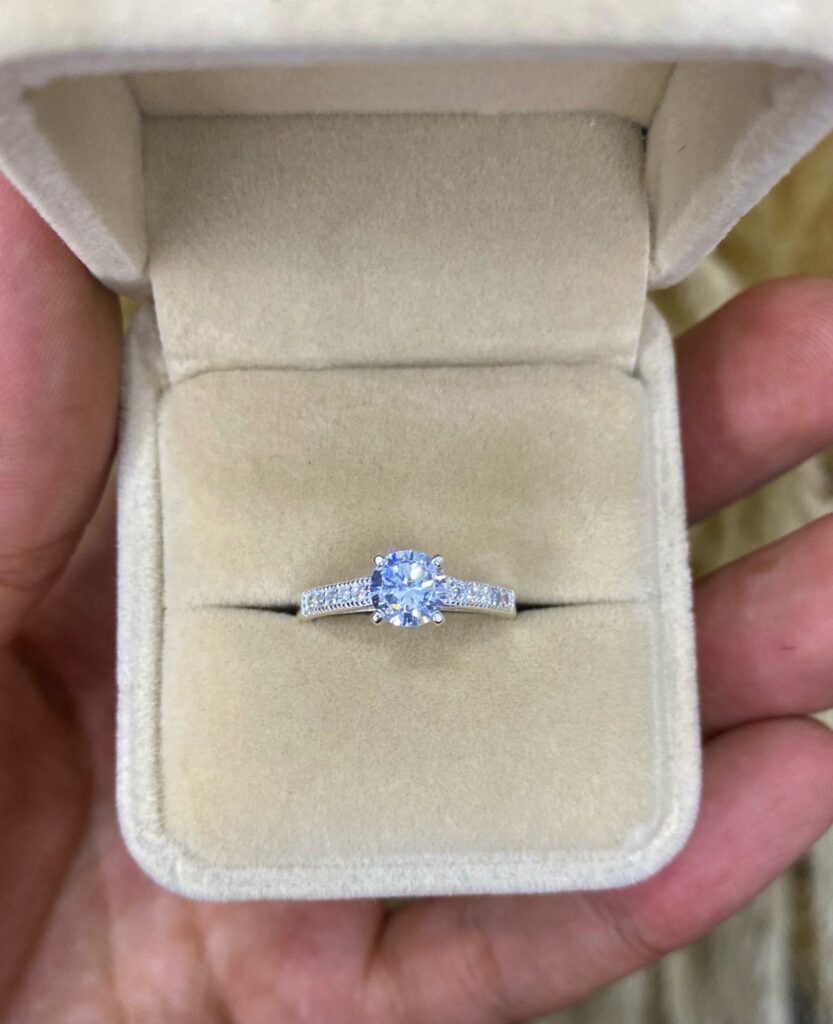
The list covers round, oval, heart and square cuts, plus a bezel setting, a platinum band and a dainty minimalist solitaire.
Shape and metal set the look, but budget settles carat weight, because a small stone costs far less than a large one. Pick the metal first, spend on a well-cut diamond, and let the band and setting stay simple.
1. Round Cut Diamond
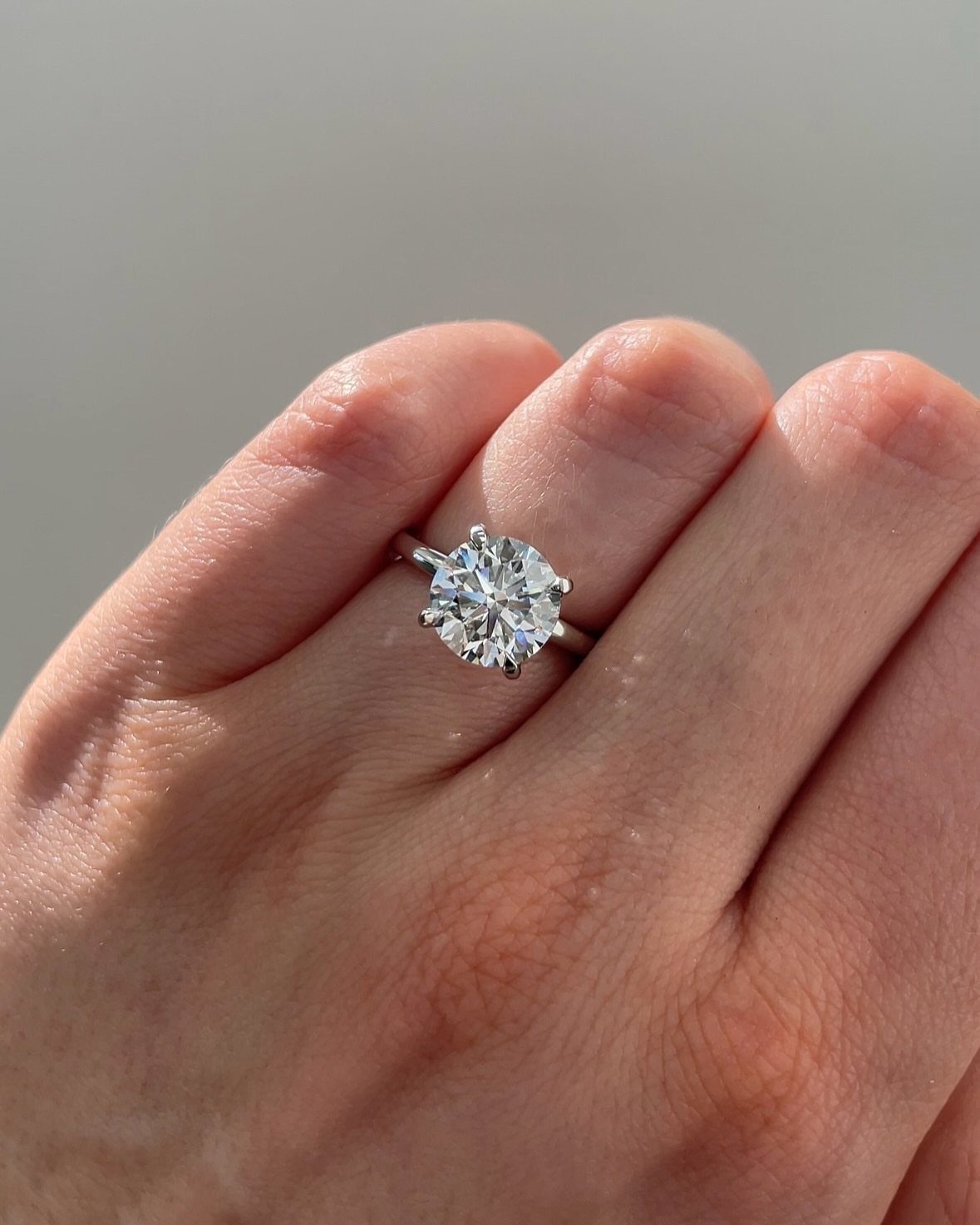
A round diamond on a plain band is the simplest ring to size up and compare. With one stone and no extra detail, the cut and the setting are all you are judging.
Ask to see a few round stones under the same light, since a ring like this shows its sparkle in the stone alone. Spend on the diamond before you spend on anything around it.
2. Timeless Beauty
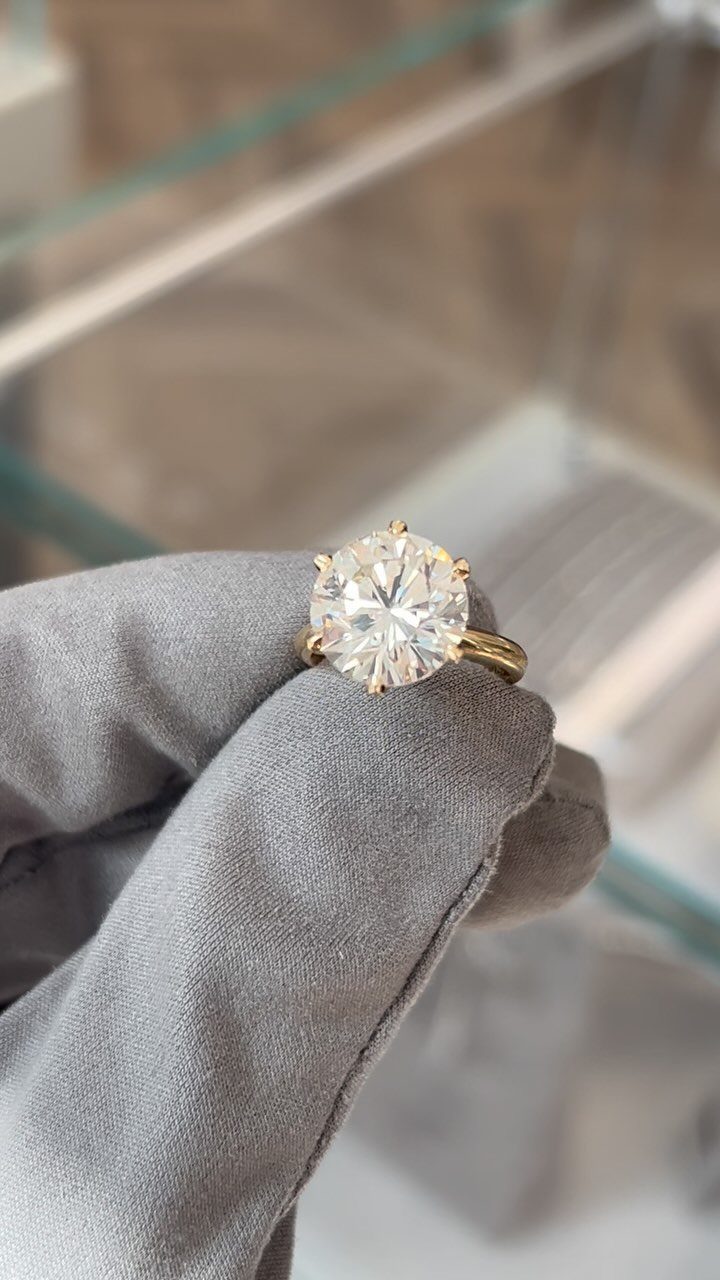
A gold solitaire with a round diamond reads as classic without trying. Warm metal makes the white stone look crisp, and the shape suits nearly any wardrobe.
The jeweler behind this ring noted that any size can be made in this style. That is a useful reminder: the design scales down well, so a smaller center stone keeps the same look at a much lower price.
I would pick the metal first, then let the budget set the carat weight.
3. Showcases the Diamond
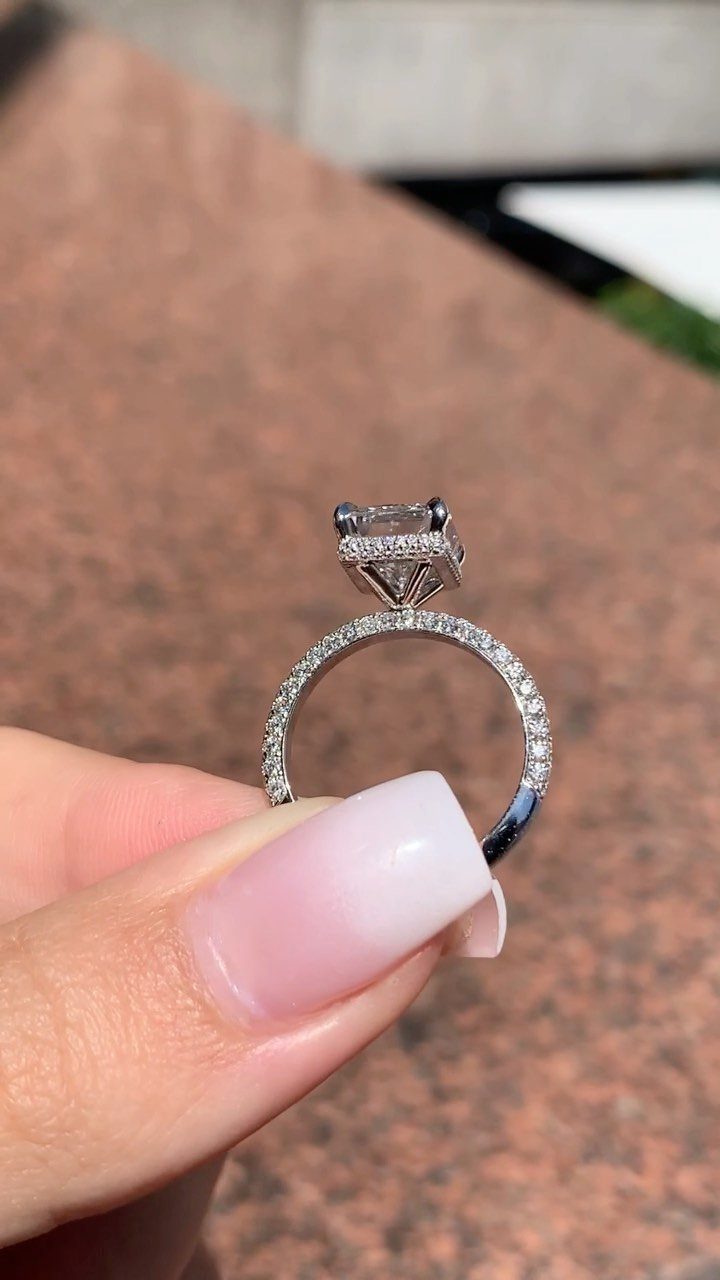
Put a large square diamond on a slim pavé band and the stone becomes the whole show. The tiny diamonds along the band add glitter without competing with the center.
If you like that balance, ask how far the pavé runs around the band. Fewer small stones means a cleaner look and a lower bill, while a fully paved band leans brighter.
Square stones show their corners, so check that the setting protects them.
4. Single Stone Engagement Ring with Wedding Band
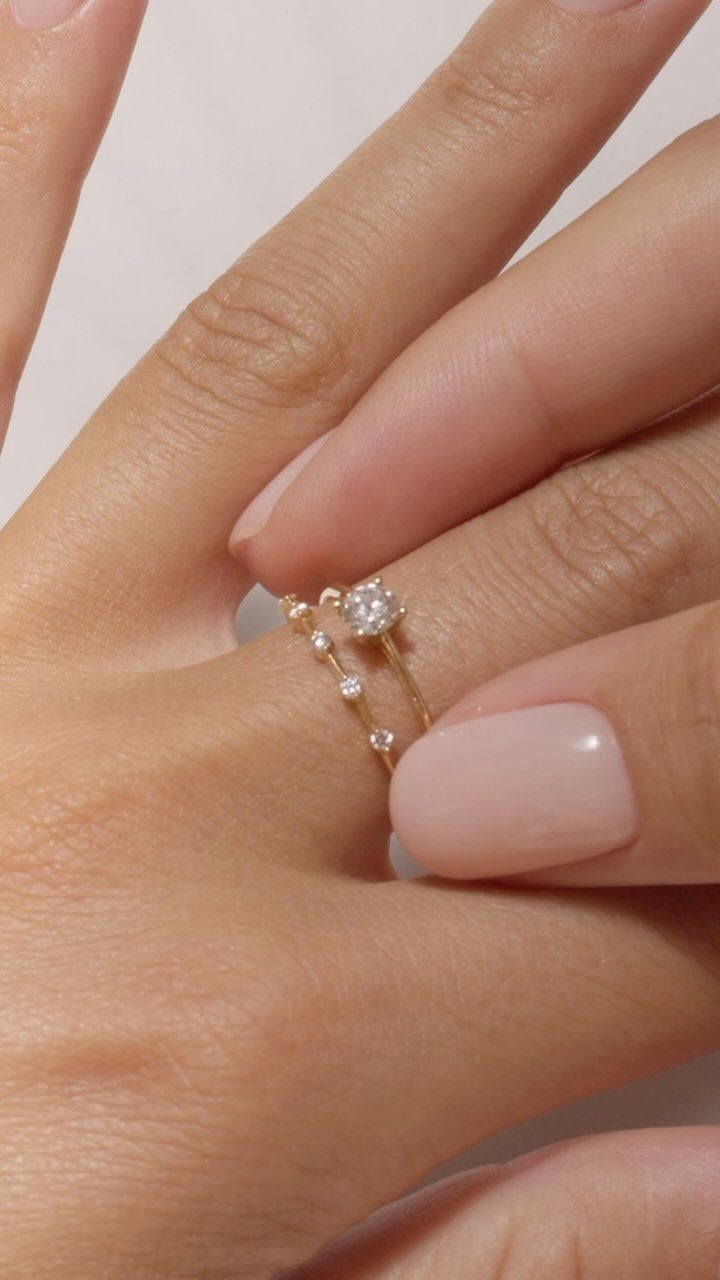
Plan the wedding band while you shop for the engagement ring, not after. A thin gold band with small diamonds sits flush beside a single-stone ring, so the two read as one stack.
Try them on together before buying either. A solitaire with a taller setting lets a straight band slide underneath, and a lower one may leave a gap.
I like matching the gold tone exactly, since a mismatch is the first thing people notice.
5. Bezel Setting
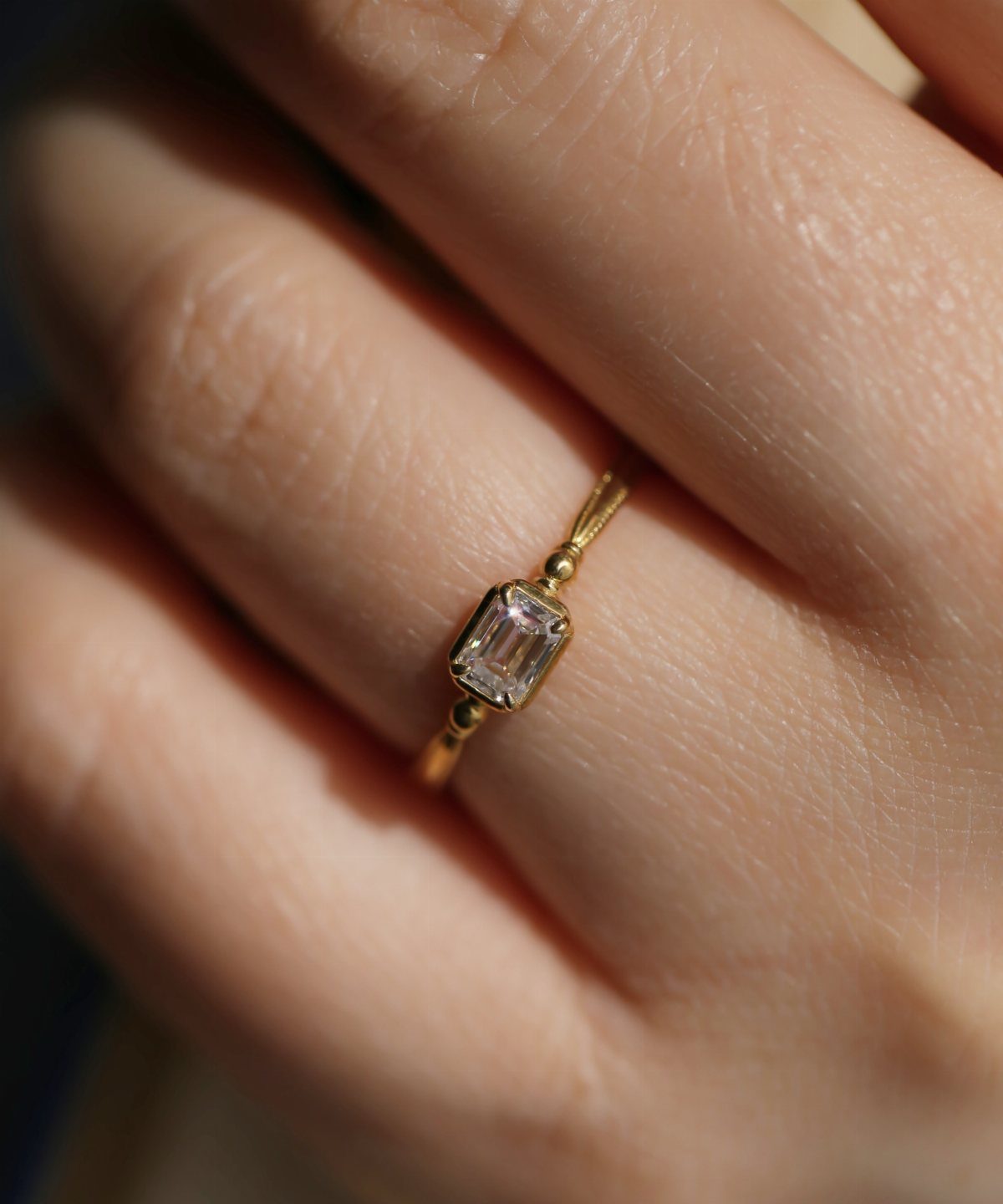
A bezel wraps a thin rim of metal around the stone’s edge instead of using prongs. On an emerald-cut diamond in gold, that rim gives the long, stepped facets a frame that looks sleek and modern.
Since the metal covers the edges, the ring has nothing to snag on a sleeve. Expect a little less of the stone to show from the sides, which is the trade for that smooth profile.
6. Platinum Single Stone Engagement Ring
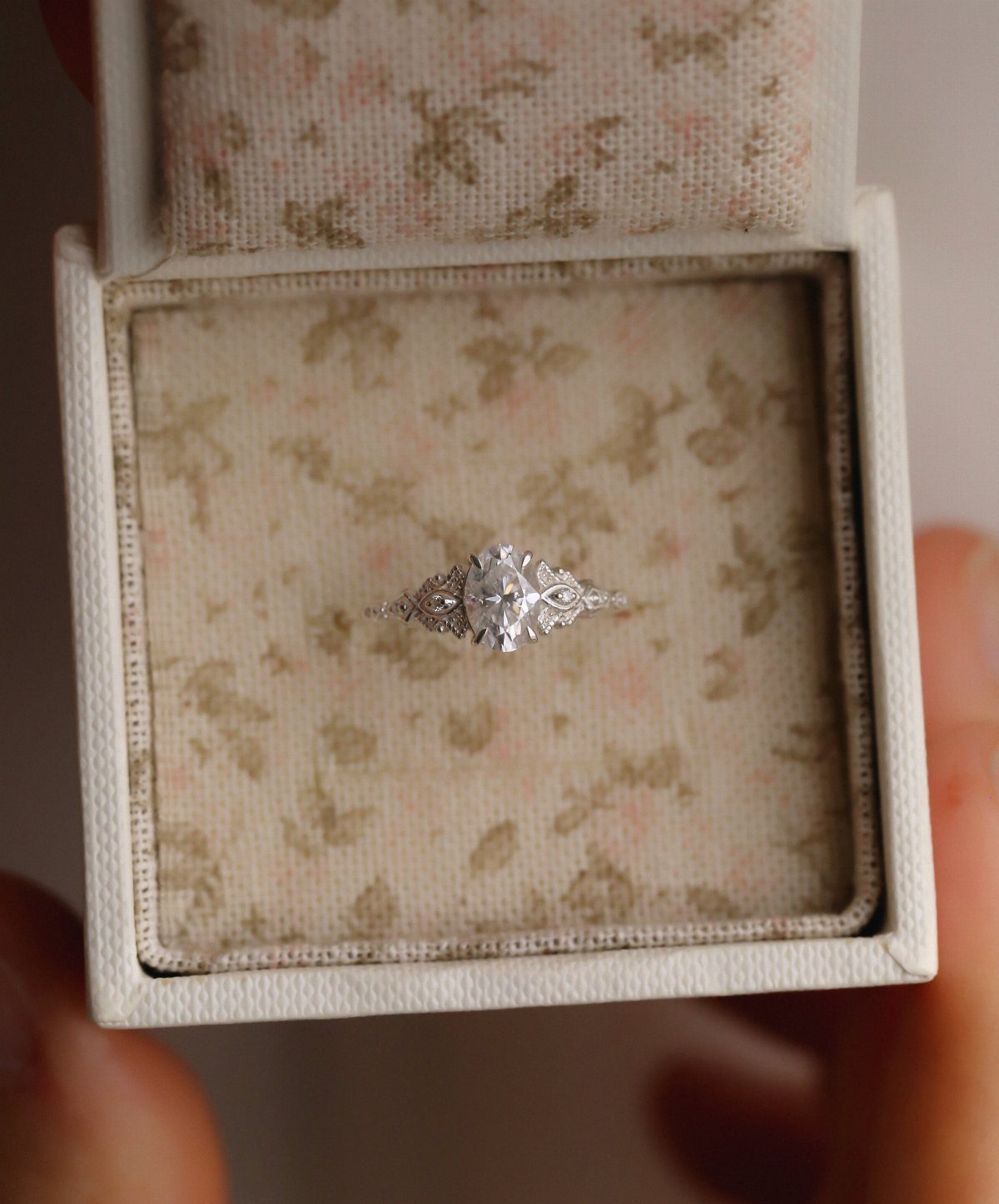
Platinum is a white metal, so a ring in it keeps a cool, silvery tone around the center diamond. The ornate side details in this one give a plain single stone some extra character.
Ask the jeweler for the metal’s cost against white gold before deciding; platinum generally runs higher. If the budget is tight, I would put the money into the stone and choose the lighter metal.
7. Symbolism in Simplicity
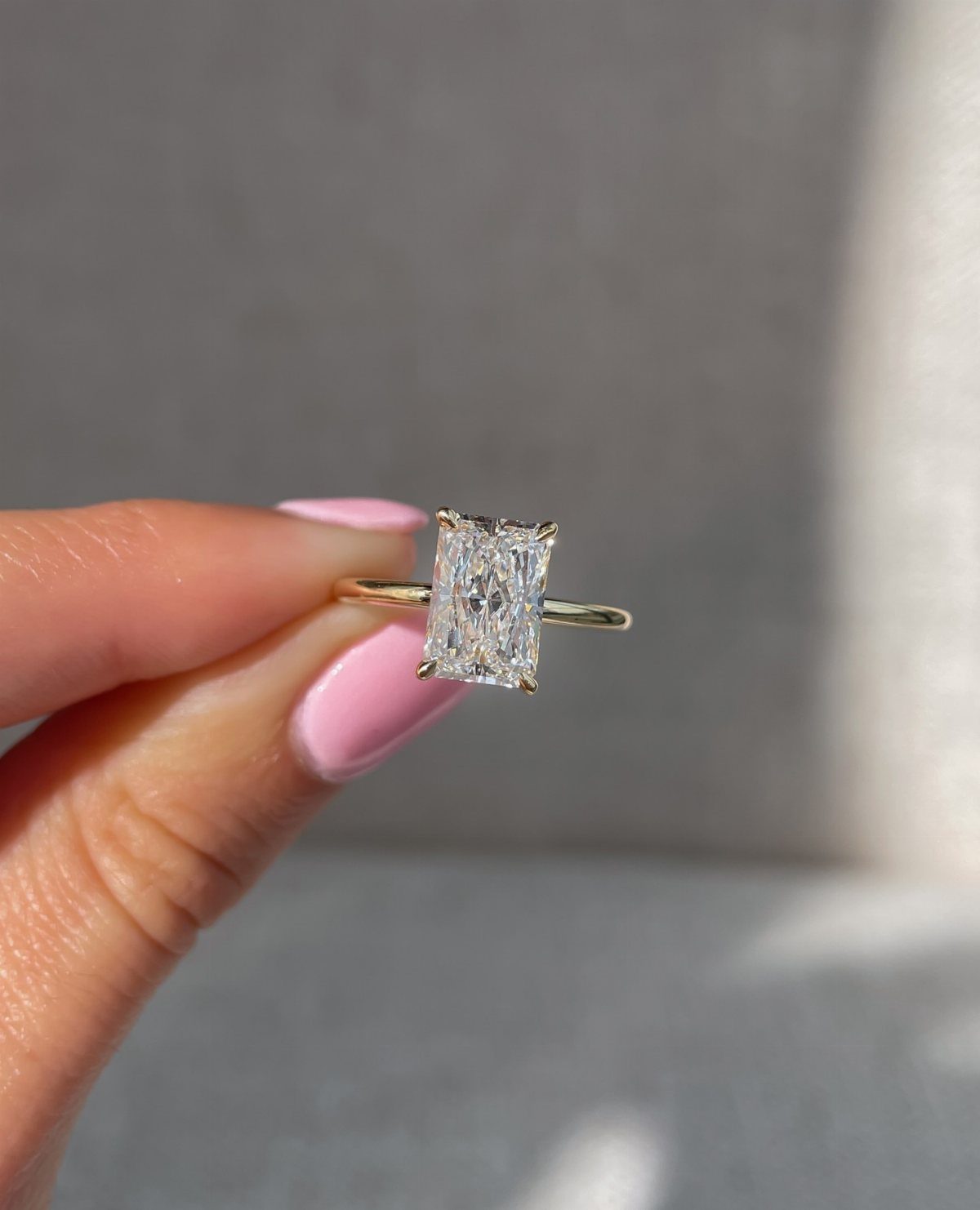
One stone means one statement, and a rectangular diamond on a plain gold band makes it in the cleanest way. With no side stones or extra metalwork, nothing competes with the center.
That suits a budget-minded buyer well, since all the money goes into one place. I would pick the stone first and keep the band simple.
8. Dainty Minimalist Solitaire Ring
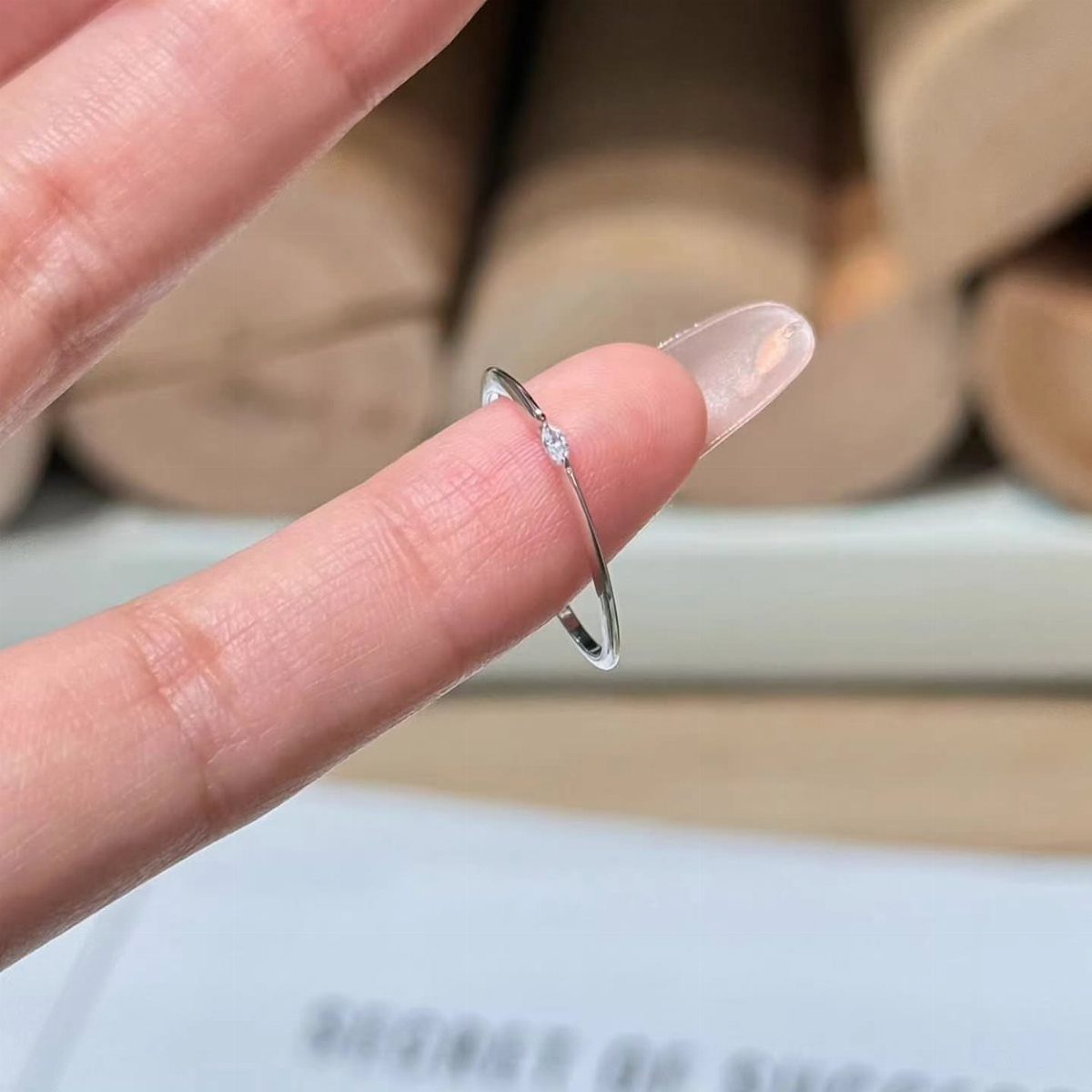
A thin silver band with one small clear stone is the lightest version of a solitaire. It sits low and quiet on the finger.
Small stones cost far less than large ones, so this style stays friendly to a tight budget.
Spend a little more on a well-cut diamond, since a small stone has only its sparkle to offer. I would choose this for someone who wants a ring they barely notice they are wearing.
9. Oval Cut Solitaire Ring
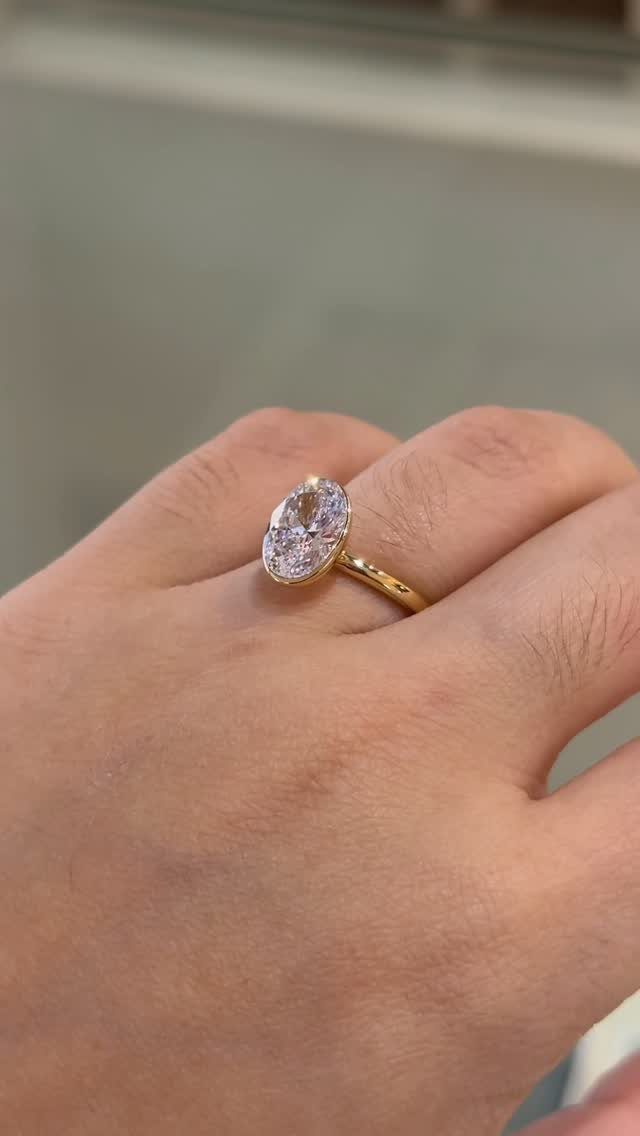
Oval cuts stretch along the finger, so a large oval in gold looks longer and bigger than a round stone of similar weight. That visual size is the draw for anyone watching the budget.
Ask to see the stone face-up in person and check how it looks from different angles. I would keep the setting classic and let the shape do the work.
10. Heart Cut Single Stone Ring
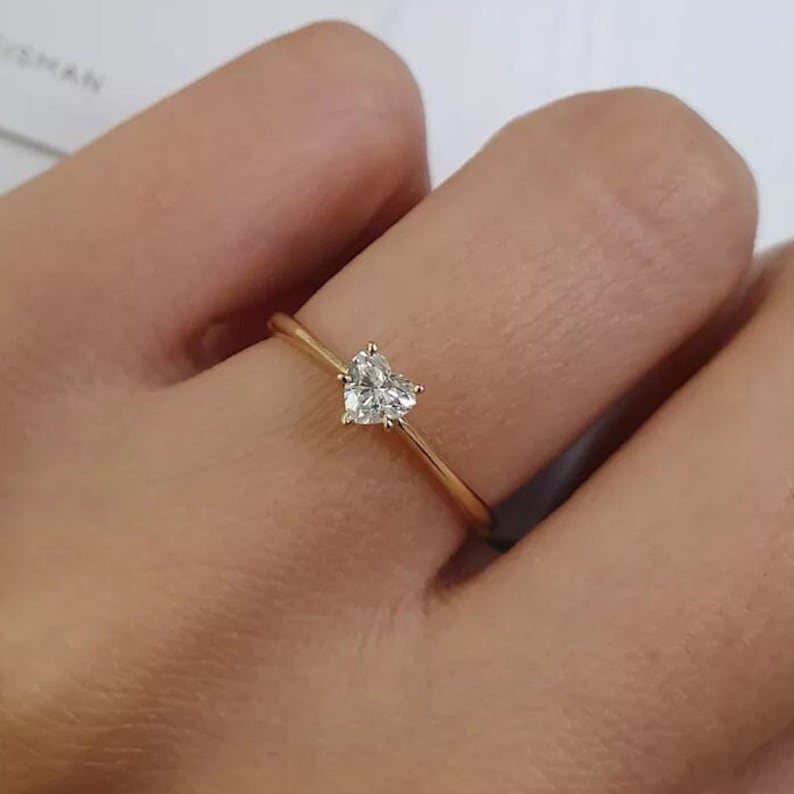
A heart-shaped diamond on a thin gold band is the sweetest take on a single stone, and the shape does the talking. Keep the band slim so the stone stays the focus.
Look closely at the point and the 2 lobes before you buy.
A well-cut heart has a clear, even outline, and a lopsided one is easy to spot. I would choose this for someone who likes a little romance in a ring.
11. Square Cut Solitaire Ring
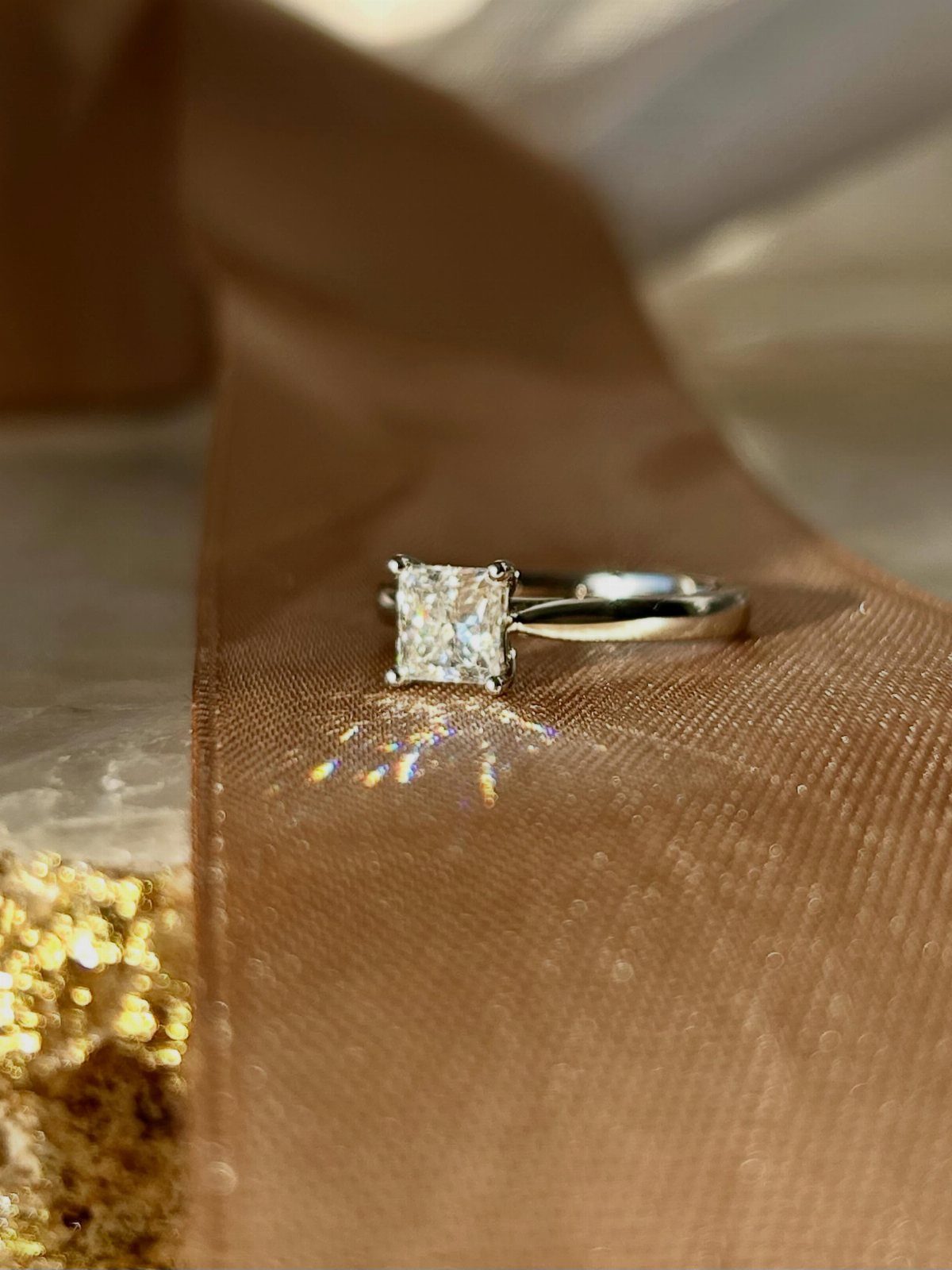
A square-cut stone in silver gives a crisp, geometric look, with straight lines and sharp corners against a simple band. It feels modern without any extra detail.
Corners are the weak point of a square stone, so ask how the setting guards them.
Silver suits a colorless stone, keeping the whole ring cool and clean. I would pick this one for a minimalist wardrobe.
Choosing the Right Diamond
Cut, color, clarity and carat weight are the 4Cs, and cut deserves the biggest share of your budget.
Pick the shape before you compare grades.
Round reads classic, oval graceful, emerald refined, pear romantic, marquise distinctive, cushion soft, radiant bold and princess geometric. Choose the one that suits the person who will wear it, not whatever is trending this season.
Skip the urge to chase carat weight just to look luxurious. Size is the easiest of the four to see and the least useful for judging quality.
Daily Wear Considerations
A solitaire has fewer stones and fewer prongs, so it catches less on sleeves and gloves. That makes it a good fit for anyone who uses their hands all day.
Get the prongs inspected, keep the diamond clean, and watch for hard impacts.
Before buying, check 5 things:
- The prongs are secure.
- The band is strong enough.
- The height of the setting should match how you use your hands.
- The center stone is well protected.
- You can commit to cleaning and inspecting the ring over time.
Take the ring off before any activity that could damage it, even if the design is sleek.
Popularity of Solitaires
Solitaires stay popular because they work, not because they are plain. The focus lands on the center stone, and the style reads classic or modern depending on the setting.
That flexibility carries over to metal. Yellow gold, white gold, rose gold and platinum all suit a solitaire, so you can match it to the jewelry you already wear.
It sits beside any wedding band you choose, whether that’s plain metal, carved vintage detail, or diamonds set all the way around.
If you think your style might change, this flexibility matters, since the band you add later can pull the whole set toward classic, sleek, or decorated.
Frequently Asked Questions
What is a solitaire engagement ring?
A solitaire is a ring built around one center stone, usually on a simple band with no side stones.
With nothing else to look at, the stone’s shape, cut, and setting carry the whole design. Metal choice and band width then set whether it reads classic or modern.
Are solitaire engagement rings still popular?
Yes. Plain is not why solitaires keep selling; the design simply does its job well.
With one stone and nothing competing, every eye goes straight to the diamond, and a low bezel or a thin pavé band can push the same ring toward modern or traditional.
Yellow, white, and rose gold all work, and so does platinum; a wedding band of almost any style will sit next to it without a fuss.
What is the classiest engagement ring shape?
Round is the classic choice, and it is the easiest shape to compare because its sparkle comes from the stone alone.
Oval reads graceful, emerald refined, and pear romantic. Let the wearer’s taste and hands decide the shape, and ignore what happens to be popular this year.
How do I choose the right solitaire engagement ring?
Settle on a shape, then a metal, and only after that let what is left in your budget decide the carat weight.
Put the largest share of your money into the cut, because a smaller, well-cut stone outshines a larger, dull one.
Carat weight is the easiest of the 4Cs to notice and the poorest guide to quality, so chasing it for the sake of a luxe look rarely pays off.
Is a solitaire a good ring for everyday wear?
Yes. Fewer prongs and no side stones mean less to snag on a sweater cuff or a work glove, which makes a solitaire a good match for busy hands.
A jeweler should check the prongs about every 6 months; clean the stone regularly, and slip the ring off for heavy lifting, gardening, or the gym.





