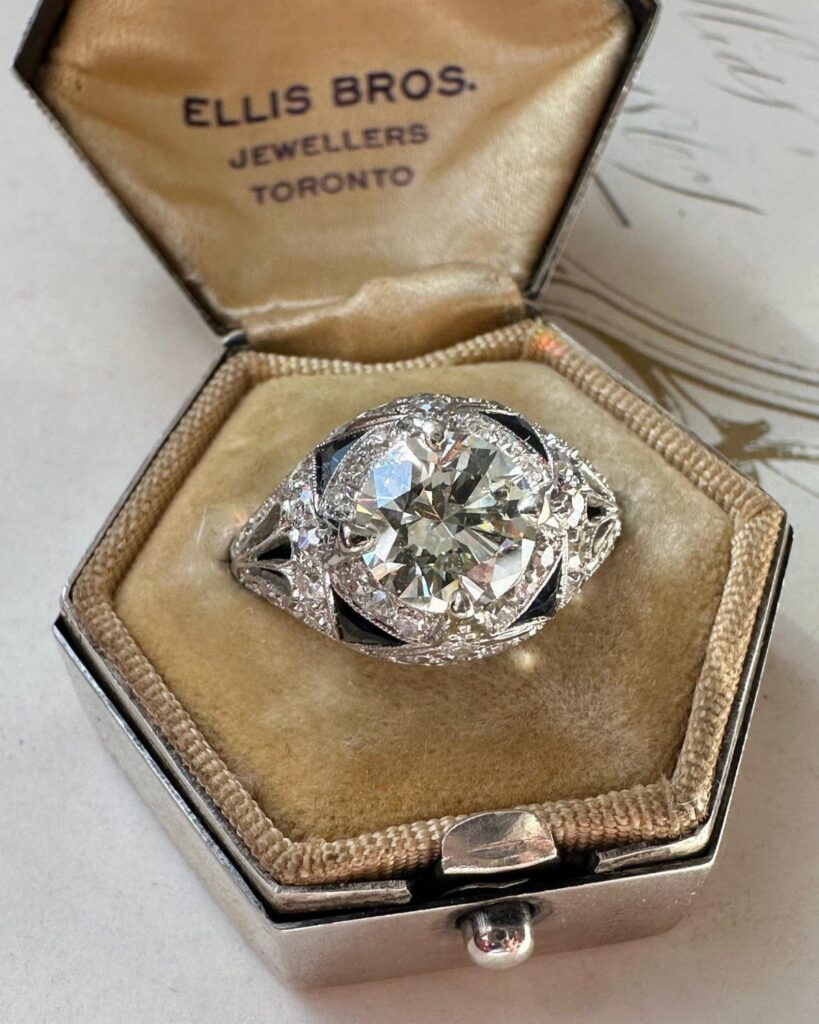
The settings here run from Victorian and Edwardian rings to Art Deco, plus old mine cuts, emerald cuts, ovals and marquise stones in yellow gold, rose gold and platinum, and the era you pick shapes the metal, the stone cut and how ornate the ring feels.
Your own taste in weight decides it: if ornate rings feel fussy on a finger you use every day, lean toward the Edwardian or Art Deco rings with milgrain and engraved platinum; if you want romance and color, the Victorian rings and the sapphire, emerald and rose gold halos fit.
Whatever you choose, ask what the metal is and get it in writing, since platinum and white gold look alike but cost differently.
1. Hand-Carved Settings Antique Engagement Rings
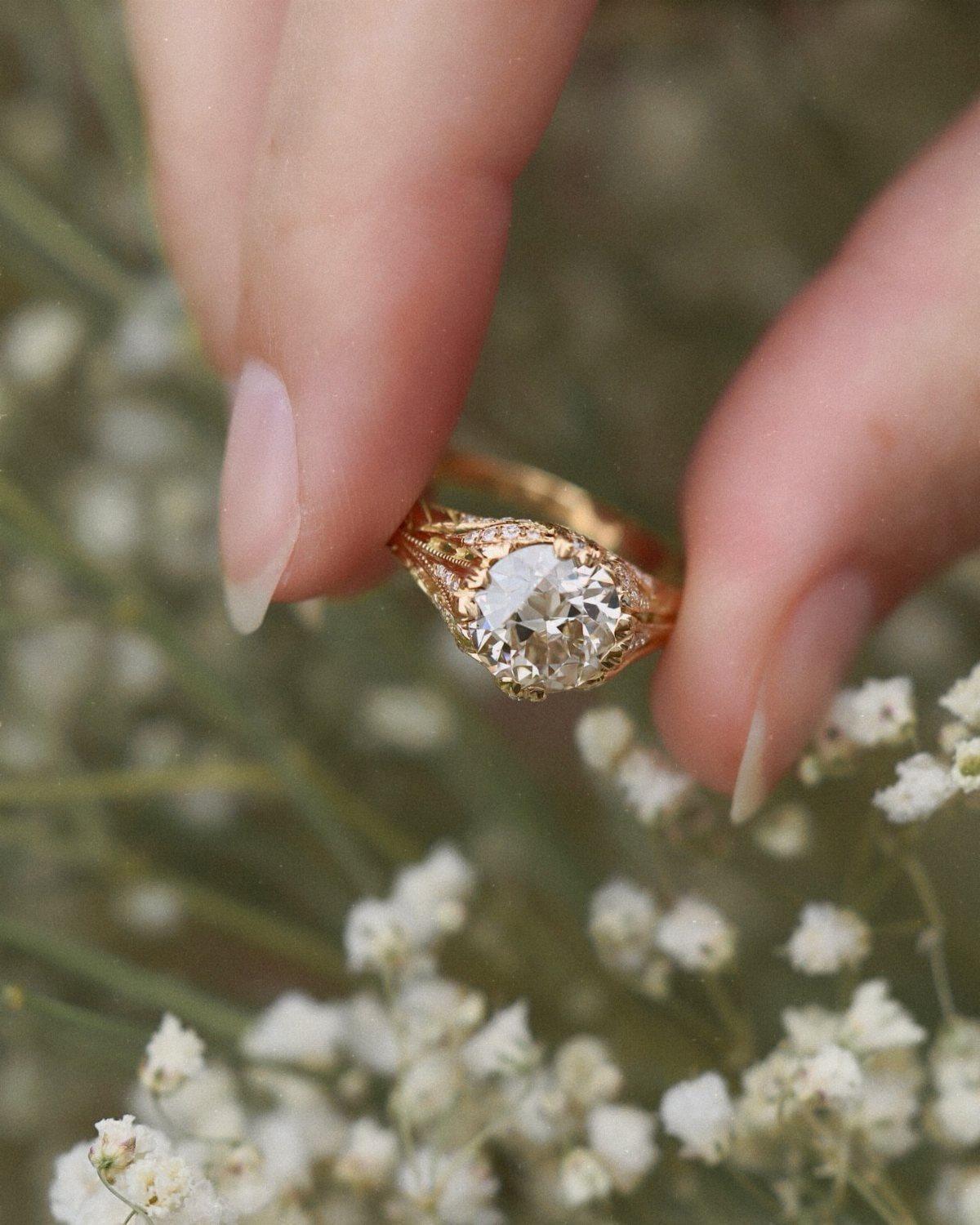
Hand-carved detail is the reason an antique setting can’t be matched by a catalog ring. Each one was fabricated by hand, so the scrollwork, the prongs and the shoulders differ slightly from any other piece, even within the same period.
For a reader who wants a ring nobody else will have, that matters more than carat weight.
A large diamond in a gold setting like this one gets its character from the metalwork around it, so look closely at the gallery and the band before you decide.
A jeweler’s loupe or microscope will show you whether the carving is crisp and hand-finished, so request one at the counter. Crisp carving is what you’re paying for.
2. Victorian Rings
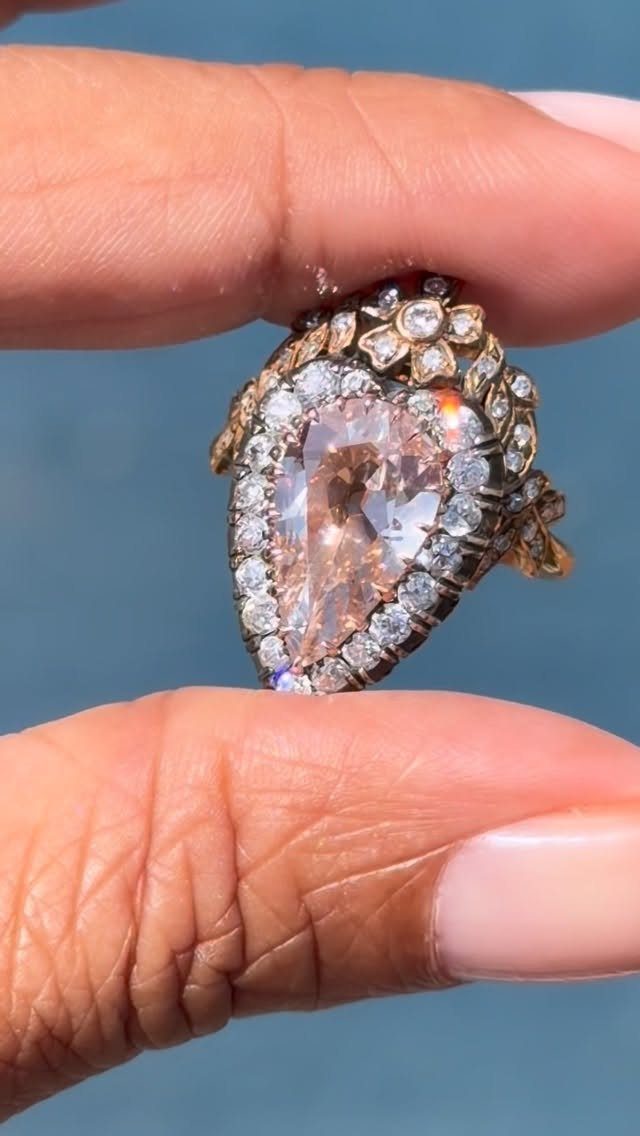
Named for Queen Victoria’s long reign, Victorian rings lean romantic, shaped by the Queen’s own tastes and life. Floral clusters and colored center stones fit that mood, and a pear-shaped stone ringed with small diamonds is a good example.
Because the stones in each piece are chosen individually, no two look alike. One jeweler’s 1.79 carat diamond came with a full GIA report, which costs far more than a standard one but raises the stone’s value considerably.
If authenticity worries you, a report like that is worth paying for.
3. Edwardian Rings
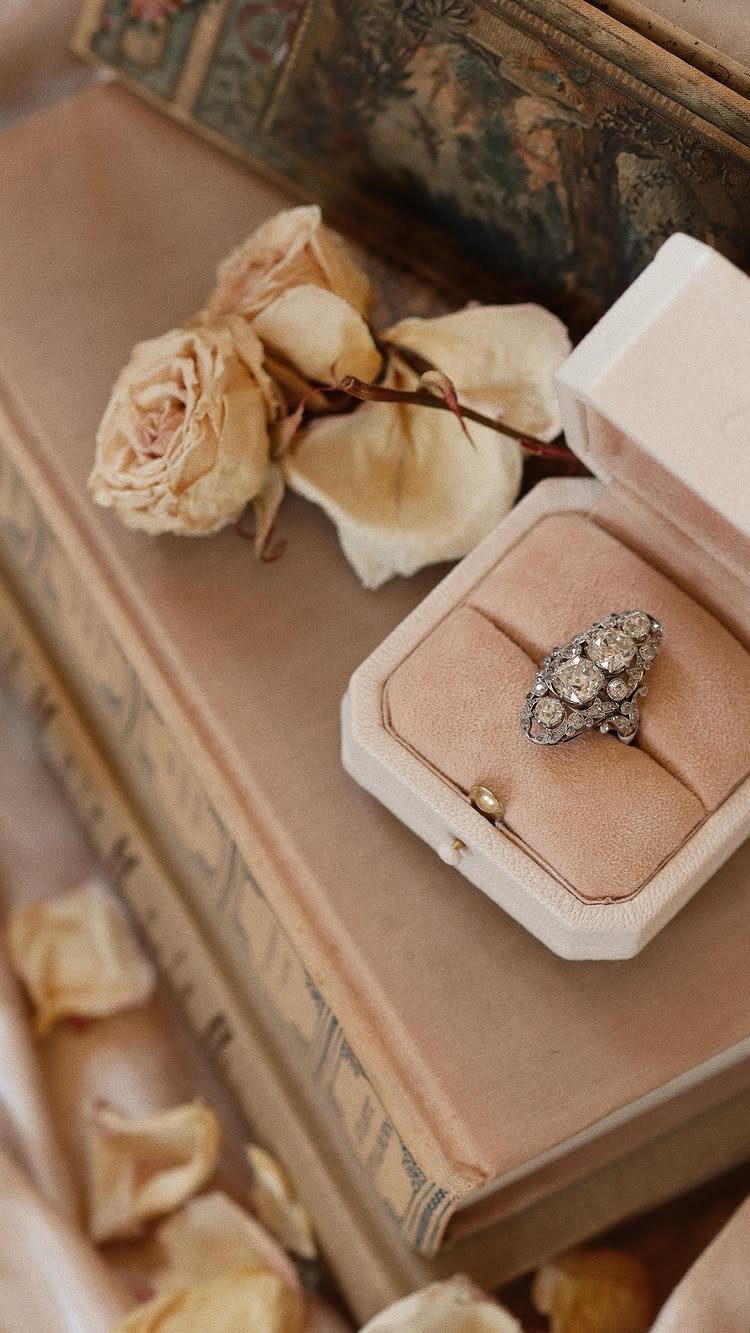
Light and airy is the shift to look for. Once Edward VII became king in 1901, the weighty, sentimental feel of Victorian jewelry lost ground to a lighter, more aristocratic style, and Edwardian rings reflect that with open, delicate designs.
Clusters of old-cut diamonds make a good fit if you want presence without a single oversized stone. A vertical cluster stretches along the finger and reads larger than its center stones alone.
I’d pick Edwardian over Victorian for anyone who finds ornate, weighty rings too fussy for daily wear.
4. Art Deco Rings
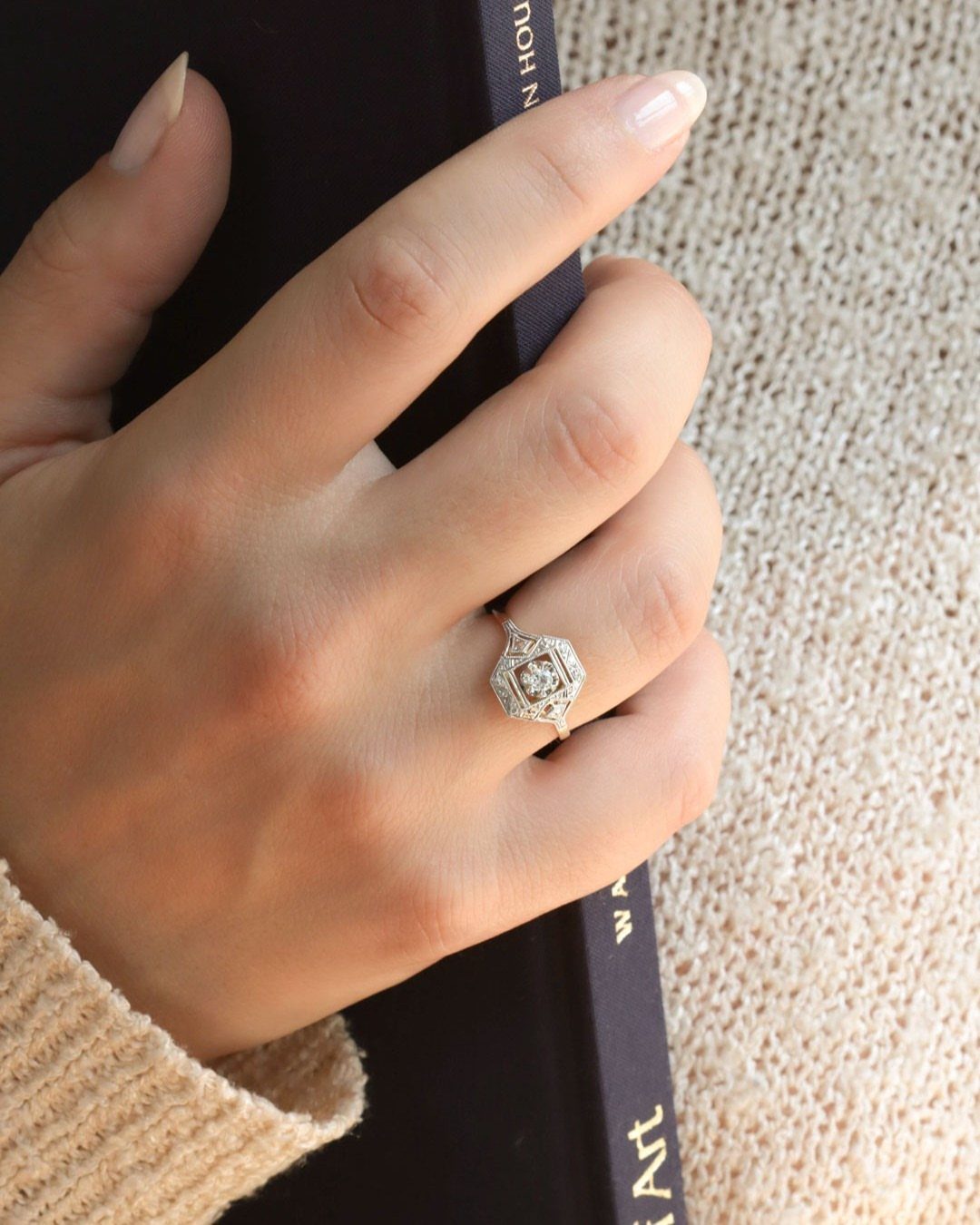
Platinum remained the top metal choice through the Art Deco years, and white gold, created as a lower-cost stand-in for it, grew popular alongside.
White gold gives you a budget route to that silver-toned Art Deco look without paying platinum prices.
Geometric halos suit anyone who prefers crisp lines to soft florals. Ask the seller which metal the ring is, since the two look alike at a glance but cost differently.
5. Old Mine Cut Antique Rings
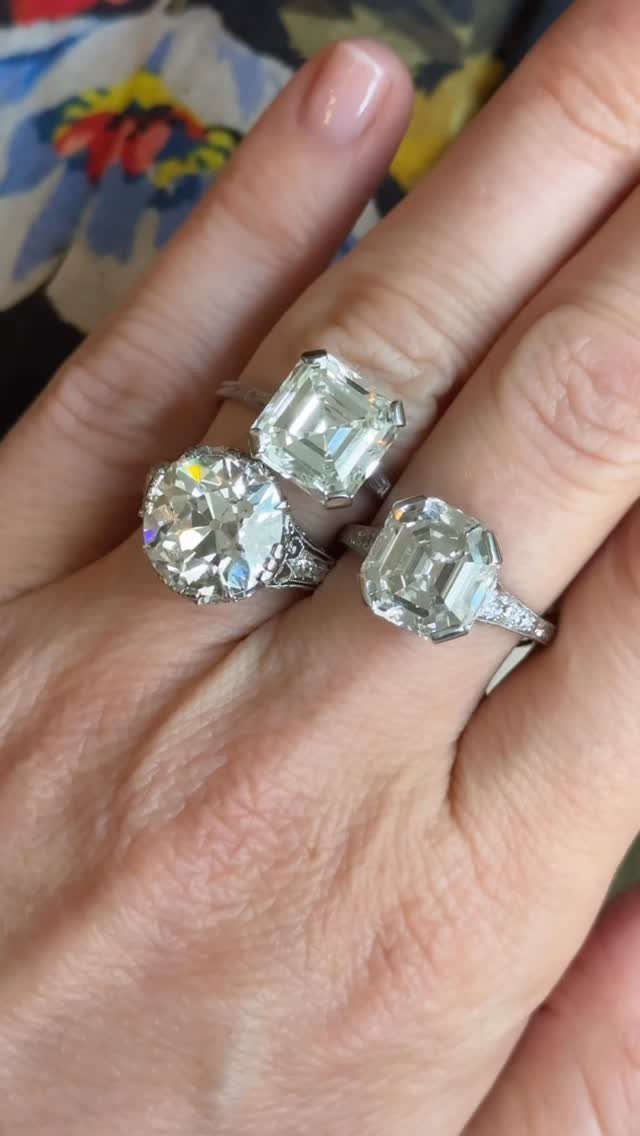
Antique rings often carry diamond cuts you won’t find in modern jewelry, and the old mine cut is the one to seek out.
Its look is softer and more character-filled than a modern brilliant, which suits a reader after something with history.
Line up different cuts in a row, as with the 3 rings here, and the differences are obvious right away. Try several in person before choosing; photos flatten what makes each cut distinct.
6. Yellow Gold Antique Rings
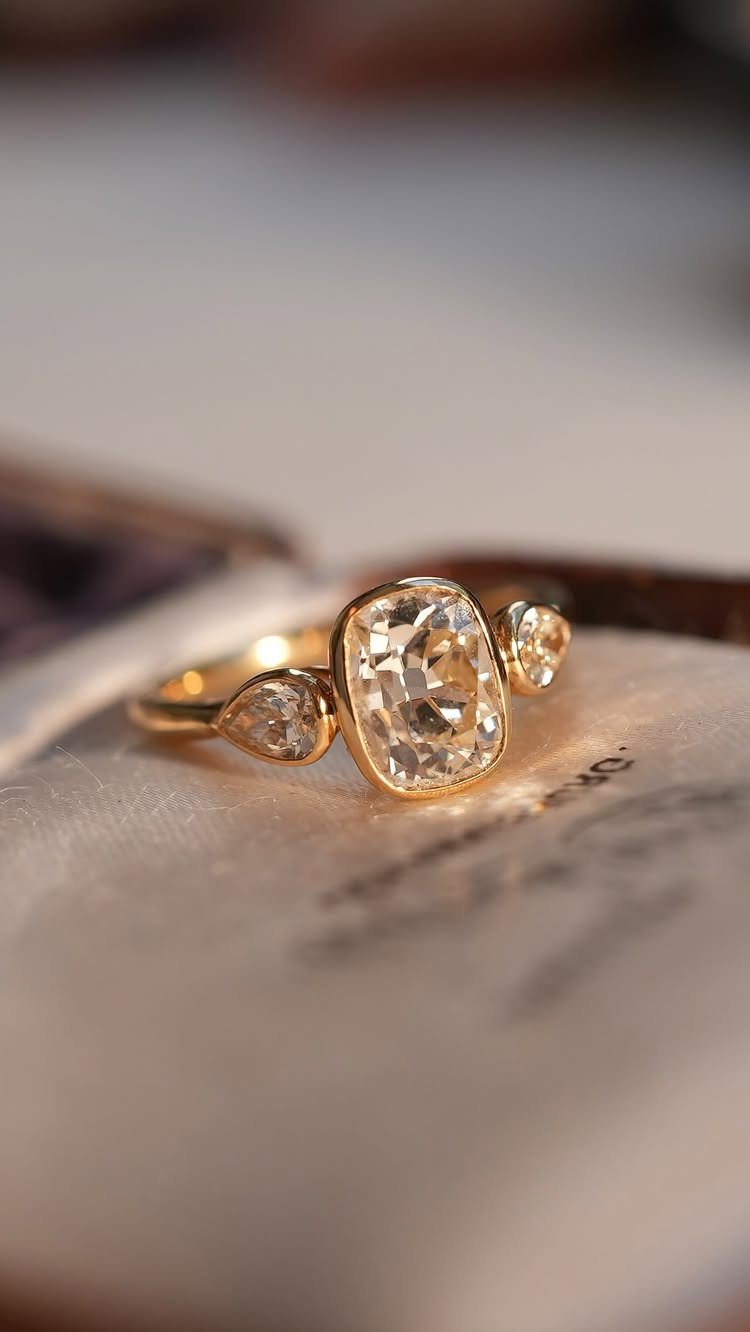
Warm yellow gold flatters old-cut diamonds, and I think it’s the most natural pairing for an antique stone.
One ring I’d point to has a bezel-set 2.04 carat old cut elongated cushion diamond with 0.57 carats of pear cut diamonds, set in 18ct yellow gold.
A bezel wraps the stone in metal, which gives a clean, finished edge. Get the carat weight and gold purity in writing before any money changes hands.
7. Sapphire Halo Antique Rings
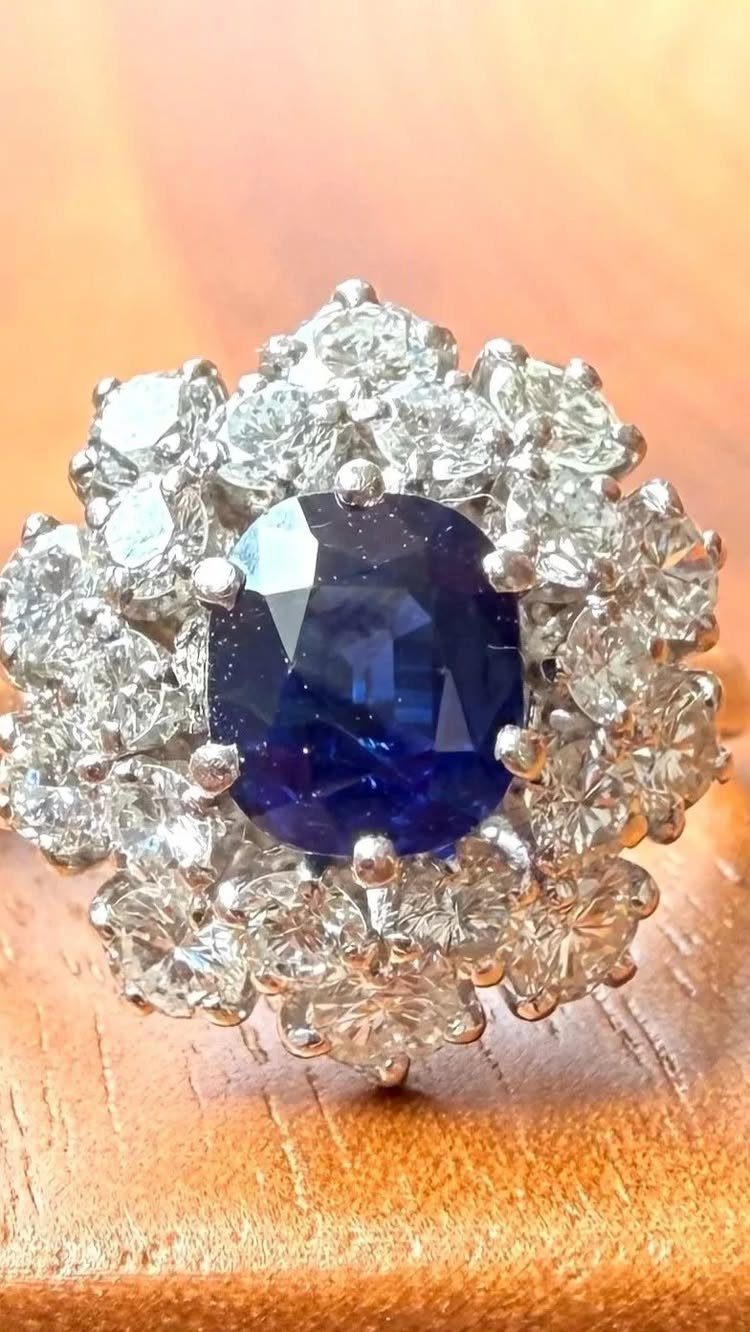
A deep blue oval sapphire ringed with small diamonds is a classic antique pairing, and the halo does real work: it makes the center stone look larger and sets off the color.
Sapphire is a smart pick for a reader who wants a colored stone with history but not a pale one.
Daylight shows a sapphire’s true color better than shop lighting does, so ask the jeweler to carry the ring to a window or step outside with it, since blue can shift a lot between the two.
I’d choose this over a plain solitaire for anyone who wants a ring that gets comments.
8. Milgrain Engraved Platinum Rings
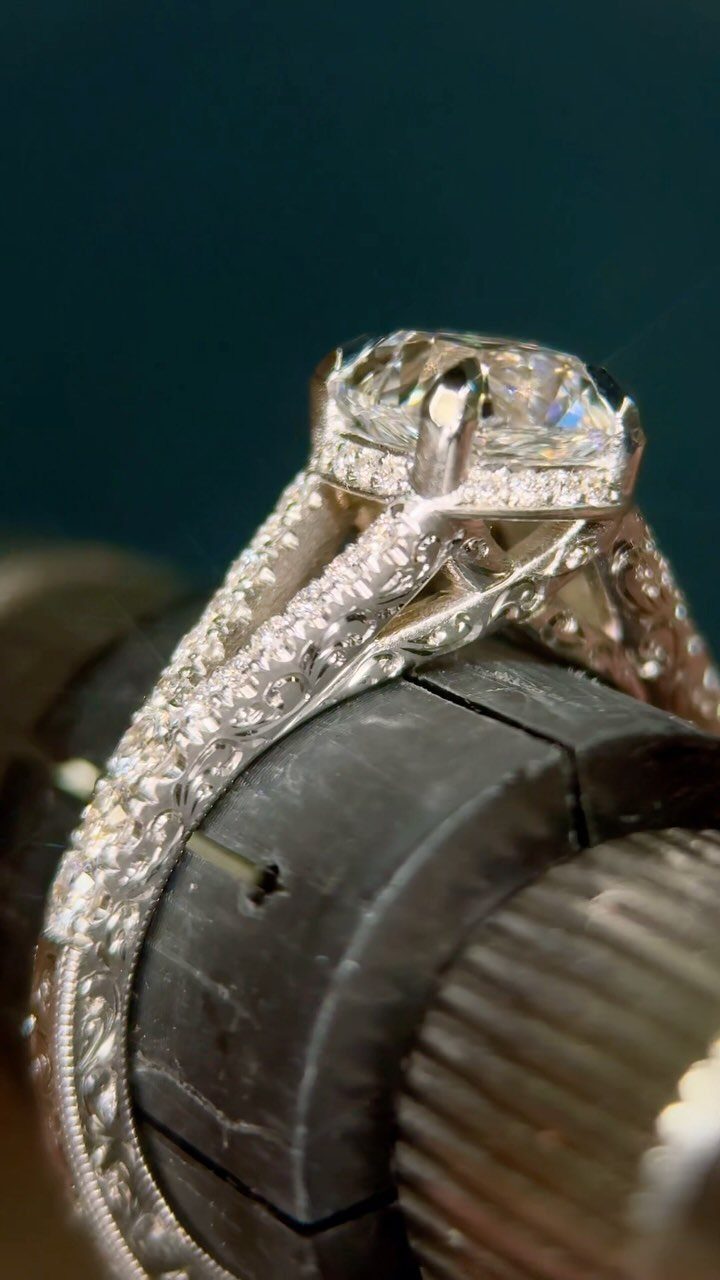
Milgrain is the row of tiny beads along an edge, and on a platinum band it reads as fine, hand-worked detail. Paired with a prominent center diamond, the engraving keeps the band from looking plain.
Check the beading under a loupe. Crisp, evenly spaced beads suggest careful work, while flattened or worn ones mean the ring has seen years of wear.
Confirm the metal is platinum in writing, because white gold looks nearly identical in photos.
9. Rose Gold Gemstone Halo Rings
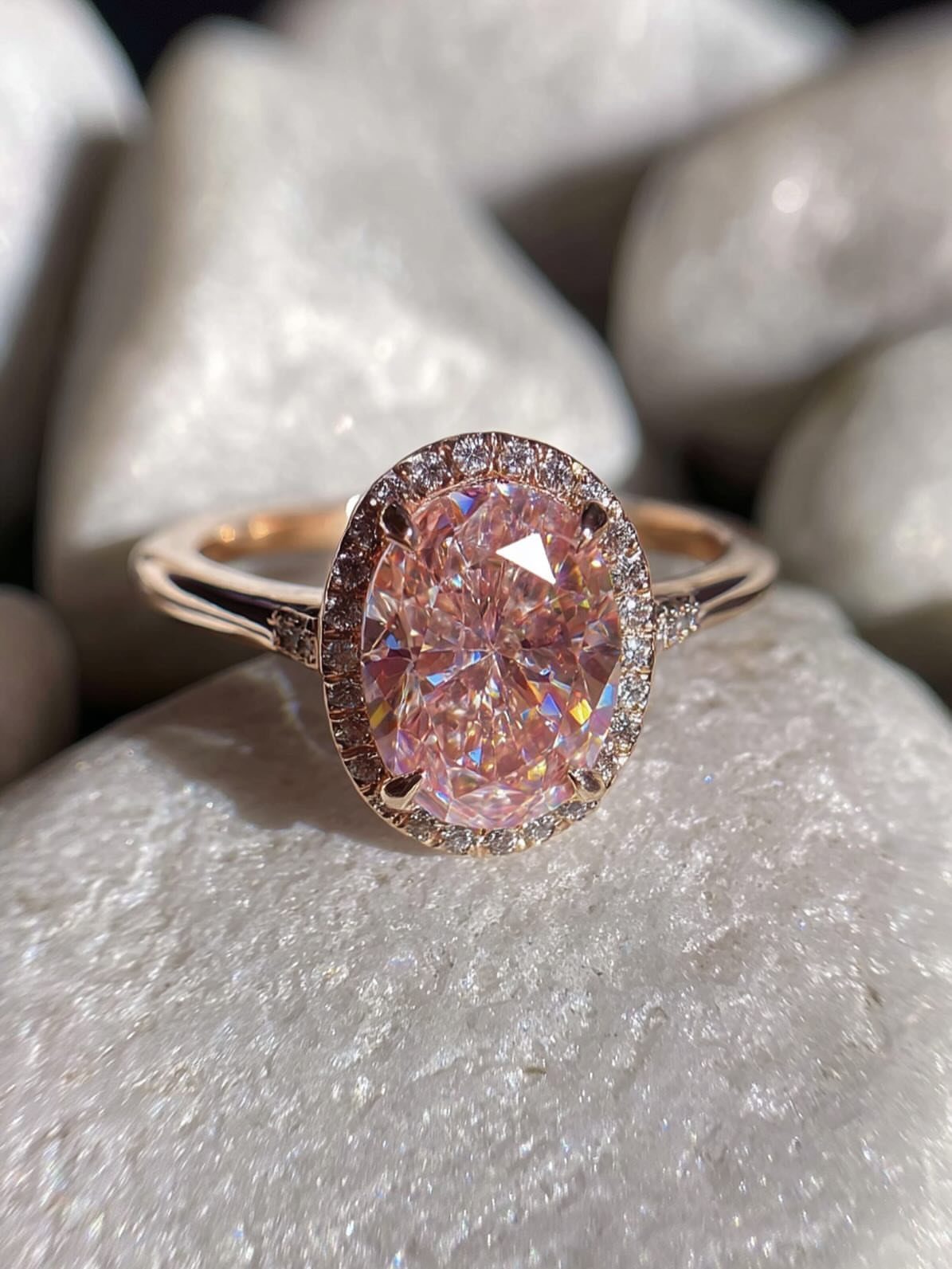
Pink and rose gold belong together: a soft pink oval stone inside a delicate diamond halo gives a warm, romantic ring without the heaviness of yellow gold.
If you’re drawn to color but find blue or green too bold, this is the gentle route. Ask the seller exactly what the pink stone is, since several gems look alike, and get that on the receipt.
Pink stones can differ in shade from one to the next, so view the ring in person before you commit.
10. Emerald Cut Diamond Antique Rings
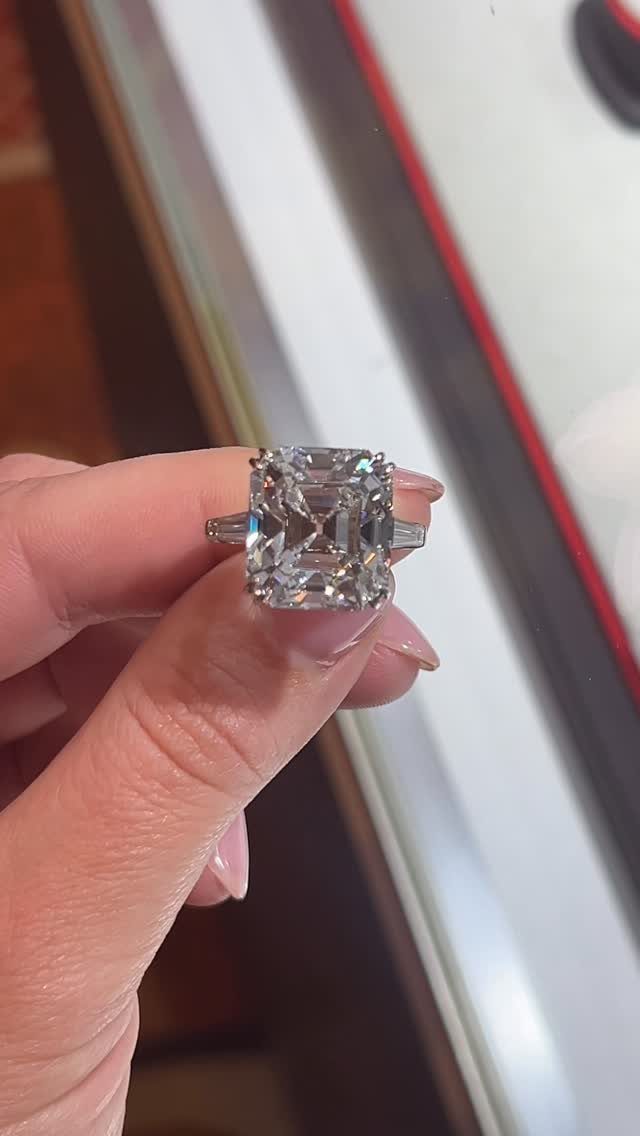
An emerald-cut diamond puts long, clean steps of light in place of sparkle, and in a platinum antique setting with small accent diamonds beside it, the effect is calm and elegant.
Because the cut is so open, clarity shows more than in a brilliant, so inspect the stone closely. Smaller side diamonds frame it without competing.
I’d choose this for someone who likes understated rings, and a loupe will tell you more than any listing.
11. Emerald Antique Halo Rings
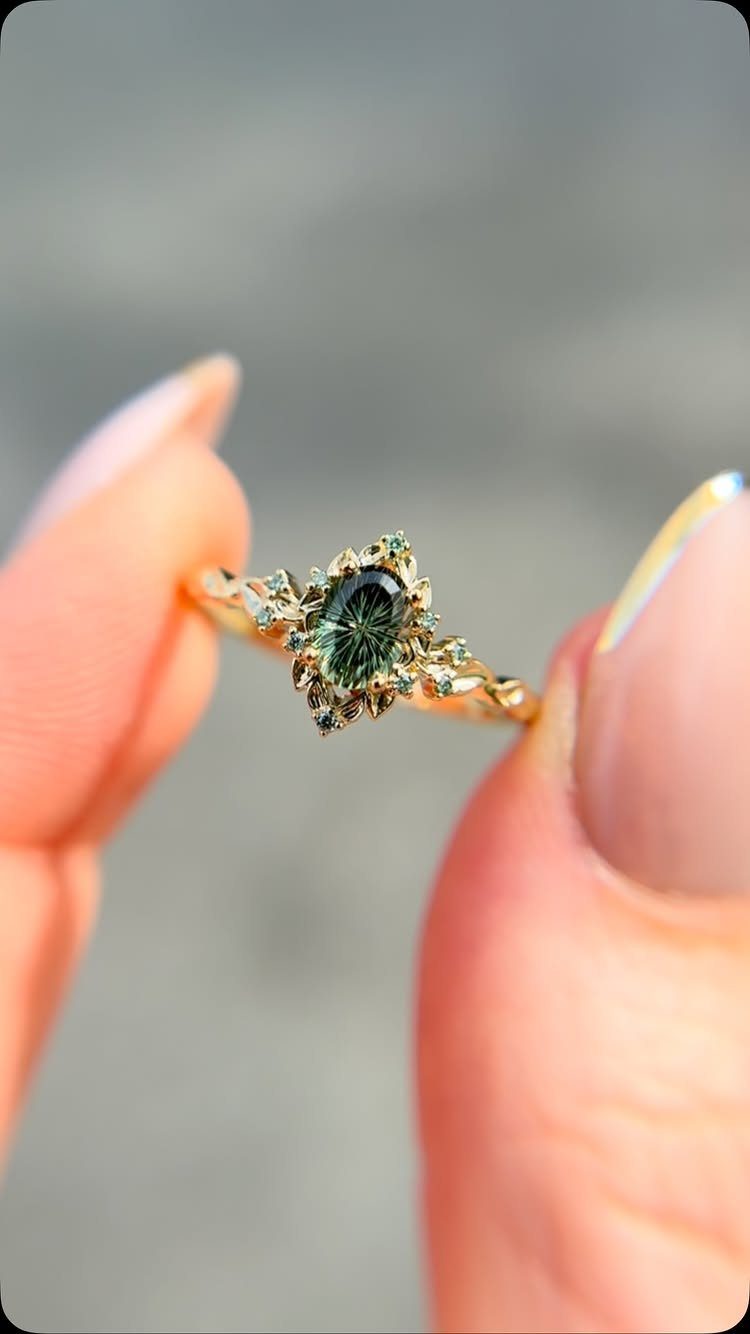
Gold, a deep green oval emerald and a diamond halo make a rich, ornate ring, the kind of color that feels very old-world.
Emeralds usually show small internal marks, so judge the stone by its color and overall look rather than hunting for perfection. Ask whether the green has been treated, and get the answer in writing.
For a reader who wants color and history in one ring, I’d rank this near the top.
12. Star Engraved Cluster Rings
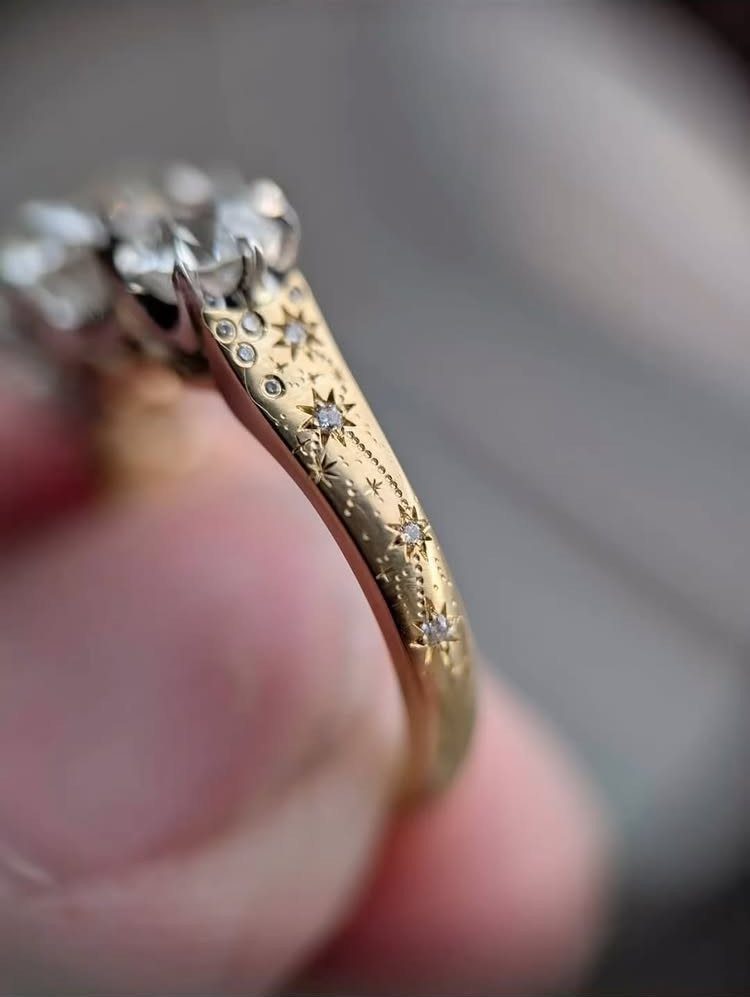
Star engravings with tiny stones set into the band lead the eye up to a diamond cluster, so the detail starts well before the top of the ring.
That makes it a good choice if you want a ring that rewards a second look. Turn it to see whether the stars are cleanly cut and the small stones sit snug in the gold.
Loose accent stones are the thing to test, so ask the jeweler to check each one.
13. Marquise Gemstone Antique Rings
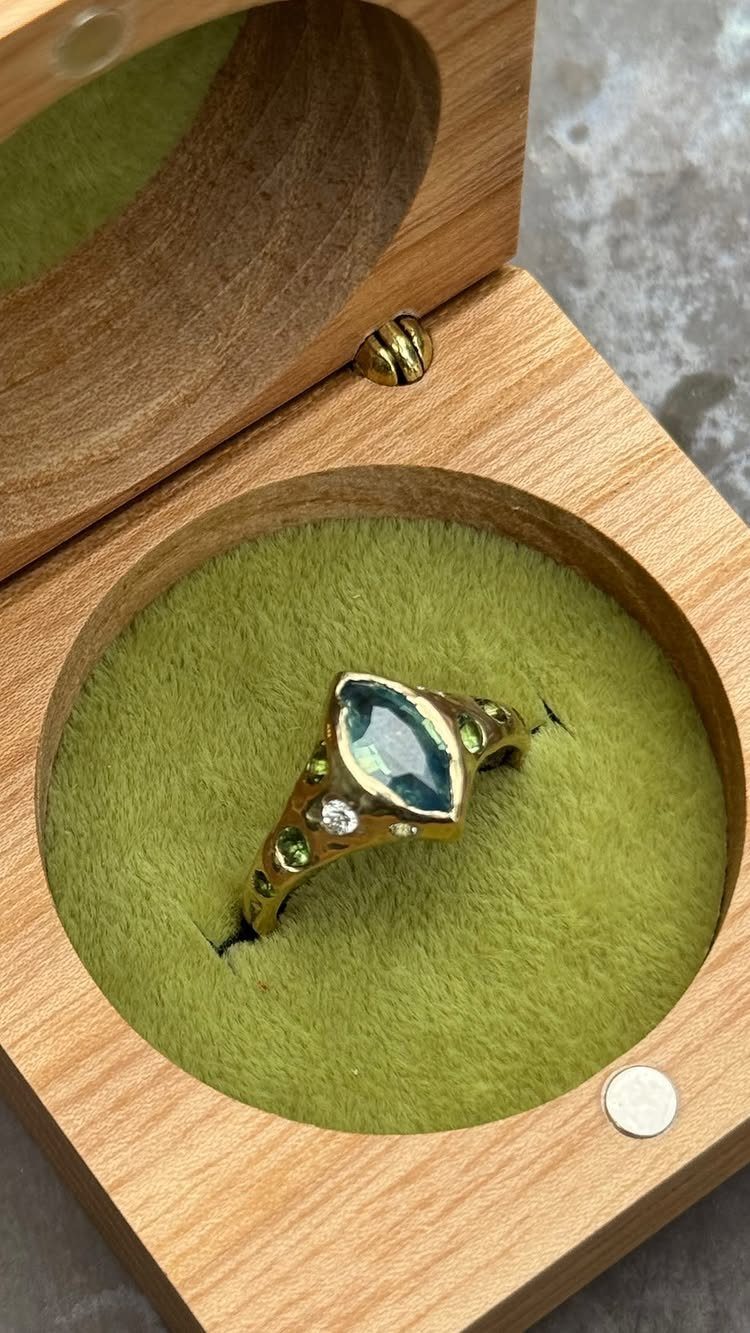
A marquise stone is long and pointed at both ends, so it stretches along the finger and makes a modest stone look bigger.
Set in gold with small diamonds on each side, as in this ring, it has a vintage feel that suits a reader who wants color without a round center.
Those pointed tips are the weak spot. Ask the jeweler to check that both ends are protected by prongs, and look for any chips at the points under a loupe.
Get the identity of the blue stone in writing, since several gems look alike.
14. Oval Diamond Antique Settings
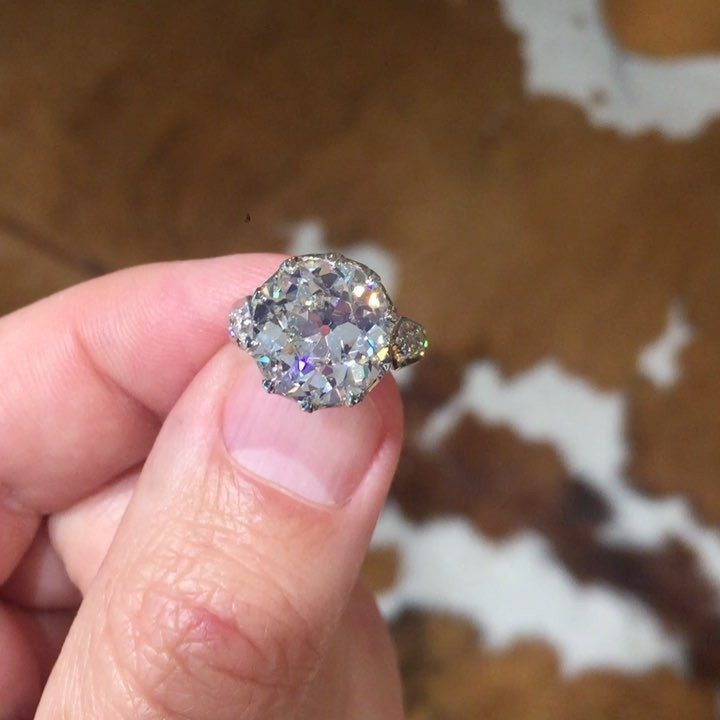
Few stones suit an antique setting as well as a large oval diamond. Its elongated outline flatters the finger, and ornate side detailing gives the ring a handmade, period look that a plain solitaire lacks.
I’d choose gold here, because the warmth sits well with the carved shoulders.
Ask for the carat weight and the metal’s purity before you pay, and have the seller confirm the diamond is original to the setting or a later replacement.
Check the side detail for wear, since worn metalwork is costly to restore.
Differences Between Antique and Vintage
Antique means a ring more than 100 years old. Vintage covers rings at least 20 years old but under 100, though some sources set the vintage line at 50 years, so ask a seller which definition they’re using.
Era tells you more than either label. "Vintage" just means old; "Edwardian" locks the ring to 1901–1915, tells you to expect platinum, filigree and an old European cut stone.
2 other terms cause confusion. Estate just means previously owned, whether the ring is 5 years old or 200.
Vintage-style is new metal made to look old, usually cast instead of hand-fabricated, and it’s not the same thing as a period original. Price it that way.
Care for Antique Rings
Skip harsh chemical cleaners and ultrasonic machines.
Some Georgian and early Victorian rings have foil-backed stones. If water gets behind the stone, the foil can be ruined for good, so check with a jeweler before you submerge anything.
Take the ring in for a professional check every 6–12 months to catch thinning shanks, worn prongs and loose stones while fixing them still costs very little.
Get the ring reappraised every 2–3 years so your insurance pays replacement value if something happens.
Authenticity Verification
Start inside the band. Look for maker’s marks, purity stamps such as "18K" or "PLAT," and assay office stamps, which can show when and where the ring was made.
Then judge the wear. Real antiques show gentle wear from decades of handling; crisp, sharp edges on filigree usually mean modern casting.
One detail won’t date a ring, but several read together will.
I wouldn’t skip this on any antique ring, whatever the seller says.
Frequently Asked Questions
Did people wear engagement rings in the 1800s?
Yes. Sellers of period rings list Victorian sapphire, diamond, emerald and three-stone pieces from the 1830s to 1900s, so there is plenty to choose from.
How much for an old engagement ring?
Prices vary widely with era, metal and stone. Another is a Victorian diamond cluster in 14k yellow gold and sterling silver at $2,850.
How do you tell when an antique or vintage ring was made?
Read several clues together, because no single one dates a ring.
Check the diamond cut, since an old mine cut points to the early 1900s or earlier. Gold tone, hallmarks and the wear on the metalwork come next, and each one narrows the date range.
Are antique engagement rings safe for everyday wear?
Yes, with care. Platinum and gold hold up well, but prong condition and band thickness decide how a ring ages on your hand, so have a jeweler look it over first.





