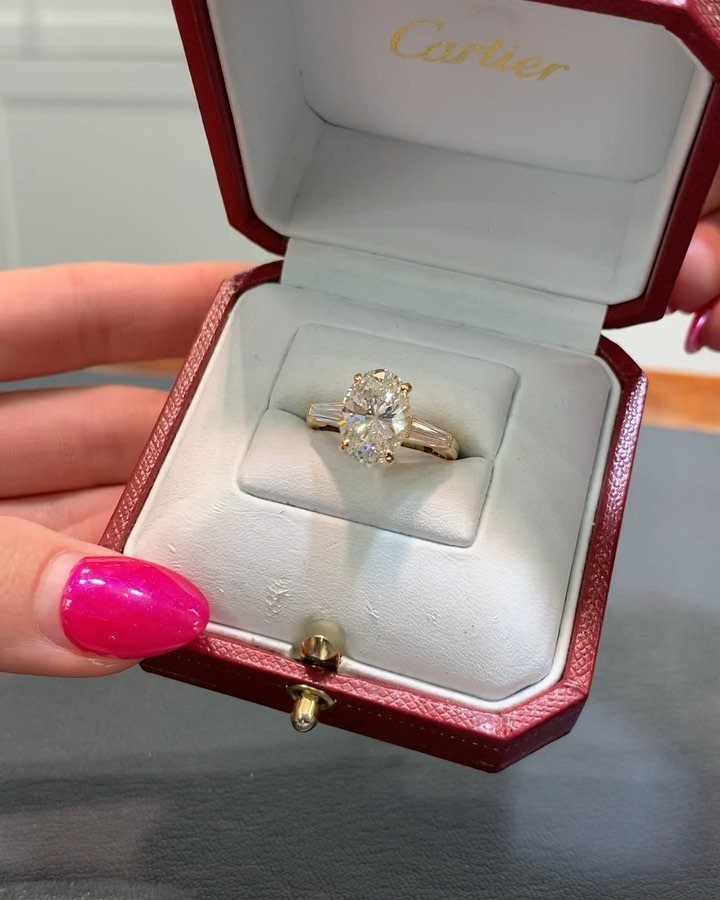
Metal sets the era of a vintage-style ring as much as the stone does, so the choice starts with what you’ll wear every day: yellow gold for Victorian or Retro warmth, rose gold for engraved and filigree detail, platinum for the lacy Edwardian look, white gold for sleek geometric settings.
Your routine decides which camp you belong in.
1. Art Deco Rings
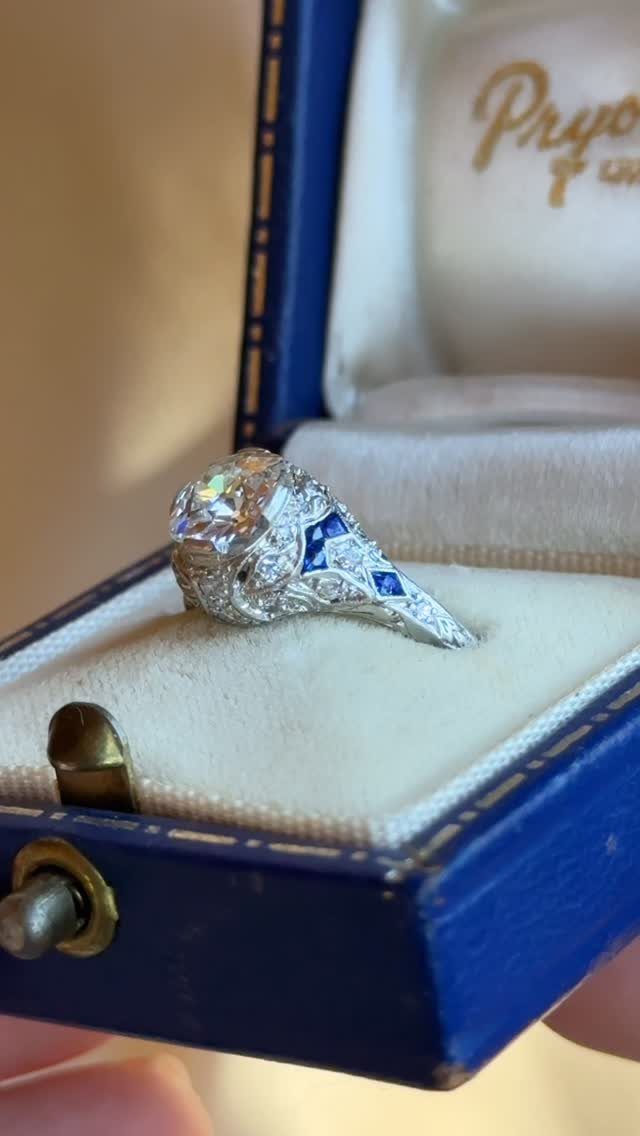
Deco rewards a big center stone, and this one has a large diamond flanked by blue sapphire accents, which is the pairing I’d pick for anyone who wants drama without gold’s warmth. The silver tone keeps it crisp.
A ring like this is a statement piece, so plan the budget around the center diamond first.
The engraved inscription reads "G.H. TO E.A.W 24–27," a reminder that personal engraving adds character to older rings. Ask a jeweler whether a personal inscription can be added inside the band.
2. Vintage Style Engagement Rings
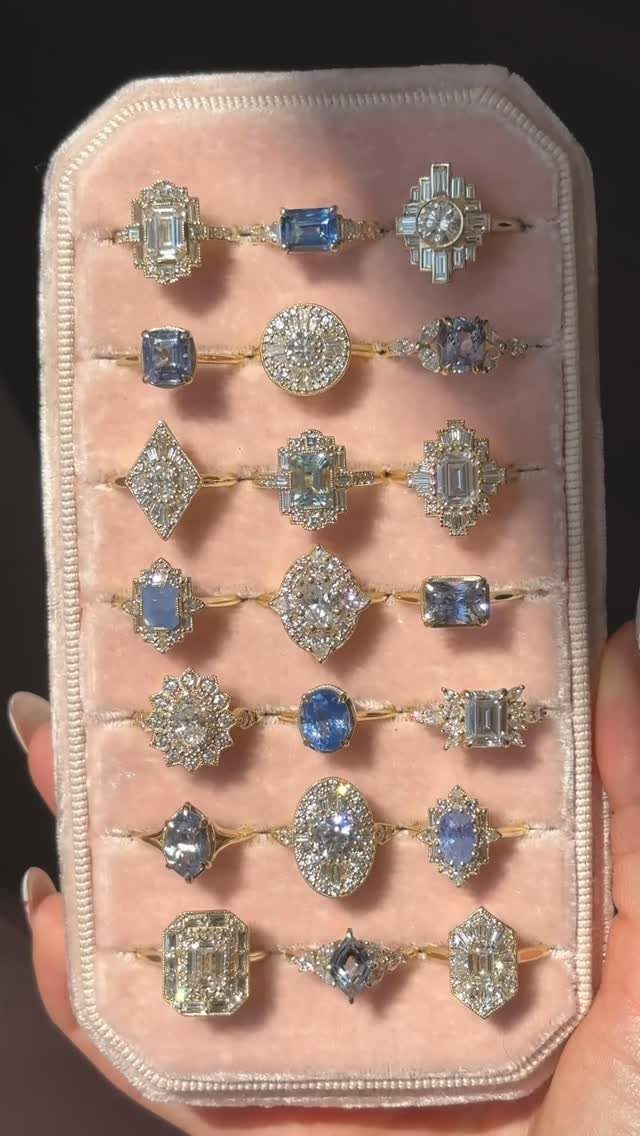
Newly made rings with historical motifs give you vintage looks with a clean, unworn start.
For a first pass, pick the one or two you keep returning to. Then ask for that look in your size, which a freshly made piece can usually offer.
3. Solitaire, Halo and Bezel Settings
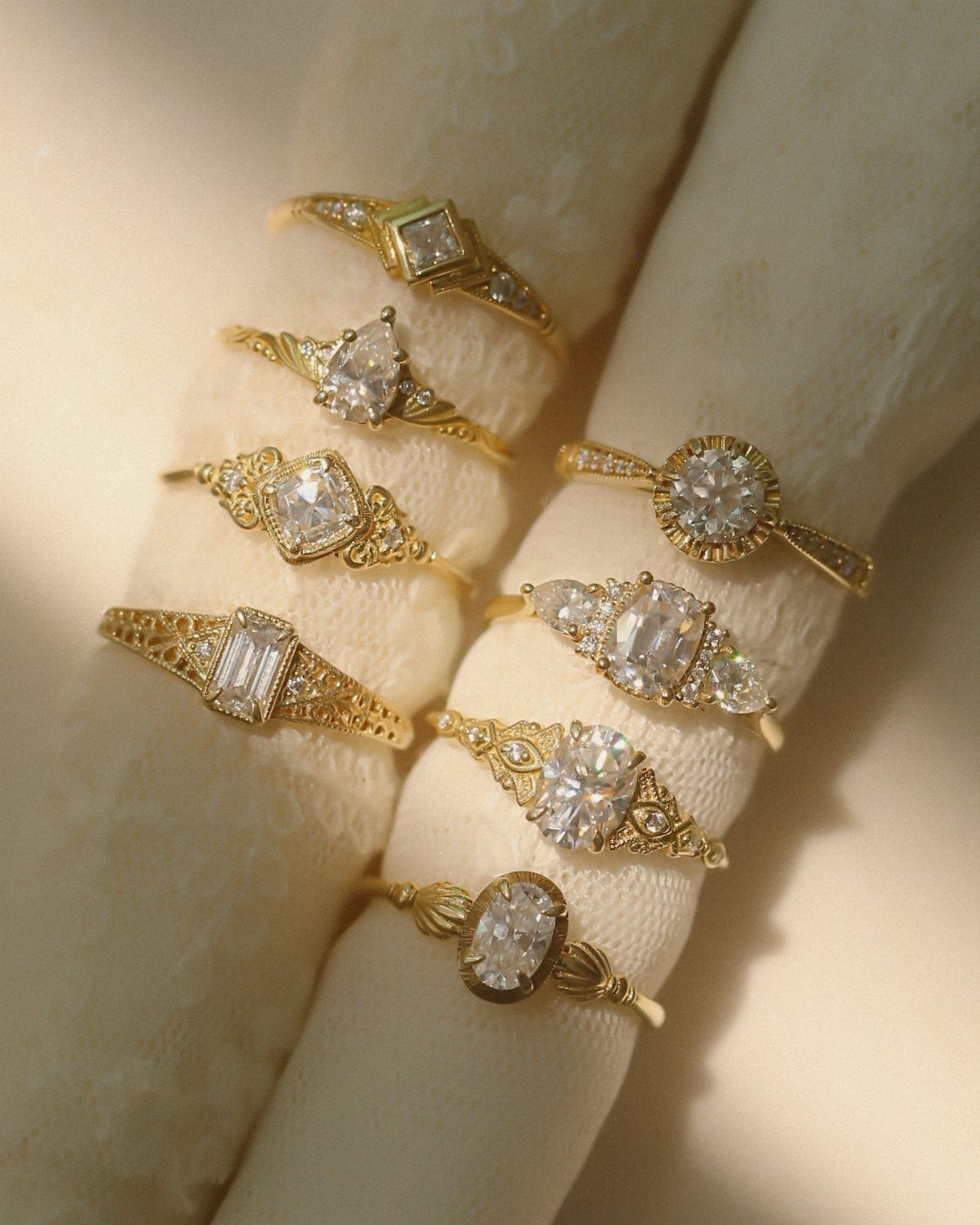
Solitaire, halo and bezel are the 3 settings to compare, and gold keeps all of them warm and period-friendly. A solitaire puts everything on one stone, while a halo makes the center look larger by ringing it with smaller diamonds.
A bezel wraps the stone in a metal rim, which suits a plainer, smoother look. Try all three on one hand before you decide; the same diamond reads very differently in each.
4. Unique Vintage Details
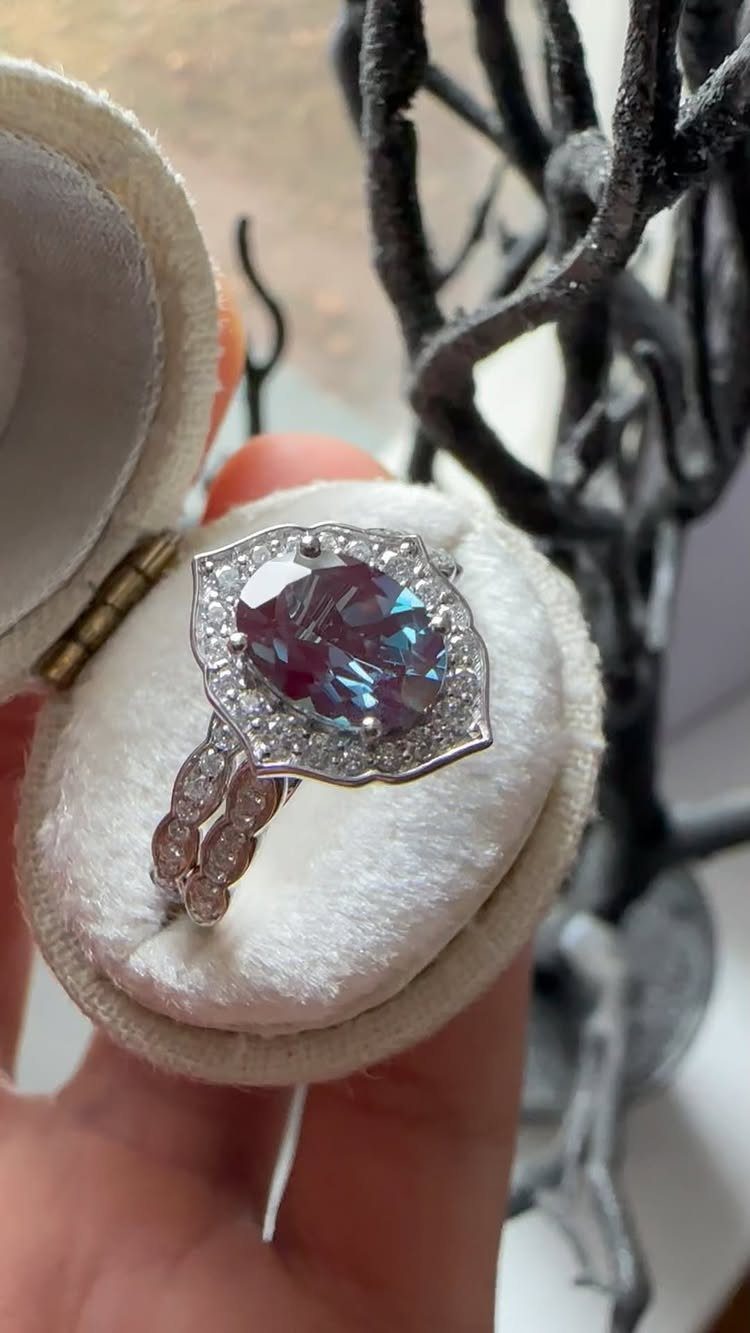
Nobody else at the table will have the same ring.
A stone like this starts conversations in a way a plain diamond does not. Look at it in daylight and under indoor lighting before buying, since iridescent color shifts with the light.
5. Georgian Rings
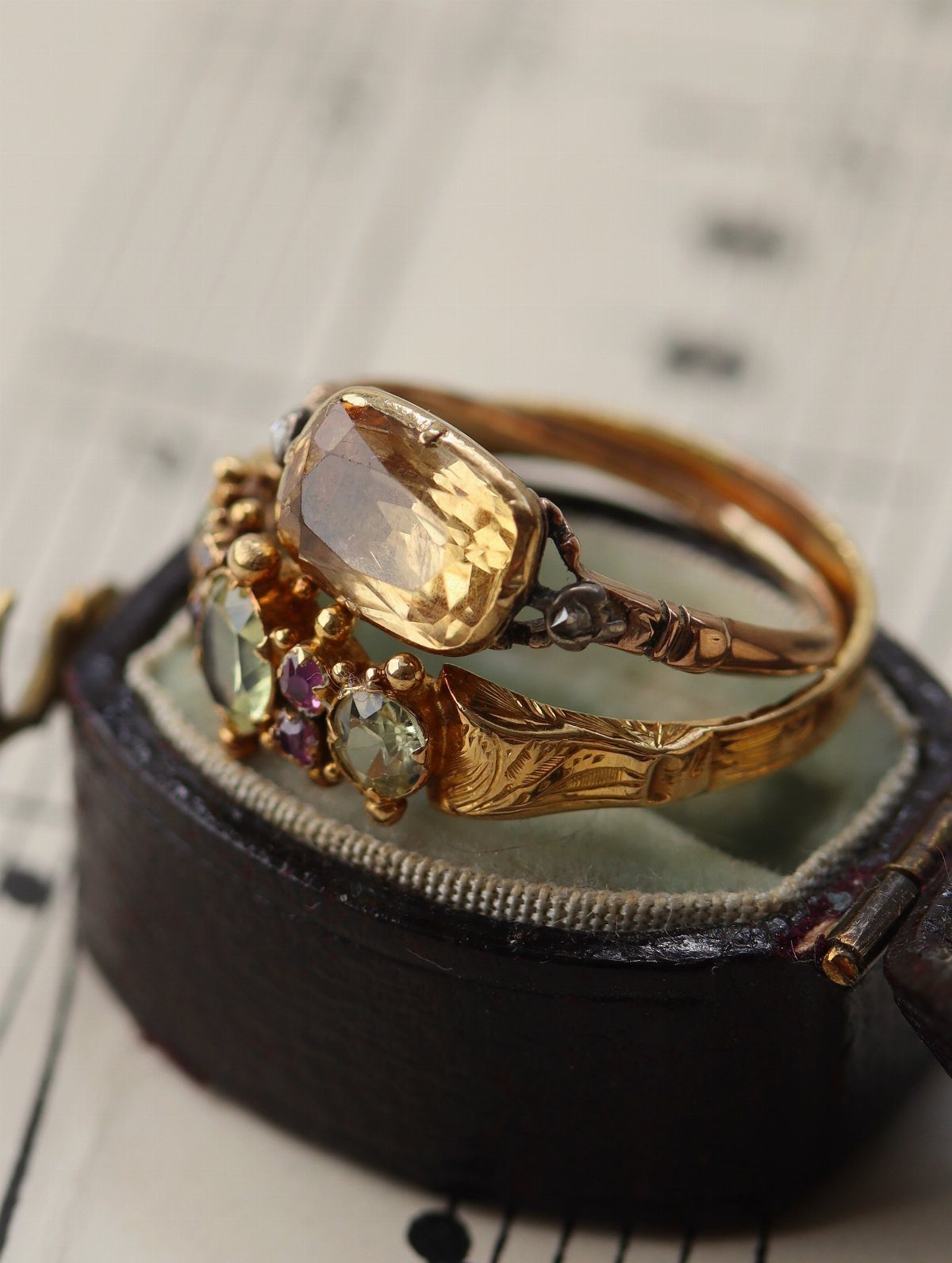
Georgian rings reward close looking. Georgian rings favor high-domed collet settings, closed backs, rose-cut diamonds and foil backing, often with nature motifs like leaves or bows.
I like them for brides who want color over sparkle. Because they are antiques, ask a jeweler to check the settings before you wear one daily.
6. Victorian Opal and Diamond Cluster Ring
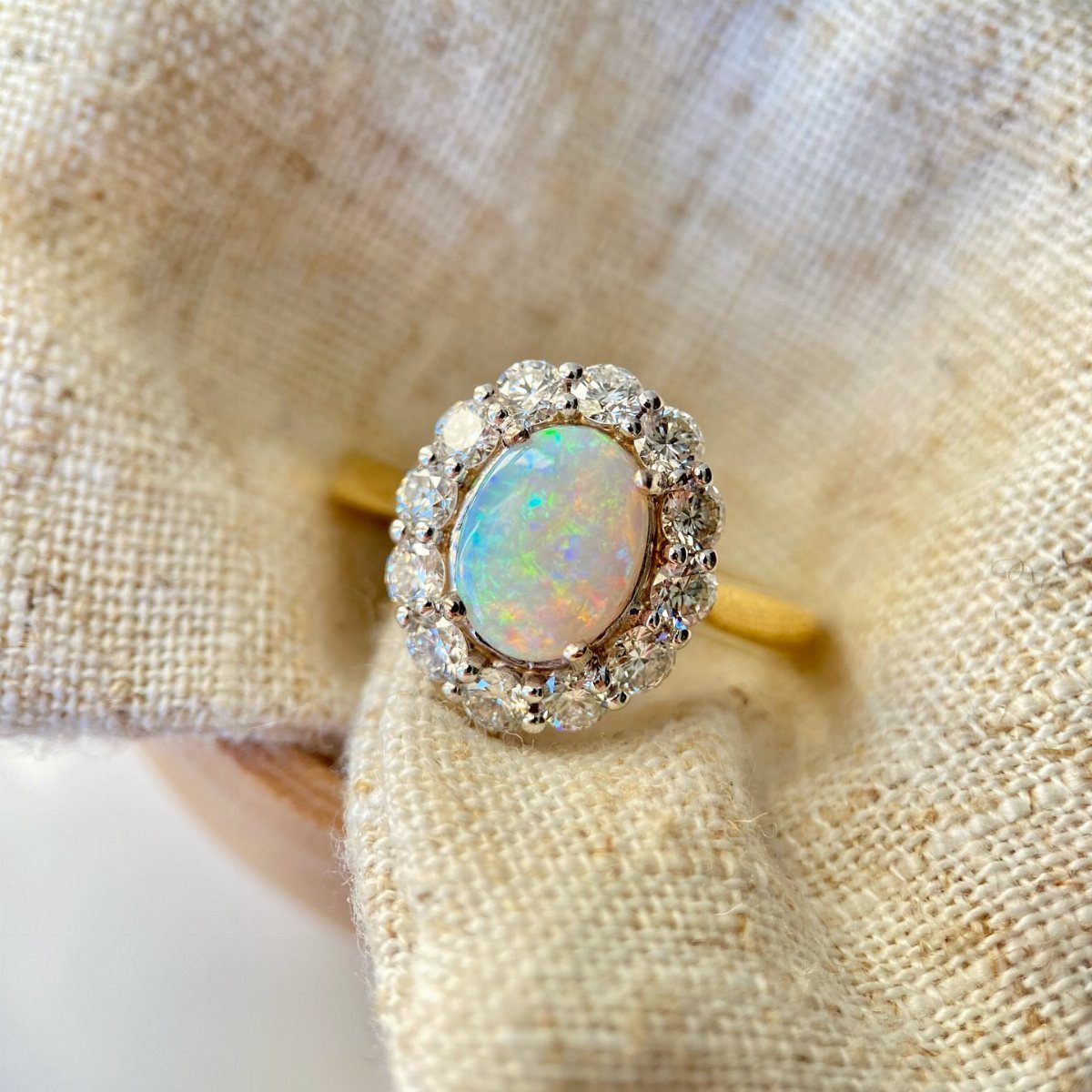
An oval opal ringed by diamonds is, to my eye, the best of the Victorian cluster look: opals catch the eye in a way few stones do. The diamond cluster frames the opal’s color without competing with it.
Gold keeps the whole ring soft and warm. Ask a seller for close-up photos of the opal in several lights, since its play of color is the reason to buy it.
7. Edwardian Rings
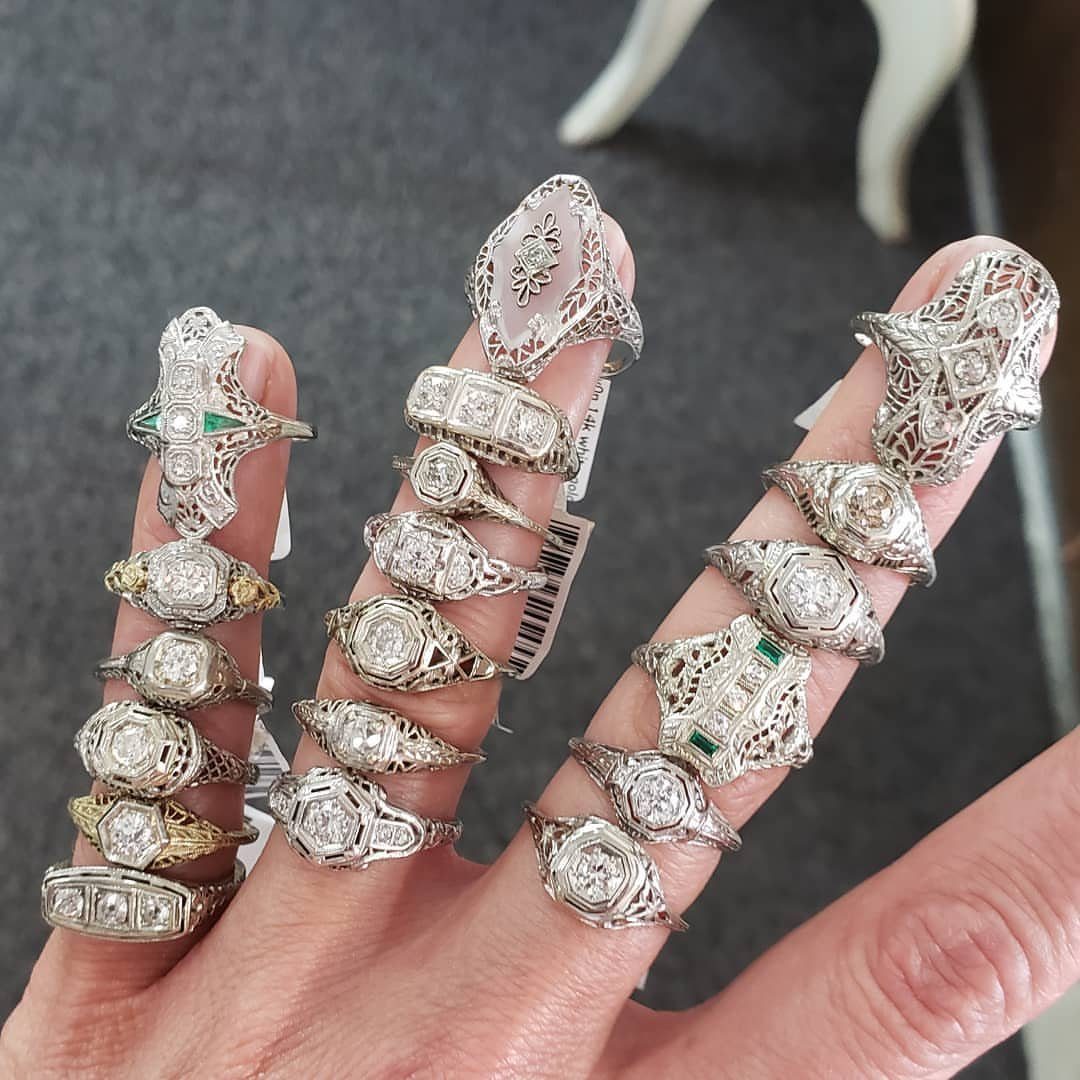
Platinum is what gives Edwardian rings their lacy, airy look. The metal allowed openwork designs, finished with filigree and milgrain, and the diamonds were typically old European cuts.
Stack several rings on one hand to compare the detailing and pick the style that reads strongest to you. For an engagement ring, I’d pick the one with the most open metalwork, since that is the era’s signature.
Check the price tag on any piece you try, and compare it with your budget before you fall for it.
8. Sapphire and Diamond Cluster Engagement Ring
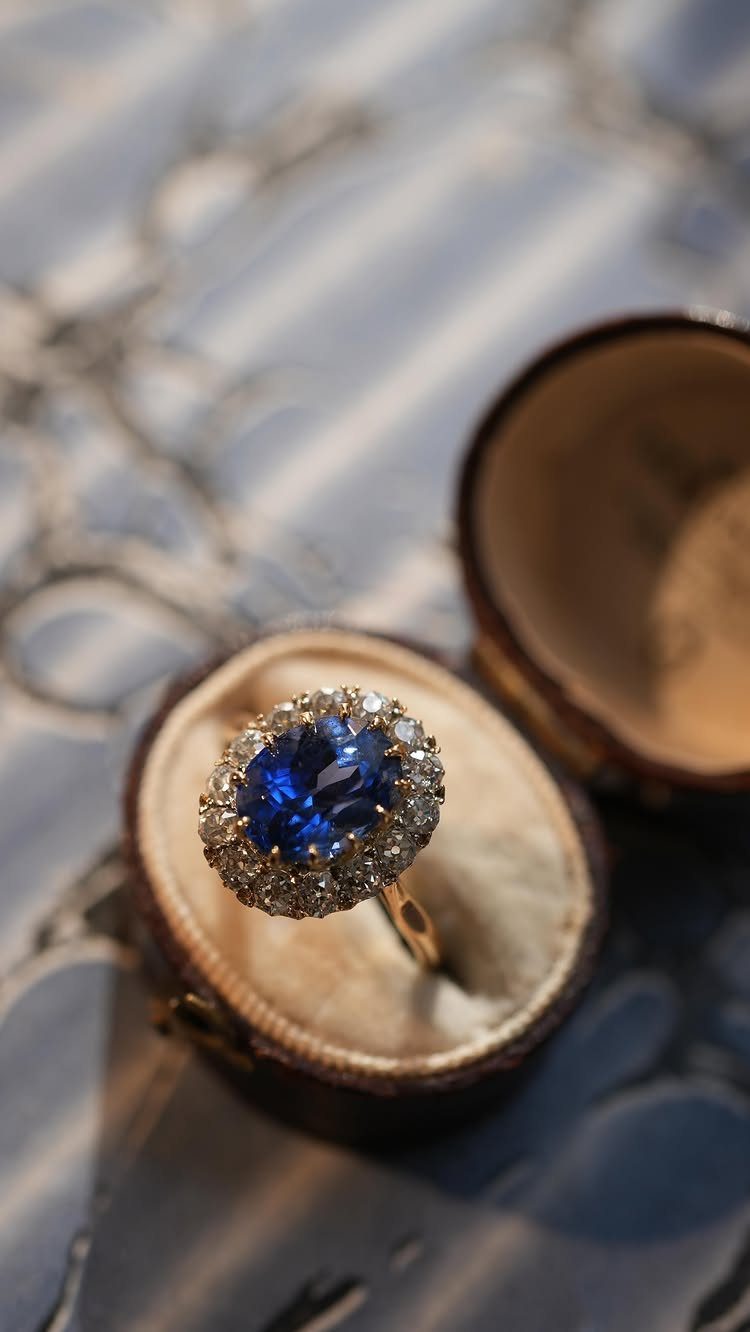
A royal-blue oval sapphire circled by diamonds is a cluster ring I would happily wear daily, and it comes in more than one color. Antique Jugendstil versions exist, and so do 1950s rings with a yellow sapphire in the center.
Blue reads as the classic choice; yellow shifts the look toward something warmer and less expected. Ask a seller to show either one next to a plain diamond ring so you can judge the color.
9. The Timeless Romance Vintage Filigree Ring
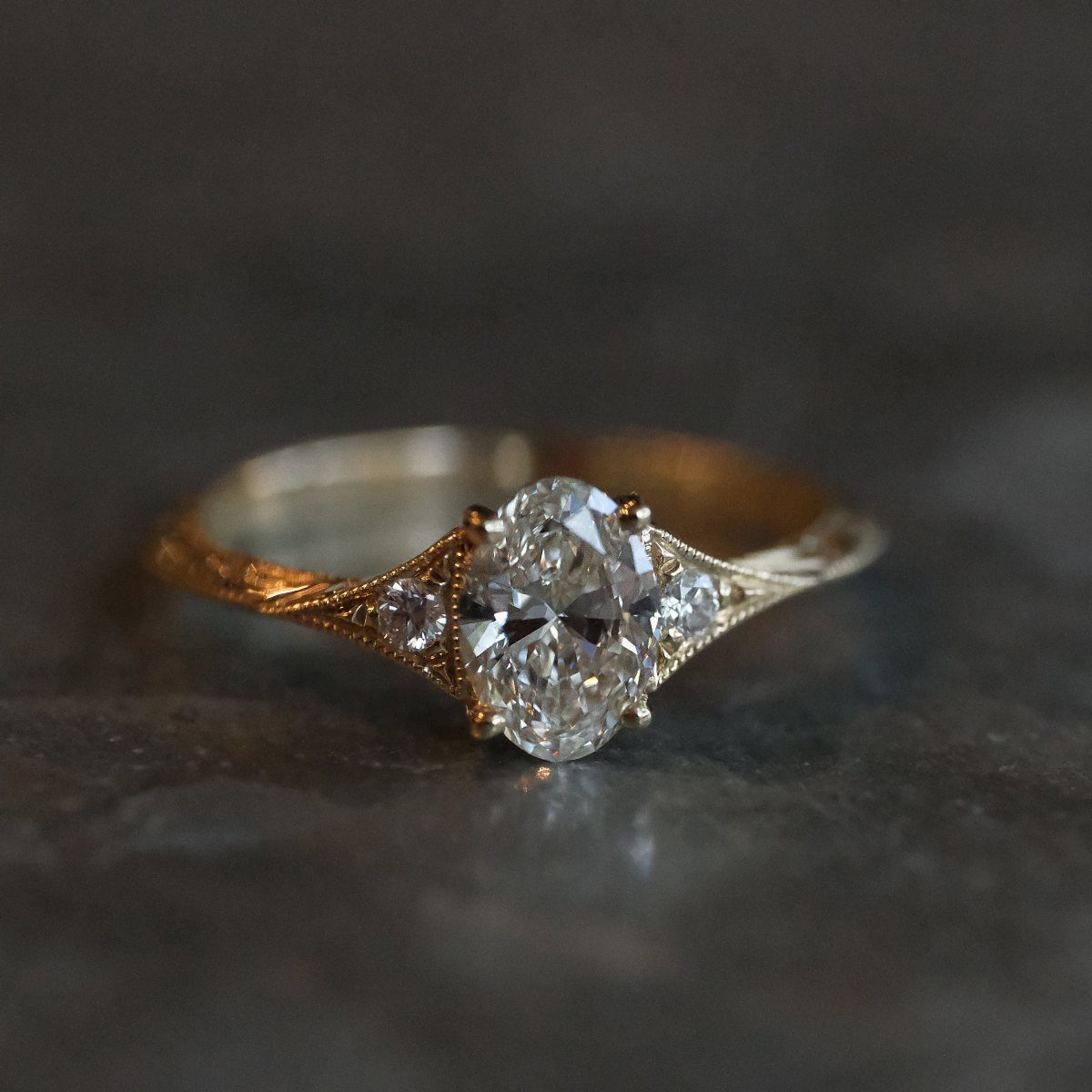
Filigree does the work here: fine, lacy detailing along the band turns a simple oval diamond into something that feels handmade. Gold suits the pattern, keeping it warm and soft.
The filigree on the band shows from the side, not just from above, so the ring has detail at every angle. Look at the ring in profile to check how the filigree reads when your hand is at rest.
A plain wedding band beside it keeps the pattern from getting crowded.
10. Vintage-inspired, Brown Sapphire and Diamond Three-stone Cocktail Ring
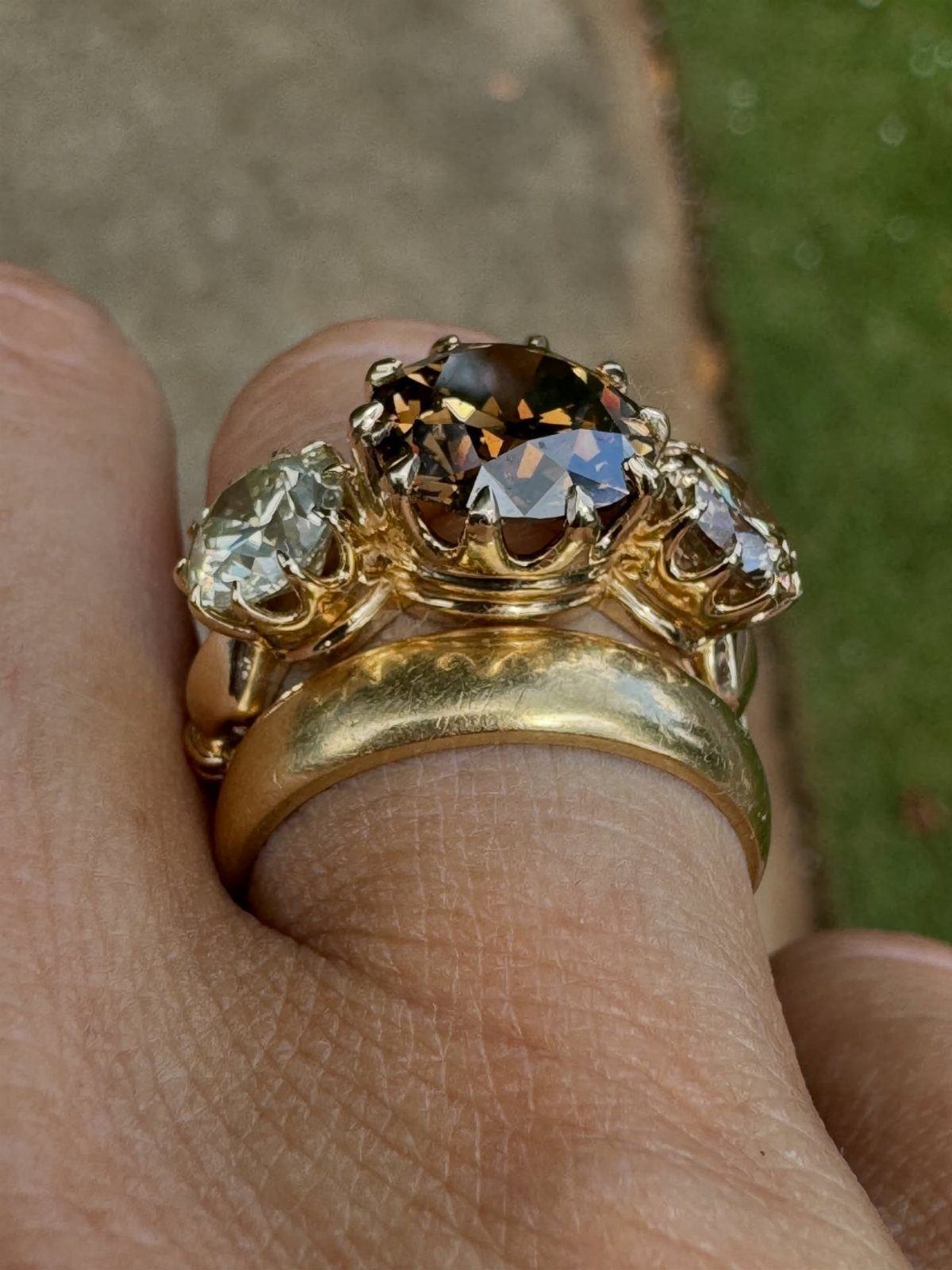
A brown sapphire in the center, flanked by 2 diamonds, is how I’d add color without leaving the vintage mood. The gold setting warms the brown, and the diamonds on each side keep it balanced.
A pop of color is an easy way to give an engagement ring personality, and it sets the ring apart from the usual white solitaire.
Check the sapphire outdoors and indoors, since a brown stone changes with the light.
Choosing the Right Metal
Metal sets the era of a vintage-style ring as much as the stone does, so pick it first.
Yellow gold reads as Victorian or Retro, and it flatters garnets, emeralds and opals. Rose gold has a soft blush tone that suits engraved or filigree detail, and it turns up in late Victorian pieces.
Platinum is also hypoallergenic, so I’d steer anyone with sensitive skin toward it for daily wear.
White gold gives geometric settings a sleek, bright backdrop.
Vintage rings come in 14K or 18K yellow gold, white gold, two-tone or platinum, and the karat rating changes the price enough that you should ask.
Care for Vintage Rings
Ornate rings need more care than plain ones. Filigree, pavé and engraving are the delicate parts, so a low-set design is the safer pick if your days are active, while a high-set ring is better kept for a calmer routine.
Budget priorities matter here too. A detailed setting around a smaller center stone reads vintage more clearly than a large plain solitaire, and the money you save pays for maintenance.
Clean the ring gently and regularly, because grime collects in fine detail and hides it. Have a jeweler inspect the prongs and settings from time to time, especially on older pieces with thin metalwork.
A lab diamond, an old mine cut or a colored stone all cost less than a modern round brilliant.
Frequently Asked Questions
What is a vintage engagement ring?
Most jewelers use vintage to describe rings at least 20 to 50 years old, though they will call newly made rings with period details like milgrain edging, filigree metalwork or hand-engraved patterns vintage-inspired or vintage-style.
You get the period look with a clean, unworn start. Because it is freshly made, it can usually be ordered in your size.
What is the difference between vintage and antique rings?
Vintage-style rings are brand new, built with details borrowed from the past, while antique rings are genuine pieces made in earlier eras.
The practical difference is wear: an antique needs a jeweler to check its settings before daily use, and a new piece comes sized to you.
Both can carry the same look, so pick based on how much history and upkeep you want.





