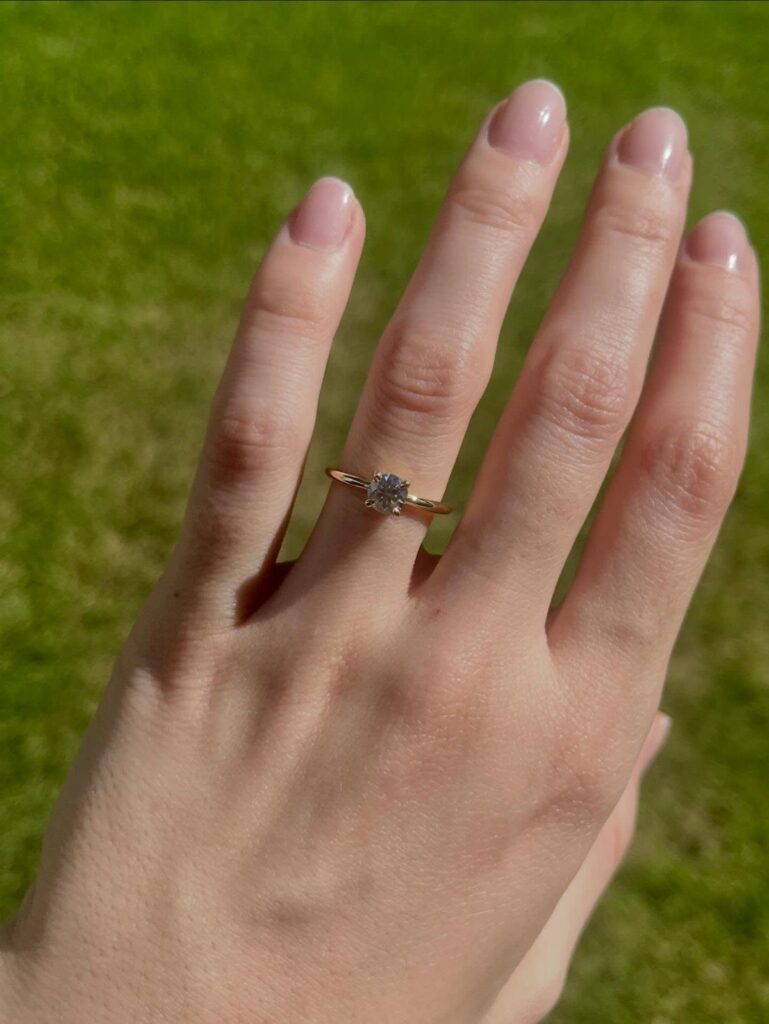
At 1 carat the weight is fixed, so the real choices are the cut shape, the setting and the quality grades, which the Diamond Quality Factors section covers.
Your daily life picks the setting: if you type, lift weights or work with your hands, a protected style in 14k gold beats a delicate point, while a desk-bound wearer can choose the longer, sharper shapes.
1. Halo Engagement Ring
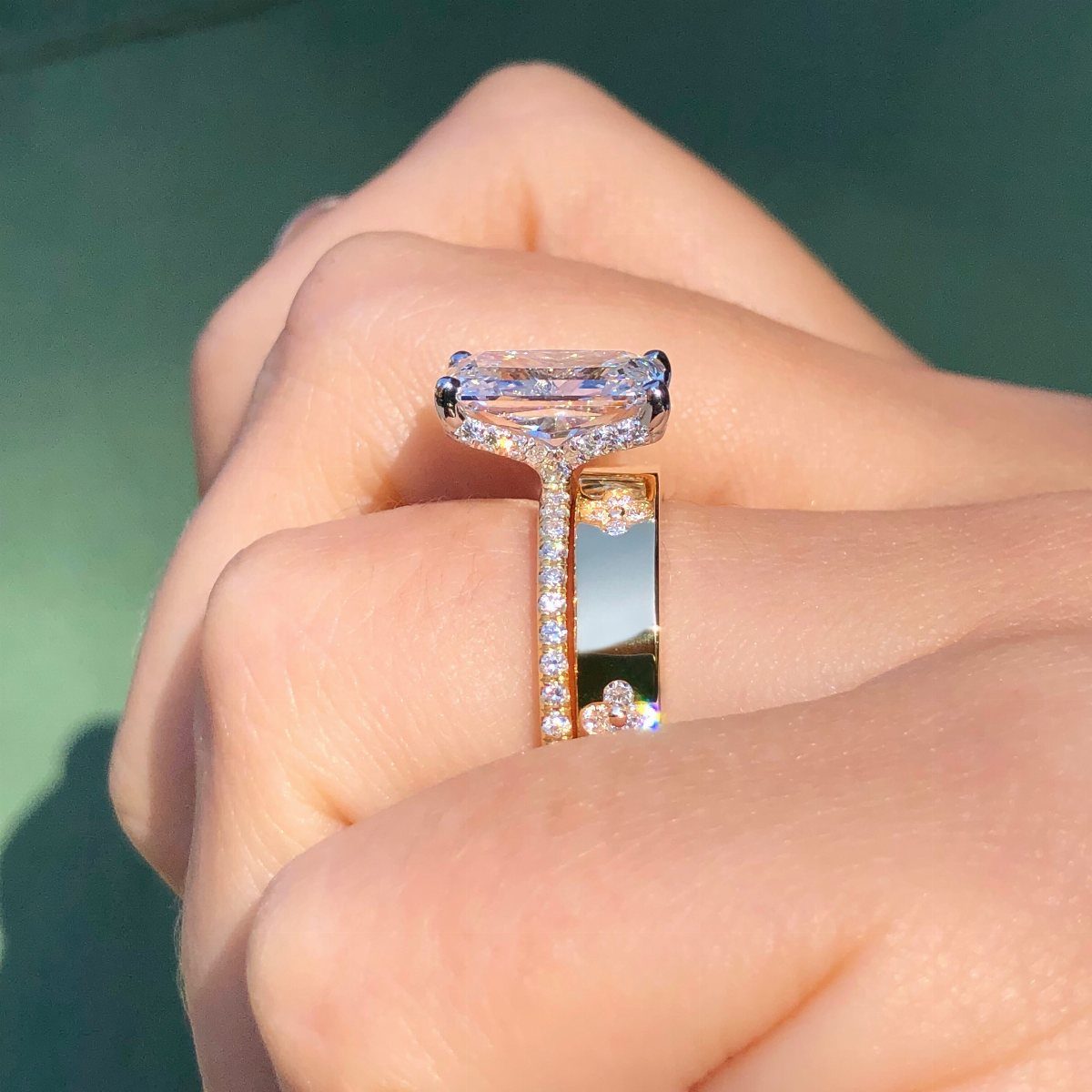
A halo turns a 1 carat center stone into a bigger-looking ring, because the ring of small diamonds around it widens the whole top. That is the budget logic: you get presence without paying for a heavier center.
An emerald cut suits the look.
Its long, stepped facets read as clean and architectural, and the pavé band keeps the sparkle going down the finger. A rose gold setting adds warmth, though yellow or white gold would also work.
2. 1 Carat Engagement Ring
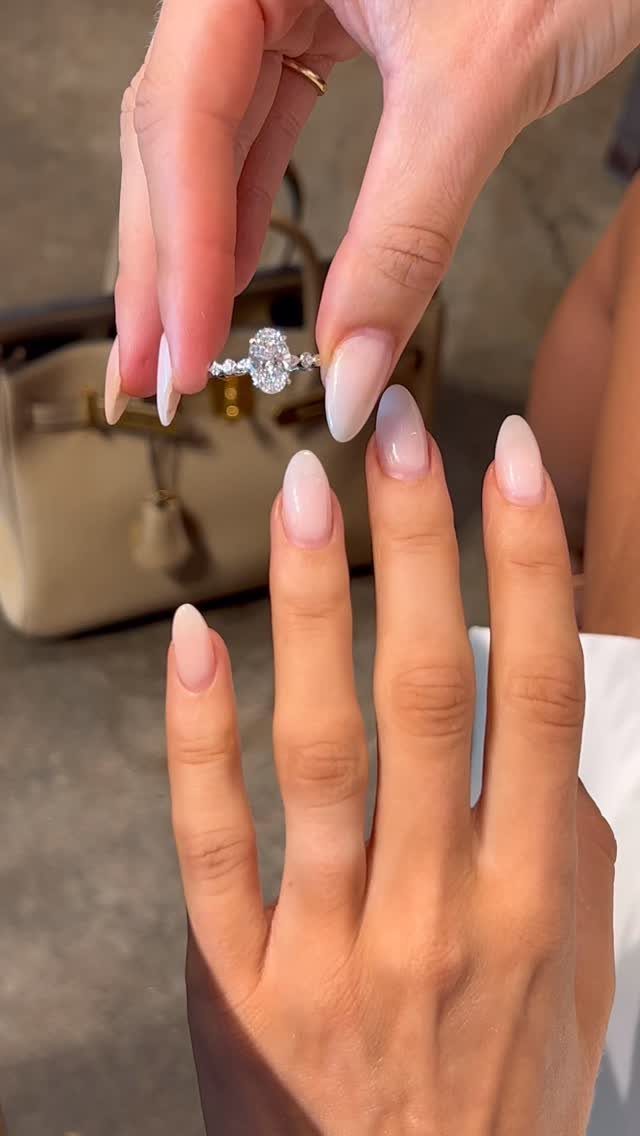
Hold the weight steady at 1 carat and the shape becomes the real decision.
An oval, like this one, usually looks longer and larger on the hand than a round stone of the same weight, which matters when the budget is fixed.
Ask to see the stone in person or on video before you commit. Two 1 carat diamonds can look very different once you compare color, clarity and cut side by side.
3. Round Diamond Engagement Ring
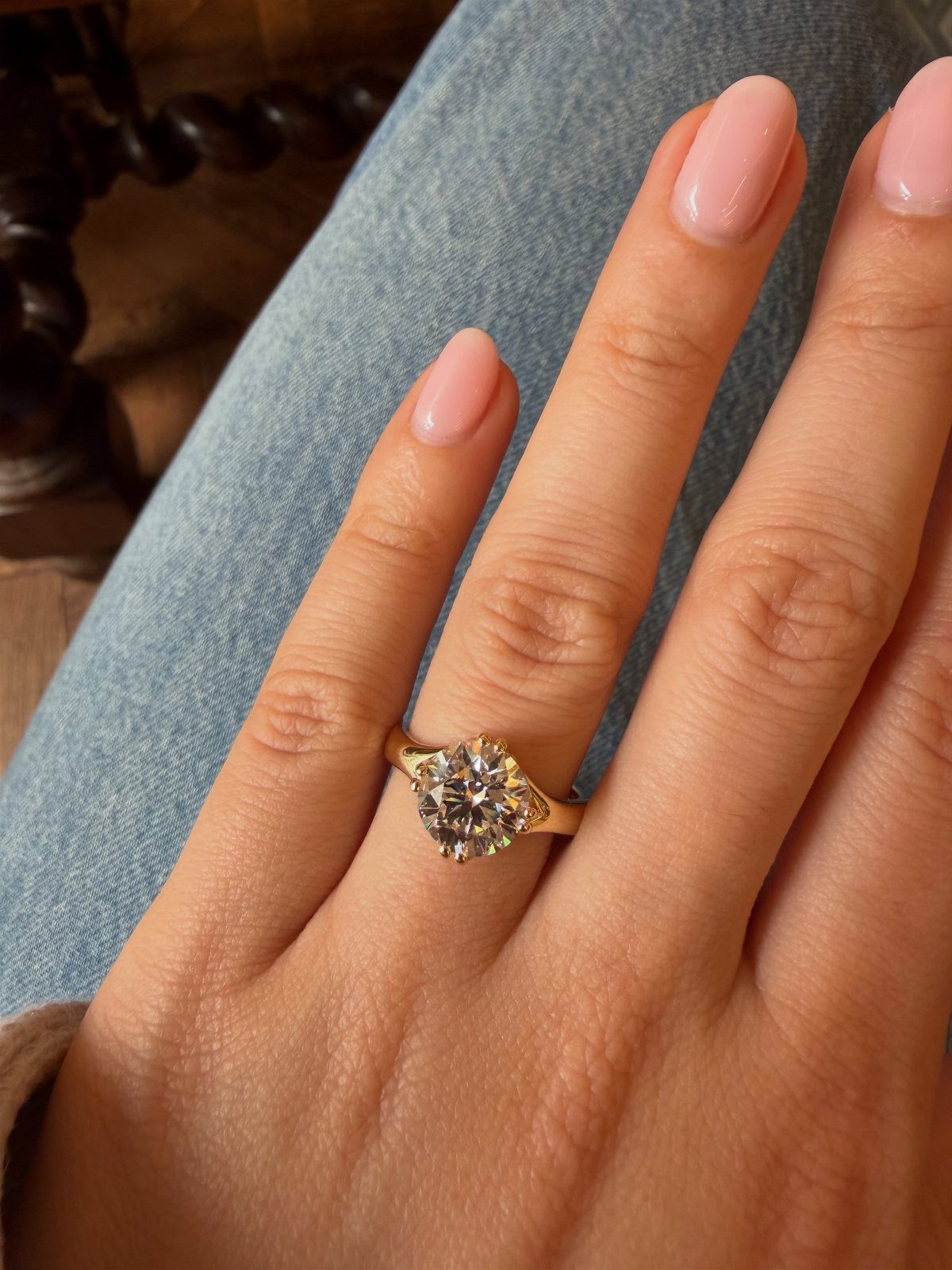
Round remains the classic, and a simple gold band lets the diamond do all the work. Because the shape is symmetrical, it fits almost any setting, so a solitaire now can take a halo or side stones later.
My advice: if you want timeless, choose round and spend your money on cut quality. A well-cut stone sparkles more than a bigger, poorly cut one.
4. Oval Cut Engagement Ring
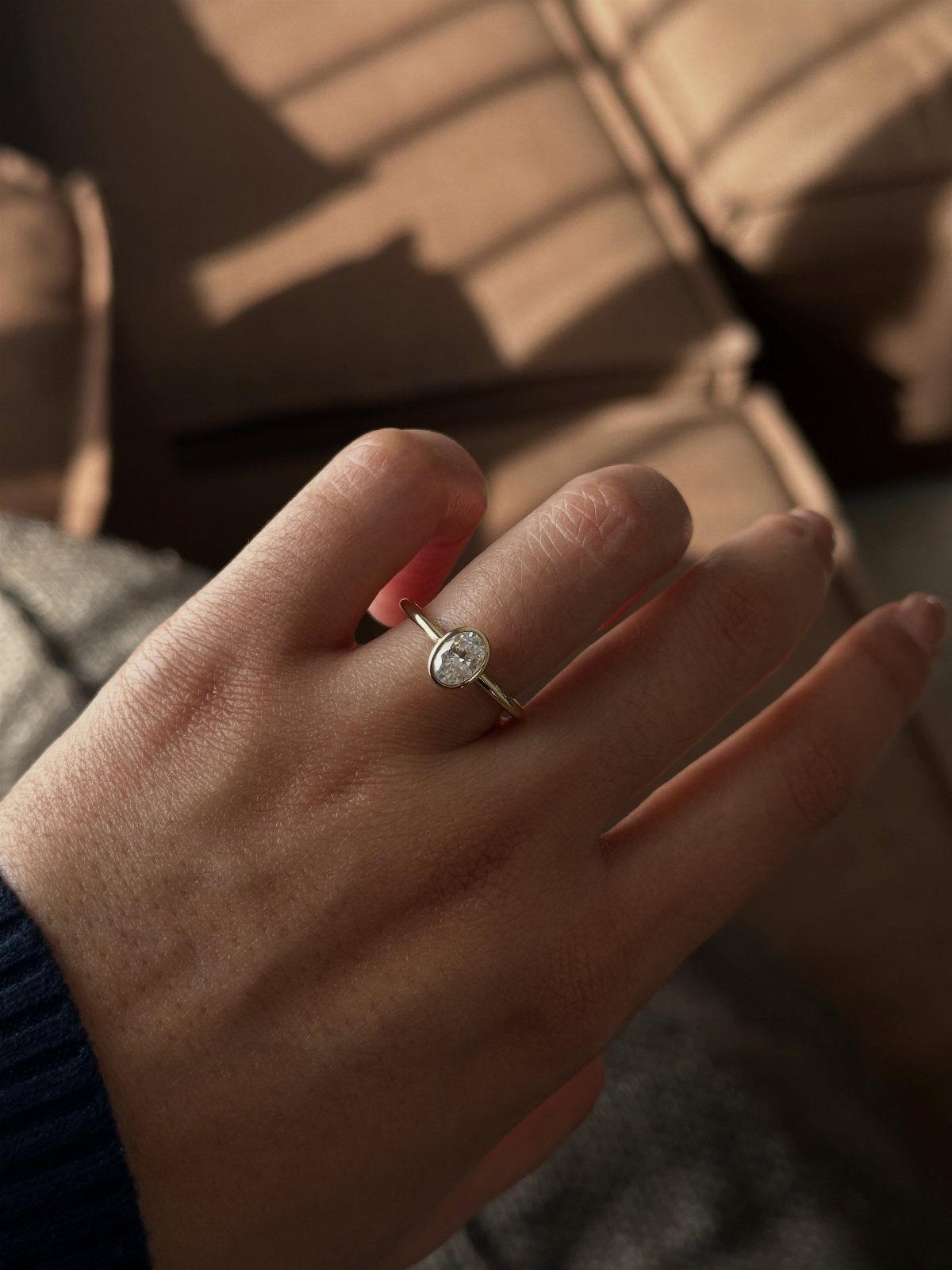
Slim and elongated, an oval-cut diamond on a gold band flatters the finger without any extra stones. East-west or north-south, the stone sits long along the hand, which gives it a graceful look.
Oval is my pick for anyone who wants a 1 carat ring to look generous. A plain band keeps the price down and lets the shape stand out.
5. Marquise Cut Engagement Ring
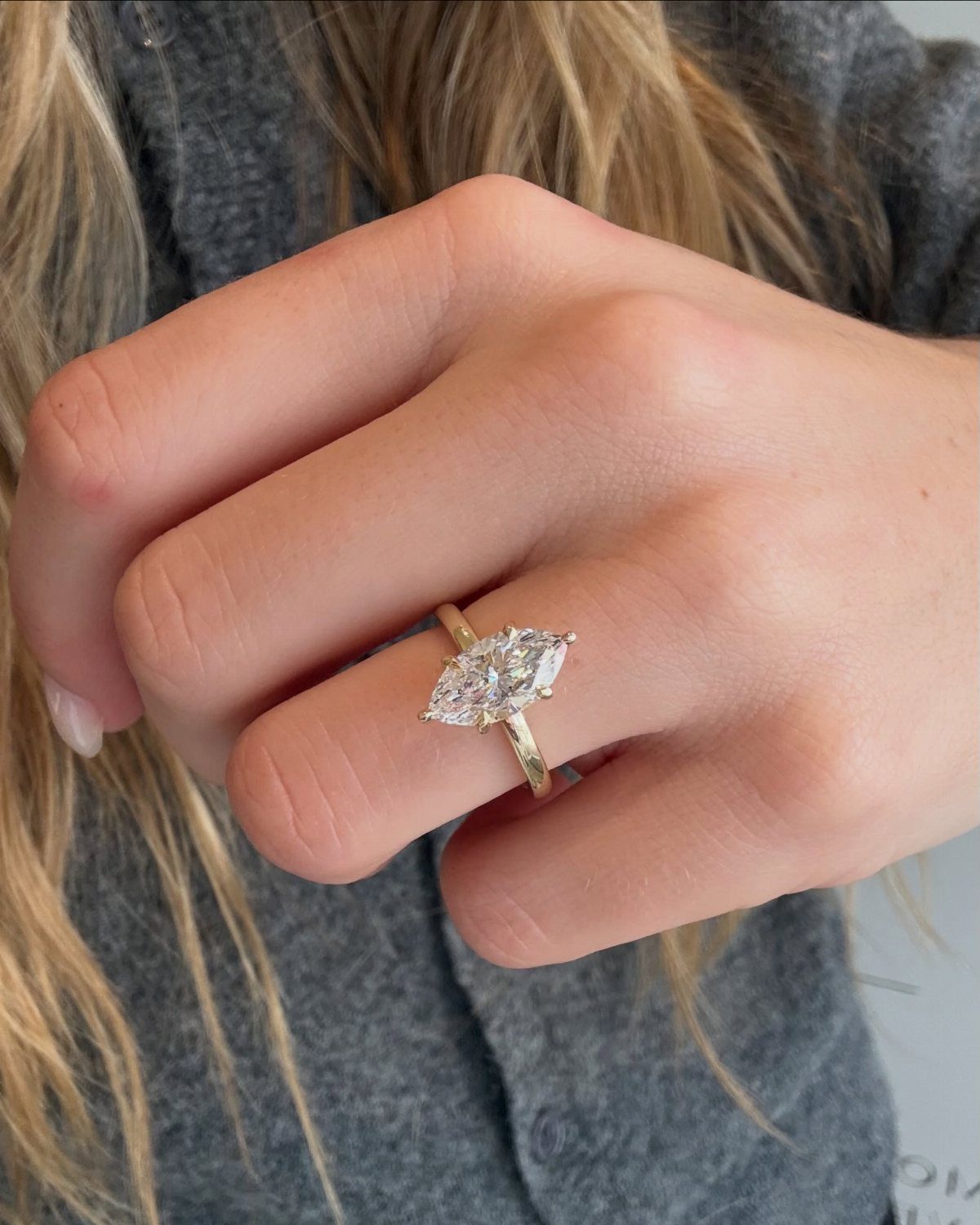
Pointed at both ends, a marquise diamond stretches across the finger and makes a modest stone look long. On a gold band it feels vintage and a little dramatic.
Those points are the weak spots, so ask your jeweler about protecting them with a prong at each tip. If you work with your hands a lot, think about whether a pointed stone suits your daily routine.
6. Pear Shaped Engagement Ring
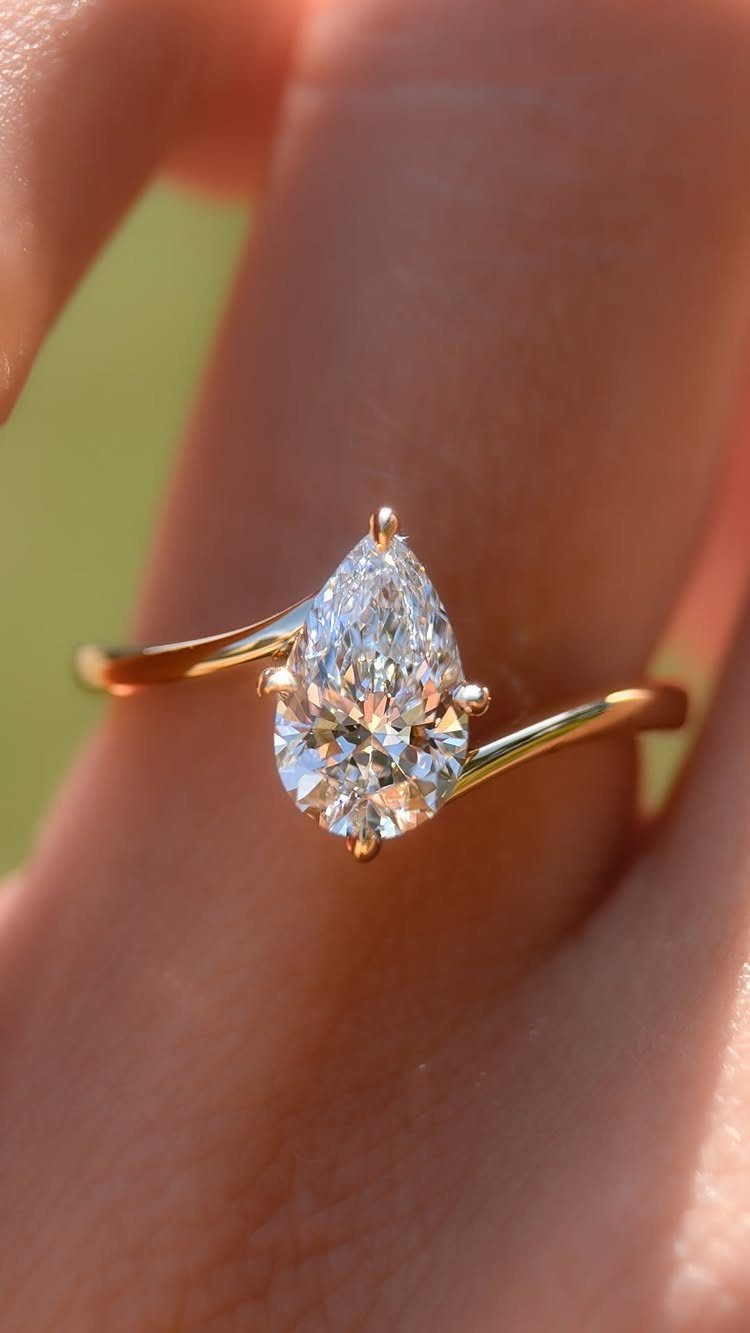
A pear shape combines a rounded end with a single point, and on a thin gold band it looks delicate and light. The teardrop outline also lengthens the finger.
Wear it with the point facing away from you, toward the fingertip. Protect that tip with a V-shaped prong, and choose a slim band if you want the diamond to look like the main feature.
7. Three Stone Engagement Ring
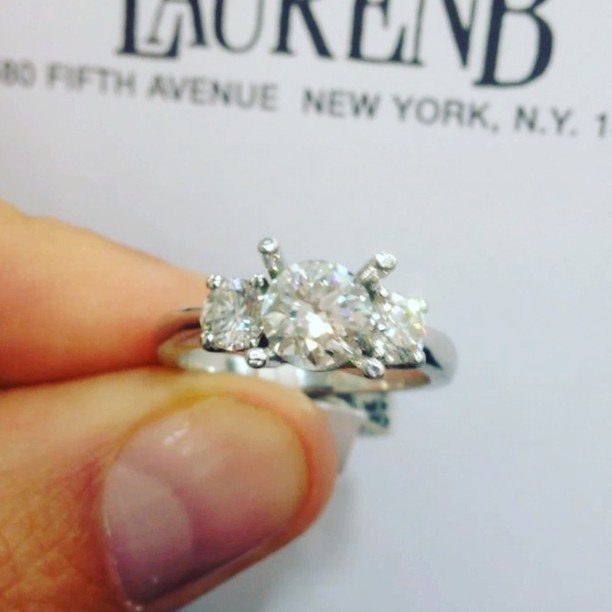
2 smaller diamonds on either side of the center stone make the ring read wider and fuller across the finger, without a halo.
A three-stone setup spreads the sparkle across the hand, so a 1 carat center can look like more of a statement.
My advice: put the budget into the center and keep the side stones modest.
They frame the main diamond, and they should not compete with it. Ask to see all three together, since matching color across them matters more than size.
8. Radiant Cut Engagement Ring
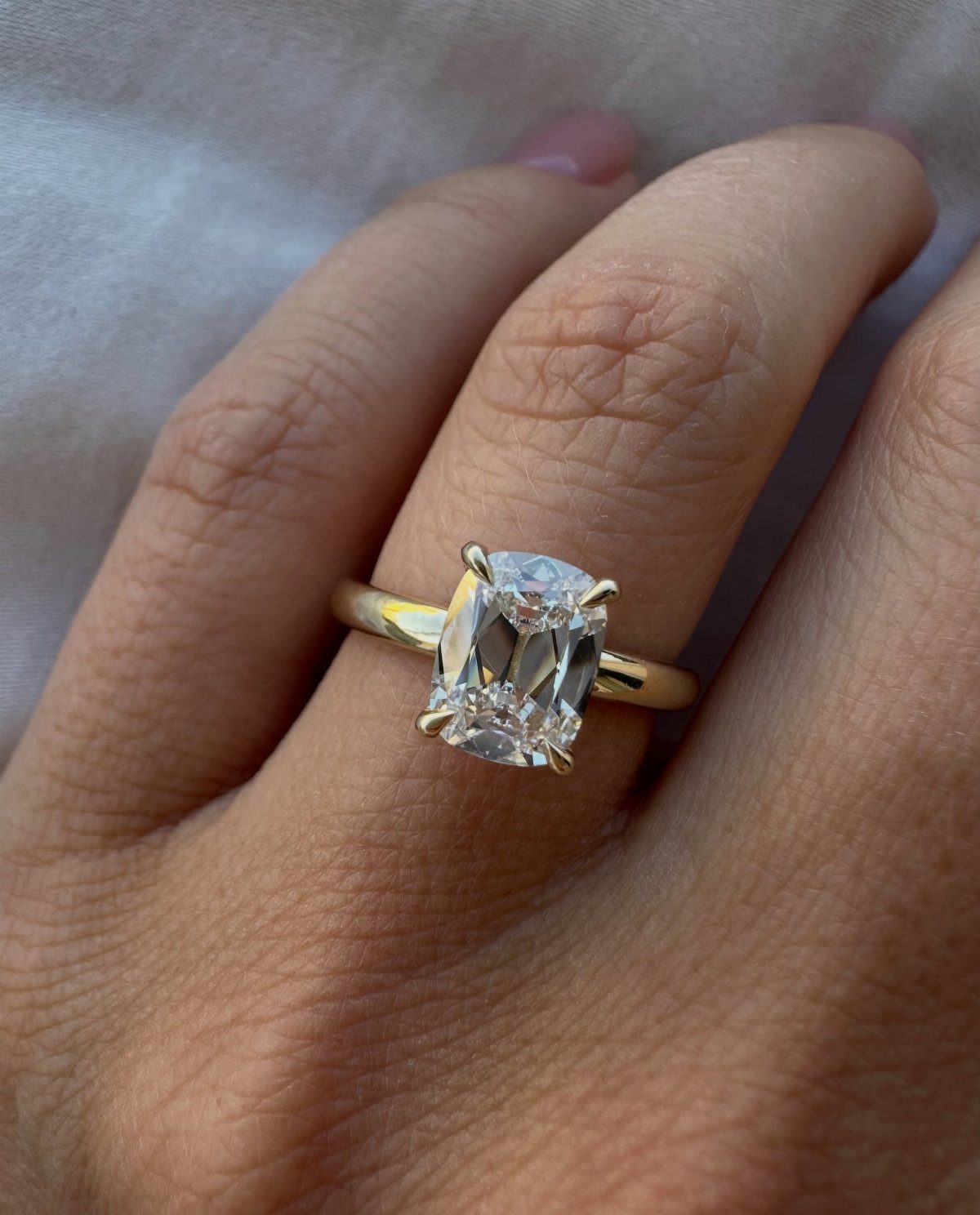
Radiant cut pairs the straight edges of an emerald cut with the faceting of a brilliant, so the stone throws more sparkle than a step-cut.
Choose it if you want a rectangular shape that still glitters. A plain band keeps the diamond as the main feature and holds the cost down.
Compare two or three radiant stones in person or on video before buying. Their proportions can look quite different, from squarer to more elongated, and that is a matter of taste.
Diamond Quality Factors
Carat weight only sets the size. Cut, clarity and color decide how that stone looks and what it costs, and the metal and design add to the total.
Prices for a 1 carat diamond ring run from $2,000 to over $10,000. Top marks in color, cut and clarity put a stone at the expensive end of the range; a faint warm tint or a few small inclusions bring the price down.
Spend where the eye can tell.
Slight inclusions are usually invisible without magnification, and a warmer tone is easy to hide in a yellow or rose gold setting. Cut, by contrast, shows from across the table.
Lab grown stones are also sold at 1 carat, so check which kind a price refers to before you compare two rings.
Choosing the Right Ring
Start with how you live, because the ring will take knocks every day. A secure setting and a metal that keeps its finish matter more than any single detail of the design.
In gold, 14k is the tougher choice for daily wear, and 18k trades some of that strength for a richer, deeper color. If you type, lift weights or work with your hands, I would lean toward 14k.
Settings change the protection as well as the look. A bezel, a cathedral or a tension style each shields the stone differently, so ask your jeweler how each one handles a hard bump.
Try rings on and wear a sample for a few minutes. Notice whether it snags on sleeves or gloves before you commit.
Engagement Ring Trends
Vintage-inspired designs and stones other than white diamonds are both part of what people are choosing now. Colored diamonds are one option, and lab grown diamonds are another.
Many jewelers build rings to order, so you can pick the diamond specifications and the metal: platinum, or yellow, white or rose gold.
Ask about resizing and the return window before you pay, since some sellers include free resizing and a 30-day return policy.
If you like a vintage look, ask for a solitaire, halo, trilogy or side stone design with detailed shoulders. Pick the trend you keep coming back to, the one you will still like long after the wedding photos have aged.
Frequently Asked Questions
How much should a 1 carat engagement ring cost?
Expect $2,000 to over $10,000.
A colorless, flawless stone costs the most; accept a slight yellow cast or a few tiny inclusions and the price drops fast. Check whether a quoted price is for a natural or lab grown stone before comparing 2 rings.
How much should I spend on an engagement ring if I make $100,000 a year?
I can’t give you a salary-based figure, but a 1 carat ring runs from $2,000 to over $10,000, so you can pick a point in that range that fits your budget.





