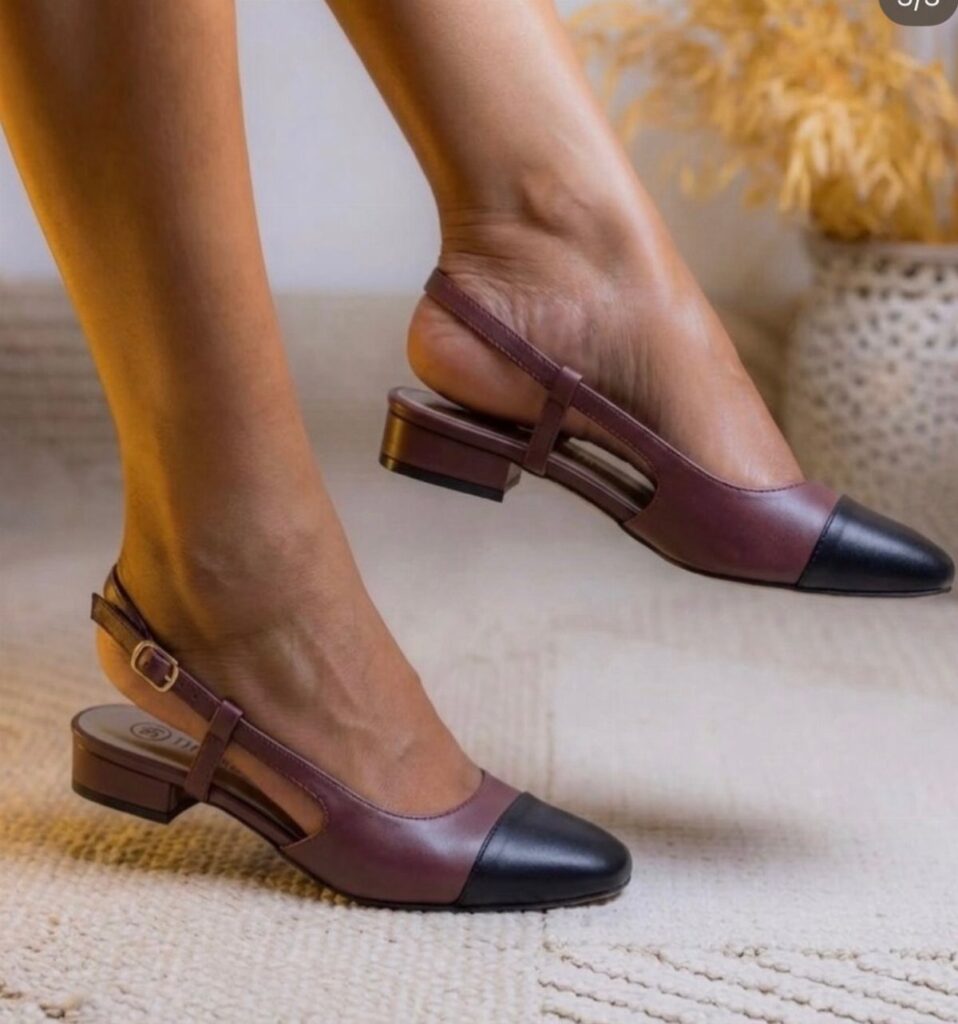
Grass and sand favor a platform block heel or a flat, cobblestones and long stretches of standing favor a low block heel sandal, and a polished ballroom floor leaves room for a slingback pump.
The list runs from metallic slingback flats and dressy metallic sneakers to platform block heels and pointed-toe kitten heels, so height is optional at every level of dressiness.
Check the invitation first, since black tie rules out the sneakers and the tan block-heel sandals, and give any new pair 20–30 minutes of wear at home before the day.
1. Slingback Pumps
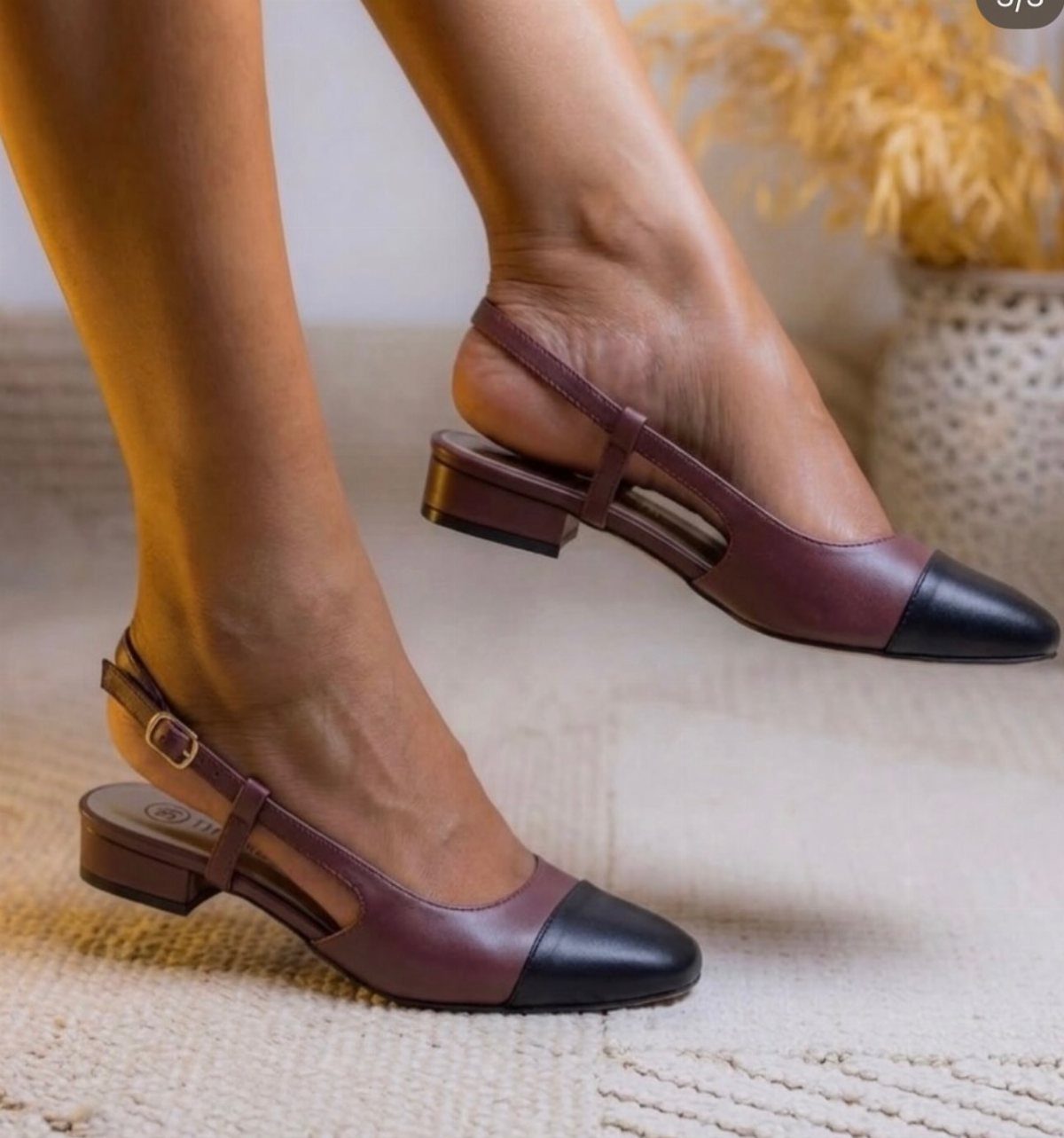
Slingback pumps leave the heel and the sides of the foot open to air, which is why I reach for them at a long formal reception.
A low heel keeps the pump dressy without the forward tilt that makes the balls of your feet burn by the first dance.
Two-tone pairs like burgundy and black read as a deliberate choice, so they work with a dark dress or a neutral one.
Check that the strap sits snug at the back of your heel and does not slide down when you walk.
Wear them around your home on a hard floor first, since a strap that rubs is better found out before the day.
2. Dressy Metallic Sneakers
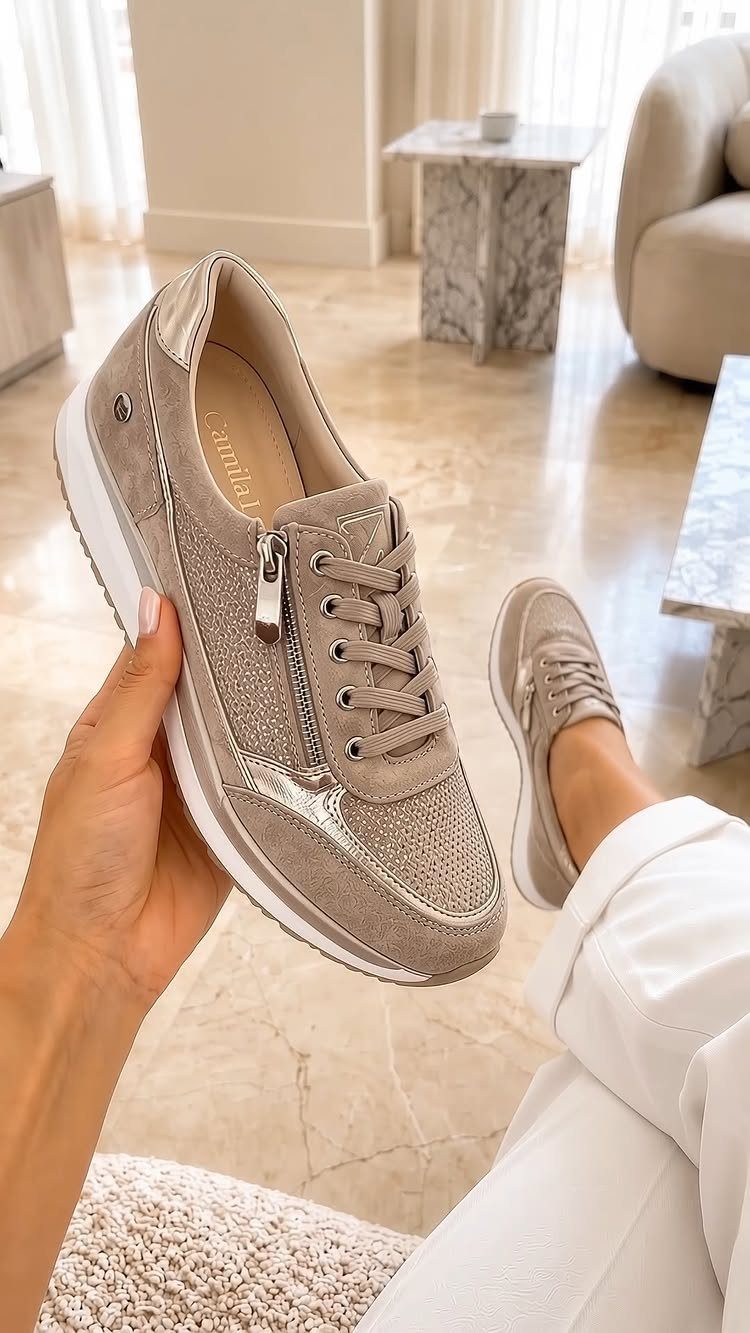
Sneakers can be dressy, and glittery beige and gold low-tops are the proof. Tailored white trousers are the right partner: the clean line of the pant lets the shine of the shoe stand out instead of looking casual.
For a guest who will be on her feet from ceremony to last song, this is the most comfortable pair on the list. Flat soles and laced fit mean you can dance without thinking about your feet.
Check the dress code first. Black-tie invitations call for a different shoe, but garden parties and relaxed receptions suit these well.
3. Low Block Heel Sandals
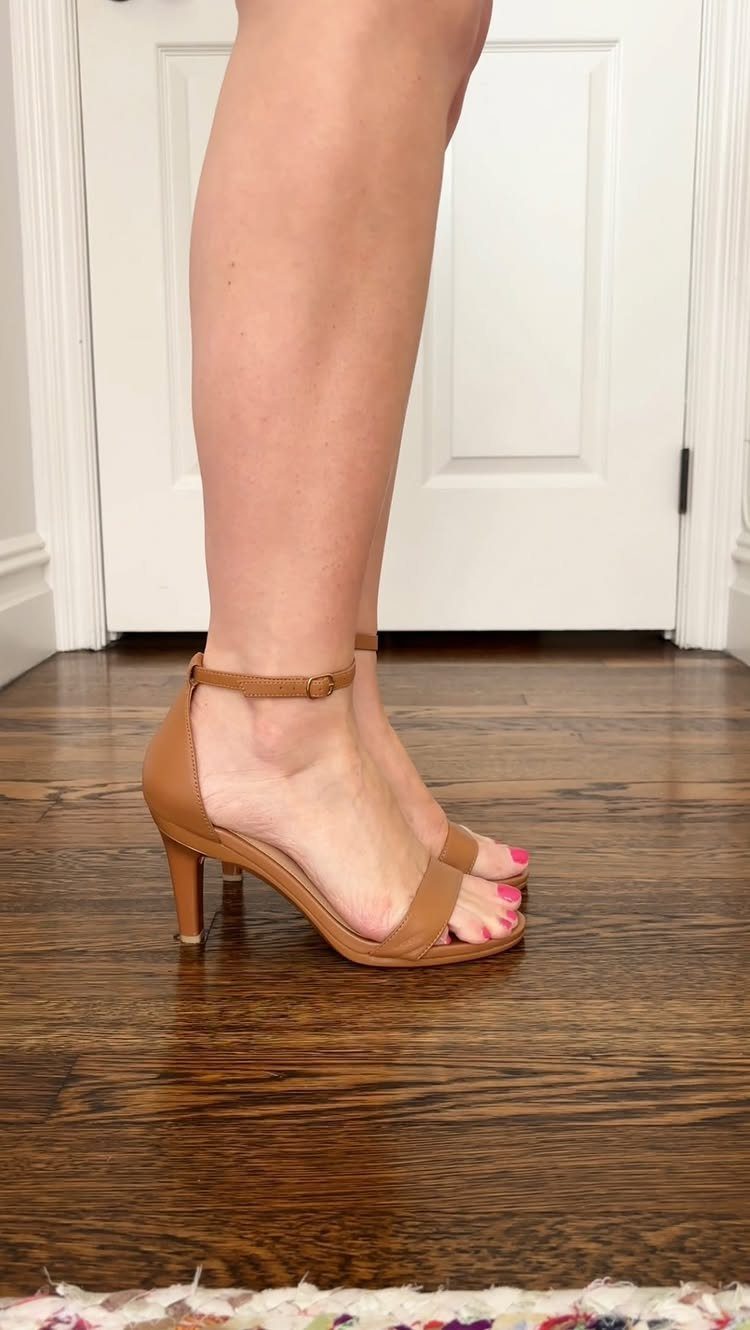
Tan leather ankle-strap sandals on a low block heel give you a wide, stable base, so grass, cobblestones and long stretches of standing are all manageable.
The ankle strap holds your foot in place, which matters more than most people expect once you start dancing.
Tan goes with nearly any dress color, and I like it with soft florals and with deep jewel tones alike. It is a pair you will wear again, which helps when you are watching what a wedding costs you.
Skip them if the invitation says black tie.
4. Platform Block Heels
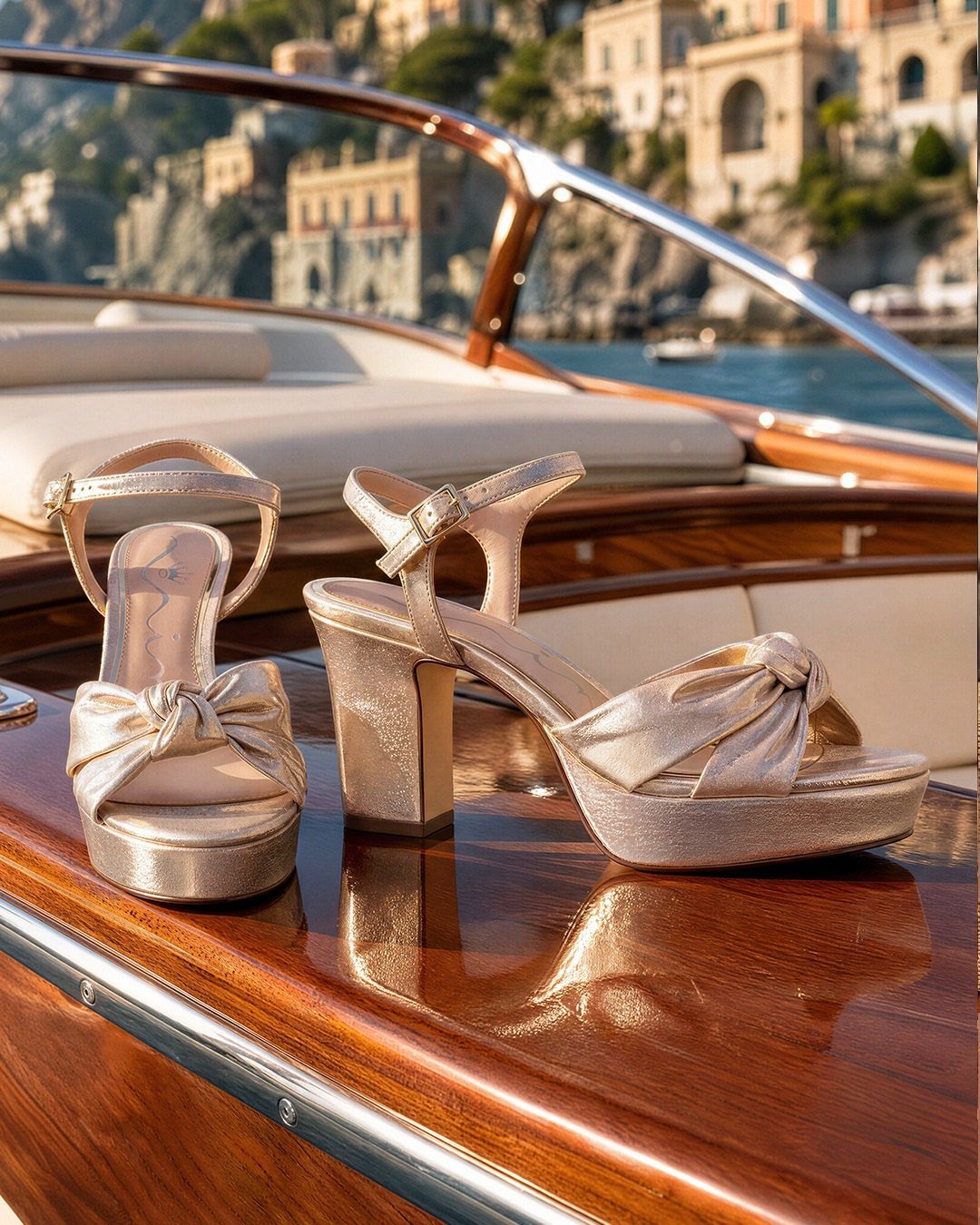
Champagne platform sandals with knotted toes give you height without the steep angle of a regular heel.
The platform lifts the front of the shoe, so the drop from toe to heel is gentler, and the block heel spreads your weight.
That is my pick for a guest who wants to look dressed up and still stay through the last song.
Champagne is soft enough to wear with blush, sage, navy or black, and the knot adds interest, so you can leave the jewelry simple.
Try walking down a flight of stairs in them before you commit.
5. Pointed-toe Kitten Heels
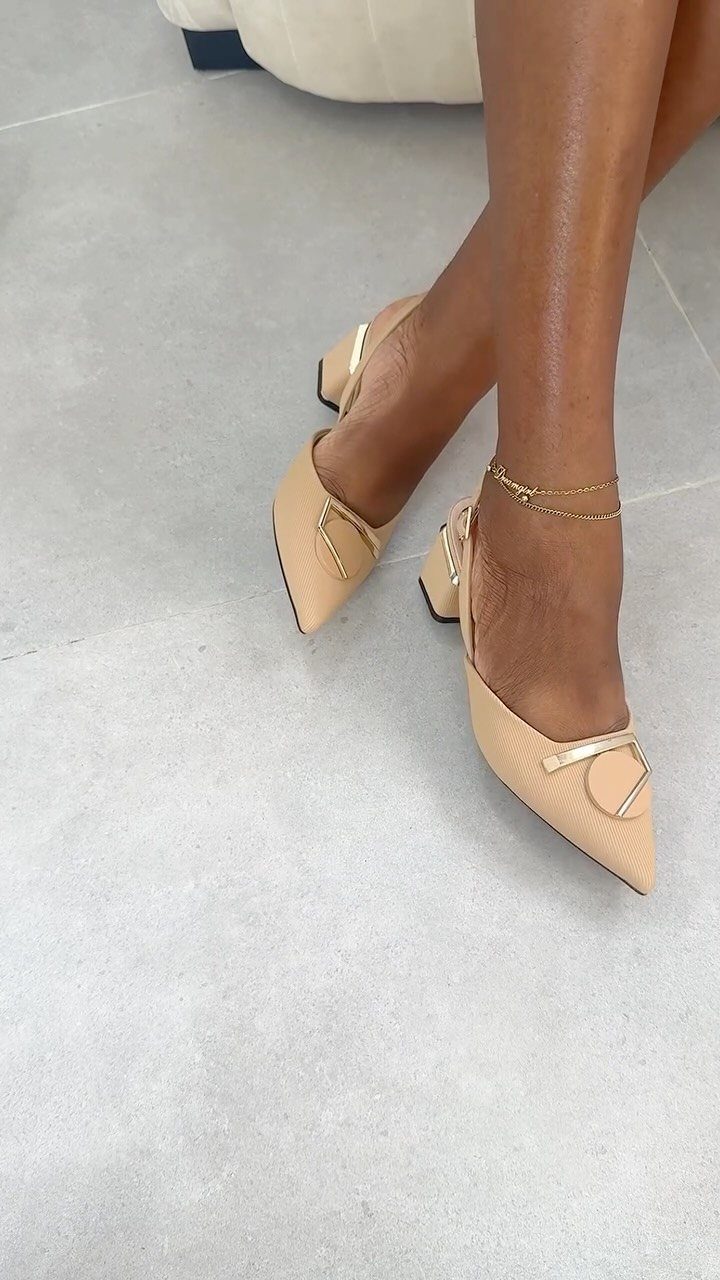
Beige pointed-toe kitten heels with gold details are the pair for a guest who wants a sharp shoe without a tall one.
The short heel keeps your weight closer to the ground, and the pointed toe lengthens the line of your leg.
Beige disappears against your skin tone, so it stretches the leg, while the gold touches dress it up for evening. They suit cocktail dresses and midi lengths especially well.
A pointed toe can pinch if the shoe runs narrow, so try them on at the end of the day when your feet are at their widest.
6. Metallic Slingback Flats
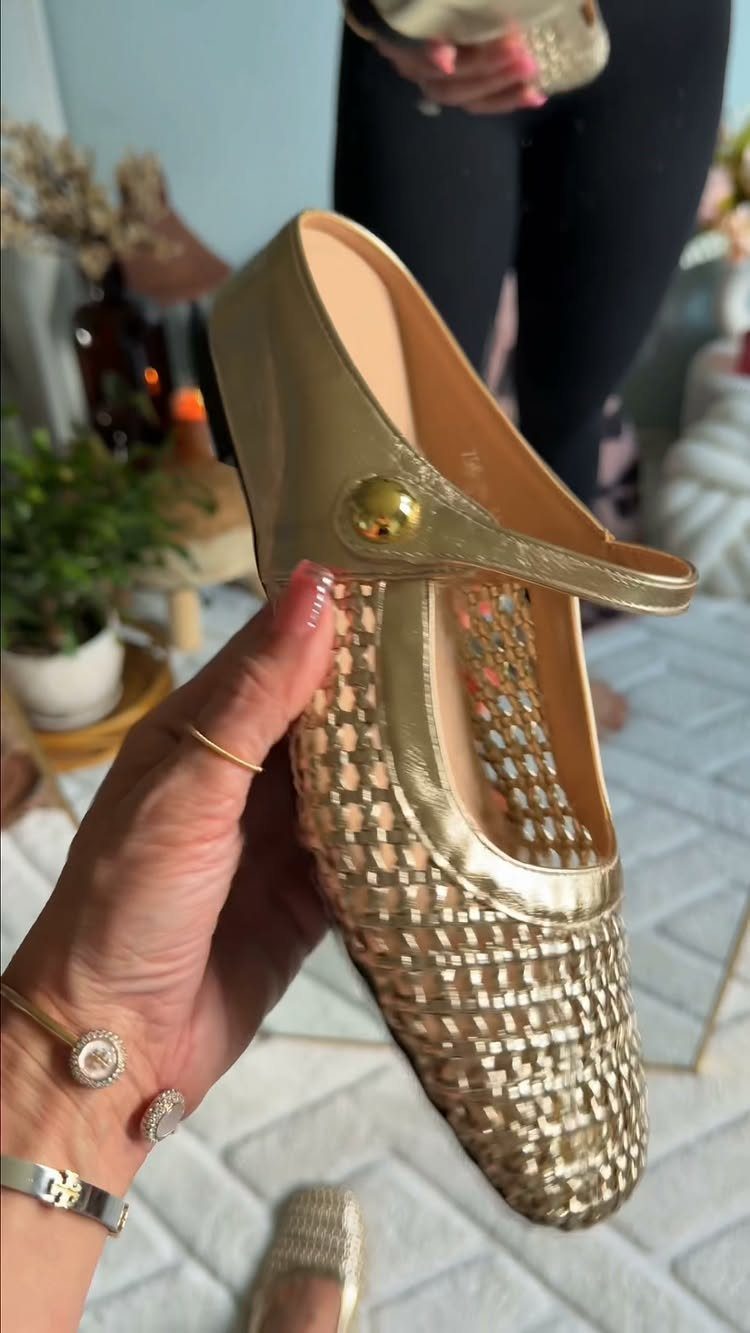
A woven gold metallic flat with a slingback strap is the easiest shoe here to wear all day. The weave gives it texture, so it looks like an event shoe rather than a plain ballet flat.
Gold works as a neutral, so it goes with most colors, and I would choose it for an outdoor or destination wedding where heels would sink into the ground.
Slip them into your bag as a backup if you wear heels for the ceremony and want relief by the reception.
The slingback strap keeps them on, which a loose flat does not.
Choosing the Right Shoe
Choose shoes for the setting first and the photo second. A wedding asks more of your feet than a dinner reservation does: you may stand outdoors, cross stone, grass or polished floors, and stay dressed for several hours.
Start with 3 questions. How formal is the invitation?
Where is the venue? What are you wearing above the ankle?
At a beach or garden wedding, you have one early choice to make: flat shoes for comfort, or a little height for the photos.
Block heels give more support than a stiletto and spread your weight over a wider base, and a wedge keeps you from sinking into soft ground.
A wrap sandal sits between formal and casual, which makes it a good swap if you want to change shoes midway through the night.
Match the shoe to the ground you’ll be standing on before you match it to the dress, because a pair that looks right in the mirror can fail on grass, sand or cobblestones.
Finding the best bridal shoes means balancing style, comfort, and practicality — because your wedding shoes need to look beautiful in photos, work with your dress, and still feel good after hours of standing, walking, and dancing.
Breaking in Shoes
Wear new shoes around the house before the wedding.
Wear them around the house for 20–30 minutes at a time over a couple of weeks, and the material loosens, the tight spots ease, and any rubbing shows up while you can still add padding or return them.
Wear them for the kind of day you will have: standing, walking and dancing. Try them with the socks or hosiery you plan to wear, since that changes the fit.
You are not trying to make them look worn. You want them to feel familiar, so you can enjoy the party instead of counting the hours until you can take them off.
Color Coordination
Anything except white is the rule for guest shoes. Leave it to the couple, even if the invitation is silent on color.
Coordinate with your outfit instead of matching it exactly. Black, brown, silver and gold are the usual shades for guest dress shoes, and between them they go with almost any outfit you’ll be wearing.
Metallics read as neutrals, so silver or gold works with most colors. Black suits darker outfits and evening events, and brown pairs well with warmer tones.
Check the shoe against the dress in daylight before the day, because indoor light can make colors look closer than they are.
Frequently Asked Questions
What kind of shoes can I wear to a wedding?
Match the shoe to the venue and the invitation’s formality first. Any of these styles can work: block heels, kitten heels, slingbacks or flats.
If the ceremony is on grass, a wedge won’t sink the way a stiletto will. Black tie on the invitation rules out sneakers and other casual pairs.
How do I break in new wedding guest shoes?
Give yourself two weeks and wear the pair at home for 20–30 minutes a session. By then the material has softened, the tight spots have eased, and any rubbing has shown itself early enough to pad or send the shoes back.
Put on the same hosiery or socks you’ll wear at the wedding, because even a thin layer changes how the shoe fits.





