The list runs from a black-tie tuxedo to a linen suit for a beach ceremony, with a navy suit, a morning suit, a velvet suit and several shades of green, tan and brown in between.
Season is the next filter: linen and cotton keep you cooler in summer, while wool or velvet adds warmth. Whichever suit you land on, the tailoring section near the end covers the fit that makes it look right in photos.
1. Tuxedo
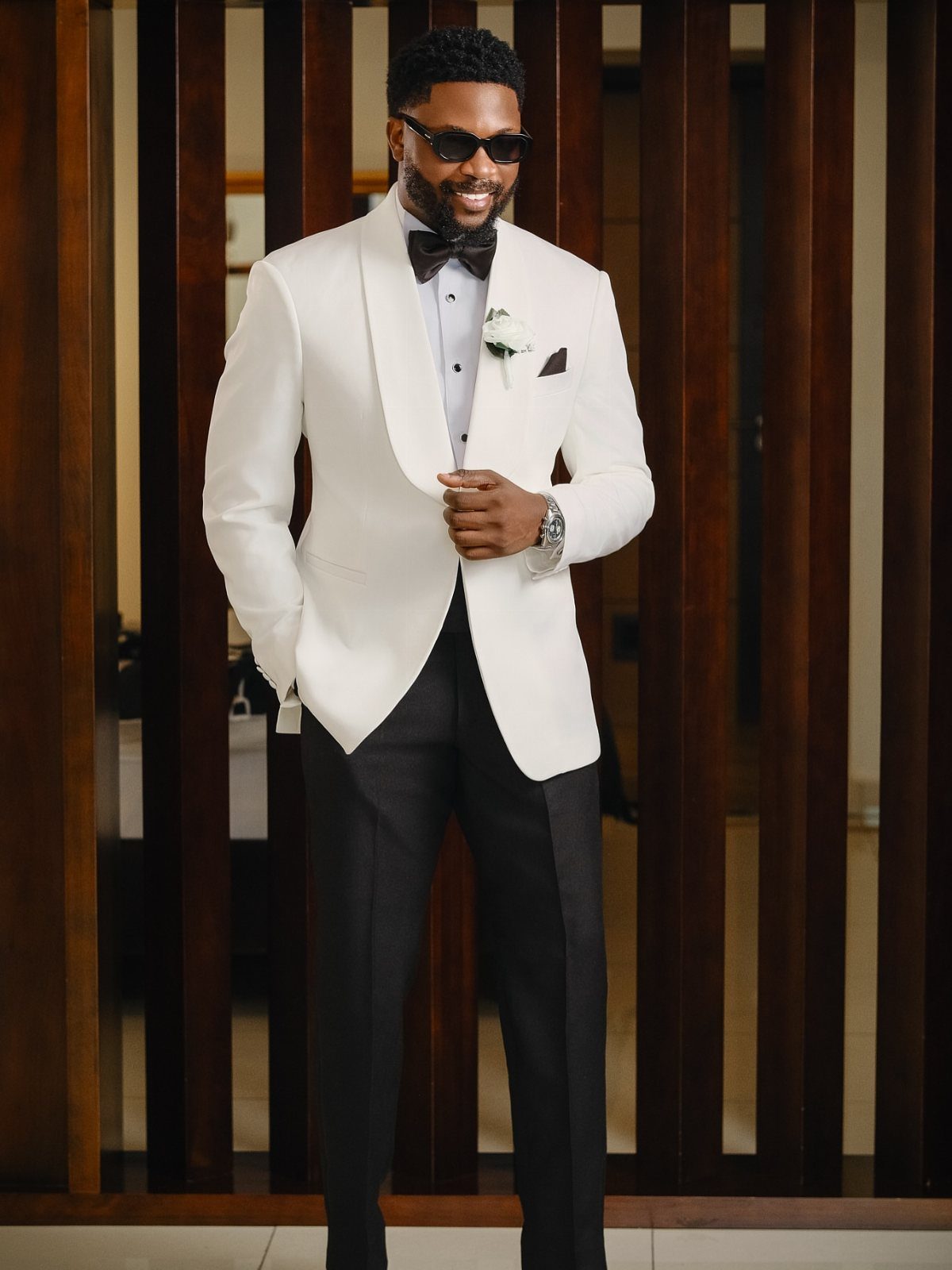
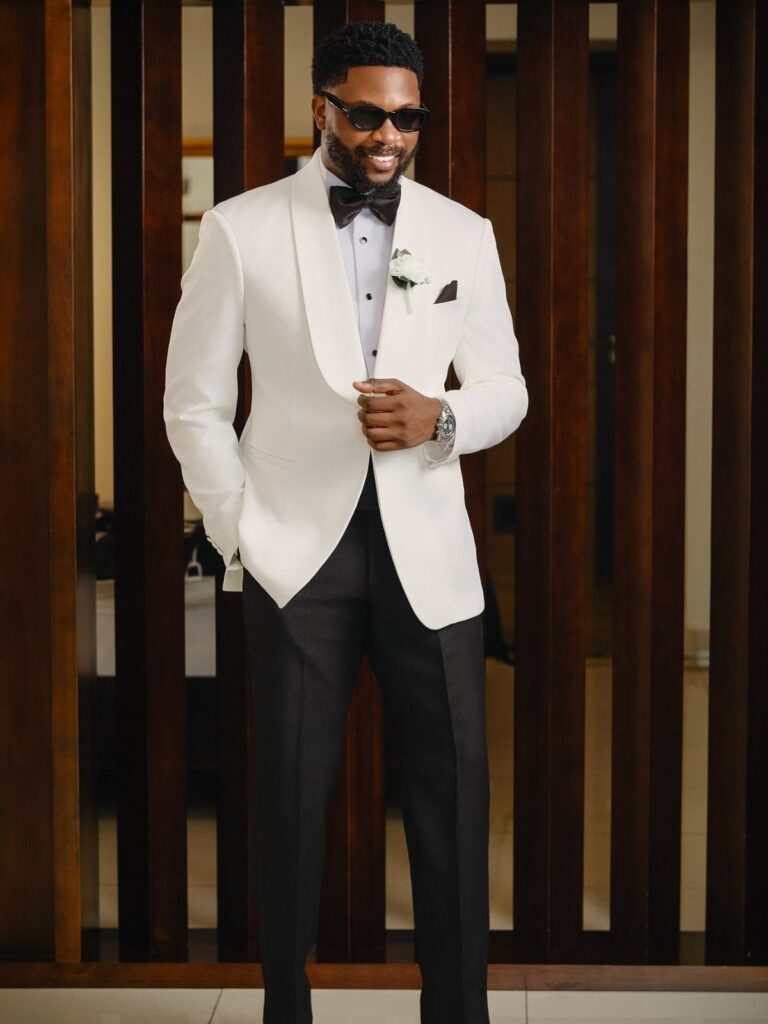
White dinner jackets with black satin lapels are a classic black-tie choice, and the contrast does the work: the lapels frame the face, and the black bow tie and trousers keep the look crisp.
Pair it with a plain white shirt so the satin stays the only shine.
This is the formal pick, so it belongs at an evening wedding where the invitation says black tie. Buying costs more than renting, but you can wear it again.
2. Linen Suit
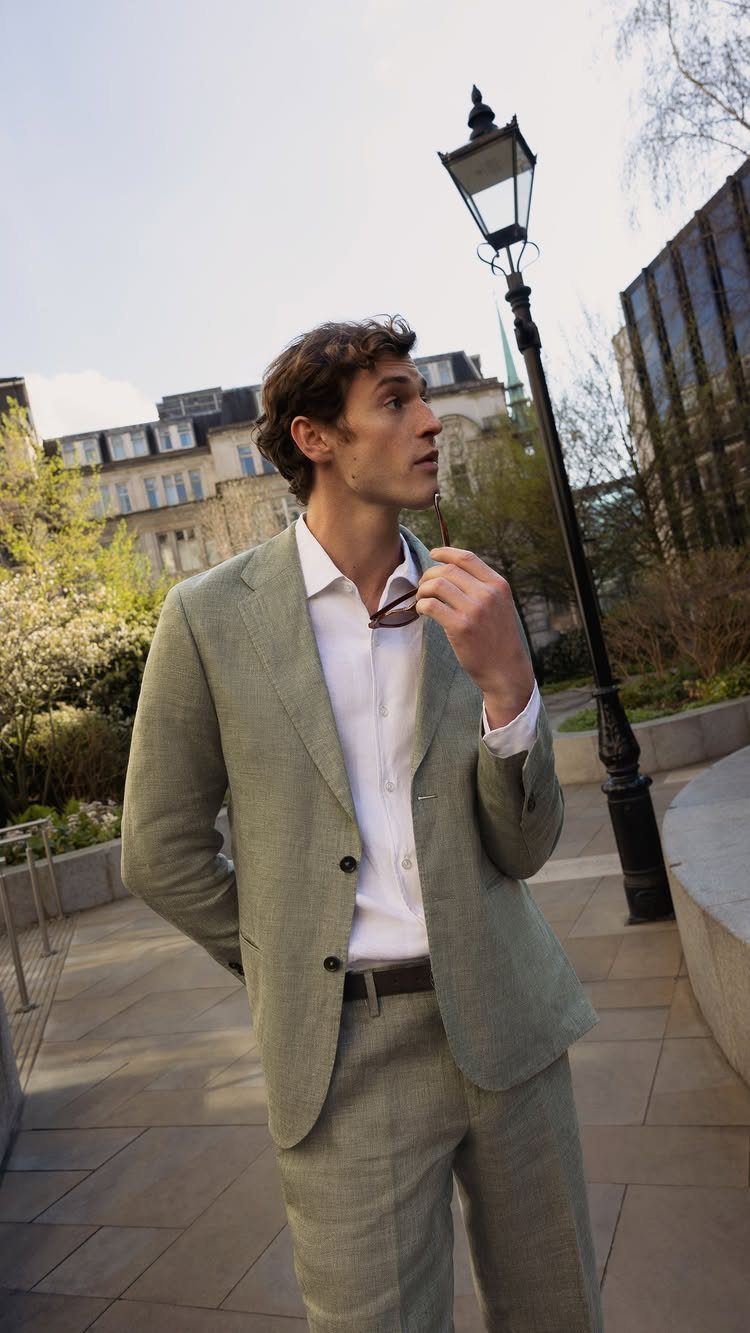
Breathability is the whole argument for linen, which is why a light sage green version suits a summer wedding so well. A white shirt underneath keeps it fresh.
Linen wrinkles, and I think that is part of its charm.
Accept the creases instead of fighting them, and steam the suit the day before. For a groom or a guest on a budget, it is a sensible way to look dressed up without feeling overheated.
3. Three-Piece Suit
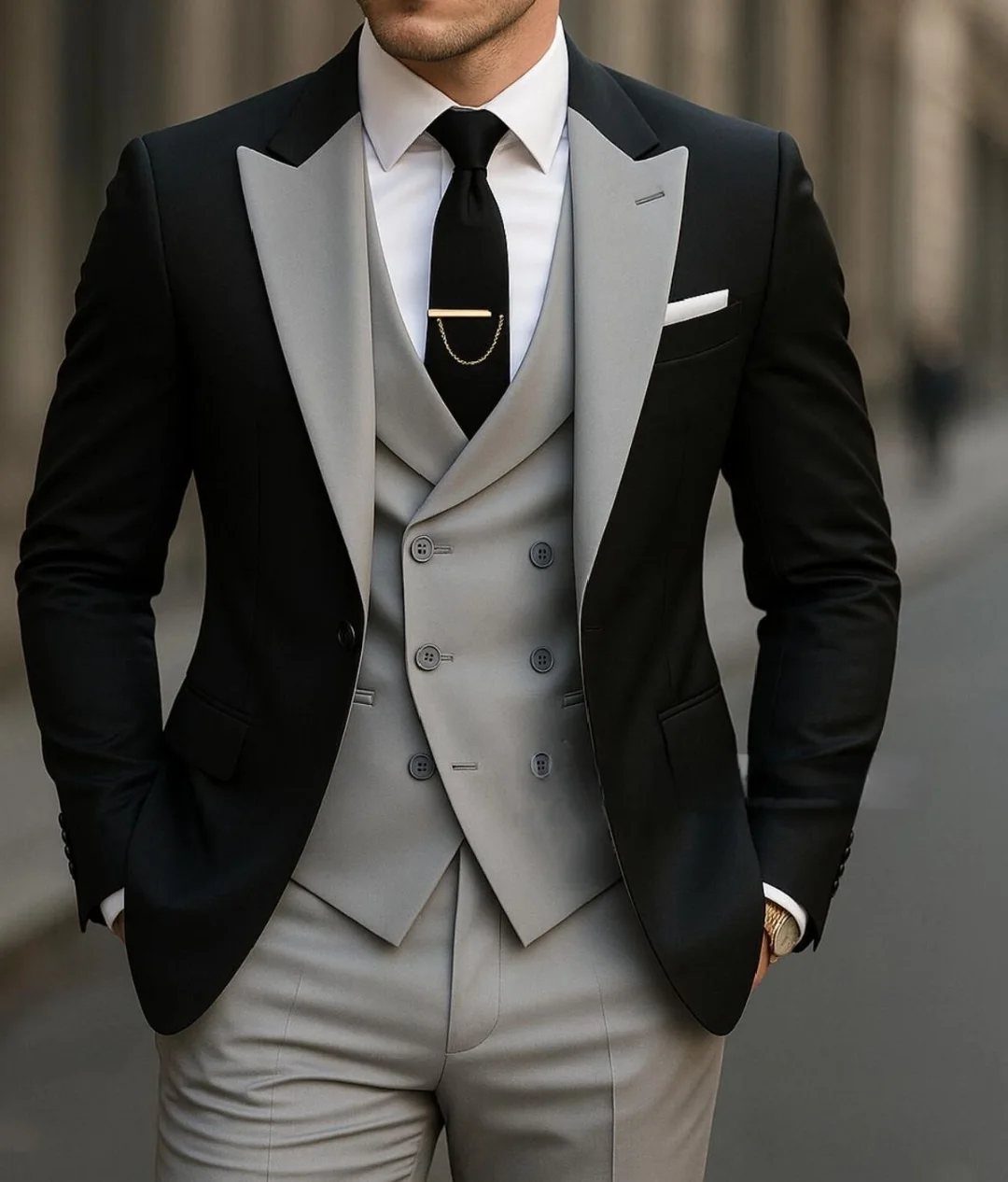
A waistcoat adds a layer of formality that a two-piece cannot match, and mixing tones, such as a black jacket over a grey vest and trousers, works well when the shades sit clearly apart.
A black tie ties the pieces together.
Because the vest finishes the look, you can take the jacket off at the reception and still look put together.
That makes it a smart pick for a long day. Have the waistcoat fitted closely, since a loose one bunches at the waist.
4. Casual Wedding Suit
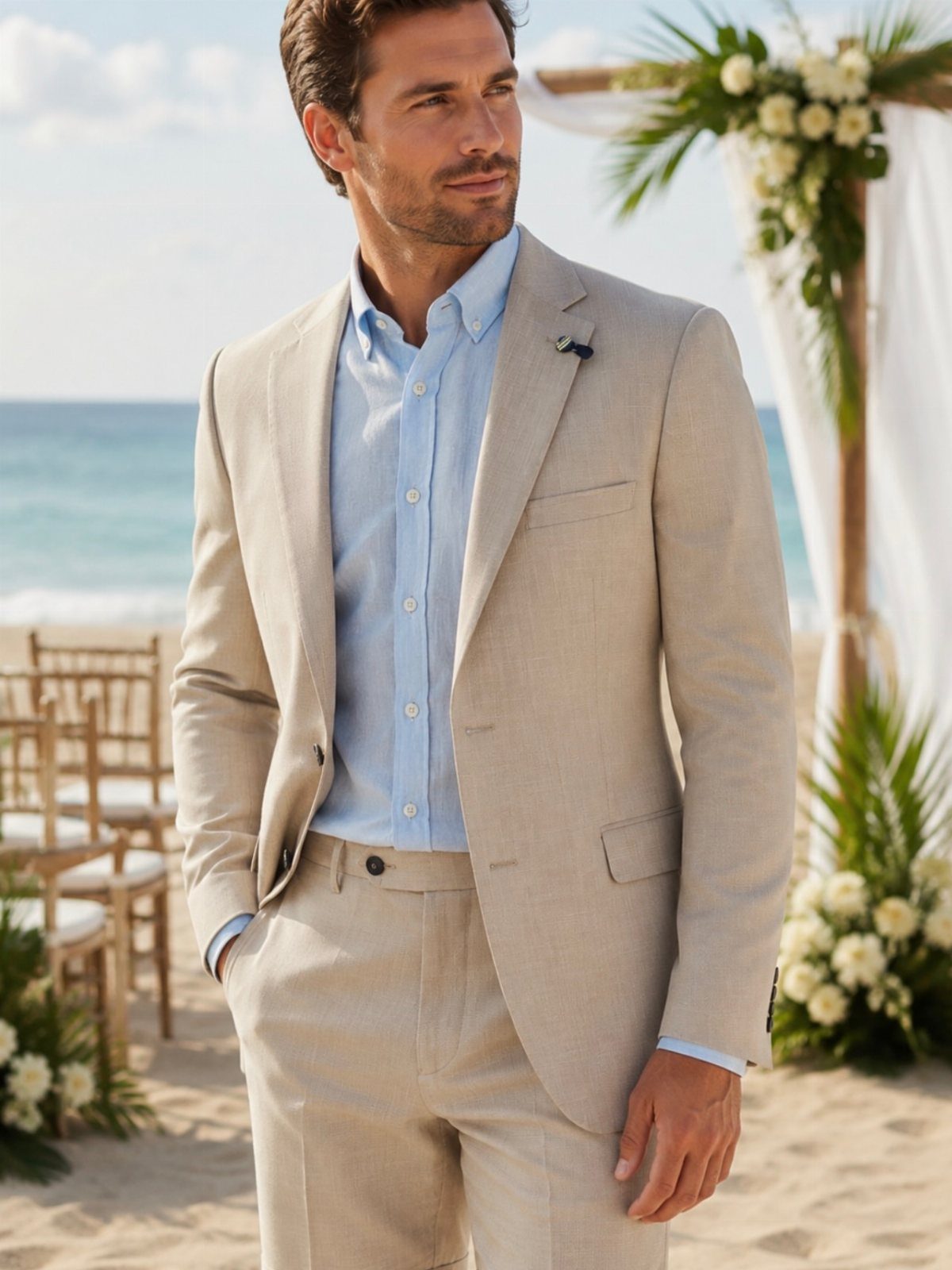
Beach ceremonies call for suits that move, and a light beige linen suit with a pale blue shirt is the right idea: relaxed, light and easy in sand. Skip the tie, or keep it loose.
Choose an unlined or half-lined jacket for lightness.
For an informal wedding, this style costs less than formalwear and looks natural against a floral arch. Expect some wrinkling, and wear shoes that cope with sand.
5. Navy Wedding Suit
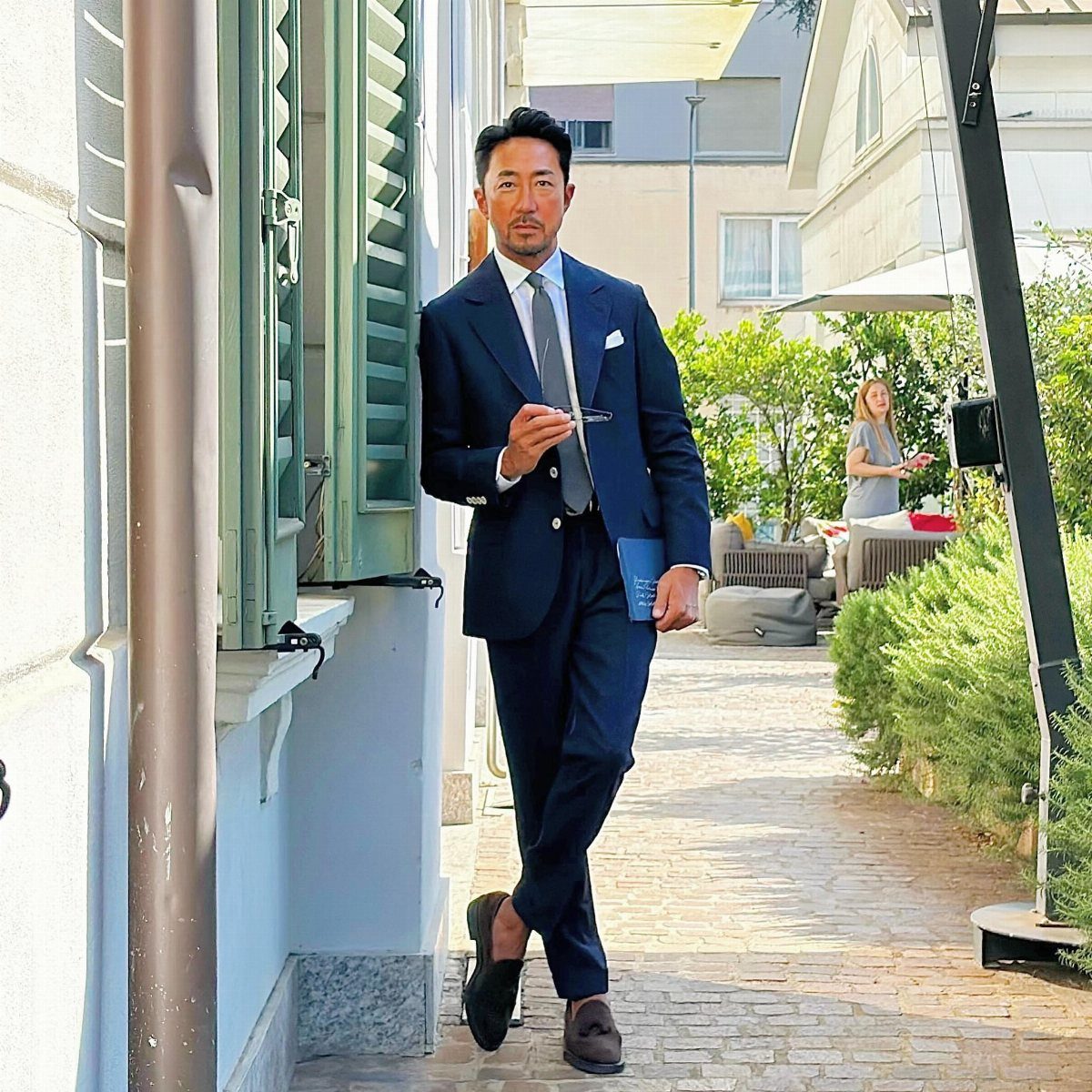
Navy is the safest color to buy, and my first recommendation for anyone who wants one suit that works well beyond the wedding day.
Because you can wear it to the office or another event afterward, the cost per wear drops fast. Spend the money on tailoring rather than a fancier fabric.
6. Morning Suit
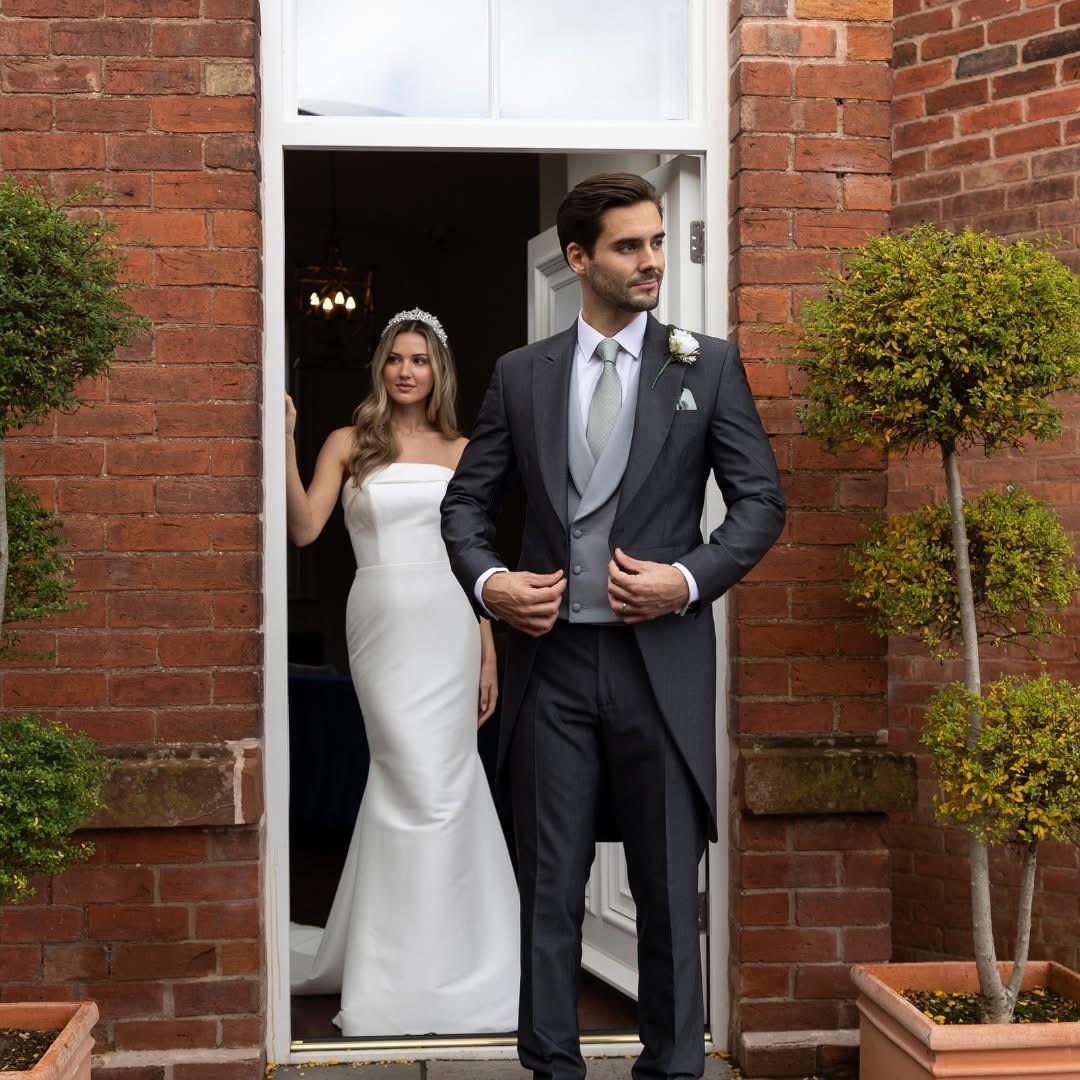
Daytime formal weddings are where a morning suit belongs: a charcoal grey tailcoat-style jacket with matching tones that pair naturally with a white gown.
It is traditional, so confirm the dress code with your partner and venue before committing.
Hiring is usually the practical route, since you will rarely wear one again. Order early so there is time for fitting changes.
7. Velvet Suit
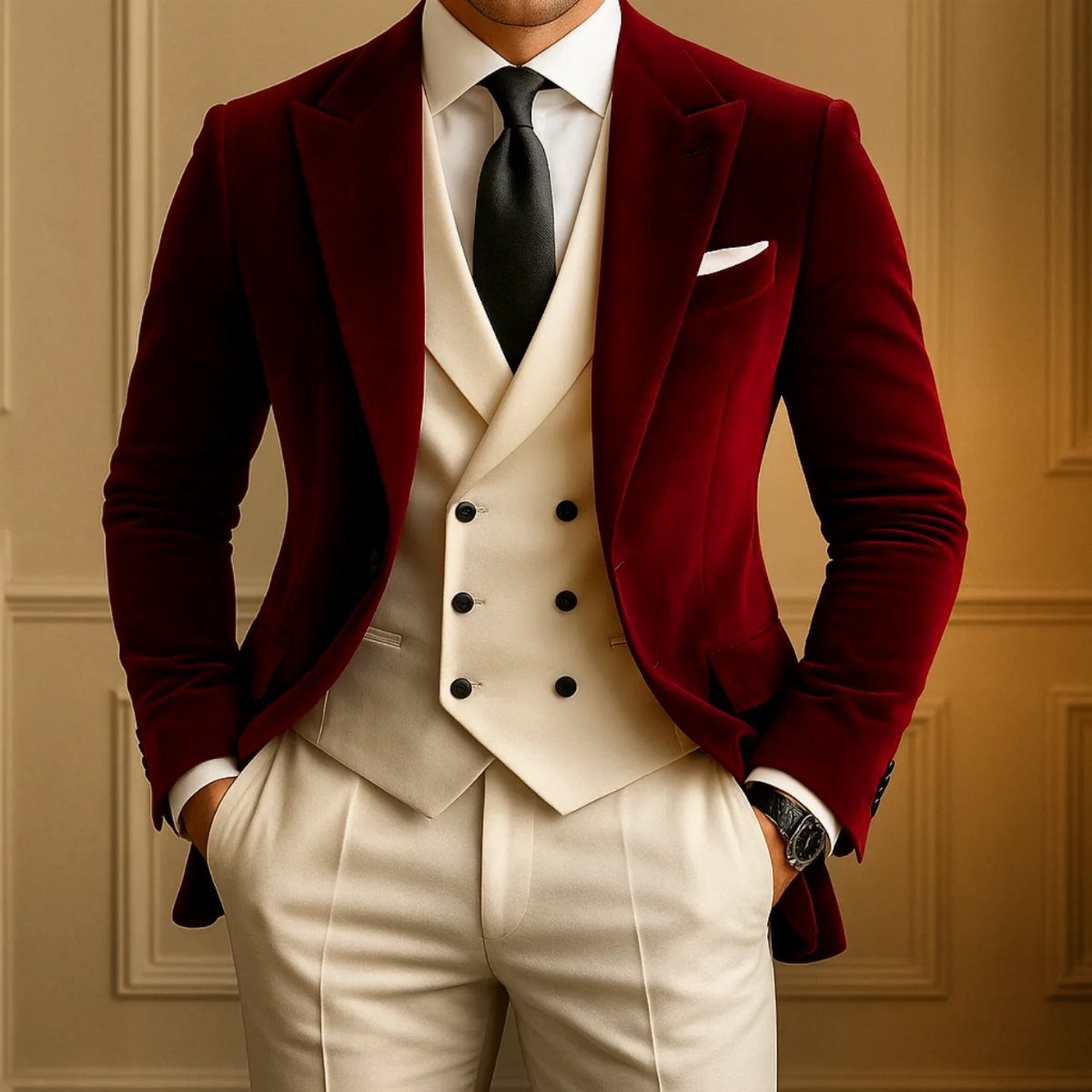
Burgundy velvet over cream is a deep, rich pairing, and the cream waistcoat and trousers keep the jacket from feeling heavy. It reads as a winter wedding suit, so it fits a cold-season evening ceremony best.
Velvet catches light and shows every flaw in the fit, so spend on tailoring at the shoulders and sleeves. Keep the shirt and accessories plain so the jacket carries all the boldness.
8. Tan Wedding Suit
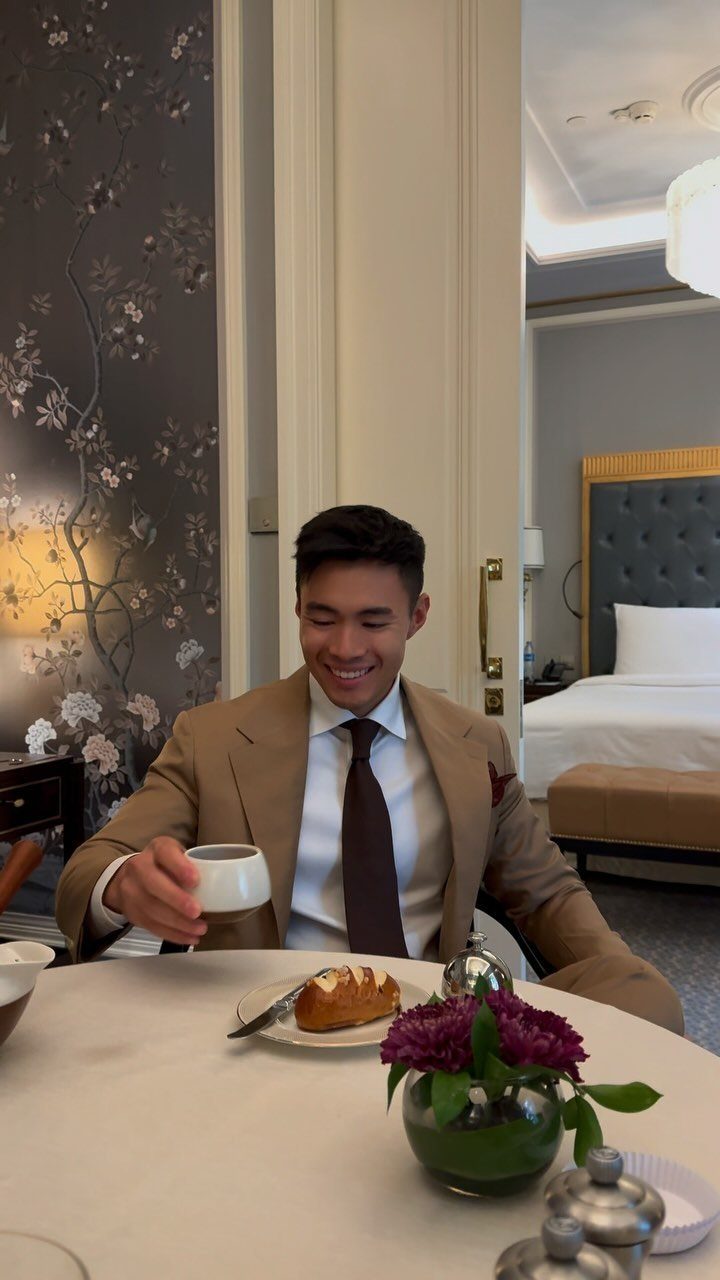
A tan suit with a crisp white shirt and a dark brown tie is easy to wear and easy to like. The brown tie gives enough contrast against the lighter jacket that the look stays sharp.
I prefer it for a daytime wedding, when the warm tone looks best.
Press the white shirt well, since light suits make wrinkles in the shirt more noticeable. Brown leather shoes finish it without extra effort.
“There’s definitely been a movement away from the classic men’s black wedding tuxedo,” says suitmaker extraordinaire David Hart.
— Vogue
9. Groomsmen in Brown Suits
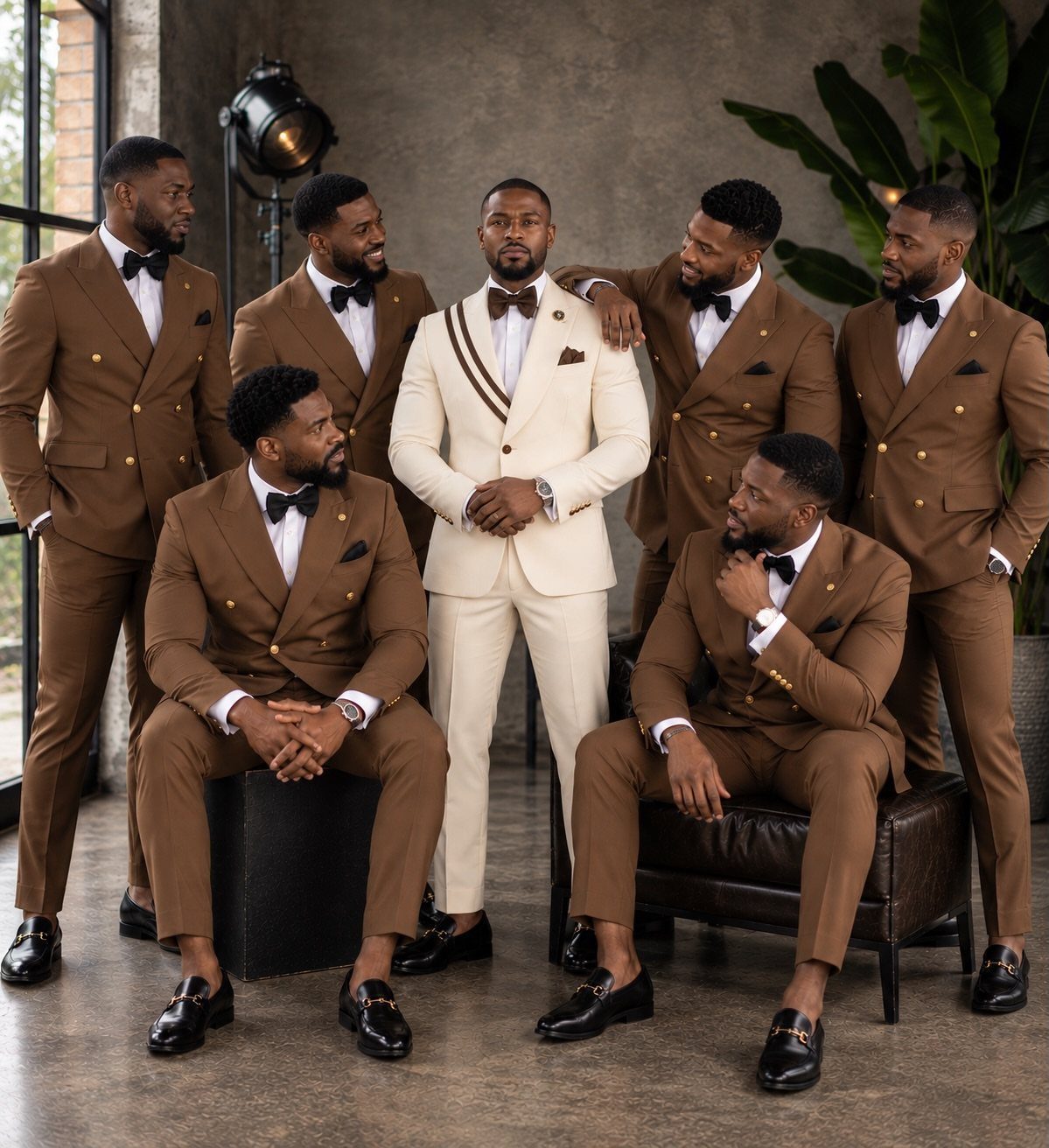
Matching brown suits on the groomsmen with a cream suit on the groom set him apart without any extra styling. The bow ties add polish, and everyone reads as one group.
Order all the suits from the same maker and dye lot so the browns match in the photos. Give the groom the lighter color, as here, and nobody will wonder who is getting married.
10. Classic Black Suit
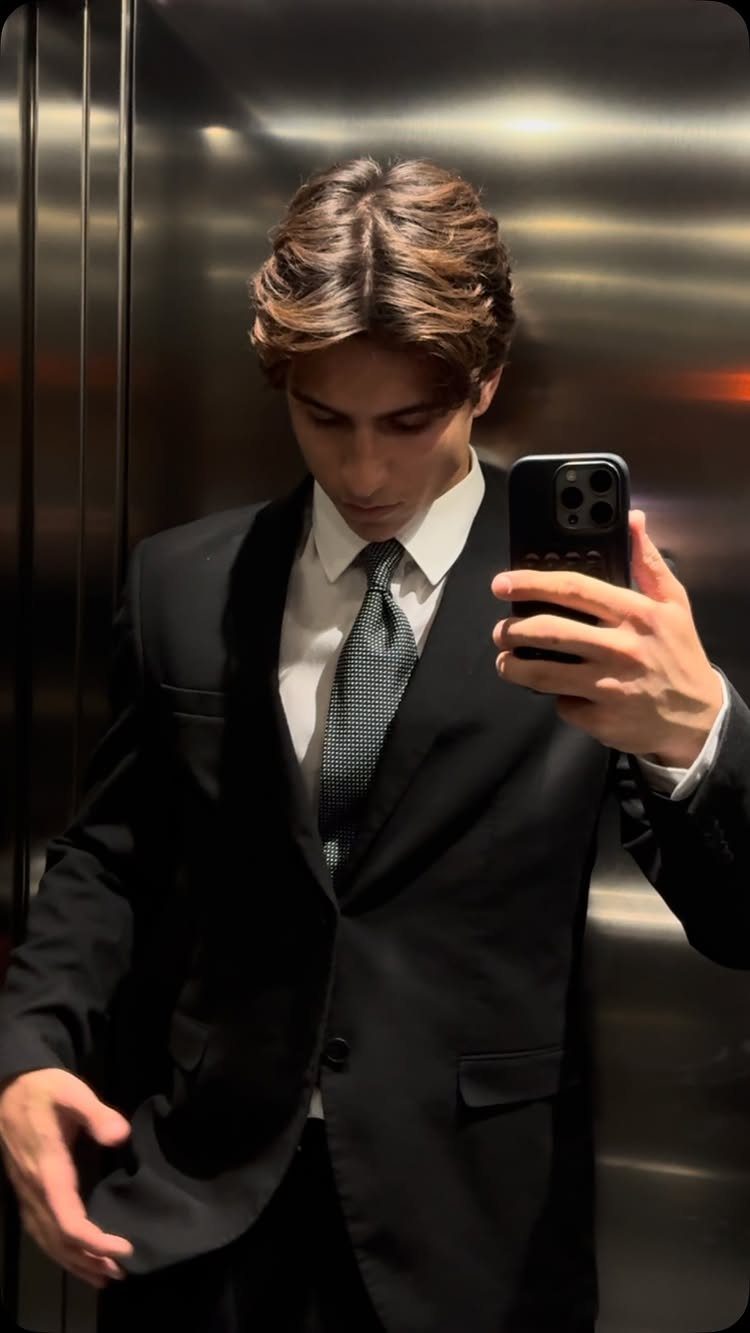
A black suit, white collared shirt and a grey patterned tie make a clean, dependable combination. The patterned tie is the detail I like most, since it adds interest while the suit stays simple.
Black suits are a good buy for a guest or a groom who wants something formal that can be worn again.
Choose a tie in a quiet pattern, and have the trouser length adjusted so the hem sits neatly on the shoe.
11. Olive Green Wedding Suit
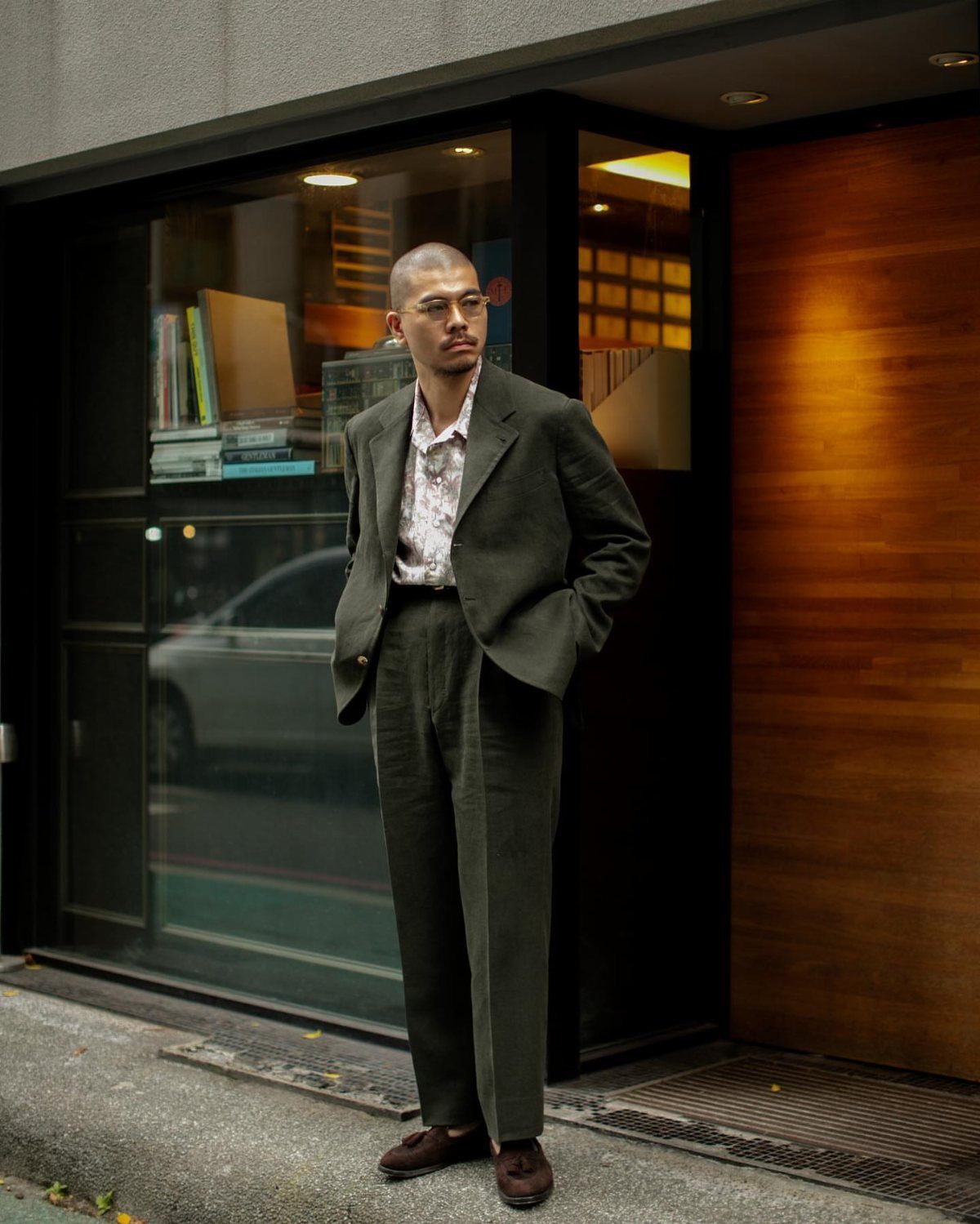
Dark olive green is a good choice for a groom who wants color without going loud. A patterned button-down shirt and brown loafers keep the outfit relaxed, so it suits a modern or casual ceremony better than a formal one.
Pick a shirt pattern that is subtle, so it complements the green and does not compete with it. Brown shoes warm up the olive tone, and loafers make the look less stiff than lace-ups would.
12. Embroidered Cream Suit and Robe
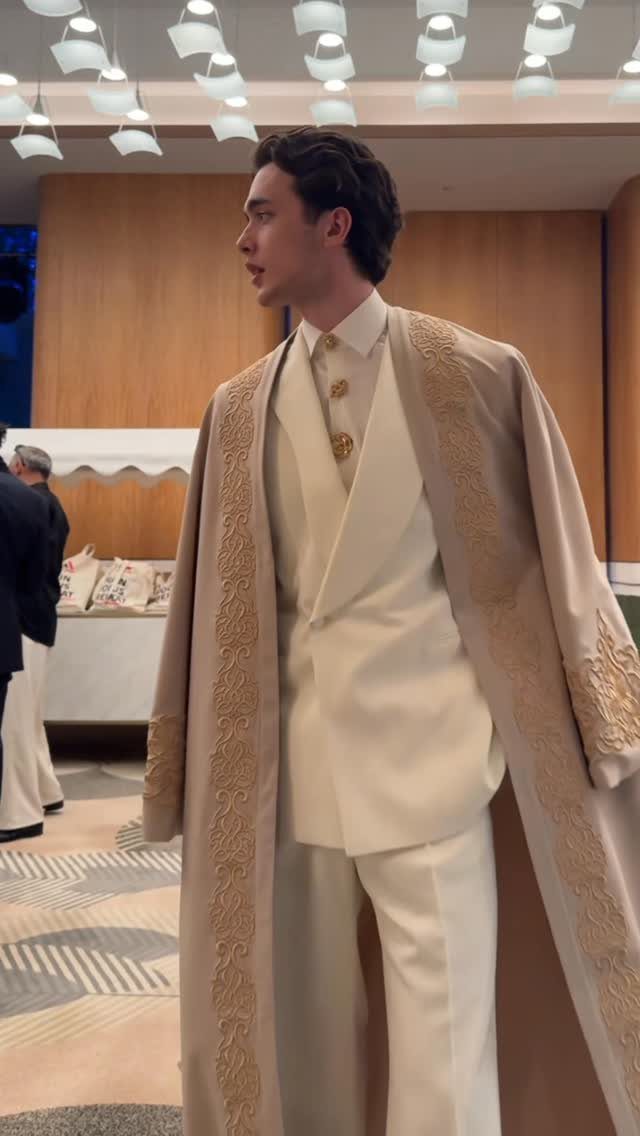
Layering a long embroidered beige robe over a cream three-piece suit adds ceremony and a sense of occasion. The suit gives a tailored base, and the robe brings texture and drama for the ceremony and portraits.
I would treat the robe as a removable piece: wear it for the entrance and photos, then take it off for dancing. Keep the suit’s cream and the robe’s beige close in tone so the layers look planned.
13. Green Double-Breasted Suit
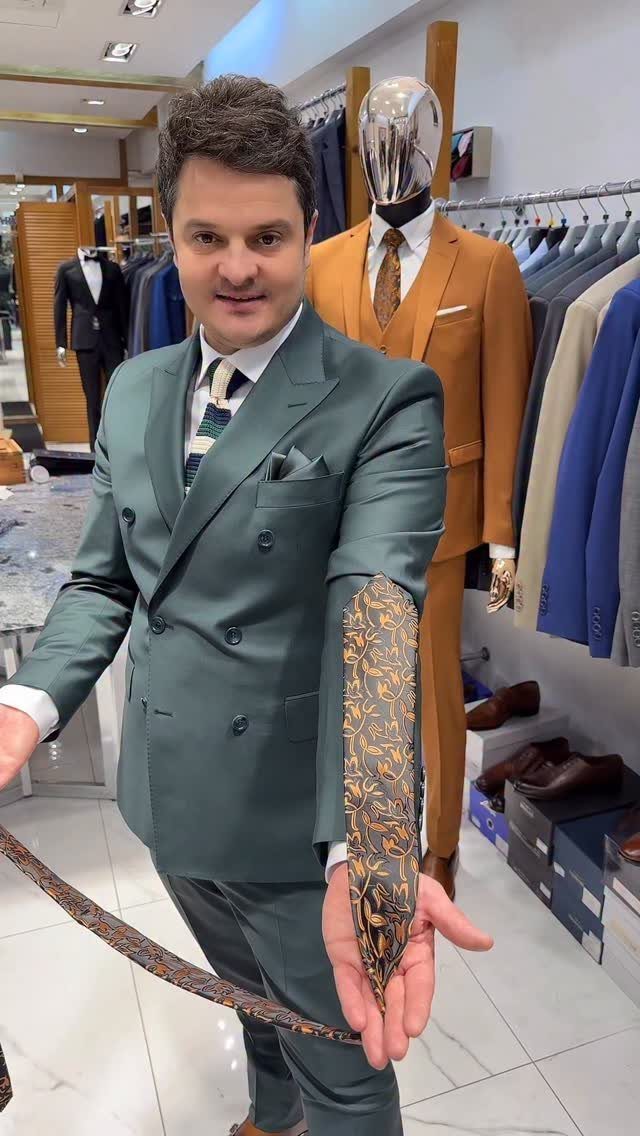
Dark green double-breasted suits suit a groom or guest who wants something bolder than navy but still formal. A gold patterned tie warms the green, and the two sit well together without extra accessories.
Double-breasted jackets look best buttoned, so have the fit checked while fastened. A shirt in white or a pale shade keeps attention on the jacket.
Try the tie against the suit in person, as I would, since green shifts under store lighting and daylight.
Choosing the Right Suit
Start with the dress code on the invitation, because it narrows everything else.
Season comes next. Linen or cotton keeps you cooler in summer, and wool or velvet adds warmth in winter.
Pick a cut that suits your build and lets you move. Slim, classic and tailored all work if you can raise your arms and sit comfortably.
The suit sets the tone, and the smaller pieces make it personal: pick a tie or pocket square that feels like you.
Try the suit on early. Leaving it to the last minute means no time for adjustments, and that is how a good suit ends up fitting badly.
Tailoring Advice
Fit matters more than price. A well-tailored suit makes you look better and feel more confident, and a poor fit shows in every photo.
You have 2 routes.
Made-to-measure, such as a suit from Indochino, starts from a base pattern that gets adjusted to your measurements. Off-the-rack is cheaper, and professional tailoring can bring it close to that result.
Look at the details when you choose.
Lapels come as notch, peak or shawl, jackets have one, two or three buttons, and pockets vary too. Peaked lapels or fabric-covered buttons change the look without remaking the whole suit.
Sit down in it, raise your arms, check that nothing pulls when you move. Wool in a lighter weight breathes better than heavy worsted, and a half-lined jacket lets more air through.
Suit Care Tips
Dry clean the suit only when it needs it, such as after a stain or a long, sweaty day. Cleaning too often wears the fabric down.
Between wears, hang the suit on a wide, shaped hanger so the shoulders keep their form. Empty the pockets first.
Store it in a breathable garment bag, not plastic, which traps moisture. Keep it somewhere cool and dry, with space around it so the fabric is not crushed.
After the wedding, have it cleaned before it goes into storage, since leftover stains can set over time.
Frequently Asked Questions
What type of suit is ideal for weddings?
It depends on the dress code. For an evening black-tie wedding, a tuxedo is correct; for everything else, a navy suit is the safer buy, since it keeps earning its place at the office and at the next dinner invitation.
For a summer or beach wedding, a linen suit is the better pick since it breathes.
How should a suit fit?
A good fit lets you raise your arms, sit down and move without anything pulling.
A $300 suit that fits beats a $1,500 one that doesn’t, and the camera catches the difference in every frame. A double-breasted jacket should be checked while buttoned.
What are the best fabrics for wedding suits?
Linen is best for summer because it breathes, though it wrinkles, so steam it the day before.
For a summer or outdoor wedding, choose a lighter wool over heavy worsted, and ask for a half-lined jacket so air can move through the back.
Velvet works for a winter evening, but it is unforgiving: every pull at the shoulders or bunch at the sleeves shows, so put the extra money into tailoring those 2 spots.





