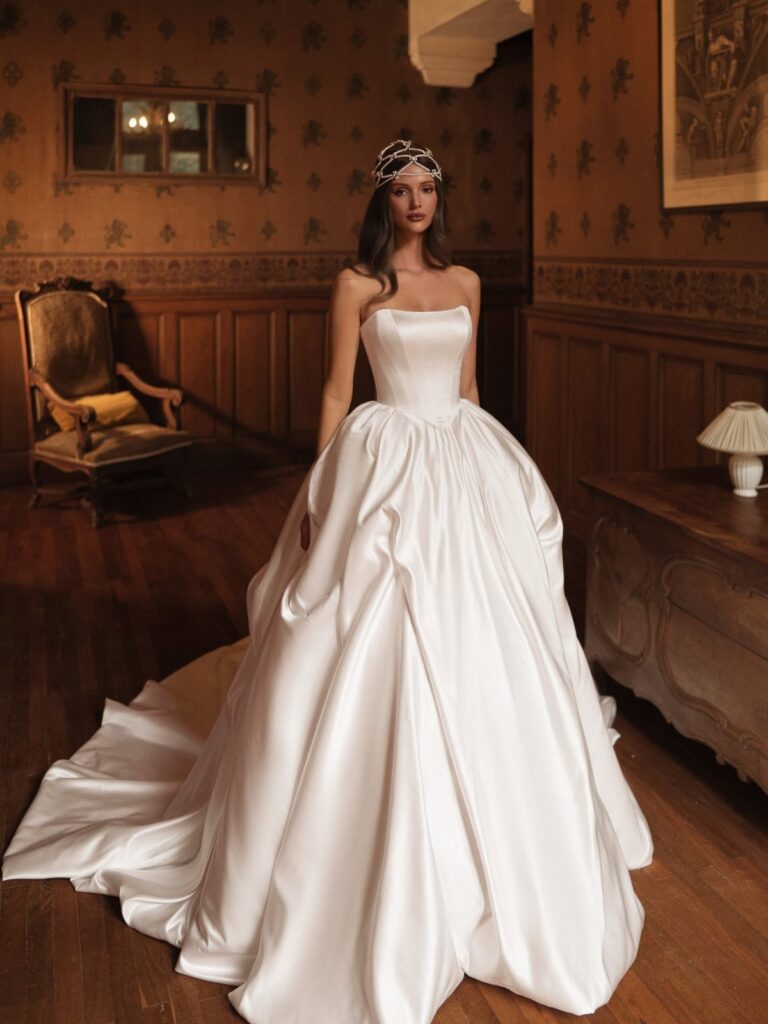
The gowns in this list run from floral and full tulle to a classic silhouette, a basque waist, sparkle, lace, a cathedral train and structured satin, so the real choice is how much drama sits in the fabric and how much in the styling.
Your venue decides a lot: a full tulle skirt and a cathedral train need wide doorways and aisles, while a structured satin ball gown is easier to fit through a tight space and often easier on a tight budget.
Whatever you pick, plan on 10 hours of wearing it.
1. Floral Ball Gowns
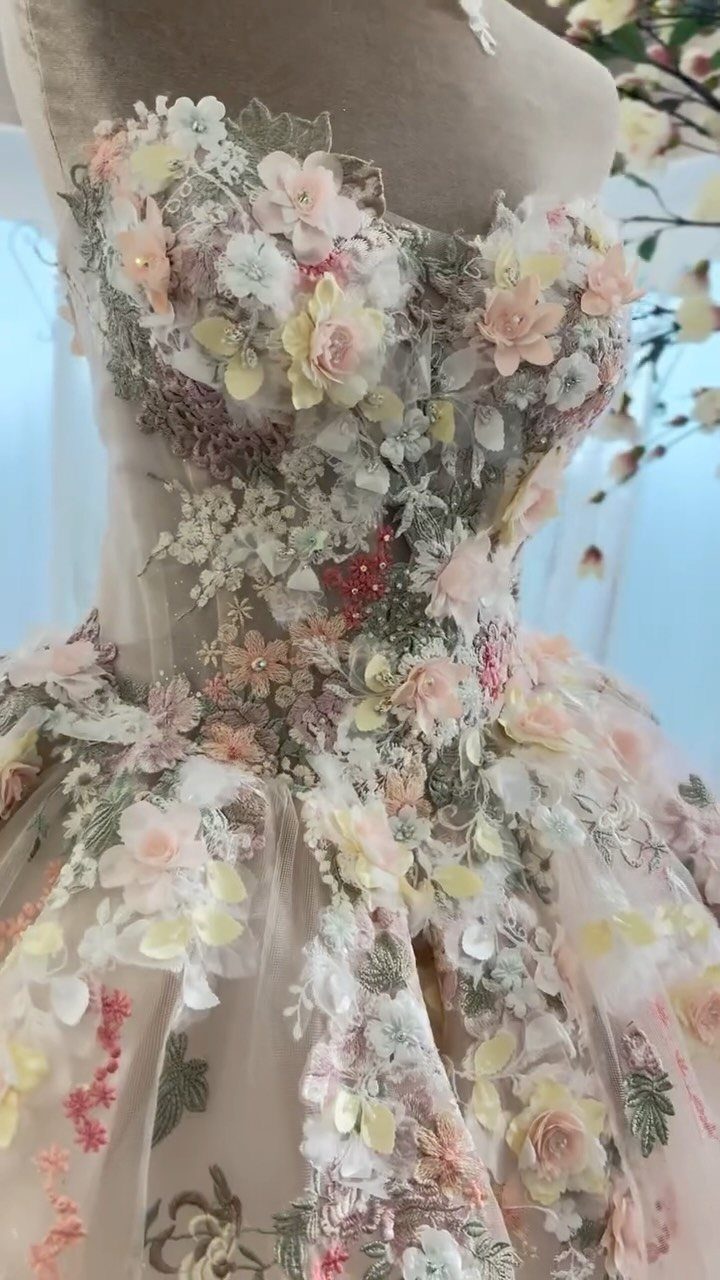
Three-dimensional flowers turn a ball gown into something closer to a garden than a dress, and the pastel pink, yellow and white here keeps it soft rather than loud.
Appliqués placed across a strapless bodice and out onto the skirt carry the romance without any extra accessories.
Pick this if you want color without committing to a colored gown. Keep the veil and jewelry plain, because the fabric flowers already do the talking.
2. Dramatic Full Tulle Wedding Dress
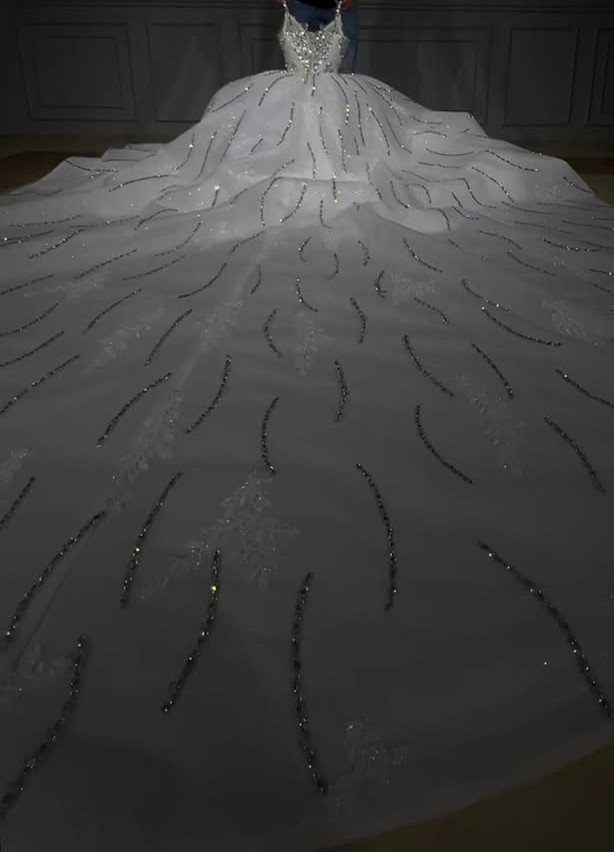
Layers of tulle give a skirt its volume, and a full one with a long train reads as pure drama from across a room. Silver sequins catch the light on top of that, so the dress shimmers as you move.
My pick is to keep the bodice simple so the skirt stays the focus. Full tulle takes up real space, so test it in the doorways and aisle width of your venue.
3. Classic Ball Gown
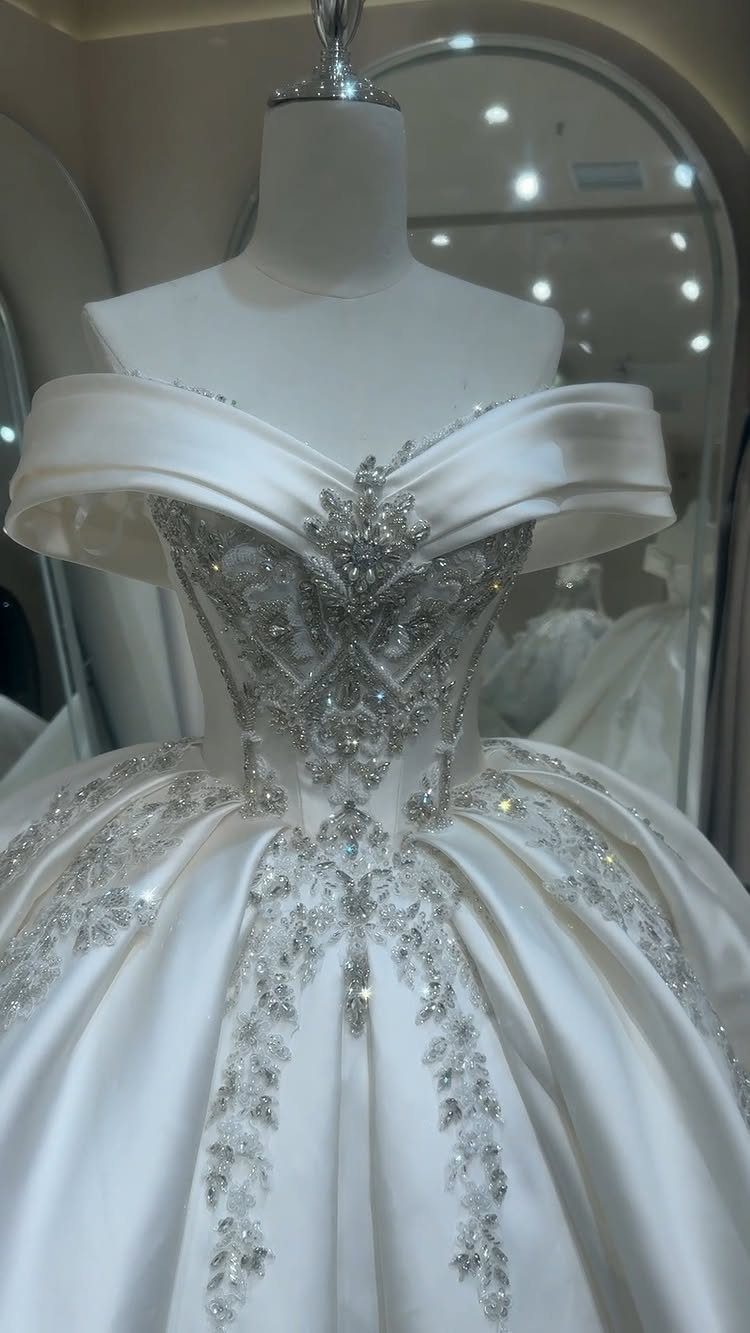
Off-the-shoulder satin, a fitted bodice and a wide skirt: this is the silhouette most brides picture first, and heavy silver crystals on the bodice make it feel current rather than dated.
I would choose this over trendier shapes if you want photos you will still love decades from now. Put the sparkle on the top half, then let the satin skirt stay clean and smooth.
4. Basque Waist Ball Gown
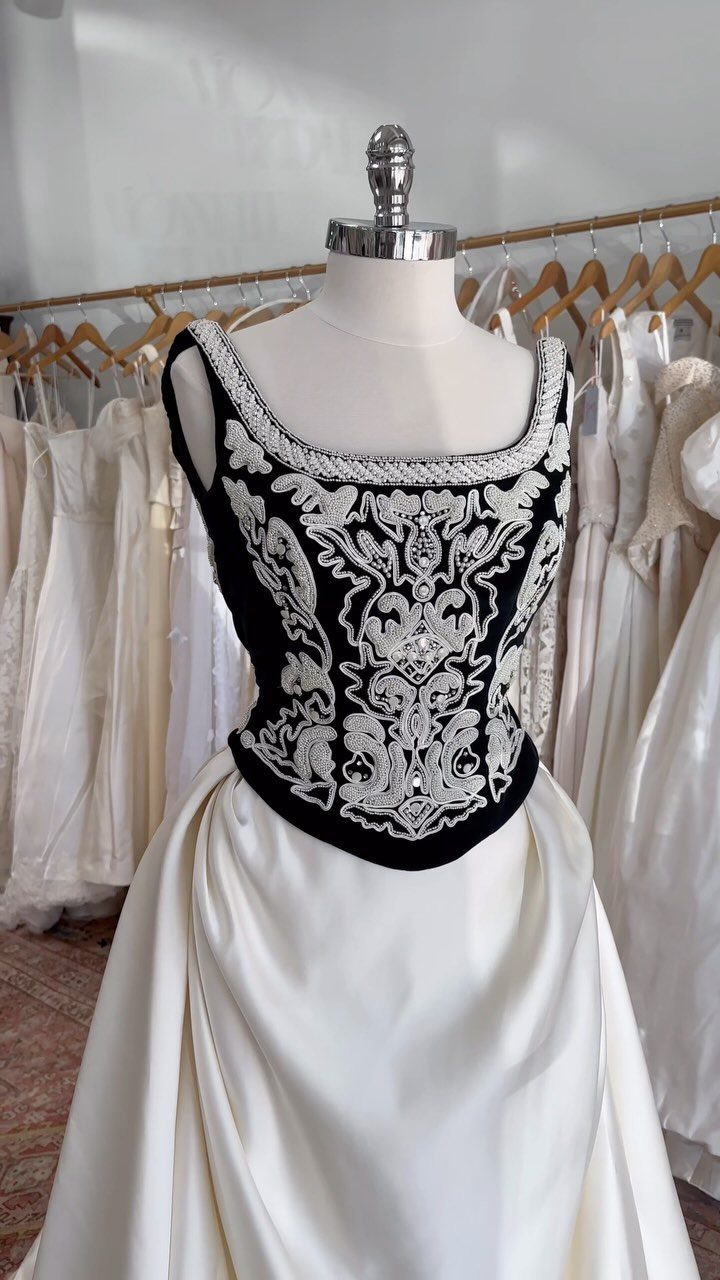
A black beaded basque waist against a white skirt is a bold contrast, and it sharpens the waistline more than any seam could.
The pointed, fitted bodice sits low over the hips, which lengthens the torso before the skirt flares out.
Wear it if white alone feels too expected. A sheer black or white veil balances the proportions.
5. Sparkly Ball Gowns
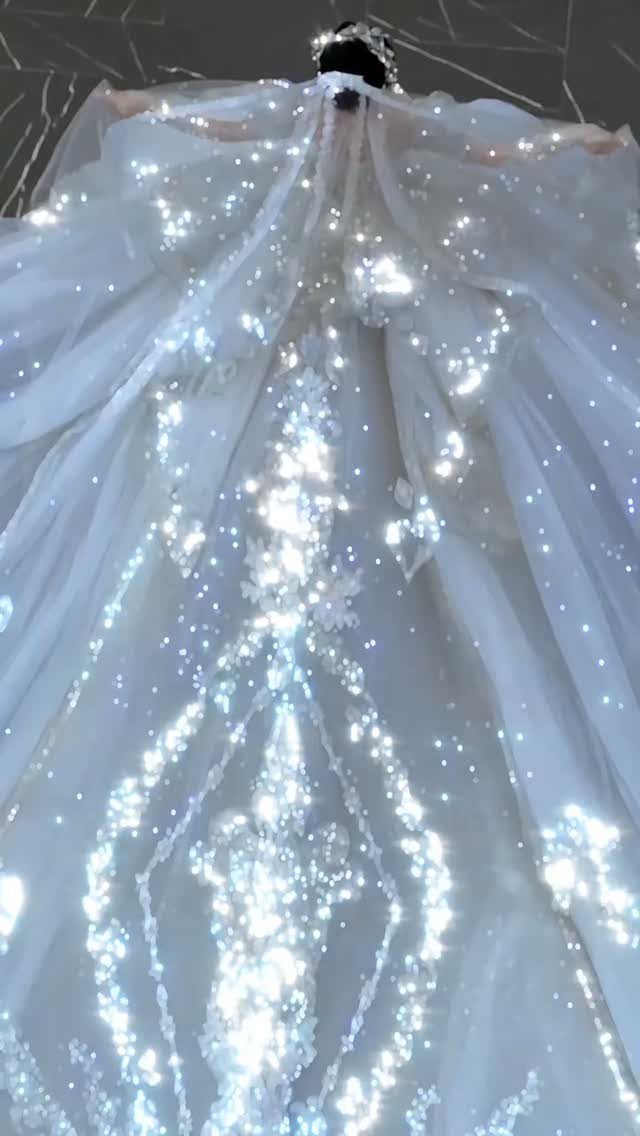
Sequins across the whole gown, plus a veil and tiara, make a full-sparkle look that suits a bride who wants to be seen. A long train adds to the effect.
Because the dress already glitters, I would skip statement earrings and choose simple studs. Add one shiny piece only, the tiara, so the shimmer reads as intentional and not busy.
6. Dramatic Lace Ball Gowns
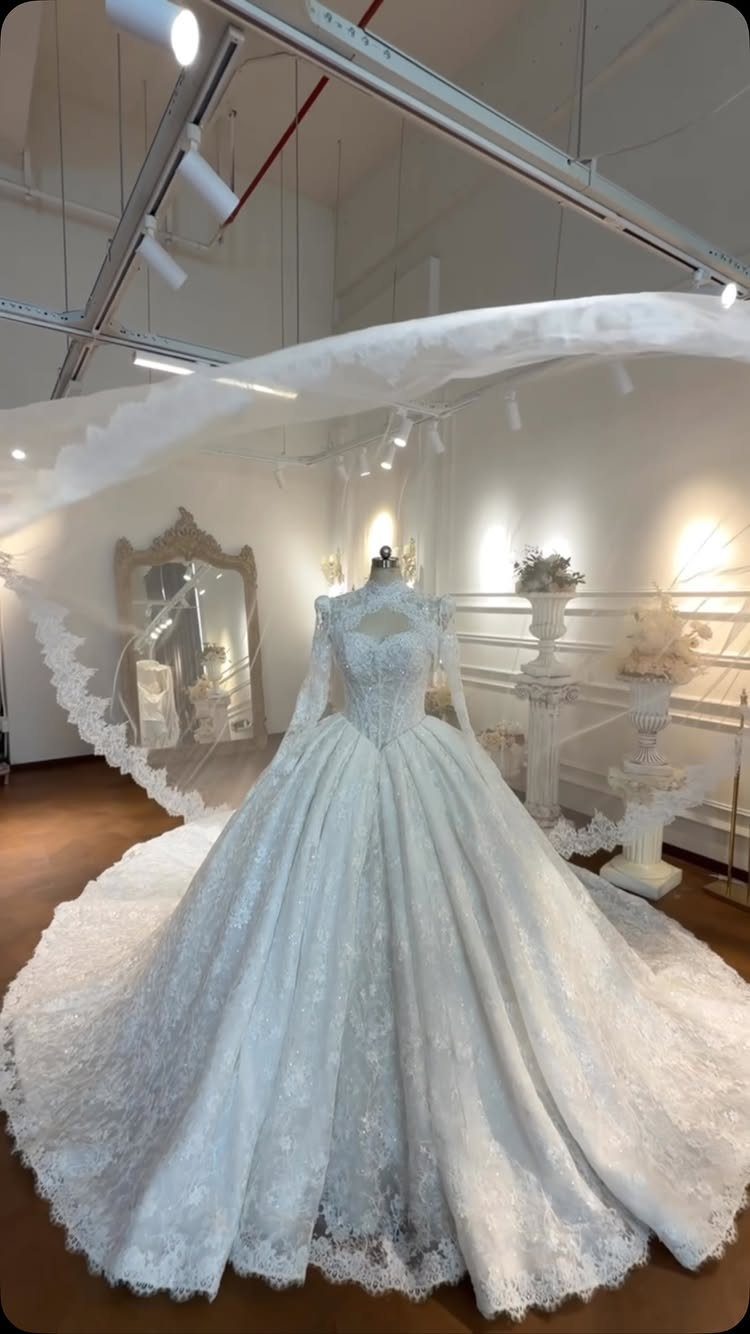
Ornate lace embroidery across the skirt, finished with long illusion sleeves, gives a ball gown a storybook, almost Victorian feel. The sheer sleeves keep your arms covered while the lace appears to rest right on the skin.
A long veil, as here, suits the formality. I would keep the hair up so the sleeves and neckline stay visible.
7. Cathedral Train Ball Gowns
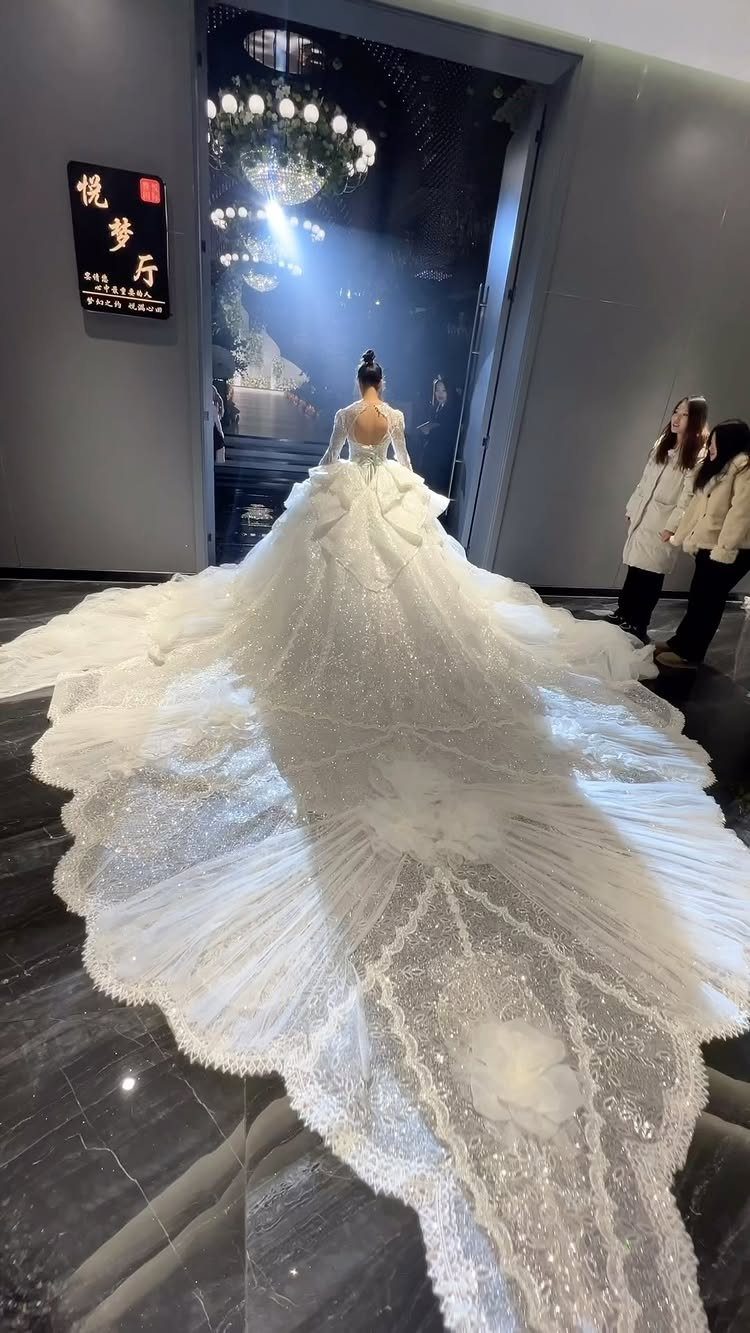
A cathedral train is the part of the gown that people see longest, since it trails behind you through the whole aisle walk.
Beading and lace across the train make the back view as detailed as the front, which matters for a ceremony where guests face your back.
My advice is to plan for the length. Ask for a bustle at the fittings so you can dance, and give your maid of honor a practice run at spreading it out before photos.
8. Structured Satin Ball Gowns
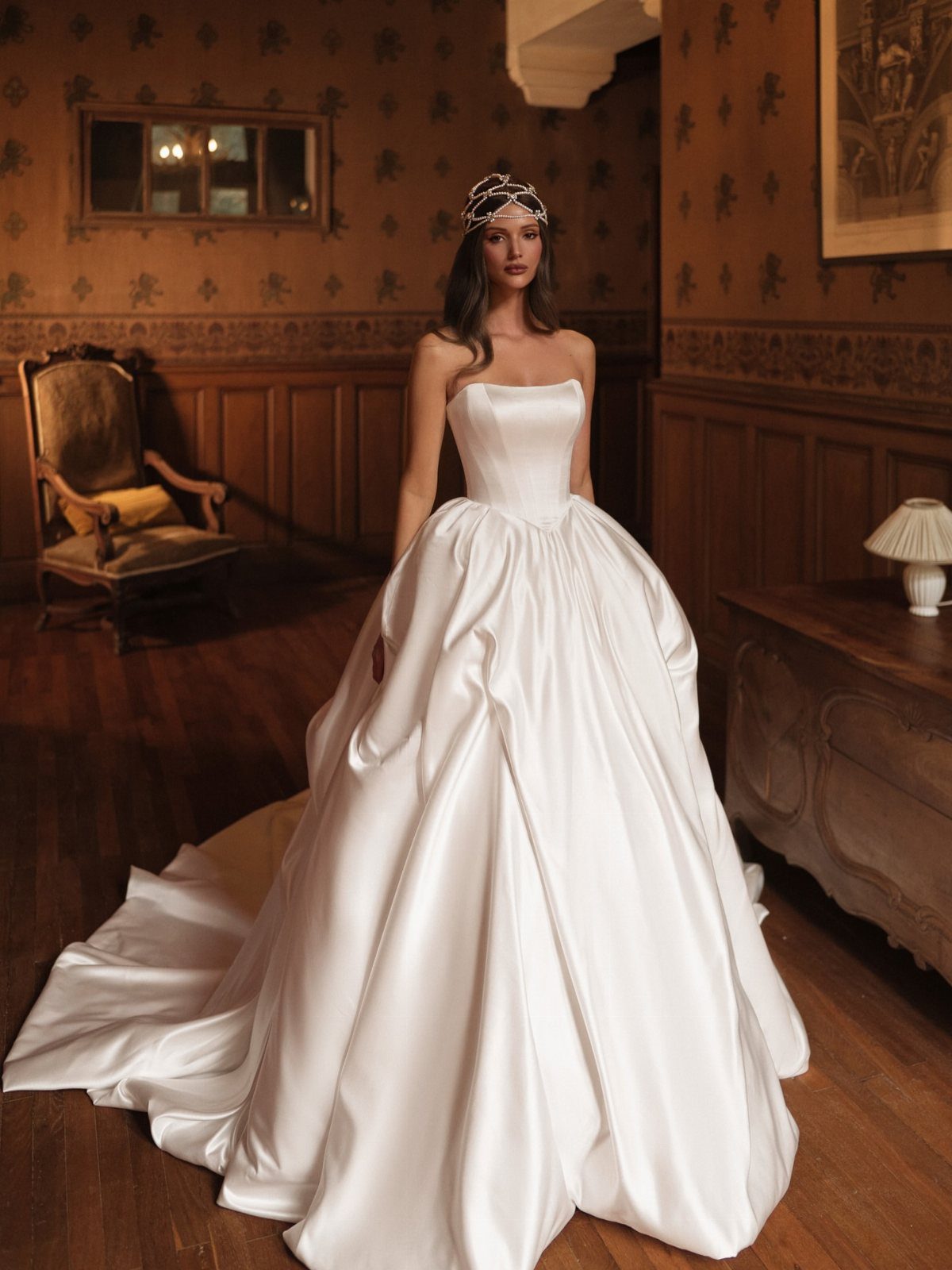
Plain, smooth satin with no beading or lace leaves the silhouette to carry the look: a strapless bodice, a skirt that flares wide from the waist and a train that sweeps out behind. A tiara is the only sparkle needed.
I would choose this if you like a clean, regal look over lace or beading. Satin shows every wrinkle and mark, so I would plan for a steamer on the day and keep the jewelry minimal.
Choosing the Right Gown
Before you fall for a silhouette, check it against 3 things: how big and formal your venue is, what you actually wear when nobody is watching, and whether you’ll feel like yourself in it for 10 hours.
A ball gown suits a dramatic entrance and a formal presence, while an A-line is the better call if you value comfort and ease of movement.
Fabric matters as much as shape. Silk or satin with sleek seams and a minimal neckline lets the silhouette do the work, which suits a clean, modern look over anything ornate.
If your budget is tight, a simple ball gown is also the easier version to find and fit.
Styling a Dramatic Gown
Let the dress be the centerpiece and build the rest around it.
Decide first how much grandeur you want. A voluminous skirt can take a cathedral veil and statement jewelry, or you can strip everything else back and let the skirt do the talking; both work, and I lean toward the second.
Either works, as long as the pieces support one feeling: regal, romantic, modern, or a mix.
Bring your veil and jewelry options to a fitting and try them with the gown on. Seeing the full look together settles it faster than guessing.
Movement and Fit
A skirt that looks grand in a photo can behave differently on your body, so try gowns on in person.
In a full-length mirror, with a friend or a phone camera nearby, you can watch the train follow you, the skirt swing open as you step, and the whole shape from the side and back.
Test it the way you will use it: walk, turn and sit.
Check the bodice first, since it defines the fit. A well-built one, especially with a basque waist, keeps you comfortable and elegant for hours.
Fabric weight changes the feel too. Heavier fabrics give drama and shape, while lighter layers add movement, so look for balance rather than sheer weight.
Frequently Asked Questions
What defines a luxury ball gown?
Intentional volume, quality fabric and expert construction. Look for a sculpted, supportive bodice, a skirt with volume that stays controlled rather than excessive, and materials like silk mikado, duchess satin, Italian tulle or layered organza.
Couture-level builds often add internal corsetry and hand finishing, and that restraint is what separates them from mass-market versions.
What is the best fabric for a dramatic ball gown?
It depends on the look.
Tulle gives a skirt volume and drama, and lace adds a storybook, almost Victorian feel. Heavy fabrics hold structure and light layers add movement, so I’d aim for a mix instead of piling on weight.
Are ball gowns hard to move in?
They can be, especially with a long train, so plan for it.





